Memory Tags Review: Snap a Photo to Auto-Generate Flashcards — No More Manual Card-Making

Memory Tags is an iOS memory tool that auto-generates flashcards from photos with AI-powered smart review.
Memory Tags is an iOS memory app that uses photo-based OCR to automatically extract key vocabulary from text, combined with custom tag organization and a built-in spaced repetition algorithm for smart review scheduling. Compared to Anki and Quizlet, it compresses the card-creation process down to snapping a single photo, dramatically reducing the effort from reading to memorization — ideal for language learners, students, and knowledge workers.
What Is Memory Tags? A Photo-Based Memory Tool
Memory Tags is a newly launched iOS memory tool built around a "zero-friction" learning experience. Unlike traditional flashcard apps such as Anki and Quizlet, which require users to manually input large amounts of content, Memory Tags lets you simply point your camera at any text and automatically extracts key vocabulary worth memorizing — dramatically reducing the effort needed to go from "reading" to "remembering."
Core Features: A Complete Workflow from Photo to Smart Review
Photo Recognition with Automatic Keyword Extraction
The core interaction of Memory Tags is remarkably simple: scan any text content (books, notes, documents, etc.) with your phone camera, and the app uses OCR text recognition to automatically extract vocabulary and phrases worth learning and memorizing. This eliminates the most time-consuming step in traditional flashcard apps — manual data entry.
OCR Technology Background: OCR (Optical Character Recognition) is a technology that converts text in images into editable digital text, with a history dating back to the 1950s. Modern OCR has evolved through three generations: from template matching, to feature extraction, to deep learning. Current mainstream solutions (such as Google ML Kit and Apple Vision Framework) are built on Convolutional Neural Networks (CNN) and Transformer architectures, achieving recognition accuracy above 99% for standard printed text, with significantly improved handling of handwriting and complex layouts. As an iOS app, Memory Tags most likely leverages Apple's native Vision Framework, which supports offline recognition, multi-language text detection, and is power-optimized for mobile devices — the technical foundation behind its low-latency "snap and use" experience.
Custom Tag Classification System
Extracted content can be organized using a user-defined tag system. This "Tag" mechanism offers flexible organization — whether by subject, difficulty, topic, or any personal preference, users are free to define their own categories. This is also where the product name "Memory Tags" comes from.
Built-in Smart Spaced Repetition Algorithm
The app features a built-in smart review scheduling system with the following core logic:
- Weak cards surface first: Content not yet mastered is prioritized for review
- Mastered content auto-hides: Cards you've already learned won't repeatedly appear and disrupt your study flow
- No manual review planning needed: The algorithm automatically determines what you need to review
This design follows the tradition of classic Spaced Repetition algorithms, but Memory Tags places greater emphasis on a lightweight, seamless user experience.
The Science Behind Spaced Repetition: Spaced repetition is built on the "forgetting curve" theory proposed by German psychologist Hermann Ebbinghaus in 1885. Ebbinghaus discovered that human memory decays exponentially over time, but reviewing information just before it's about to be forgotten can significantly extend memory retention — and each successful recall resets and lengthens the next forgetting cycle. Building on this, the SM-2 algorithm (SuperMemo 2, 1987) became the foundational algorithm for modern spaced repetition software, and Anki still uses a variant of it at its core. In recent years, companies like Duolingo have further introduced Bayesian inference-based "Half-Life Regression" models that dynamically predict the forgetting point for each card based on user history, making scheduling more personalized. What Memory Tags calls "smart review scheduling" is essentially a continuation of this scientific tradition in a lightweight product form.
Memory Tags vs Anki vs Quizlet: What Pain Points Does It Solve?
The Core Contradiction of Traditional Flashcard Apps
Memory Tags targets a long-standing contradiction in flashcard apps: users need to spend a significant amount of time creating cards before they can actually start learning. While Anki and Quizlet are powerful tools, the card-creation process itself is a barrier — especially in fragmented learning scenarios, where this upfront cost often discourages users from even getting started.
Flashcard Market Landscape: The flashcard learning tool market is already quite mature, with a competitive landscape centered around Anki and Quizlet. Anki (released in 2006) is known for being open-source, highly customizable, and having a powerful spaced repetition algorithm, earning fierce loyalty among medical students and language learners — though its steep learning curve and dated UI design have long been criticized. Quizlet (released in 2005) took a social and content-sharing approach, allowing users to directly use card sets created by others, and currently boasts over 60 million monthly active users. In recent years, AI-driven automatic card creation has emerged as a new frontier, with general-purpose tools like Notion AI and ChatGPT plugins also entering this space. By choosing "photo capture" as its differentiating interaction entry point, Memory Tags is essentially competing for the middle-ground users who are put off by Anki's complexity but dissatisfied with Quizlet's content quality.
Memory Tags' solution compresses the card-creation process down to the effort of "taking one photo," creating the shortest possible path from reading to memorization.
Who Is It Best Suited For?
Based on its product positioning, Memory Tags' target users primarily include:
- Language learners: Snap a photo of unfamiliar words on the spot to build vocabulary
- Students: Quickly convert textbook and lecture content into review materials
- Knowledge workers: Repeatedly memorize terminology and concepts from professional literature
User Experience: Strengths and Weaknesses
Three Clear Advantages
- Extremely low barrier to entry: Snap a photo and start — virtually no learning curve
- Reduced decision fatigue: Smart algorithms decide what to review and when, instead of the user
- Clear design philosophy: A minimalist approach of "No clutter, No friction" runs throughout the experience
Current Limitations
- Accuracy of automatic extraction: Whether the AI can accurately determine which words are "worth memorizing" is highly dependent on algorithm quality and the specific use case
- Limited content depth: Extracting only vocabulary-level information may not be sufficient for deep learning scenarios that require understanding conceptual relationships
A Cognitive Science Perspective: The flashcard learning paradigm that Memory Tags represents is scientifically grounded in the "Testing Effect" from cognitive psychology. Extensive research shows that actively attempting to recall information (even when recall fails) produces more durable memory encoding than repeatedly reading the same content — a phenomenon known as the "Retrieval Practice Effect." A classic 2006 experiment by Roediger and Karpicke, published in Science, demonstrated that students who practiced through testing had nearly 50% higher memory retention after one week compared to those who simply re-read the material. However, this mechanism has high requirements for "content granularity" — overly fragmented vocabulary memorization may lack semantic network support, which is precisely the cognitive science root of Memory Tags' "limited content depth" limitation.
- iOS only: Android users cannot use it for the time being
Summary: A Lightweight Memory Tool Worth Trying
Memory Tags represents a noteworthy trend in the learning tools space: using AI capabilities to reduce tool friction, so users can focus their energy on learning itself rather than on operating the tool. Its "Photo → Extract → Tag → Smart Review" workflow offers a streamlined path from reading to retention.
Related articles
 Product Reviews
The Programmer's Desk Setup Guide: Building a Workspace That Feels Like Home
Discover how programmers build productive, comfortable workspaces. From multi-monitor setups to ergonomic design, explore the desk philosophy that drives focus and flow.
 Product Reviews
Qoder vs Cursor Real-World Comparison: Which $20/Month AI IDE Is Better?
Hands-on comparison of Qoder vs Cursor AI IDEs: Agent autonomy, human interaction count, and architecture decisions. Qoder needed only 2 interactions vs Cursor's 8.
 Product Reviews
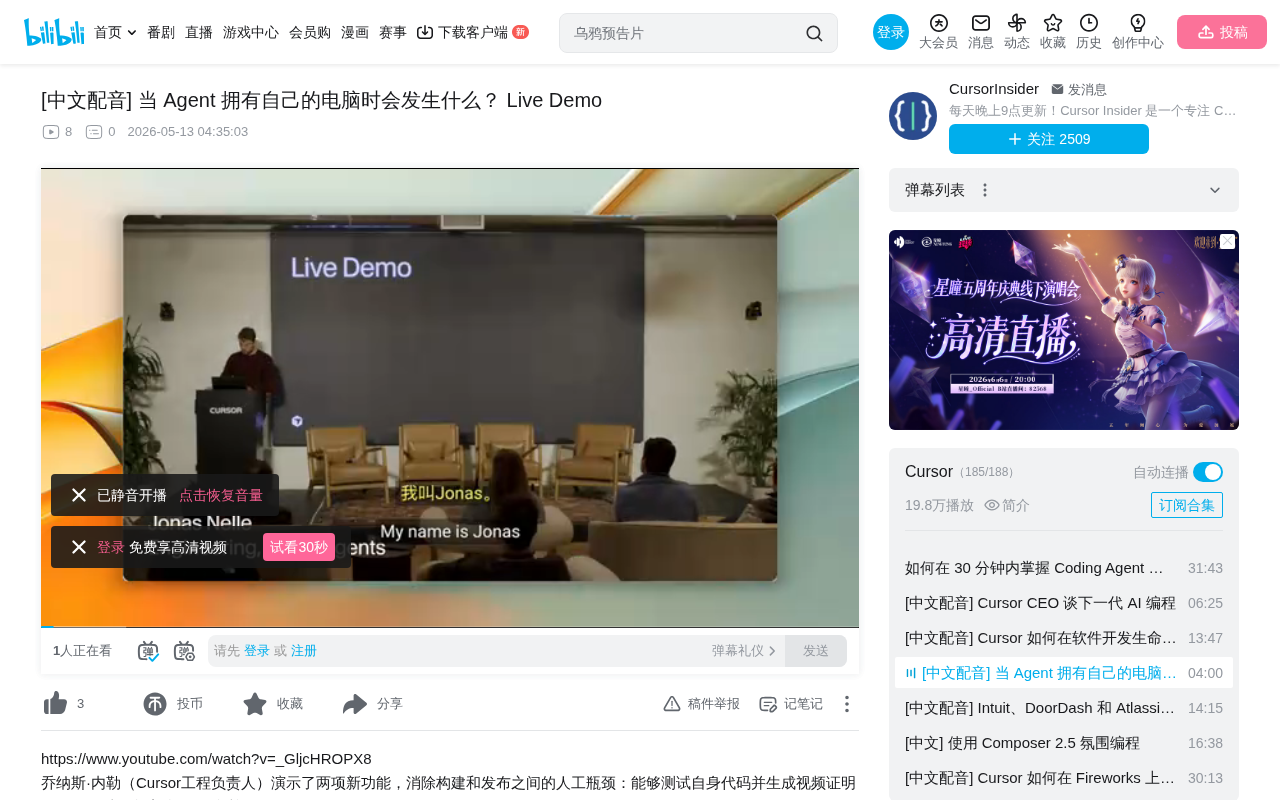
Cursor Cloud Agent Demo: Eliminating Bottlenecks Across the Entire Software Development Lifecycle
Deep analysis of Cursor's Cloud Agent demo showing how cloud VMs, automated test artifacts, and a full-chain control plane systematically eliminate human bottlenecks across the software development lifecycle.