Mercor Races Toward a $20B Valuation: The Capital Logic Behind the AI Data Labeling Race

Mercor's valuation nearly doubles to $20B, spotlighting the capital logic of the AI data labeling race.
AI talent and data labeling platform Mercor is in talks for a $20B valuation, nearly double its $10B mark from months earlier. This article unpacks Mercor's RLHF-driven business model, its competition with Scale AI, the disruptive threat of synthetic data, and the classic 'sell shovels' investment logic behind the surge.
Mercor's Valuation Doubles in Three Months: The Capital Frenzy Around AI Data Services
According to the latest reports, Mercor — an AI talent and data labeling platform — is in talks for a new funding round targeting a valuation as high as $20 billion. This figure represents a near-doubling from the $10 billion valuation it had just reached this past October — and this leap took place in the span of only a few months.
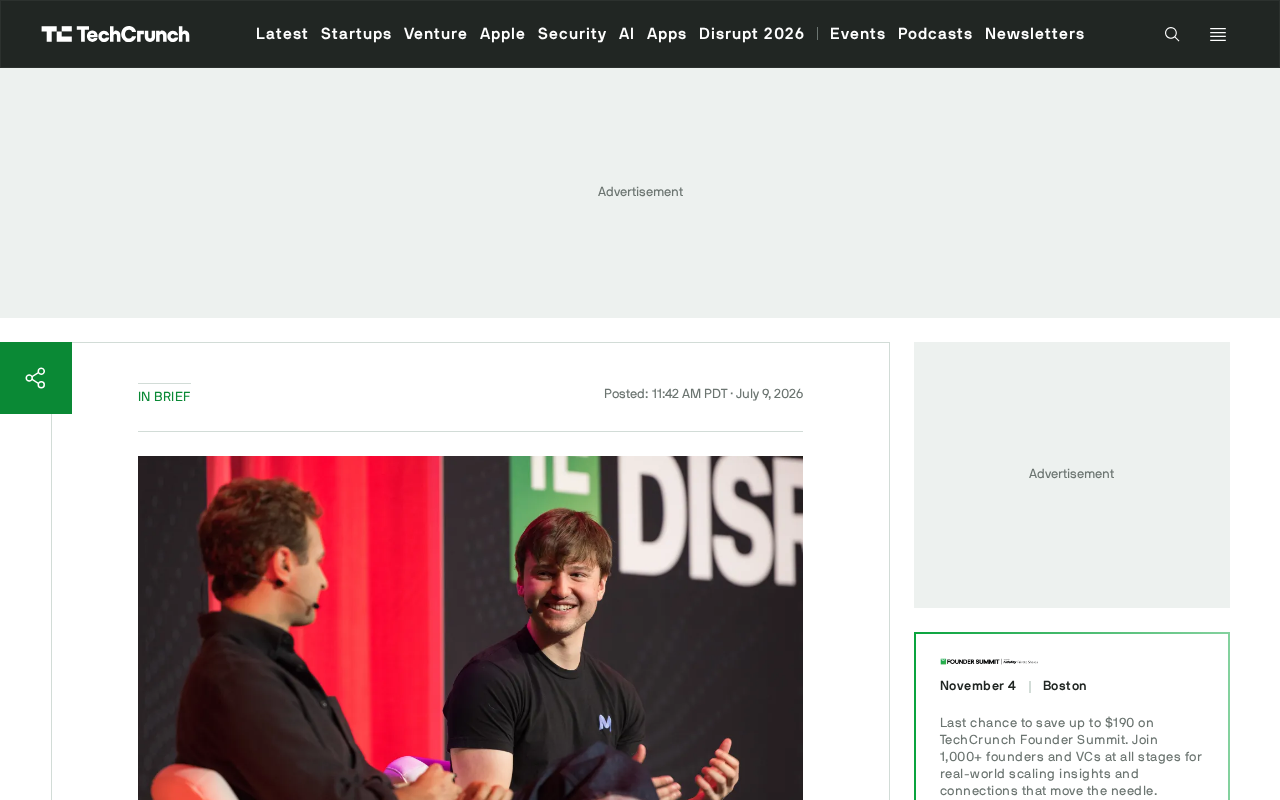
For a relatively young company, this pace of valuation growth is itself a powerful signal: the capital markets' enthusiasm for the "AI training data supply chain" has reached unprecedented heights. As the arms race among large models gradually shifts from a contest of compute power to a battle over data quality and expert annotation, platforms like Mercor that connect top-tier talent with AI labs are positioned at the very center of the storm.
What Business Is Mercor In?
From a Recruiting Platform to an AI Data Engine
Mercor began as an AI-driven recruitment matching service, using algorithms to help companies efficiently screen and evaluate candidates. But what truly sent its valuation soaring was its pivot into one of today's hottest fields — providing high-quality expert data annotation and evaluation services to frontier AI labs.
As models like GPT, Claude, and Gemini approach human-level capabilities, simple crowdsourced labeling can no longer meet training needs. What the labs require are genuine domain experts: doctors, lawyers, programmers, mathematicians, and financial analysts who can provide professional-grade judgment, correction, and demonstration for model outputs. What Mercor has built is precisely such a bridge connecting professional talent worldwide with AI companies.
RLHF: Turning Human Feedback Into Fuel for Model Evolution
The key to understanding Mercor's business value lies in understanding the core training paradigm of Reinforcement Learning from Human Feedback (RLHF). The basic logic of RLHF is this: human evaluators rank or score a model's various outputs, and these preference signals are used to train a "reward model," which then serves as the benchmark for fine-tuning the language model itself via reinforcement learning. The "obedient" and "helpful" qualities of products like ChatGPT and Claude are, to a large extent, the products of RLHF training.
However, the quality ceiling of RLHF depends entirely on the expertise of the annotators — when models begin tackling advanced mathematical proofs, medical diagnoses, or legal analyses, ordinary crowd workers can no longer provide effective feedback, and genuine domain experts must be brought in. It is precisely this structural demand that forms the fundamental source of business value for expert-annotation platforms like Mercor. When leading labs such as OpenAI and Anthropic invest billions of dollars each year in model training, a substantial portion of that budget flows into this human feedback loop.
Why Can AI Data Labeling Support Such a High Valuation?
The underlying business logic is not complicated. As a key hub in the RLHF supply chain, Mercor directly benefits from the capital expansion of the entire AI industry. In other words, Mercor isn't selling models — it's selling "the raw material that makes models smarter." The ceiling of this business is essentially equivalent to the ceiling of the entire large-model industry.
The Hidden Concerns Behind the Valuation Surge
The Competitive Landscape: Scale AI and Other Players in the Race
A valuation doubling in three months is impressive, but the competitive pressure Mercor faces cannot be ignored either. Scale AI is the most representative competitor in this space. Founded in 2016, it once reached a valuation of $13.8 billion and is one of the world's largest AI data service providers, with clients including OpenAI and the U.S. Department of Defense. Unlike Scale AI, which relies primarily on large-scale crowdsourced labor, Mercor's differentiated positioning lies in its "expert network" — recruiting and verifying highly skilled professionals to deliver more precise annotation services at a higher price point. In addition, Surge AI focuses on high-quality crowdsourcing, while Labelbox, Appen, and others provide platform-based tooling.
Competition in this space is essentially a contest of "talent network density" and "quality verification systems." Whether Mercor can build a deep enough moat in head-to-head competition with Scale AI is the core variable determining whether its $20 billion valuation can be realized.
Synthetic Data: A Potential Structural Disruptor
Moreover, the revenue of such companies is heavily dependent on the continued investment of a handful of leading AI labs, and a deeper technical risk is beginning to loom — the rise of synthetic data.
Synthetic data refers to training data generated by AI models themselves or by dedicated algorithms, rather than derived from real human behavior or expert annotation. In recent years, synthetic data techniques represented by methods such as self-play, model distillation, and procedural generation have matured rapidly. Labs such as DeepMind, Meta, and Mistral have demonstrated across multiple benchmarks that high-quality synthetic data can significantly reduce reliance on manual annotation.
This trend poses a real long-term risk to Mercor: if synthetic data continues to break through in quality and scale, the market size for expert manual annotation could gradually recede from being the "core supply" to a "fine-tuning supplement." The current industry consensus is that in domains involving reasoning, creativity, and high specialization, the irreplaceability of human experts will persist for several more years — but the length of this window is a strategic question that all data service providers must confront.
The "Selling Shovels" Logic of the AI Industry: Historical Origins and Real-World Limits
From an investment perspective, Mercor represents a classic "sell shovels during a gold rush" strategy. The historical prototype of this framework comes from the 19th-century California Gold Rush: those who truly made money were often not the prospectors but the merchants who sold them tools, food, and services — the most famous case being Levi Strauss, who amassed great wealth by selling jeans. This logic has been repeatedly validated in tech investing — during the dot-com bubble, infrastructure providers like Cisco and Oracle outlasted most internet applications; in the cloud computing era, AWS became profitable far earlier than the vast majority of SaaS applications.
At a time when the commercialization prospects of large models remain unclear and most AI applications continue to burn cash, companies that provide infrastructure and services to AI firms enjoy a clearer, more stable source of revenue. This explains the deeper reason capital is willing to grant such a high premium: investing in Mercor is essentially a bet on the long-term prosperity of the entire AI industry, without having to wager on the success or failure of any specific model or application.
However, the "sell shovels" strategy is not a foolproof insurance policy. For Mercor, this logic holds only on the premise that AI training's demand for expert data will grow rapidly over the long term; once the technical trajectory shifts toward synthetic data or self-training via reinforcement learning, the value of the "shovels" will be repriced accordingly. And when shovel suppliers become overcrowded, they too can fall into cutthroat competition.
Revaluing the Data Supply Chain
Mercor's valuation leap from $10 billion to $20 billion is not merely the success story of one company — it reflects profound changes in the AI industry's value chain. While attention is focused on the most dazzling large models and star applications, the data service providers quietly supporting model training are becoming the most certain value anchors in the eyes of capital.
The core question for the future is this: as AI technology continues to evolve, will the role of human experts in the data supply chain strengthen or weaken? Can Mercor hold onto its core value amid the rising tide of synthetic data? Will RLHF's dependence on expert talent diminish as model capabilities improve? The answers to these questions will determine whether this round of valuation frenzy is a rational discovery of value — or yet another market bubble waiting for time to deflate.
Key Takeaways
Related articles

Felix Rieseberg Personal Homepage
Felix Rieseberg's personal homepage sparks attention on Hacker News. This article covers the Slack engineer's technical background, the rise and fall of nativefier, and the value of a developer homepage as a tech calling card.

@ai-sdk/vue 3.0.306 Patch Release Syncs with [email protected] Update
@ai-sdk/vue 3.0.306 released, synced with [email protected]. A routine patch release for the Vercel AI SDK ecosystem with no public API changes; the Vue adapter layer stays version-aligned with the core package.

Gemini 4 Argon API Launches: The Era of Million-Token Output Begins
Google launches Gemini 4 Argon with sparse MoE architecture, up to 1M output tokens, and a 68.90% Vals Index score, available across API, AI Studio, and the Gemini app.