Meta Quietly Revises Terms: AI Training Data Scraping Controversy Resurfaces

Meta removed disputed AI training data language from its business terms after controversy, highlighting platform data compliance dilemmas.
Meta added language to its business terms about acquiring data from business domains and external URLs for AI training, raising concerns among legal experts and news organizations about unauthorized content scraping. Under public and legal pressure, Meta removed the disputed wording but stressed that its crawler policy remains unchanged and that the relevant terms apply only to advertising products and professional services. The incident reflects the widespread tension between transparency in AI training data sources and the ambiguity of platform terms, and reminds content creators to watch for subtle changes in platform terms that may involve significant data rights arrangements.
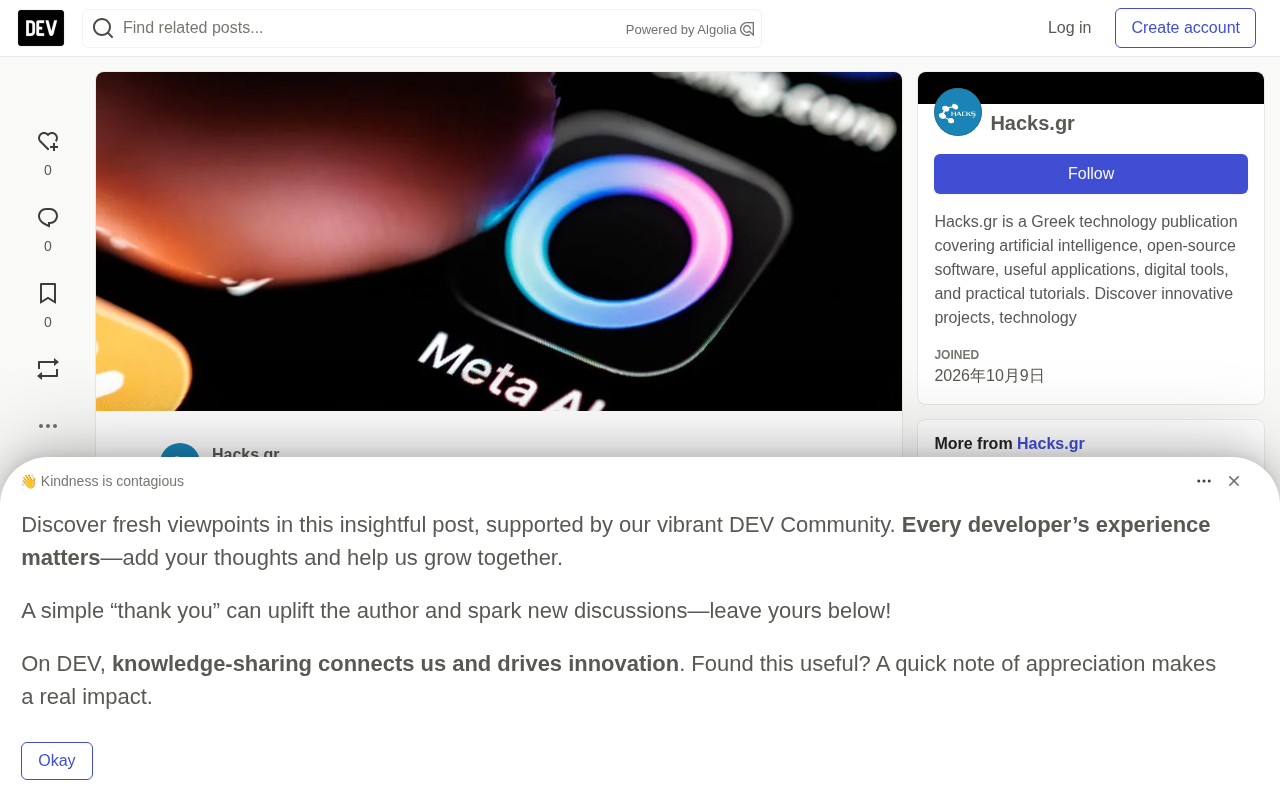
Meta recently made what appeared to be a technical change to its business terms, but it unexpectedly reignited a new round of debate over the legality of AI training data sources. At the heart of the controversy: whether the platform incorporated content from third-party websites with business accounts into its AI training corpus without explicit permission.
How the Terms Change Unfolded
According to Hacks.gr, Meta added language to its updated business terms about acquiring data from business domains and external URLs for AI training. The wording quickly caught the attention of legal professionals—lawyers pointed out that the clause left room for Meta to scrape content from news websites that hold business accounts.
Under public pressure and legal scrutiny, Meta ultimately removed the disputed language. A company spokesperson later clarified that the relevant terms apply only to advertising products and professional services, and stressed that this does not mean Meta has changed its overall approach to scanning the internet.
The Relationship Between Web Crawlers and AI Training Data
A web crawler is a program that automatically browses the internet and scrapes web page content, and it is one of the primary means by which large language models acquire training corpora. A considerable share of the training data for models such as GPT-3 and LLaMA comes from large-scale scraping of public web pages. The problem is that "publicly accessible" does not equal "freely usable for AI training"—the robots.txt protocol, website terms of service, and copyright law together form a gray area. Companies such as Meta and Google typically assert the legality of scraping based on authorization clauses in their own terms of service, so any change in wording about the scope of data sources in those terms is interpreted as a substantive expansion or contraction of scraping boundaries.
Why a Single Clause Sparked Such a Strong Reaction
This is not an isolated incident. In recent years, legal battles between publishers and tech giants over the use of intellectual property have intensified. Meta won a similar lawsuit in June 2025, but that did not dispel questions about the boundaries of its data acquisition.
The sensitivity of the issue lies in this: when a platform simultaneously plays the dual role of "business service provider" and "AI model trainer," any ambiguity in its terms may be read as a signal of expanding the scope of data collection. News organizations are especially concerned that their content could be indirectly used, through business accounts, to train competitors' AI systems.
Background on Copyright Lawsuits Between Publishers and AI Companies
Since 2023, cases including The New York Times suing OpenAI and Microsoft, Getty Images suing Stability AI, and multiple news organizations jointly suing Google have formed an escalating legal battle between publishers and AI companies. The core issues in these lawsuits include whether AI training constitutes "fair use," whether scraping violates website terms of service, and whether AI-generated content constitutes substitutive competition for original works. The similar lawsuit Meta won in June 2025 did not establish a universal precedent, and courts in different jurisdictions still disagree on what counts as fair use. Against this backdrop, any wording in Meta's business terms involving "business domains" or "external URLs" may be seen by publishers as a tentative move to hedge litigation risk.
"Removal" Does Not Equal "Change": Reading Meta's Position
Meta's response strategy is worth examining. On one hand, the company quickly withdrew the disputed wording; on the other, it explicitly stated that its crawling policy had not substantively changed. This statement conveys two messages: first, an acknowledgment that the terms wording may have been misleading; second, a insistence that its existing data scraping practices are compliant.
From a product experience perspective, this approach of "changing the wording but not the behavior" reflects the typical response pattern of tech companies facing regulatory and public pressure—maintaining business continuity as much as possible within the range of controllable legal risk.
Implications for Data Compliance in the AI Industry
This incident reflects the widespread predicament of transparency in AI training data sources. Most large tech companies rely on web crawlers to obtain massive amounts of text, but their public terms are often vague. Meta's terms controversy this time may prompt more companies to re-examine the boundaries of data-use wording in their own terms of service.
For content creators and publishers who rely on platform traffic, this is a reminder that they need to pay closer attention to subtle changes in platform terms—a seemingly inconspicuous wording adjustment may involve significant data rights arrangements.
Regulatory Trends in AI Training Data Transparency
The EU AI Act requires providers of general-purpose AI models to disclose a summary of their training data sources, and the U.S. Copyright Office has repeatedly issued reports and sought public comments on AI training data issues. At the same time, data provenance technologies and content licensing markets (such as News Corp's content licensing agreements) are emerging, attempting to establish an auditable intermediate layer between scraping and licensing. Meta's terms controversy shows that vague authorization based solely on terms of service is increasingly difficult to defend against regulatory scrutiny and public pressure, and the industry is being forced to transition toward clearer data source declarations and licensing mechanisms.
Conclusion
The act of Meta removing the disputed clause is not complicated in itself, but it reveals a deeper problem: against the backdrop of surging demand for AI training data, there is still a lack of a clear balancing mechanism between the ambiguity of platform terms and the protection of content owners' rights. This terms controversy may be only the prelude to a larger-scale contest.
Related articles

Chain of Thought Isn't Just for AI: How Humans Can Use CoT to Improve Thinking Quality
Chain of Thought isn't just a prompt trick for large models. Starting from a Hacker News discussion, this article analyzes why CoT works for human thinking too, breaks down actionable ways to transfer it, and highlights the key differences between human CoT and machine CoT.
Cloudflare Teams Up with OpenAI: Closi…
Cloudflare Teams Up with OpenAI: Closing the Loop from Vulnerability Discovery to Defense with AI
Cloudflare uses OpenAI Daybreak to investigate security vulnerabilities and generate reviewable remediation plans, while developers use Codex to boost coding efficiency and quality.

Orca Multi-Agent Orchestration in Practice: A Guide to Parallel Collaboration with Claude and Codex
Orca is Stable AI's free open-source agent workbench supporting 34 agents like Claude Code and Codex in parallel. Learn its Git worktree isolation, multi-model orchestration, and mobile management.