Meta's Latest Model Lands on Foundry, Giving Developers and Enterprises More Flexible Choices

Meta's latest model lands on Foundry, adding model choices for developers and enterprises.
Meta's latest-generation model is now available on the Foundry hosting and distribution platform, which the company says gives developers and enterprises more choices and flexibility. Platform hosting can reduce inference setup and operations costs, especially for smaller teams lacking MLOps staff. Key details remain undisclosed, including model version, open-source synchronization, hosted fine-tuning, and pricing.
Event Overview
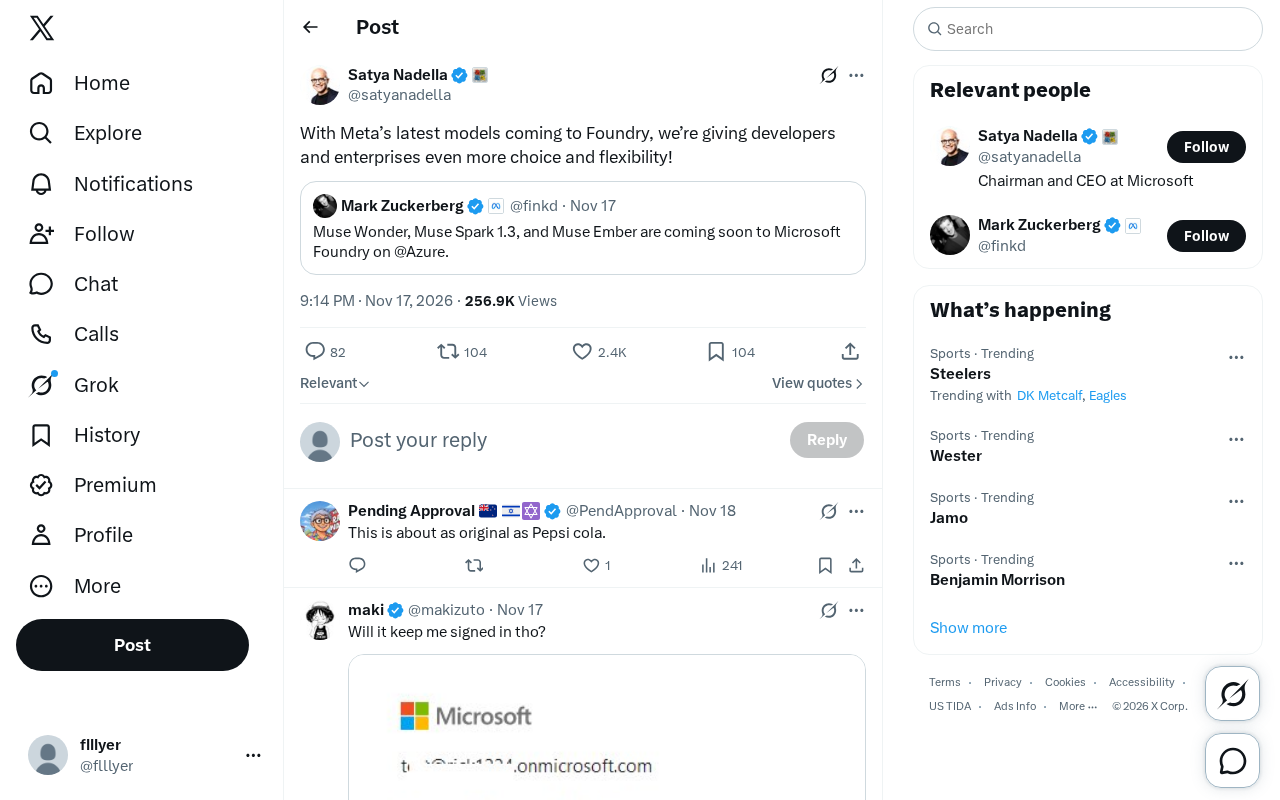
According to an official Twitter announcement, Meta's latest-generation model is now available on the Foundry platform. The move is described officially as "providing developers and enterprises with more choices and flexibility." Although the tweet did not disclose the specific model version, parameter scale, or integration method, "latest model" typically refers to Meta's recently iterated large model series, while Foundry, as a model hosting and distribution platform, plays the role of lowering the barrier for enterprises to access frontier models.
From an industry perspective, the combination of model capabilities and distribution channels is becoming a competitive focal point. Meta expands its ecosystem influence through open model weights and third-party platform partnerships, while Foundry enriches its service matrix by bringing in leading models. For developers, this means one more option from Meta when selecting models, and potentially a reduced burden of self-deployment and operations.
Foundry platform in this context refers to a category of enterprise-oriented model hosting and distribution platforms (such as Microsoft Azure AI Foundry) whose core function is to provide developers with a unified entry point to invoke, evaluate, and manage frontier models from multiple model providers without building inference infrastructure themselves. Such platforms typically integrate a model catalog, inference APIs, fine-tuning tools, evaluation benchmarks, and version management, billed by token or subscription. For enterprises, the value lies in shifting model acquisition from "self-built deployment" to "on-demand invocation," while enabling horizontal comparison of multiple models within the same interface. Understanding this role helps assess what conveniences developers actually gain from Meta's model integration and what platform terms constrain them.
Practical Impact on Developers
The most direct value of a model landing on Foundry is integration convenience. Developers can invoke Meta's latest model capabilities through the platform without building an inference environment from scratch. This is especially friendly to small and medium-sized teams—they often lack dedicated MLOps personnel but want to quickly validate product prototypes.
However, the tweet did not clarify whether the Meta model on Foundry is synchronized with the open-source version, whether hosted fine-tuning is offered, or what the pricing strategy is. These details will determine the quality of the actual experience. If the platform can provide evaluation tools and version management alongside the model, developers' migration costs will be further reduced; conversely, if it is merely simple hosting, differentiation will be limited.
MLOps (machine learning operations) refers to a full set of engineering practices covering model training, deployment, monitoring, version iteration, and resource scheduling. For small and medium-sized teams, building MLOps in-house means handling a large amount of non-core business work such as GPU resource orchestration, inference service scaling, model update rollback, and logging and latency monitoring—labor costs often exceed the model invocation itself. Hosted platforms encapsulate these steps into out-of-the-box services, so teams only need to focus on prompt design and business integration. Therefore, "whether it reduces MLOps burden" is a key dimension for evaluating the value of such integration—if the platform only provides inference APIs without monitoring, fine-tuning, and version management, teams still need to build peripheral engineering themselves, and the convenience will be diminished.
Enterprise Market Selection Logic
The official emphasis on "more choices and flexibility" hits the core demand of enterprises procuring AI capabilities. A single model provider easily brings lock-in risk, and enterprises prefer to mix and switch among multiple models. After Foundry introduces Meta models, enterprises can compare the performance of different models on specific tasks on the same platform before deciding on production environment usage strategies.
From the perspective of compliance and data sovereignty, enterprises also need to pay attention to model hosting location, data processing terms, and whether private deployment is supported. None of this information is covered in the original material, and teams interested in this should confirm directly with the platform provider.
Vendor lock-in refers to the risk that after an enterprise becomes overly dependent on a single vendor, migration costs become high and bargaining power declines. In AI model procurement, lock-in can come from three aspects: proprietary interfaces and data formats of model APIs, fine-tuning and prompt engineering assets built around a specific model, and billing and compliance binding at the platform level. Multi-model platforms reduce the first two risks through unified interface abstraction, enabling enterprises to dynamically switch models at the task level. But note that if the platform itself becomes a new aggregation layer, the lock-in risk is merely transferred from the model provider to the platform provider. Therefore, enterprises should also pay attention to the degree of interface standardization and data exportability when evaluating.
Signals of Ecosystem Competition
Meta pushing its latest model to a third-party distribution platform reflects the cooperative-competitive relationship between model providers and platforms. On one hand, model providers want to expand reach; on the other hand, platforms enhance stickiness by aggregating multiple models. For the developer ecosystem, this trend is generally positive—more choices, price competition, and increasingly standardized toolchains.
It is currently unclear whether the partnership is exclusive or whether it covers all of Meta's latest models. If more model vendors follow with similar partnerships, Foundry could become a hub-type platform for model distribution.
Points to Watch
- Which specific Meta models are integrated, and what their version numbers and capability boundaries are;
- Whether the platform provides weights and licenses consistent with the open-source version;
- Pricing model (token-based billing, subscription, or hybrid) and free quota;
- Whether it supports common enterprise workflows such as fine-tuning and RAG;
- Details of data privacy and compliance terms.
Until more information is disclosed, developers can treat this as an option worth watching, but should not make migration decisions prematurely.
One-line Summary
Meta's latest model lands on Foundry, adding model choices for developers and enterprises, with specific integration details still to be disclosed.
Paragraph Summary
Meta's latest-generation model has been integrated into the Foundry model hosting and distribution platform, which the company says provides developers and enterprises with more choices and flexibility. For developers, platform hosting can save the cost of building and operating inference environments, especially benefiting small and medium-sized teams lacking MLOps personnel; however, the tweet did not disclose the specific model version, whether it is synchronized with the open-source version, whether hosted fine-tuning is supported, or the pricing strategy—details that will determine the actual experience. For enterprises, comparing multiple models on the same platform can reduce vendor lock-in risk, but hosting location, data processing terms, and private deployment capabilities still need to be confirmed with the platform provider. The move also reflects the cooperative-competitive trend of model providers expanding reach and platforms aggregating multiple models to enhance stickiness; whether the partnership is exclusive and how broad its coverage is remain worth watching.
Related articles

Michael Nielsen Takes Down His Classic Neural Network Textbook, Sparking Community Discussion
Michael Nielsen's classic free textbook Neural Networks and Deep Learning has been taken offline, sparking discussion on Hacker News about the reasons and impact.

Inside the AI Training Data Market: The Trade-off Between Exclusivity and Discounts
G2i founder Gabe Greenberg reveals the dual-track pricing of the AI training data market: labs pay a premium for exclusive data or accept discounts that allow others to buy it.

SessionGraph: Unifying All Coding Agent Sessions in One Interactive Graph
SessionGraph aggregates coding agent sessions into an interactive graph, helping developers review, debug, and manage AI coding workflows across sessions. This article examines its positioning, value, and open questions.