Meta's Strongest AI Model Stays Out of the API: You Need the $50 Muse Code Subscription to Use It

Meta's strongest model Muse Wonder Full is subscription-only, with weaker versions in the API, as models become agent feature modules.
Meta simultaneously released Muse Wonder Full and Muse Wonder, but locked the strongest one inside its own agent subscription Muse Code, starting at $50/month, with no access via the Meta Model API. The API-accessible Muse Wonder is priced the same as Claude Opus 5.5 ($4/$20 per million tokens) yet loses 9 of 14 benchmarks on Meta's own scorecard, with an independent score of 52 versus Opus 5.5's 58. The article argues this reflects an industry trend: models are shifting from open API resources to exclusive benefits of agent subscriptions, where choosing an agent means simultaneously choosing model, plan, sandbox, and billing. The recommended response is to keep agents replaceable—run them in parallel with separate logins and worktrees, and switch freely.
Meta's Strongest AI Model Stays Out of the API: You Need the $50 Muse Code Subscription to Use It
Meta released two frontier models at once, but developers can only call the weaker one. According to TechCrunch, Meta's official product page, and independent evaluations from Artificial Analysis, Meta's Muse Wonder Full, launched on Monday, October 12, is the best-performing model on its own scorecard—yet it's restricted to Muse Code subscribers. Meanwhile, the Muse Wonder available in the API loses to the similarly priced Claude Opus 5.5 in 9 out of Meta's own 14 benchmark comparisons.
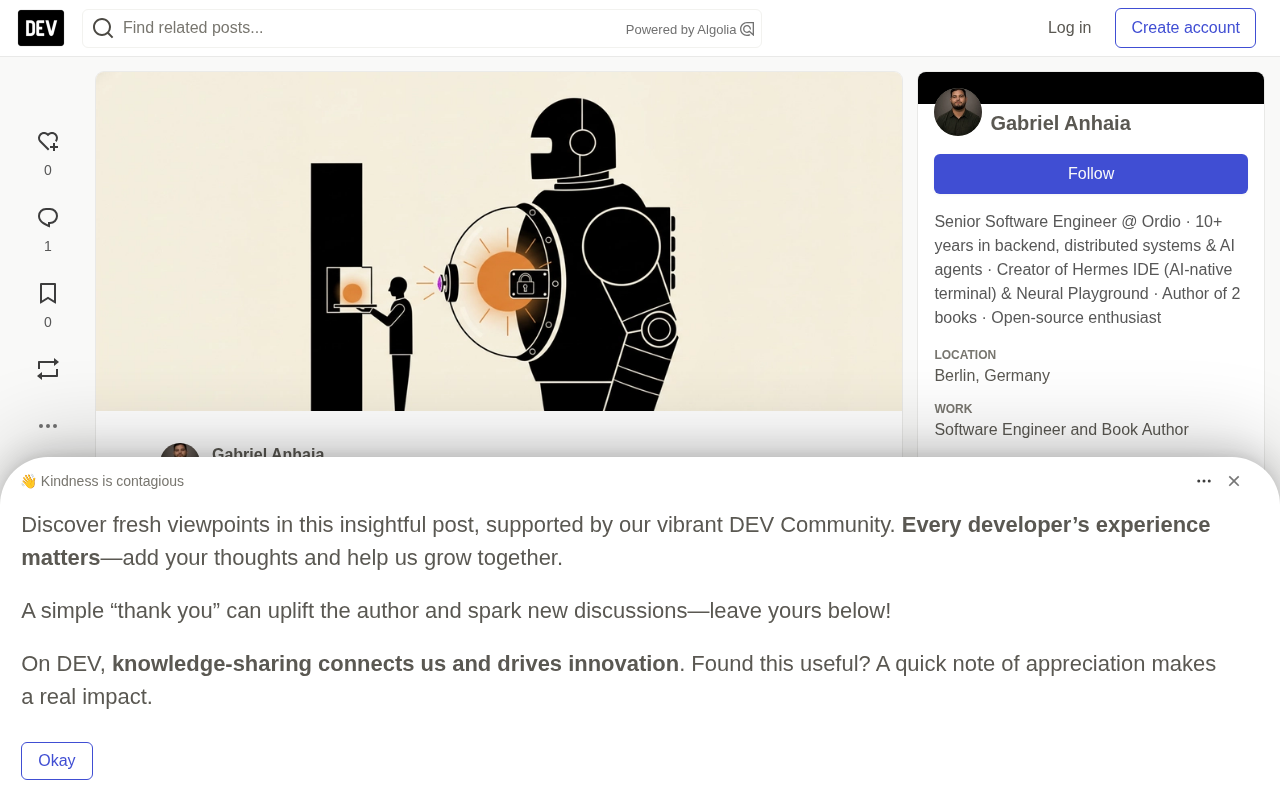
Two Models, Two Doors
Meta's strategy with this release is simple: keep the strongest model inside its own agent product. Muse Wonder Full scores 59.1 on Meta's Personal Superintelligence Index, leading all models; the API-accessible Muse Wonder only scores 54.3, trailing not just Opus 5.5 (55.2) but also GPT-6 Astra (54.5).
On pricing, Muse Wonder is listed in the Meta Model API at $4 per million input tokens and $20 per million output tokens—exactly matching Claude Opus 5.5. But on the Artificial Analysis Intelligence Index, Muse Wonder scores 52 while Opus 5.5 scores 58. For the same money, independent evaluations show you're buying a weaker model.
To use Wonder Full, you need a Muse Code subscription, starting at $50/month for the Power Usage tier and going up to $200/month for the Maximum Usage tier.
Personal Superintelligence Index is a proprietary evaluation system Meta introduced alongside the Muse series. According to its official description, the index scores personal assistant and agent scenarios across dimensions like reasoning, long-context throughput, tool calling, and coding tasks, using Meta's internal prompts and tool frameworks. It's worth noting that vendor-built indices like this are not industry-standard benchmarks—their questions, weights, and runtime environments aren't fully disclosed. So the scores are better suited for horizontal comparison of generational differences within Meta's own models, rather than being directly compared against third-party leaderboards like Artificial Analysis. Artificial Analysis Intelligence Index, on the other hand, is a public leaderboard maintained by the independent evaluation firm Artificial Analysis, aggregating multiple standardized benchmarks under unified inference configurations and covering around 200+ models. It's commonly used for cross-vendor comparisons. The different methodologies explain why the same model can show considerable score gaps across the two leaderboards—one reason Muse Wonder appears as "54.3 on Meta's own, 52 on independent" in the original text.
Breaking It Down: Muse Wonder's Strengths and Weaknesses
In Meta's own 14-row comparison, Muse Wonder wins 5 rows and loses 9, while Wonder Full wins 8 and loses 6. Looking row by row reveals some interesting splits.
Muse Wonder beats Opus 5.5 on DeepSWE 1.1 with 78.8 to 74.2, and leads significantly on the Harvey legal agent benchmark LAB-AA with 10.0 to 4.2. It also takes SWE-Marathon at 53.1 to 46.3. But Meta itself notes in its model card that SWE-Marathon is not a controlled, isomorphic comparison. At launch, Muse Wonder was ranked 9th out of 219 models by Artificial Analysis—frontier-class.
The problem is the pricing strategy. Meta's Alexandr Wang told Handy AI that API pricing would be "significantly lower" than competitors. That claim holds against Claude Fable 5.1's pricing of $10/$50 per million tokens, but not against Opus 5.5.
SWE-Marathon and DeepSWE 1.1, recurring throughout the text, are both benchmarks oriented toward software engineering agents. SWE-Marathon's focus isn't on single fixes but on pushing agents through long-horizon, multi-step task chains—like cross-file refactoring, continuous iteration until tests pass—making it closer to "long-horizon coding" capability than one-shot patch correctness. DeepSWE 1.1 is an updated version of the DeepSWE series, mainly assessing engineering task completion in multi-repo, multi-dependency scenarios. Like vertical-domain benchmarks such as Harvey LAB-AA, both rely on a specific execution environment, toolset, and scoring script. Meta's note in the model card that SWE-Marathon is "not a controlled, isomorphic comparison" refers precisely to the fact that different vendors may use different agent frameworks, tool counts, retry counts, and reasoning effort when running the benchmark—scores can't simply be treated as equivalent comparisons of raw model capability.
Models Are Becoming Feature Modules of Agents
Meta's release reflects a larger industry trend: in the past, labs released models, models entered APIs, and developers chose their own tools. Editors, agents, and scripts were all doors to the same room.
Wonder Full not entering the API means Meta's strongest model has become a feature of Meta's own agent. You can't choose the model separately—you have to choose Muse Code, pay for the subscription, and the model comes with it. Claude Code is already tied to Claude plans, Codex to ChatGPT plans, and Meta goes further: the strongest model exists only inside the bundle.
So choosing an agent now means choosing an entire set of constraints: which models you can reach, which plan and its usage caps, what sandbox and approval model you work under, and who gets the bill.
There's a reasonable inference for why Meta did this: the model card explicitly states performance "varies with quantization, serving configuration, prompts, tools, and agent framework." If the framework itself affects scores, keeping the strongest model only within your own framework is one way to control the results users see.
Reasoning effort is an adjustable parameter widely introduced in recent frontier models, typically divided into low, medium, high, xhigh tiers. Higher tiers mean the model generates longer internal chains of thought before responding, consuming more output tokens and introducing higher latency, but generally scoring better on complex reasoning and long-horizon tasks. The same model can differ by several percentage points on benchmarks across different tiers. This is why the original text emphasizes that "Wonder Full's data used xhigh reasoning effort": if the two sides being compared weren't run at the same tier, score differences may partly stem from configuration rather than the model itself. Additionally, quantization refers to compressing model weights from high precision to low precision to reduce inference costs, usually accompanied by slight capability loss; serving configuration includes batch size, concurrency limits, context window truncation strategies, and more. Together these factors form variables that vendors can more easily control within their own agents—and they're the technically reasonable motivation behind the strategy of "keeping the strongest model inside your own framework."
Is Muse Code's $50 Worth It?
To be fair, Muse Code has its own value. The product page lists built-in multi-agent coordination, parallel workers, background reviewers, cookbooks for sub-agents in isolated worktrees, and "every operation auditable." Meta also describes two model features: Active Memory carries relevant context across conversations, and Active Focus keeps trying different paths on difficult goals and confirms before critical operations.
Wonder Full performs strongest on long-horizon coding tasks: SWE-Marathon score of 57.5 vs Opus 5.5's 46.3, DeepSWE 1.1 score of 79.0 vs 74.2. But the model card warns that SWE-Marathon isn't a controlled isomorphic comparison, and Wonder Full's data used xhigh reasoning effort—this row needs to be treated cautiously.
Early feedback has been mixed. In Hacker News discussions, one commenter said Muse Code's sandbox "never worked properly on either Mac or Linux," another said they kept getting errors after paying. Others expressed enthusiasm. These are just a few comments from launch day, and the original author hasn't personally run Muse Wonder or Muse Code either.
Don't Lock Yourself Into One Agent
If models increasingly hide behind agents, the defensive strategy is to keep agents replaceable. The original article suggests: use separate logins and plans for each agent; run them in parallel on the same repo, one git worktree per task, so trying a new agent costs only a branch; when one agent hits usage limits, or a better model appears behind another agent, switch anytime.
Currently there are two paths to access Muse. One is to install Meta's own agent—the command-line tool muse installs to ~/.local/bin. The other is to point Claude Code at Meta's API by setting environment variables like ANTHROPIC_BASE_URL, ANTHROPIC_AUTH_TOKEN, and ANTHROPIC_MODEL, replacing the model ID with muse-wonder-1.0. But this path only gets you Muse Wonder—never Wonder Full.
ANTHROPIC_BASE_URL is an endpoint override environment variable supported by Anthropic's official SDK and Claude Code. Pointing it at a third-party service compatible with OpenAI or Anthropic message formats makes the client send requests to that address; ANTHROPIC_AUTH_TOKEN provides the key for the corresponding service; ANTHROPIC_MODEL specifies the actual model ID to call. Combining all three lets you switch backends without modifying Claude Code's source code—this is how "pointing Claude Code at Meta's API" is implemented. Note that this redirection depends on how well the target service is compatible with the Anthropic message protocol—tool calling, streaming responses, and system prompt handling may differ. Also, Meta only exposes Muse Wonder at the API layer, so no matter how you configure environment variables, this path can never reach Wonder Full, which exists only within the Muse Code subscription.
A Practical Approach to Multi-Agent Parallelism
The original author developed Hermes IDE, so this section should be read with that context in mind. Hermes runs each agent in a real terminal, so even CLIs it's never heard of will work. Press ⌘N (Ctrl+Shift+N on Windows and Linux), select "Custom agent," fill in the name and command. Hermes won't ask for your token—the login process happens within that terminal.
Claude Code and Codex appear as built-in agents in the same list. Each task gets a hermes/<task> branch in an independent worktree, and the three agents won't touch each other's files. When one agent hits usage limits, you can continue completing the task in another.
The limitations are also obvious: Hermes doesn't know the approval model for custom commands and has no status signals. The attention inbox can tell you when Claude Code or Codex is waiting for you, but it can't tell you the status of muse—you need to watch that terminal yourself. Hermes itself is also very young, without cloud agents or Docker isolation.
The Real Question in the Era of Subscription Consolidation
When the strongest model starts appearing only in one agent and nowhere else, "which agent do you use" becomes "which services are you subscribed to." Whether a $50/month subscription to one agent—just to use a model you can't call from your own code—is a worthwhile trade depends on whether your work happens to fall on the benchmark rows that Wonder Full wins.
The deeper issue is that vendors like Meta are turning model capability into an exclusive benefit of agent subscriptions. For developers, keeping agents interchangeable may be more important than choosing the "best" one.
Related articles

Workbuddy for Absolute Beginners: How a Desktop AI Agent Fits Into Real Workflows
A beginner's guide to the Workbuddy desktop AI agent: installation, claiming credits, file management, and building automated workflows—compared with CodeX for fit and cost, helping professionals shift from AI question-askers to AI managers.

OpenAI's New Agent Stack: Computer Use, Decisions API, and Ultra-Fast Workflows
OpenAI Dev Day unveiled a new agent stack: Computer Use outperforms humans, Decisions API delivers ultra-low-latency classification via Luna, Agents API opens the same Computer Use capabilities, and GPT-6.1 Sol costs only one-seventh of Astra. Core updates, benchmark data, and developer insights.

Liang Wenfeng Open-Sources DeepInfo Inference Framework, Takes On U.S. Ban
DeepSeek open-sources its DeepInfo inference framework after its models, featuring GPU/CPU cross-pipelining, small-model prediction with large-model verification, and full Huawei Ascend and NVIDIA chip support—facing the U.S. federal ban head-on. This article analyzes its significance for AI deployment and open-source strategy.