Michael Pollan on Consciousness: A New Perspective from Plants and Animals to the Brain

Pollan and Huberman explore consciousness through plants, body sensation, microbes, and psychedelics, challenging the brain-as-source assumption.
In this Huberman Lab episode, science writer Michael Pollan surveys the frontiers and paradoxes of consciousness research across plants, animals, microbes, and humans. Admitting that science still knows almost nothing about consciousness, he uses surprising cases — plants navigating mazes, responding to anesthetics — to challenge the assumption that consciousness requires a brain. Emerging neuroscience suggests its roots may lie in brainstem body-feeling rather than the cortex, implying far more species are conscious than previously thought. Pollan also explores the bidirectional manipulation between humans and microbiomes, the lessons of psychedelic ego dissolution, and the philosophical possibility that the brain is a receiver of consciousness rather than its source — all while maintaining a rare balance between rigor and open-minded inquiry.
Bestselling author Michael Pollan — known for How to Change Your Mind, The Botany of Desire, The Omnivore's Dilemma, and more — joined the Huberman Lab podcast to share his latest thinking on consciousness. The conversation ventured into territory that neuroscience has long avoided, weaving together the inner lives of plants, animals, microbes, and human self-awareness into a series of views that are at once humble and bold.
Why Consciousness Is So Hard to Define
Pollan opened with a frank admission: "We actually know nothing about consciousness — we don't know how the brain's physical matter gives rise to it, or even whether that's really what's happening." That statement set the tone for the entire conversation: stay open, resist premature conclusions.
He reflected on the awkward position of neuroscience. Huberman candidly admitted that as a neurobiologist he was trained to avoid the topic of consciousness altogether, because it was once "the kiss of death for an academic career" — only those who had already achieved great success and won major awards were deemed "entitled" to discuss it.
Pollan drew on a few classic definitions to home in on consciousness. The simplest is "subjective experience" — a toaster has none, and he believes AI doesn't either. Another comes from philosopher Thomas Nagel's famous essay What Is It Like to Be a Bat?: if "being something" genuinely feels like something, then it is conscious.
He further distinguished between sentience and consciousness. Sentience is the more fundamental, baseline capacity — an awareness of one's environment and the ability to register whether changes are good or bad. This may be a universal property of life. Consciousness, by contrast, is the particular way we execute that sentience; every species has its own version.
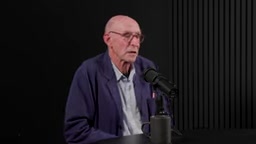
Thomas Nagel's 1974 paper What Is It Like to Be a Bat? is one of the most cited texts in the history of analytic philosophy of mind. Nagel's central argument is that even if we had complete knowledge of a bat's neurophysiology, we still could not understand from a first-person perspective what echolocation subjectively feels like — and that irreducible subjectivity is the core difficulty of consciousness. The argument directly challenged the physicalism dominant at the time, the view that mental phenomena can be fully explained in terms of physical processes. Philosopher David Chalmers later named this the "Hard Problem of Consciousness," contrasting it with the "Easy Problems" (information integration, attention allocation, and other functional issues) that neuroscience is better equipped to answer. Pollan invokes this framework to remind listeners that scientific methods currently reach only the Easy Problems, while no physical theory has yet fully explained the subjective quality of conscious experience.
Plant
Related articles

Testing the 350K-Star REA in an Isolated Environment: 4-Second Install, but Watch Out for Two Pitfalls
Isolated lab test of the 350K-star open-source reverse-engineering tool REA: 4-second install, 15 seconds to list a screenshot tool's outbound addresses, 565 communication channels mapped, while exposing two pitfalls—user-level settings writes and 31 high-risk tool permissions—plus three safety rules.
Reverse Engineering + AI Agents: The T…
Reverse Engineering + AI Agents: The Technical Truth Behind Cloning Adobe Apps in Weeks
A developer used AI Coding Agents for reverse engineering to build 7 open-source Adobe alternatives in weeks. We explore how it works, the MCP Server that hit 100K stars in 6 days, and the real technical and legal limits.
MCP Protocol Explained: How AI Agents Connect to External Tools
What is MCP (Model Context Protocol)? From APIs and Function Calling to MCP's three-layer architecture, this article explains how AI Agents connect to external tools like calendars and email, and reveals two major security risks—prompt injection and tool poisoning—along with four protection principles.