Microsoft Blasts Rival Anthropic: Could Have 'Disastrous Impact' on Humanity
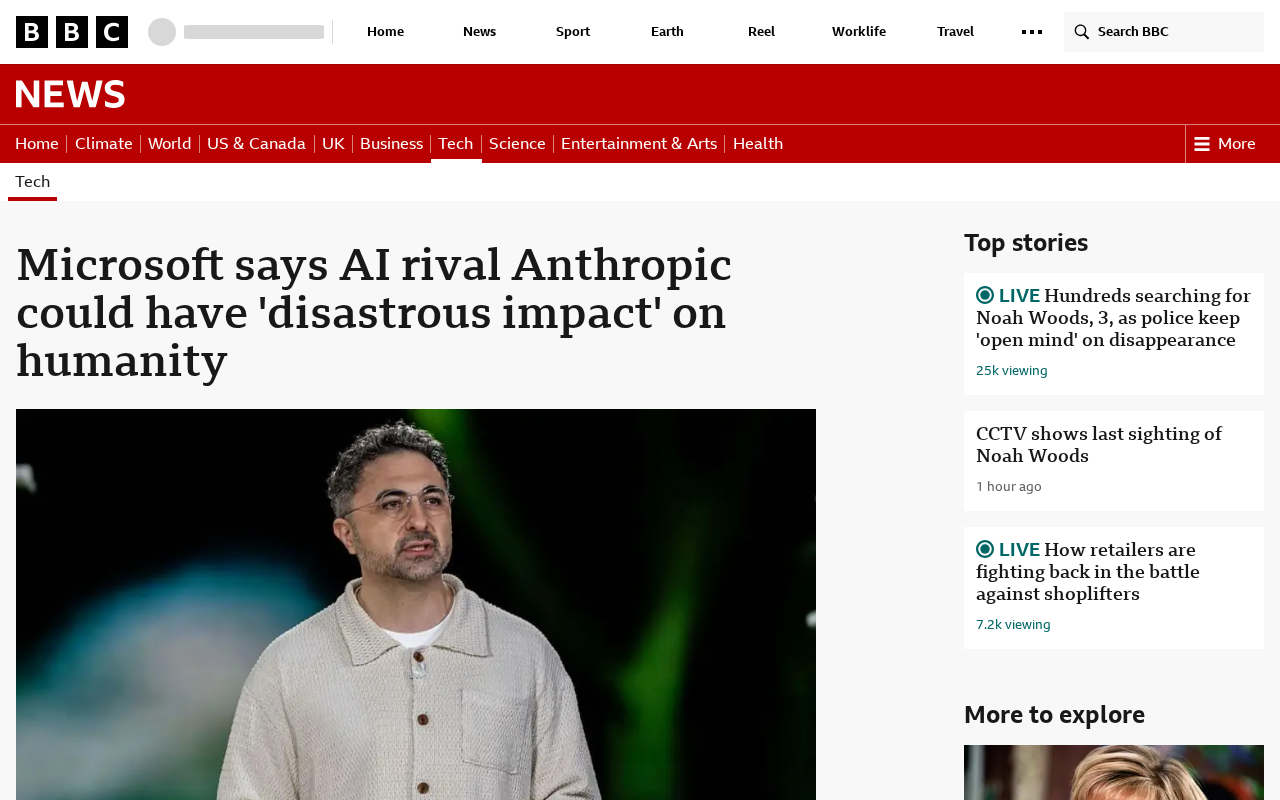
Microsoft accuses Anthropic of 'disastrous' risk, revealing how AI safety talk has become a competitive weapon.
Microsoft has publicly accused AI rival Anthropic of potentially causing a "disastrous impact" on humanity — a striking move given that Anthropic, founded by ex-OpenAI executives and backed by Amazon and Google, has built its entire brand around "safety first." Microsoft is deeply invested in OpenAI, placing the two camps in direct competition for cloud and enterprise customers. This episode exposes a core tension in the AI industry: with no unified, verifiable safety evaluation standard, "AI safety" is shifting from a technical ethics issue into a tool for competitive pressure and regulatory influence. The casual use of alarmist language may ultimately dull public awareness of genuine risks.
Microsoft and Anthropic's War of Words Escalates
Microsoft has publicly issued a stark warning against AI rival Anthropic, claiming the company's AI development path could have a "disastrous impact" on humanity. The statement quickly sparked discussion on Hacker News and other tech communities, reflecting the increasingly blurred line between safety narratives and commercial competition among AI giants.
What makes this particularly noteworthy is that Anthropic has long positioned "AI safety first" as its core brand identity. Founded by former OpenAI members, the company has consistently emphasized a responsible path to AI development. Microsoft choosing to fire back at a safety-focused competitor with high-intensity language like "disastrous impact" is, in itself, a telling signal about the state of the industry.
Anthropologic was founded in 2021 by Dario Amodei, former VP of Research at OpenAI, along with his sister Daniela Amodei and others. Its core research focus is "Interpretability" and "Constitutional AI" — constraining model behavior through a clear set of principles rather than relying solely on human feedback fine-tuning. The company has received over $4 billion from Amazon and roughly $300 million from Google, and has launched its flagship Claude model series. From day one, its brand positioning placed "safety first" at the center, earning it considerable influence in academic and policy circles. This is precisely why Microsoft's choice to attack this particular rival with "disastrous impact" language carries strategic implications far more complex than a surface-level technical critique.
How Safety Narratives Become Competitive Weapons
In today's AI competitive landscape, "safety" is no longer just a topic in tech ethics — it has gradually evolved into a rhetorical tool companies use to pressure each other and shape the regulatory environment. When one company accuses another of potentially harming humanity, what lies beneath is almost always a multi-layered struggle over market share, regulatory lobbying, and public perception.
Microsoft is deeply tied to OpenAI, having committed resources on the order of tens of billions of dollars. Anthropic, meanwhile, is backed by Amazon, Google, and other major players, making it one of the most significant challengers outside the OpenAI camp. In this kind of head-to-head dynamic, a narrative battle over "whose AI is safer" is almost an inevitable extension of commercial logic.
Microsoft and OpenAI established a deep, exclusive partnership starting in 2019, with total investment estimated at over $13 billion, integrating the GPT model series into core product lines including Azure cloud and the Copilot suite. This tight coupling means OpenAI's market performance directly affects Microsoft's cloud business growth. Anthropic's rise — especially its penetration into enterprise clients and policy circles — poses a direct threat to the OpenAI/Microsoft camp. Understanding this commercial structure is a prerequisite for decoding the real motivations behind the current "safety accusations."
The Deeper Problem This Dispute Exposes
High-profile accusations like this expose a fundamental contradiction in the AI industry that remains unresolved: how do you objectively evaluate "AI safety"? When every company claims to be the responsible party and accuses its rivals of being irresponsible, it's nearly impossible for outside observers to apply a unified, verifiable standard to determine whose claims are closer to the truth.
For regulators and the public, this situation is both a reminder and a risk. The reminder is that AI safety is genuinely a topic that deserves serious attention. The risk is that safety discourse may be co-opted as a competitive tool, diluting the conversation about real technical risks. When terms like "disastrous impact" are casually deployed in commercial spats, it may actually desensitize the public to genuine safety warnings.
The industry currently lacks a widely accepted AI safety evaluation framework. The main efforts to date include the U.S. NIST's AI Risk Management Framework (AI RMF), the UK AI Safety Institute's (AISI) model evaluation protocols, and the "Frontier Safety Commitments" developed by some leading labs. However, most of these frameworks are voluntary in nature, lack enforcement mechanisms, and vary significantly by institution. Without a unified third-party verification mechanism, inter-company "safety accusations" remain, in essence, a discourse competition that cannot be publicly falsified — and this is precisely the core manifestation of the current regulatory vacuum.
What to Watch Going Forward
This story has generated limited community discussion so far (only 10 upvotes and 5 comments on Hacker News) and has not yet evolved into a large-scale public debate. But it is a signal worth tracking: the competition among AI giants is expanding beyond pure technology and product rivalry into a contest over safety narratives and regulatory influence.
Key things to watch going forward include what specific evidence underpins Microsoft's accusations, how Anthropic will respond, and whether regulators will step in. These subsequent developments will reveal far more about where AI industry competition is truly headed than any single exchange of barbs.
Related articles
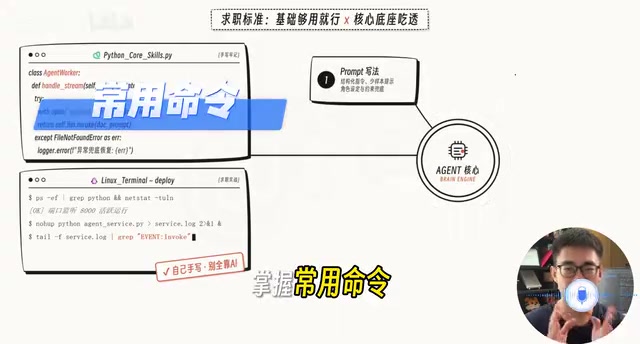
AI Agent Developer Job Hunt Guide: Four Hard Standards to Clear Before You Apply
A practical guide for landing AI Agent developer roles: four measurable standards — project runs, problems debuggable, solution explainable, interviews survivable.
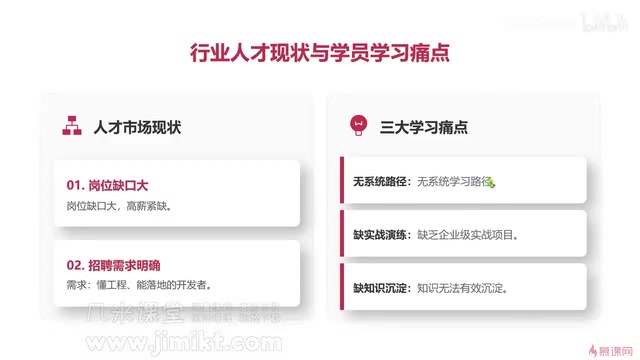
Multi-Agent Development Guide: From Monolithic AI to Team Collaboration in Practice
A beginner's guide to multi-agent development covering core advantages, common learning pain points, enterprise tech stacks, and engineering methodology for AI developers.
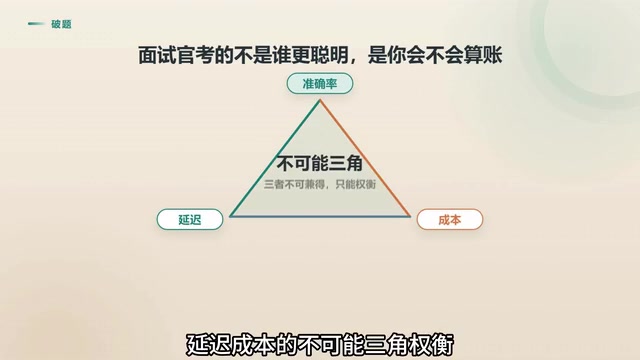
Agent Skill Routing: Retrieval vs. LLM vs. Two-Stage Architecture Compared
Retrieval or LLM for Agent skill routing? Compare coarse-filter vs. fine-select architectures on latency, accuracy, and cost — with 4 key production considerations.