Microsoft Open-Sources Flint: A Deep Dive into the AI Agent Behavior Visualization Language

Microsoft's Flint is an open-source visualization language that makes AI agent behavior transparent and debuggable.
Microsoft has open-sourced Flint, a structured visualization language designed specifically for AI agents. As agent systems grow more complex — involving multi-step reasoning, tool use, and multi-agent collaboration — traditional logs fall short. Flint adopts a "Diagram as Code" approach to render agent behavior as clear, readable visual graphs, improving observability, debugging efficiency, and team communication.
Microsoft Introduces Flint: Making AI Agent Behavior Visible
As AI agent technology advances rapidly, understanding, debugging, and monitoring these autonomously operating systems has become a core challenge for developers. Microsoft published a project called Flint on Hacker News via a "Show HN" post — a visualization language specifically designed for AI agents.
An AI agent is a software system capable of autonomously perceiving its environment, formulating plans, and executing actions to achieve goals. Unlike traditional single-turn large language models, agents operate in a "perceive-reason-act" loop, continuously interacting with their environment. A typical agent architecture consists of four core modules: Memory for storing historical context and knowledge; Planning for decomposing complex goals into subtasks; Tool Use for accessing external APIs, databases, or executing code; and Action for producing effects in the real world. This multi-module collaborative architecture is precisely what makes an agent's execution trace far harder to track than a traditional program.
This release marks a turning point where the industry begins to acknowledge a long-overlooked problem: when AI agents execute complex multi-step reasoning, invoke tools, and collaborate with other agents in the background, developers are often left staring at cryptic logs and opaque decision chains. Flint attempts to address this by providing a structured visual representation that makes these otherwise "black box" processes intuitively visible.
Why AI Agents Need a Dedicated Visualization Language
The Complexity Problem with Agent Systems
Modern AI agents are far more than simple "input-output" models. A typical agent workflow may involve task decomposition, tool invocation, memory retrieval, multi-turn reasoning, and interaction with external environments or other agents. When these steps are deeply nested and interdependent, the system's behavioral path becomes extremely difficult to trace.
In Multi-Agent Systems (MAS), inter-agent communication patterns typically fall into three categories: peer-to-peer direct messaging, indirect collaboration via a shared blackboard, and hierarchical scheduling through an orchestrator. As the number of agents grows, the combinatorial explosion of system behavior increases sharply — even if each agent behaves predictably in isolation, the emergent behavior arising from concurrent interactions can be surprising. This is precisely where visualization tools deliver value: by rendering message flows, state changes, and decision branches graphically, they help developers build an intuitive understanding of the system's overall behavior, rather than manually inferring causal chains from mountains of logs.
Developers building and debugging such systems commonly face three pain points:
- Difficulty tracing decisions: Hard to pinpoint exactly where an agent made a faulty judgment;
- Unclear collaboration relationships: No clear way to visualize interaction logic between multiple agents;
- Lack of a unified representation: No standardized way to describe and share an agent's runtime structure.
Traditional text logs capture raw information but are nearly useless for understanding high-level behavioral patterns.
From Code to Graphics: An Upgrade in Expression
Flint's core idea is to provide an abstraction at the "language" level — it's not just a visualization tool, but a specification for expressing agent behavior. This design philosophy resembles the Graphviz DOT language or Mermaid: concise syntax definitions that automatically generate clearly structured graphical representations.
The DOT language, developed at AT&T Labs, describes graphs in plain text by declaring nodes and edges, then rendered into visual graphs by the Graphviz engine. It's widely used in software architecture and flowchart design. Mermaid is its modern successor, designed for the Markdown ecosystem, supporting flowcharts, sequence diagrams, Gantt charts, and more, with native support on GitHub, Notion, and other major platforms. This "Diagram as Code" philosophy offers advantages like version-control friendliness and ease of programmatic generation. Flint borrows from this approach, applying semantic modeling specifically to agent behavior.
For AI agent development, this means developers can describe key elements — state transitions, task handoffs, and decision branches — in a unified way and render them as highly readable visual diagrams. Compared to ad-hoc visualization scripts, this "language-first" approach offers much stronger consistency and reusability.
Flint's Core Value and Use Cases
Improving Debugging Efficiency and Observability
Observability is becoming indispensable in the AI agent development lifecycle. Originating from control theory and later adopted in distributed systems engineering, observability in traditional software engineering is built on three pillars: Logs, Metrics, and Traces. However, the observability requirements of AI agent systems go far beyond traditional software — their behavior is shaped not just by code logic, but by the dynamic influence of model reasoning, contextual state, and tool return values. This makes traditional APM (Application Performance Monitoring) tools difficult to apply directly, and has given rise to AI-specific observability platforms like LangSmith and Arize AI. Flint can serve as a key component in this toolchain, allowing developers to quickly reconstruct an agent's execution trace through visual diagrams at runtime or during post-mortem review, dramatically reducing debugging time.
This is especially pronounced in multi-agent systems. When multiple agents execute concurrently and pass messages to each other, logs alone are nearly incapable of reconstructing the full picture. With Flint, teams can clearly see how messages flow between agents and precisely identify bottlenecks or anomalies.
Reducing Team Communication Overhead
Another key value of a visualization language is eliminating communication barriers. When technical teams need to explain the inner workings of a complex agent system to product managers, business stakeholders, or cross-functional engineers, a well-structured diagram is far more persuasive than paragraphs of text. Flint has the potential to become the "common language" for describing AI agent architectures — both within teams and across organizational boundaries.
Microsoft's Strategic Play: From Frameworks to Toolchains
Notably, Flint comes from Microsoft. As a tech giant with deep and ongoing investment in AI, Microsoft has made significant strides in agent frameworks in recent years, building a relatively complete agent development ecosystem.
AutoGen, introduced by Microsoft Research in 2023, is a multi-agent conversation framework whose core innovation allows multiple agents with distinct roles to collaborate on tasks through structured dialogue, with support for a human-in-the-loop mechanism. It has become one of the most widely followed multi-agent frameworks in both academia and industry. Semantic Kernel is positioned as an enterprise-grade agent development SDK, offering plugin-based tool integration, a Planner abstraction, and a memory layer, deeply integrated with Microsoft Azure OpenAI services and primarily targeting .NET and Python developers. Together, these form the backbone of Microsoft's agent technology stack, and Flint — as a visualization layer complement — is poised to play an important role in debugging and documentation within this ecosystem.
Flint's emergence can be seen as an extension of this ecosystem along the dimensions of observability and developer experience. By open-sourcing this tool, Microsoft advances the standardization of AI agent development paradigms while further cementing its technical authority in this emerging space. For the developer community, an open-source project backed by a major company with guaranteed ongoing maintenance is generally worth a greater investment of learning time than scattered community tools.
An Honest Assessment: The Limits and Potential of an Early-Stage Project
It's worth keeping perspective: judging by the relatively modest initial traction on Hacker News, Flint is still at a very early stage. How widely it will be adopted by the developer community depends on several key factors: whether its syntax design is elegant and approachable enough, how smoothly it integrates with mainstream agent frameworks, and the level of Microsoft's continued investment.
The AI agent tooling space is exploding, and visualization is just one niche within it. Whether Flint will stand out and become a de facto standard remains to be seen. But regardless, the direction it represents — making AI agent behavior transparent and understandable — is undeniably a necessary step on the path to industry maturity.
Conclusion
Flint's release is a reminder that as AI agents move from research labs into production environments, the surrounding developer tooling is becoming increasingly critical. "Infrastructure-level" projects like visualization languages may not attract the same headlines as large models, but they are actively driving the engineering maturity of agent technology. For teams exploring AI agent development, paying early attention to and experimenting with tools like Flint may provide valuable input for future technology decisions.
Related articles
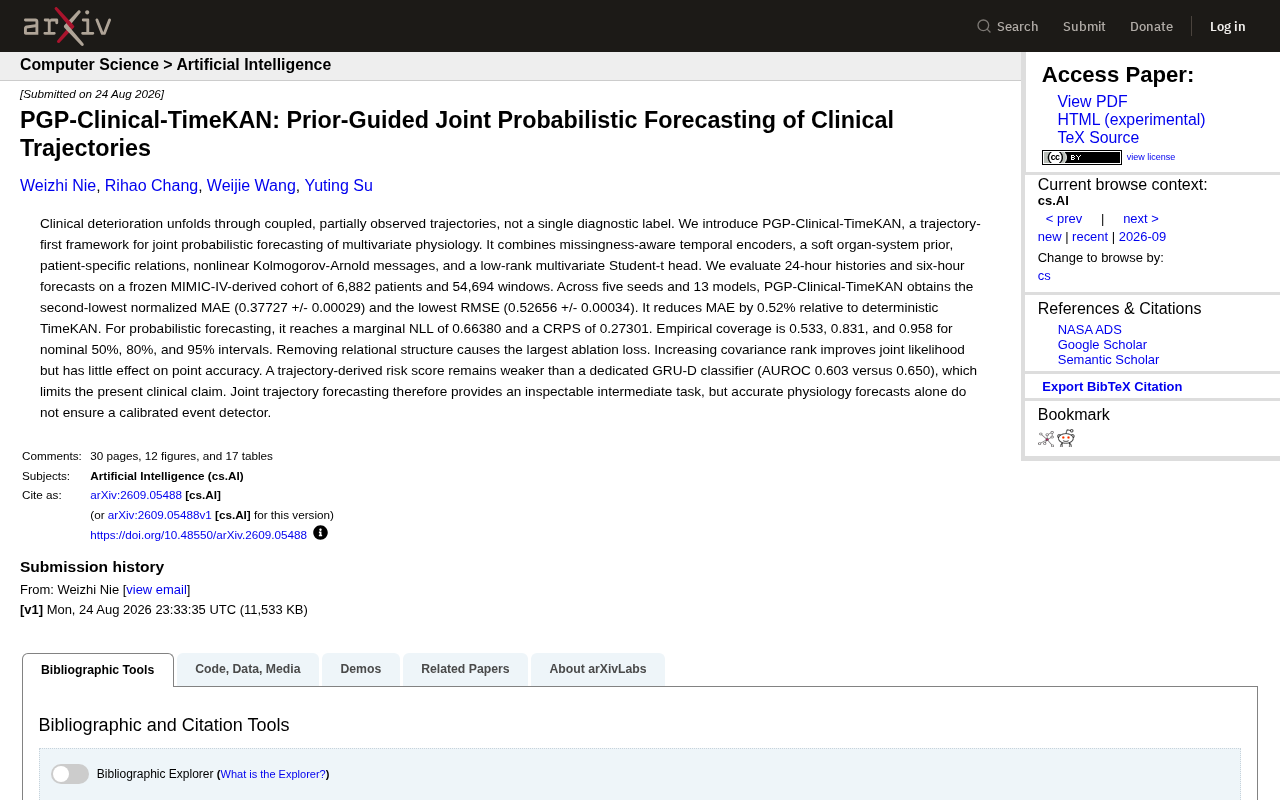
PGP-Clinical-TimeKAN: A Detailed Guide to the Multivariate Physiological Indicator Joint Prediction Framework
An in-depth analysis of the PGP-Clinical-TimeKAN framework for joint probabilistic prediction of multivariate physiological indicators, covering trajectory-first paradigm, KAN message passing, MIMIC-IV validation, and ablation studies.
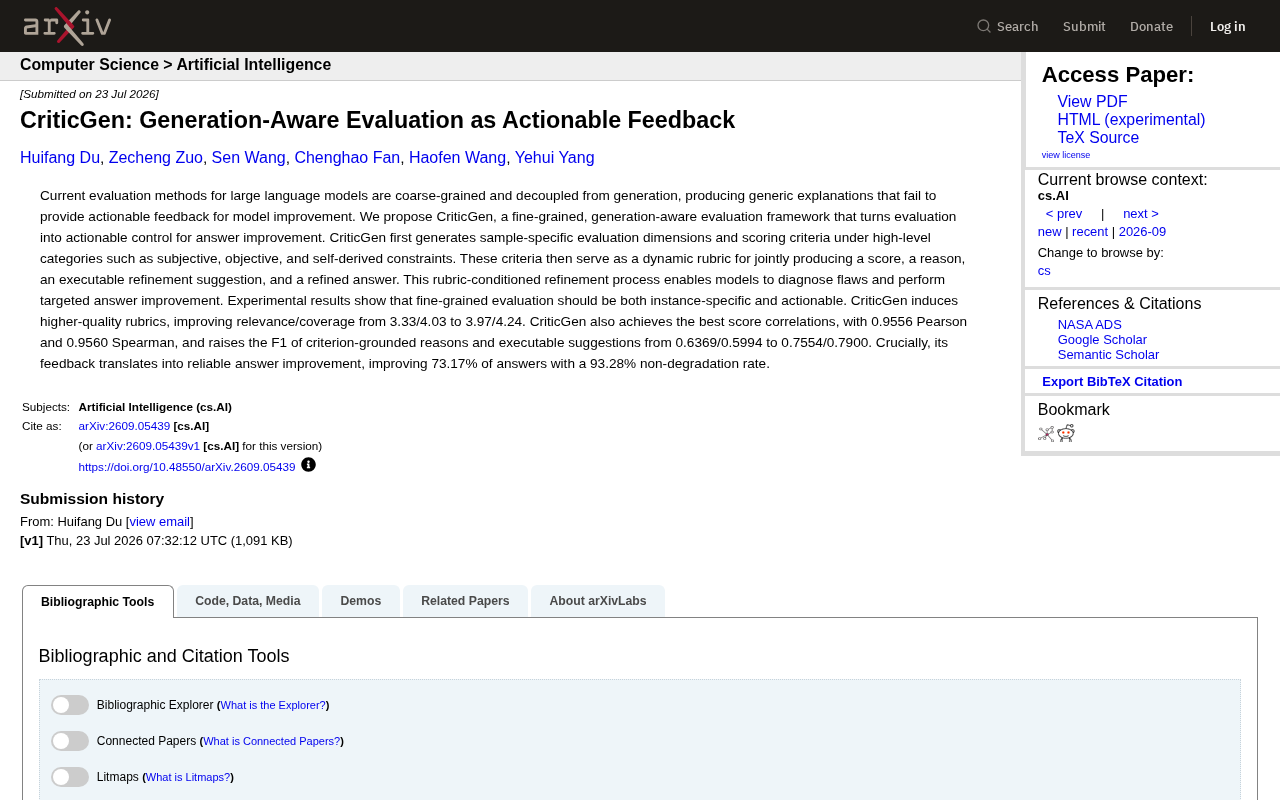
CriticGen: A New Framework That Transforms AI Evaluation into Actionable Improvement Feedback
CriticGen proposes a generation-aware evaluation framework that transforms AI assessment from passive scoring to an active optimization loop, achieving 73.17% answer improvement and 93.28% non-degradation rate.
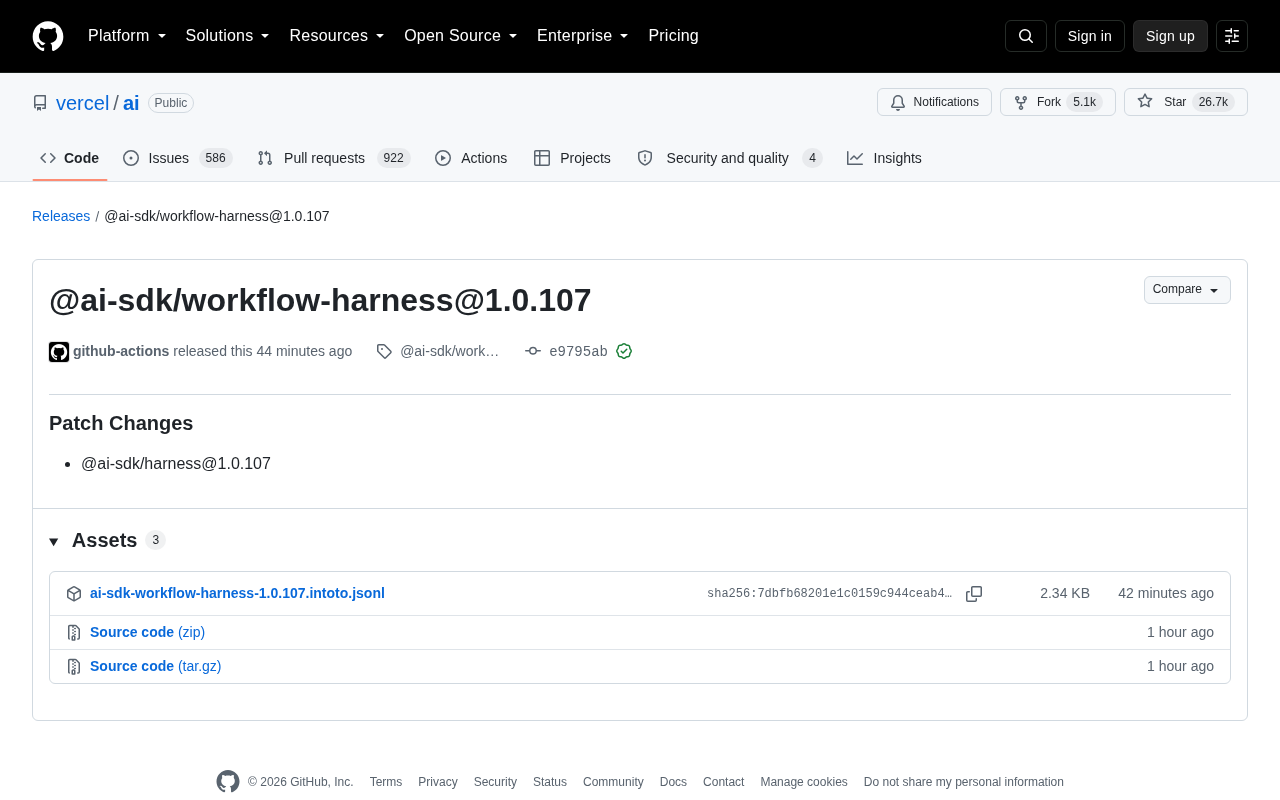
Vercel AI SDK workflow-harness Update Analysis
Deep analysis of Vercel AI SDK workflow-harness 1.0.107 update: architecture design, engineering practices, and developer value for building reliable AI apps.