Microsoft Xbox Mass Layoffs of 3,200: Strategic Retreat or Prelude to a Spinoff?

Microsoft lays off 3,200 Xbox staff and closes four studios, signaling a pivot from hardware to services.
Microsoft has announced sweeping cuts to its Xbox business — 3,200 layoffs and four studio closures — reflecting a broader strategic shift away from hardware competition and exclusive blockbusters toward a services-first, cross-platform model anchored by Game Pass. The move highlights structural pressures across the gaming industry and raises questions about Xbox's long-term role within Microsoft.
Microsoft Swings the Axe at Xbox
Microsoft recently launched a massive reorganization of its Xbox business, sending shockwaves through the gaming industry. According to reports, Microsoft announced the immediate layoff of 1,600 employees, with another 1,600 positions to be cut in the next fiscal year, alongside the closure of four game studios. These moves signal an unprecedented strategic contraction of Microsoft's gaming operations.
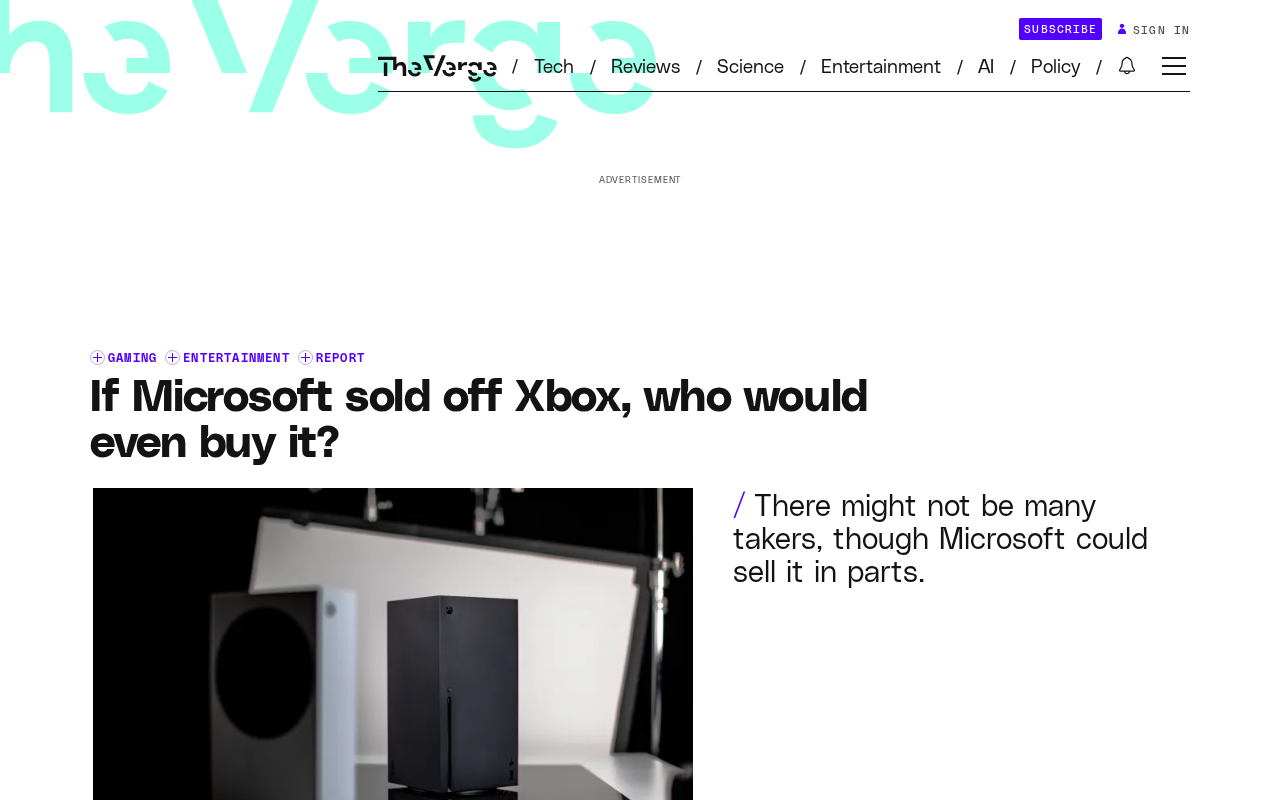
Xbox CEO Asha Sharma was candid about the aggressive cuts, openly explaining the rationale behind such a consequential decision. This rare degree of transparency reflects deep strategic soul-searching within Microsoft about its gaming business, and has prompted outside observers to reassess Xbox's place within Microsoft's broader portfolio.
The Scale and Structure of the Cuts
The scale of this restructuring far exceeds anything seen before. A combined layoff of 3,200 people paired with the closure of four studios signals a systematic overhaul of the gaming business's cost structure. This is not a simple headcount reduction — it is a full-scale strategic retreat.
Why Such a Dramatic Pullback?
Industry context is key: after the explosive growth of the pandemic era, the gaming industry is now grappling with a pronounced slowdown. The 2020–2021 period delivered an unprecedented boom — stay-at-home mandates drove a surge in global gaming users, and both console sales and game revenues hit record highs. Yet this prosperity masked deep structural vulnerabilities.
As the pandemic tailwind faded, the industry entered a systematic de-bubbling phase from 2022 onward, with waves of layoffs sweeping through nearly every major publisher — EA, Ubisoft, Epic Games, Take-Two, and more. This wasn't a simple cyclical correction but the result of multiple structural forces converging: exponentially rising development costs (next-gen visual standards demand larger art teams; open-world design requires longer content production cycles); weakening launch-window effects (digital distribution means older games continuously compete with new releases for players' time); and the fragmentation of player attention (the proliferation of free-to-play models on mobile and PC has intensified competition against premium buy-to-play titles). These three pressures combined mean that even critically acclaimed AAA titles can suffer commercial disappointment if released into the wrong market window.
Player base growth has plateaued, while development costs have continued to climb — a single flagship AAA title can easily exceed $200 million in development budget alone, often surpassing $500 million once marketing is included — yet player sensitivity to game pricing has not kept pace. This has stretched return-on-investment cycles and squeezed publisher margins across the board. For a company like Microsoft, whose core profit engine is cloud computing and enterprise services, scrutiny of Xbox's return on investment is naturally more intense.
Also worth noting: Microsoft previously completed its acquisition of Activision Blizzard for approximately $68.7 billion, the largest deal in gaming history. The regulatory review process was one of the most representative cases of global tech regulation in recent years: the U.S. Federal Trade Commission (FTC), the EU Competition Commission, and the UK Competition and Markets Authority (CMA) each launched investigations, with the central concern being the risk of Call of Duty becoming platform-exclusive. To secure approval, Microsoft signed ten-year multi-platform supply agreements with Sony, Nintendo, and others, and made licensing commitments to cloud gaming operators. The UK CMA initially blocked the deal; Microsoft eventually won approval after restructuring the transaction — specifically by licensing cloud game streaming rights to Ubisoft. This lengthy battle spanned nearly two years before finally closing in October 2023, bringing franchises including Call of Duty, World of Warcraft, Diablo, and Candy Crush under Microsoft's umbrella.
However, the post-acquisition integration phase following a mega-deal is often the most difficult: clashing corporate cultures, the consolidation of overlapping functions, and the migration to unified technical architectures all carry enormous organizational costs. Historical precedent shows that the true impact of mega-mergers in tech and media often only becomes clear years after closing. Post-deal integration and cost optimization at this scale is, in fact, standard practice following any transaction of this magnitude.
If Microsoft Wanted to Sell, Who Could Buy Xbox?
Given the ongoing adjustments to the Xbox business, a critical question emerges — if Microsoft truly decided to divest Xbox, who in the market has the capacity and the will to absorb such a massive asset?
Very Few Credible Buyers Exist
Realistically, the pool of buyers capable of absorbing Xbox's scale is extremely limited. Xbox's assets span not just the hardware platform and Game Pass subscription service, but also a large portfolio of first-party studios and the recently integrated Activision Blizzard content library — setting a prohibitively high bar for acquisition.
Game Pass is Microsoft's most strategically ambitious innovation in gaming — its essence is a shift from a one-time buy-to-play model to a subscription service, reimagining game consumption along the Netflix model. From a software-as-a-service (SaaS) perspective, the lifetime value (LTV) of a subscriber far exceeds that of a single transactional purchase: a subscriber paying $10–$20 per month who maintains their subscription for three years can contribute more cumulative revenue than purchasing five or six full-priced games. More critically, the subscription model builds a compounding stickiness — as users accumulate save files, achievements, and gameplay history within the Game Pass library, their switching costs rise continuously, analogous to how Adobe Creative Cloud users find it difficult to switch products due to file format dependencies. Yet the subscription model also carries a deep internal tension: it places extreme demands on the content supply side, requiring a steady stream of high-quality new titles to sustain renewal intent, while day-one inclusion of major releases in the subscription library compresses the sales ceiling of individual games. How to maintain balance between subscription scale and content quality remains a core question Microsoft has yet to fully answer — and is the deeper reason why these layoffs pose a potential long-term threat to Game Pass's value proposition. Any potential buyer would therefore need to take on this complex business model, not merely a traditional gaming business.
While tech giants like Amazon, Google, and Apple have ample capital, their strategic priorities in console gaming differ significantly, and each has encountered notable setbacks in cloud gaming or gaming hardware. Traditional gaming companies like Sony and Nintendo lack the financial firepower required, and would face stringent antitrust scrutiny.
Practical Barriers to a Divestiture
The Xbox business is deeply integrated with Microsoft's cloud services (Azure) and Windows ecosystem. xCloud (now integrated into Game Pass Ultimate) is a cloud gaming streaming service built on Azure's global data center network, allowing players to run console-grade games on phones, tablets, and even browsers.
The technical underpinning of this service is far more tightly coupled to Azure than is commonly understood: xCloud uses proprietary blade servers integrating custom chips equivalent to multiple Xbox Series X units, deployed within Azure data centers. Elastic scaling of compute resources depends on Azure's orchestration system; global node load balancing relies on Azure Traffic Manager; user identity and game state synchronization depends on Azure Cosmos DB; and low-latency streaming relies on Microsoft's private backbone network rather than the public internet. Every layer of this stack is deeply integrated with Azure. Separated from this infrastructure, xCloud would need to rebuild its entire backend architecture from scratch, and would lose the automatic scale benefits that come with Azure's data center expansion.
From a broader perspective, gaming workloads themselves reinforce Azure's economies of scale — the relationship between gaming and cloud services is not a one-way cost dependency, but a mutually reinforcing commercial relationship. A complete divestiture of Xbox from Microsoft's ecosystem would not only require complex technical decoupling, but would materially erode its core competitive advantages.
Consequently, while the layoffs and studio closures have sparked widespread speculation about Microsoft abandoning its gaming business, a complete Xbox divestiture in the near term is not realistic, given the tight integration of assets and the scarcity of credible buyers.
The Strategic Pivot Beneath the Cuts
The deeper significance of this restructuring may be a deliberate shift in Microsoft's gaming strategic priorities. Rather than continuing to pour money into exclusive blockbusters and a hardware arms race, Microsoft has in recent years consistently emphasized the long-term value of Game Pass subscriptions and a scaled cross-platform content distribution strategy.
From Hardware Competition to Services-First
Understanding this shift requires revisiting the history of the console platform wars. Since Sony's PlayStation entered the market in 1994, the console gaming market has long maintained a three-way competitive structure, with exclusive content serving as the pivotal competitive asset. Microsoft entered the console market in 2001 with the original Xbox, and the Xbox 360 era (2005–2013) was the period when Microsoft's console business came closest to leading the market — but the PS3's comeback and PlayStation 4's comprehensive dominance left Microsoft in a structurally disadvantaged position globally. PlayStation 5's cumulative sales still lead Xbox Series X/S by a significant margin. This historical backdrop explains why Microsoft, under Satya Nadella, extended its "mobile-first, cloud-first" strategy into gaming: when the odds in traditional console competition are unfavorable, redefining the competitive dimension — shifting from hardware sales volume to subscription user scale — becomes the most rational strategic choice. It is precisely within this long-running competitive disadvantage that Microsoft has gradually abandoned the traditional framework of measuring success by console sales, and reoriented around "number of players reached" and "Game Pass subscriber scale" as its new strategic coordinates.
Microsoft has progressively stepped back from a direct hardware sales contest with Sony, focusing instead on expanding player reach. By porting some formerly exclusive games to rival platforms like PlayStation and Nintendo Switch, Microsoft is attempting to substitute scale through content and services for the traditional moat built by hardware ecosystems. This cross-platform strategy represents a fundamental shift in the logic of the console platform wars — at the cost of abandoning the high margins that a platform moat provides, in exchange for accepting the long investment cycles of a services-oriented model.
Within this strategic framework, reducing studio headcount and optimizing staffing is essentially a concentration of resources toward the most commercially valuable projects. This is both a practical cost-efficiency measure and an inevitable expression of a business model in transition.
A Warning to the Entire Gaming Industry
Microsoft's sweeping moves at Xbox serve as a stark warning to the entire gaming industry: even the most financially powerful tech giants cannot sidestep the inherently high-cost, high-risk nature of the games business.
For small and mid-sized game studios, this trend may signal a harsher operating environment — as large publishers pull back, acquisition opportunities and external financing support will shrink. For players, the successive studio closures may mean many anticipated game projects are shelved permanently.
Going forward, the gaming industry may be entering a new phase defined more by rationality and profitability than by sheer scale expansion. Microsoft's strategic repositioning may well prove to be just the opening act of a far deeper industry transformation.
Key Takeaways
Related articles

Felix Rieseberg Personal Homepage
Felix Rieseberg's personal homepage sparks attention on Hacker News. This article covers the Slack engineer's technical background, the rise and fall of nativefier, and the value of a developer homepage as a tech calling card.

@ai-sdk/vue 3.0.306 Patch Release Syncs with [email protected] Update
@ai-sdk/vue 3.0.306 released, synced with [email protected]. A routine patch release for the Vercel AI SDK ecosystem with no public API changes; the Vue adapter layer stays version-aligned with the core package.

Gemini 4 Argon API Launches: The Era of Million-Token Output Begins
Google launches Gemini 4 Argon with sparse MoE architecture, up to 1M output tokens, and a 68.90% Vals Index score, available across API, AI Studio, and the Gemini app.