Migrating from Claude to GPT Astra: A Developer's Real-World Experience
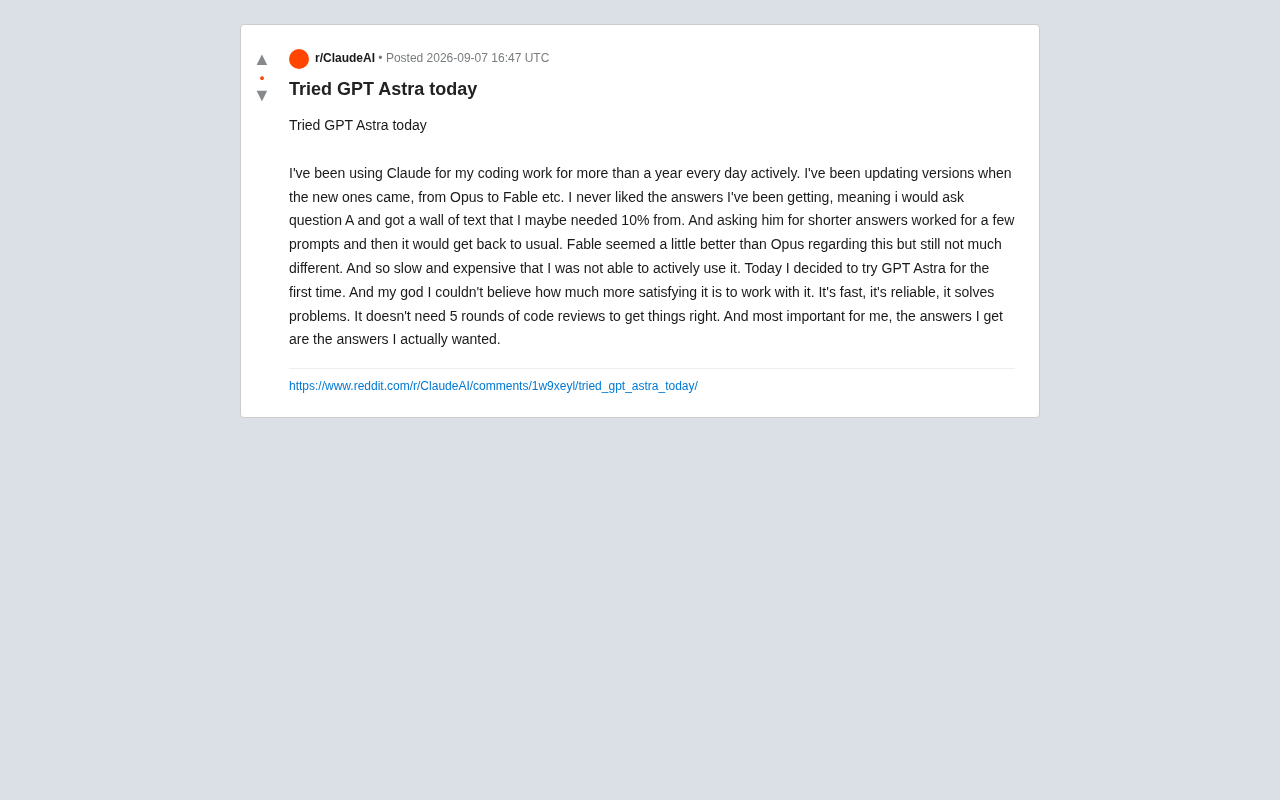
Developer migrates from Claude to GPT Astra, finding faster, more precise, cost-effective AI assistance
A Reddit developer with over a year of daily Claude use shares their migration experience to GPT Astra. Key issues with Claude included verbose responses that didn't match actual needs, instruction decay over conversations, and prohibitive speed/cost for heavy use. GPT Astra impressed with faster responses, precise answers, and reliable first-time results, highlighting how user experience factors increasingly trump raw capability in AI tool selection.
A Heavy User's Real-World Experience
When it comes to choosing AI coding assistants, few evaluators are more credible than long-term heavy users. Recently, a Reddit developer shared his complete experience migrating from Claude to GPT Astra. This seemingly simple user review actually reveals several key pain points in the current competitive landscape of AI programming tools.
Technical Background of AI Coding Assistants
Claude is a large language model series developed by Anthropic, a company founded by Dario Amodei, former VP of Research at OpenAI. It's known for its Constitutional AI methodology, emphasizing AI safety and controllability. Claude has gone through multiple version iterations, including Opus and Fable mentioned in the article. The GPT series is a Generative Pre-trained Transformer model developed by OpenAI, with GPT-4 being one of the most advanced versions. Astra likely refers to a specific variant or application wrapper based on GPT architecture.
AI coding assistants are built on large language model (LLM) technology. Through pre-training on massive code repositories and technical documentation, they learn programming language syntax, common patterns, and best practices. When developers input questions (prompts), the model understands intent from context and generates corresponding code snippets, explanations, or suggestions. These tools typically use Transformer architecture, leveraging attention mechanisms to capture long-range dependencies in code.
The developer stated that he had been actively using Claude daily for over a year for programming work, upgrading with each new release—tracking through versions from Opus to Fable. As a power user, his feedback wasn't a superficial first impression but a lateral comparison based on long-term, high-frequency use.
Claude's Core Pain Point: Missing the Mark
From this developer's account, his biggest complaint about Claude wasn't lack of capability, but rather low signal-to-noise ratio in responses.
The "Wall of Text" Problem
He described: "I ask question A and get a wall of text, when what I really need might be just 10% of it." This is a common experience among programmers using large language models—the model tends to provide comprehensive, exhaustively detailed explanations while overlooking that developers often just want a precise, directly actionable answer.
This phenomenon is closely related to prompt engineering. Prompt engineering is a key technique for interacting with AI models, involving how to precisely express requirements to get ideal outputs. Effective prompts typically include clear role definitions, specific task descriptions, format or style requirements, and relevant context. However, different models have different sensitivities to prompts—some require detailed instructions, while others better understand implicit intent. The accuracy of user intent understanding directly determines the practical value of AI assistants.
Even more frustrating, explicitly requesting "shorter answers" only worked for a few conversation turns. "Tell it to give shorter answers, works for a few prompts, then back to the same." This "instruction decay" phenomenon essentially reflects the model's insufficient ability to maintain user preferences in long conversations.
Technical Roots of Instruction Decay
Instruction decay is a common problem in large language models during extended conversations, where the model gradually "forgets" user preferences or constraints set earlier. This stems from the attention mechanism characteristics of Transformer models: while theoretically able to access the entire context window, attention weights for early information naturally decay as conversations lengthen.
Current mainstream solutions include: 1) periodic system prompt reinforcement; 2) using memory-enhanced architectures that store user preferences in separate memory modules; 3) employing longer context windows (like Claude's 200K tokens) to delay decay. However, these methods all have limitations, and instruction decay remains a key technical bottleneck affecting long-term user experience.
Limited Marginal Improvement Through Version Updates
A revealing detail: he mentioned the Fable version "seemed a bit better than Opus, but not by much" on this point. This indicates that while vendor version iterations continuously optimize, the improvement magnitude for experiential issues like "verbose responses" hasn't met users' psychological expectations.
Speed and Cost: Hidden Barriers to Active Use
Besides answer quality, the developer identified two easily overlooked but critically important factors: speed and cost.
He bluntly stated Claude was "too slow and too expensive for me to use it heavily." For professional developers who need high-frequency daily interaction with AI assistants, response latency directly disrupts coding flow, while high costs create "billing anxiety" that unconsciously reduces usage frequency.
Technical Factors in Response Speed
AI model response speed is influenced by multiple factors. First is model size: larger parameter models (like GPT-4's estimated 1.8 trillion parameters) require more computational resources and longer inference time. Second is inference optimization techniques, including quantization (reducing weights from FP32 to INT8), pruning (removing unimportant connections), and knowledge distillation (transferring large model capabilities to small models). Third is infrastructure deployment, including GPU/TPU cluster configuration, batching strategies, and model parallelization schemes.
Claude's model architecture is relatively conservative but quality-focused, potentially sacrificing inference speed; whereas OpenAI continues to lead in inference optimization and infrastructure investment. For developers, interaction delays exceeding 2-3 seconds noticeably interrupt thought flow, making response speed a hard metric for practical usability.
Cost Structure Analysis
Mainstream AI APIs use token-based billing, distinguishing between input (prompt) and output (completion) costs. As of 2024 pricing, Claude Opus costs approximately $15 per million input tokens and $75 for output; GPT-4 Turbo costs about $10 and $30 respectively. For heavy users, hundreds of daily interactions could generate tens to hundreds of dollars in costs.
High costs stem from: 1) training large models requires tens of millions in compute investment; 2) inference stage requires expensive GPU clusters; 3) human costs for quality control and safety review. Cost differences reflect different companies' business strategies: Anthropic targets the premium market emphasizing quality, while OpenAI reduces unit prices through economies of scale. For developers, monthly subscriptions (like ChatGPT Plus at $20) are often more economical than pay-as-you-go, though they may have rate limits.
This reminds us that AI programming tool competition is no longer just about "who's smarter"—response speed and usage cost are becoming key variables determining daily user stickiness. No matter how powerful a model is, if it's slow and expensive, it's hard to truly integrate into developers' workflows.
First Impressions of GPT Astra: Fast, Accurate, Worry-Free
After switching to GPT Astra, the developer's assessment was decidedly positive. He used "incredible" to describe his satisfaction level and summarized several core advantages:
- Fast speed: No more noticeable waiting delays
- High reliability: Consistently solves problems
- Gets it right first time: No need for "5 rounds of code review" to get things right
- Precise answers: "The answers I get are exactly what I actually want"
That last point is perhaps the core of the entire review. For developers, the ideal state for an AI assistant isn't "telling you everything," but rather "telling you exactly what you need." This ability to precisely match user intent is what the developer found most compelling about GPT Astra.
Industry Insights Behind a Single Experience
Objectively speaking, this article is based on one Reddit user's personal experience—a single-source subjective evaluation whose conclusions may not apply to all use cases. Different programming languages, project complexity, and prompt habits could all produce vastly different experiences.
However, even as an individual case, this story reveals several important dynamics in the current AI coding assistant competition:
First, beyond the "capability ceiling," users increasingly care about the "experience floor." When various models' fundamental capabilities converge, experiential factors like answer conciseness, response speed, and cost control often become the decisive reasons for actual user migration.
Second, sustained instruction following is critically important. Users don't want to repeatedly remind the model to "keep it short." An assistant that can consistently remember user preferences over time has far greater experiential value than marginal leads in single-answer quality.
Third, developer loyalty is not firmly established. This user was a daily active Claude user for over a year, yet a single trial generated strong migration intent. This shows that in the AI tool market, user switching costs are rapidly decreasing—vendors must continuously work on real-world usage experience.
Conclusion
This migration story from Claude to GPT Astra is less a product comparison and more a mirror—it reflects what professional developers truly want from AI coding assistants: not verbosity, but precision; not expensive and slow, but efficient and reliable. For all AI tool vendors, understanding these straightforward yet pointed user voices may be more important than gaining a few percentage points on benchmarks.
In today's rapidly iterating technology landscape, AI coding assistant competition has shifted from pure model capability comparisons to deep understanding of developer workflows and experience optimization. Whether Anthropic or OpenAI, both need to focus on practical usage details like response speed, cost control, and instruction persistence while maintaining technical leadership. After all, what truly retains users isn't benchmark scores from the lab, but the smooth experience accumulated through hundreds of daily interactions.
Related articles
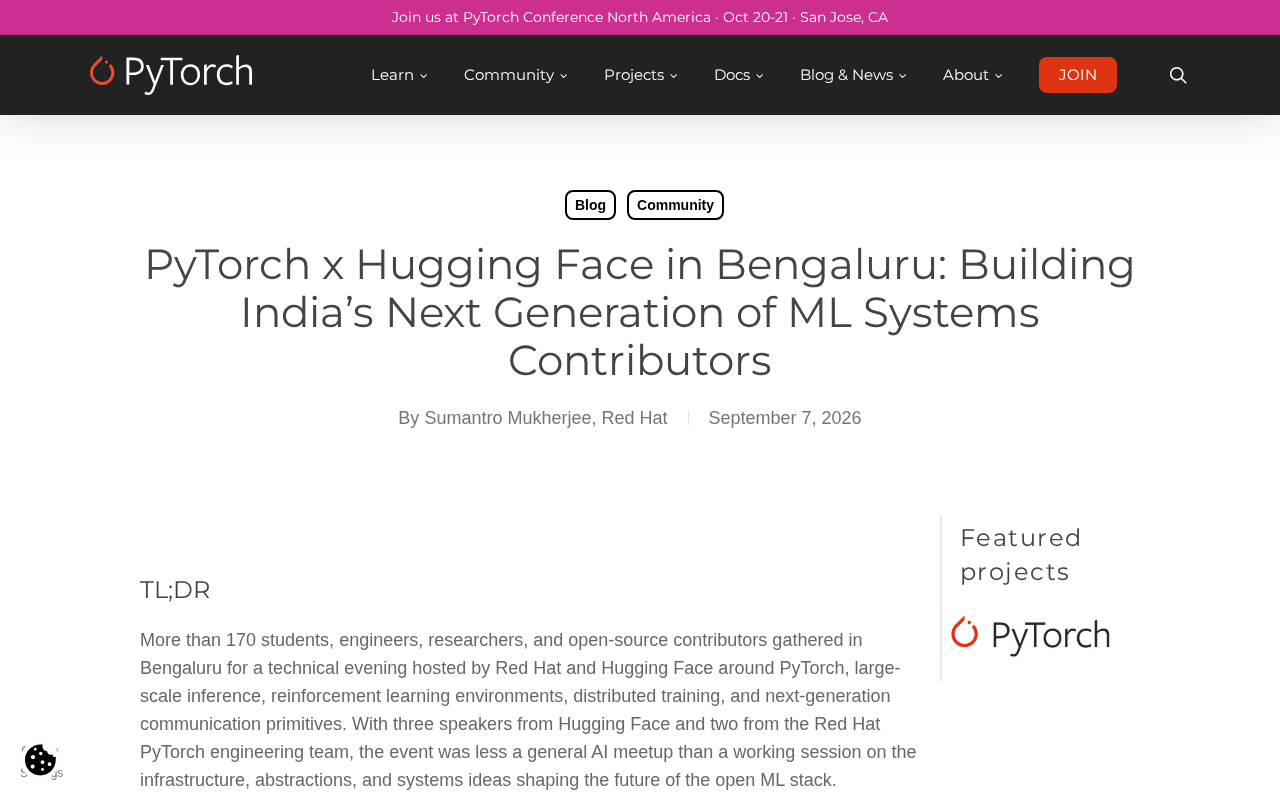
PyTorch and Hugging Face Bangalore Tech Summit: In-Depth Recap
Bangalore PyTorch and Hugging Face tech summit recap: 170+ developers explore large-scale inference optimization, reinforcement learning practices, and open-source community building, analyzing India's AI ecosystem trends and technical innovation.
The Physics of Splash-Free Urinals: How Fluid Dynamics Solves a Public Health Challenge
Explore the fluid dynamics principles behind splash-free urinal design, examining how impact angle, hydrophobic coatings, and curved geometry reduce splashing, achieve 30-50% water savings, lower maintenance costs, and drive sustainable innovation in public health facilities.
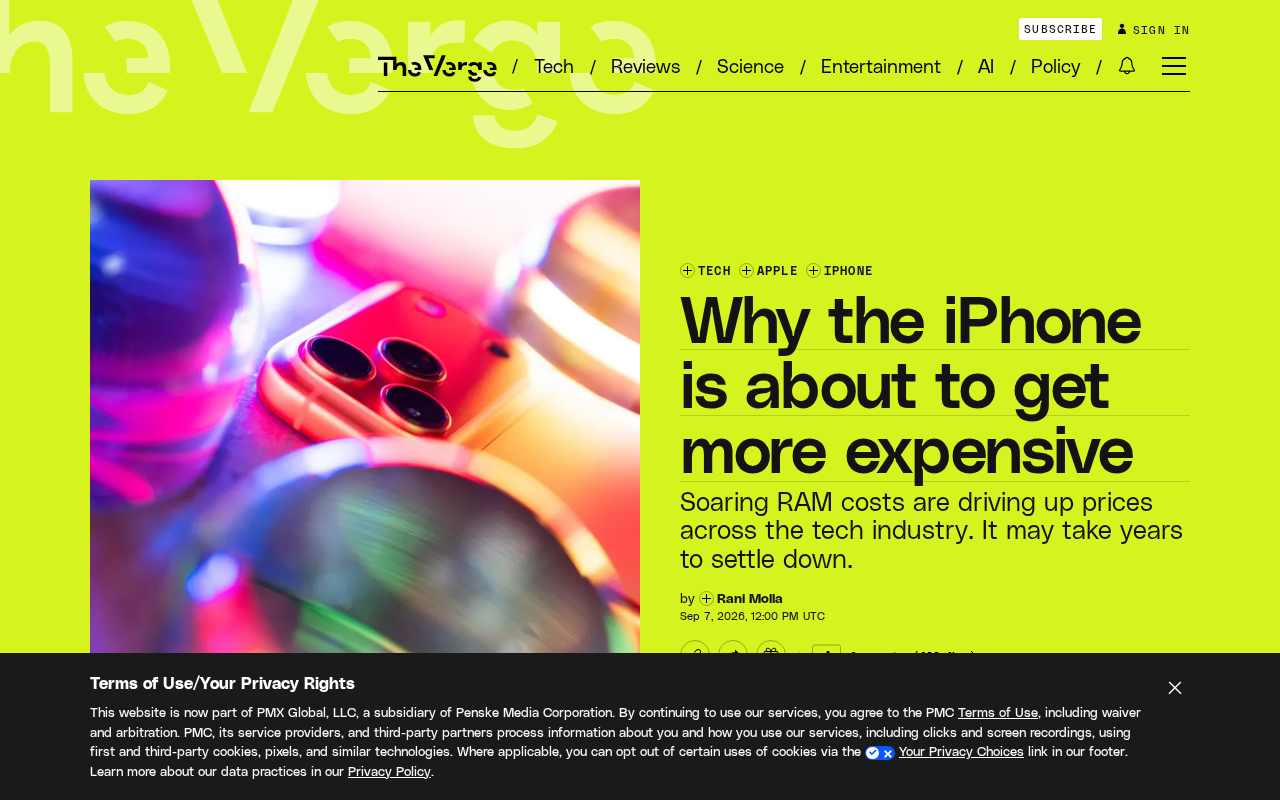
Chipflation Hits: The Storage Crisis Behind iPhone Price Hikes
Apple's iPhone price hike stems from soaring DRAM and NAND flash prices—chipflation driven by AI demand squeezing consumer electronics supply. Storage costs rising with no quick relief in sight.