Minimalist Aesthetic Puzzle Game Development: Insights from Independent Creation
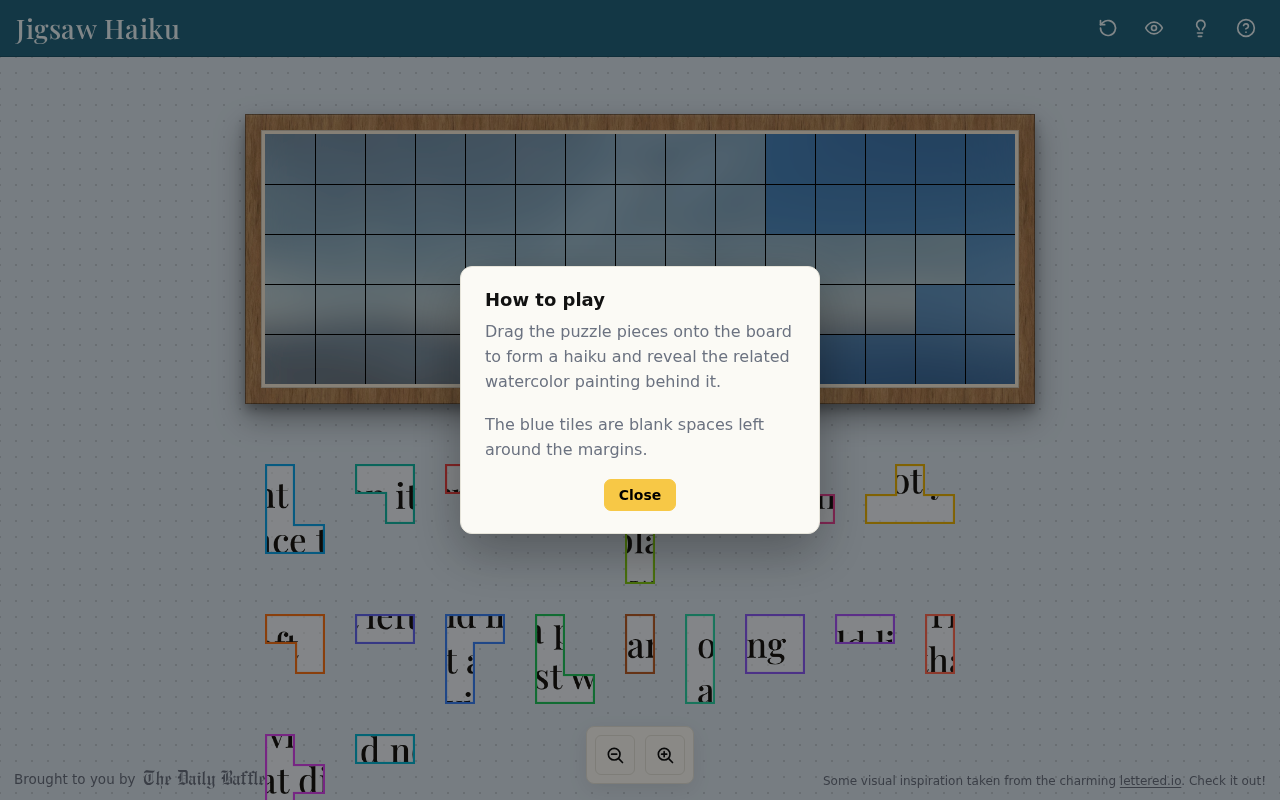
How a minimalist aesthetic puzzle project on Show HN reveals the power of beauty-driven independent development
An independent developer's aesthetically pleasing puzzle game on Hacker News exemplifies a shift in indie development: prioritizing visual delight over commercial scale. This exploration examines how aesthetics-first design, minimalist principles, and Show HN's feedback culture empower creators to build meaningful products driven by craft rather than metrics.
When Puzzles Meet Aesthetics
On Hacker News's Show HN section, an independent developer shared their creation of an "aesthetically pleasing puzzle." While the post itself was brief—garnering 15 upvotes and 5 comments—it reflects an independent development culture and design philosophy worth exploring in depth.
Show HN is a dedicated showcase section within the Hacker News community for creators. Unlike ordinary link sharing, it requires publishers to be direct participants in the project. Hacker News is operated by Y Combinator (one of Silicon Valley's most influential startup accelerators) and has become a core forum for the global tech community since its launch in 2007. Well-known products like Dropbox and Stripe gained their first seed users through Show HN in their early days. The section employs a simple voting ranking mechanism where community members determine content visibility through upvotes. This decentralized filtering approach allows truly valuable projects to surface.
In today's environment of proliferating AI tools and severe product homogenization, small-scale projects led by individuals that emphasize aesthetic experience represent an alternative direction for technical creation: pursuing pure expression and refinement rather than commercial scale.
Aesthetics-First Product Philosophy
The developer deliberately emphasized "aesthetically pleasing" in the title, which is itself a noteworthy signal. In traditional puzzle products, functionality and difficulty design are typically core elements, while visual presentation is often considered secondary.
The philosophy of placing aesthetics at the core of product design can be traced back to Don Norman's three-level design model proposed in Emotional Design: visceral, behavioral, and reflective. The visceral level refers precisely to users' instinctive aesthetic response when first seeing a product. Research shows that visually pleasing interfaces make users more forgiving—even when operational processes have minor flaws, users tend to give higher ratings. This is known as the "Aesthetic-Usability Effect." The success of products like Apple, Notion, and Linear validates this theory to some degree.
The Shift from Function to Experience
Placing aesthetics first reflects a clear trend in the independent development field in recent years: user experience and visual design are becoming key differentiators. As technical barriers continue to lower, merely "functional" features are no longer sufficient to win users over. "Beautiful," "comfortable," and "delightful" experiences have become the core elements of attraction.
For products like puzzles that require prolonged user immersion, carefully designed color schemes, animations, and interactive feedback can significantly reduce cognitive fatigue and improve user retention. According to game designer Scott Kim's definition, excellent puzzles must simultaneously satisfy three conditions: "simple rules, elegant solutions, and progressive difficulty." From Tetris to Monument Valley to the recently popular Wordle, successful puzzle products often contain depth within minimalist rules. Visual feedback plays a key role—for example, Wordle's color block change mechanism is both part of the core gameplay and constitutes a highly recognizable visual language. Cognitive psychology research also shows that proper visual hierarchy can reduce players' extraneous cognitive load, allowing them to invest more mental resources in solving puzzles themselves. An elegantly designed puzzle game, even with ordinary difficulty, may be repeatedly revisited simply because it "feels good to play."
The Return of Minimalism
These types of projects show that more and more developers are embracing minimalist design principles. Removing redundant elements, focusing on core gameplay, and using visual language to guide users—these are common characteristics of excellent contemporary digital products.
The revival of Minimalism in digital product design is closely related to the evolution of front-end technology. Modern CSS animations, SVG vector graphics, and WebGL enable developers to create rich interactive experiences with minimal visual elements. Meanwhile, the popularization of Design Systems—such as Google's Material Design and Apple's Human Interface Guidelines—has provided mature methodological support for minimalist design. It's worth noting that minimalism doesn't equal crudeness: it requires that every element remaining on the interface be carefully considered, achieving a balance between information density and aesthetic quality through "subtraction." Japanese designer Kenya Hara's philosophy of "white" and German industrial designer Dieter Rams's "less is more" principle are both important philosophical sources for this concept.
Show HN Culture: A Stage for Independent Creators
The appearance of this project on Hacker News's Show HN section is itself quite representative. Show HN is one of the world's most important work showcase platforms, where countless well-known products have gained their first users and feedback.
Why Developers Choose to Launch Here
The value of Show HN lies not in traffic explosions but in high-quality peer feedback. It gathers numerous developers, designers, and tech enthusiasts who can provide constructive opinions from professional perspectives. For a puzzle project emphasizing aesthetics, evaluations from this community are often more valuable than those from ordinary users.
While the metrics of 15 upvotes and 5 comments may not seem impressive, for a pure personal small-scale project, gaining community attention and discussion already achieves the creator's original intention—sharing work and receiving feedback. In Show HN's ecosystem, such interaction data is actually quite typical: statistics show that dozens of projects are submitted to the section daily, with only a few reaching the front page for large-scale attention. Most projects complete their community lifecycle within the 10-30 upvote range. But this doesn't mean these projects lack value—often, 5 precise comments from senior developers are far more valuable for product iteration than 500 random likes.
Practical Insights for Independent Development
These small but beautiful projects remind us that technical creation need not all aim for commercial success as the sole goal.
Independent Development (Indie Development) entered a golden age in the 2020s. On one hand, infrastructure-as-a-service platforms like Vercel, Supabase, and Cloudflare Workers have greatly reduced deployment and operations costs, enabling solo developers to build production-quality applications. On the other hand, communities like Product Hunt, Indie Hackers, and Show HN have formed a complete loop of work distribution and feedback. Pieter Levels's (founder of Nomad List) "one-person company" concept has inspired numerous developers to embark on independent creation. Unlike venture capital-driven entrepreneurship models, independent development emphasizes sustainable small-scale profitability (bootstrapping) or pure interest-driven creation. Products born under this model often have stronger personal style and higher completion quality.
The Purity of Creation
Many excellent products initially stem from developers' simple motivation of "I want to make something fun/beautiful." This non-utilitarian creation often gives birth to works that truly touch people's hearts. This is especially true for puzzle games—they don't need complex business models, only to provide moments of joy and thought. History offers many precedents: Tetris was initially just programmer Alexey Pajitnov's spare-time experiment, 2048 was Italian developer Gabriele Cirulli's impromptu weekend project, and Wordle was engineer Josh Wardle's personal gift to his partner. What these projects have in common is that the creator's initial motivation came entirely from personal passion, not market analysis or business planning.
Insights for Creators
For developers wanting to start independent creation, this case provides several points of reference:
- Focus on one clear differentiator: Here it's "aesthetics," using clear positioning to make work stand out. In an age of information overload, a unique selling point (USP) that can be summarized in one sentence has more communication power than a comprehensive feature list
- Dare to share: Even if the project is small, public display can bring unexpected feedback and growth. "Build in Public" has become mainstream culture in the independent development community. By continuously sharing progress during development, creators not only gain early feedback but also build a sense of responsibility for their work
- Value detail refinement: In an era when functionality is generally satisfied, details and experience are the true moat. A smooth 60fps animation, a carefully calibrated color palette, a perfectly timed haptic feedback—these seemingly minor details, when layered together, constitute what users describe as "can't say exactly what's good, but it just works well"
Conclusion
An "aesthetically pleasing puzzle" may not change the world, but it represents a precious aspect of technical creation—the pursuit of beauty and love for pure creation. In today's world swept up by AI and scaling, such small projects appear especially valuable.
It reminds us that good products don't just solve problems—they create delight. And this is precisely the most moving power of independent developers.
Related articles
GPT-6 Astra Completes All 48 Levels of 'I'm Not A Robot' Game
GPT-6 Astra successfully completes all 48 levels of the 'I'm Not A Robot' game, demonstrating remarkable visual understanding, logical reasoning, and task adaptation. This article analyzes the technical capabilities behind this breakthrough and its implications for CAPTCHA verification and AI safety.
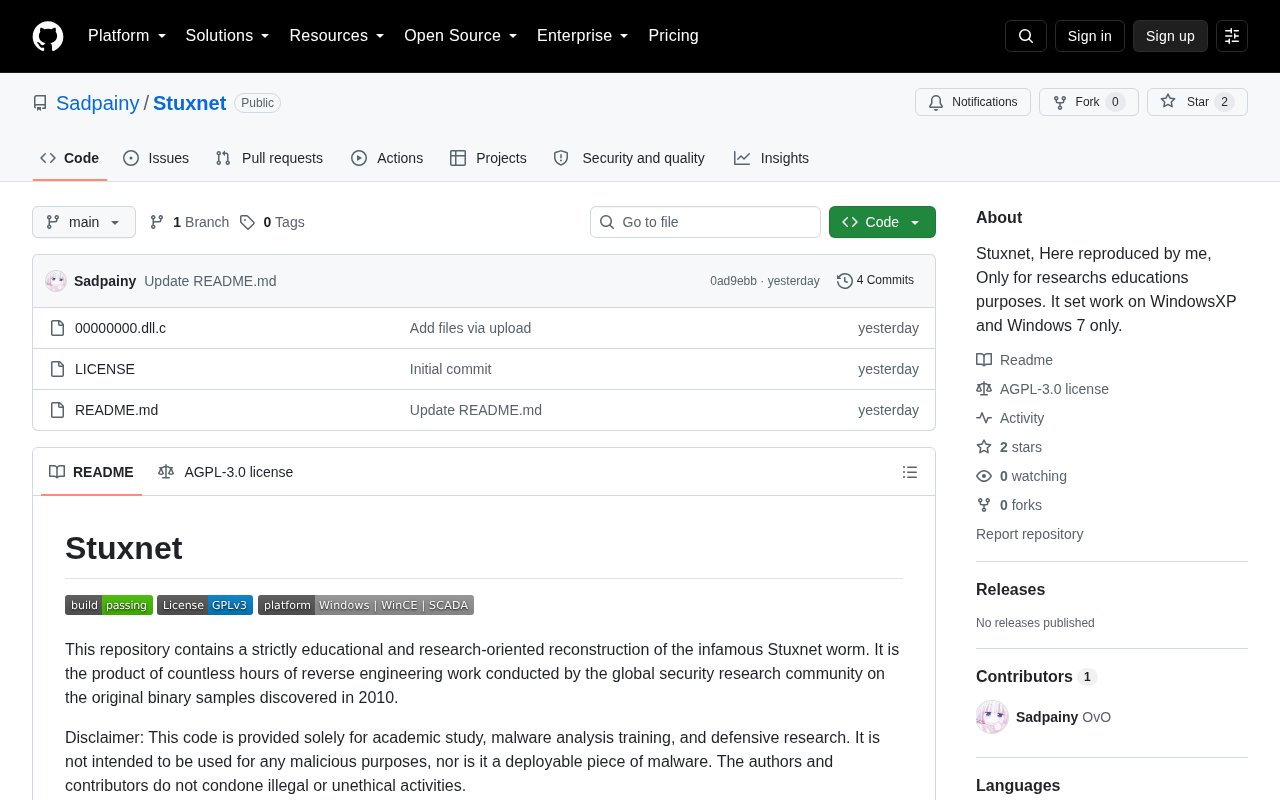
Stuxnet Source Code Reconstruction: Dissecting the Attack Chain of History's Most Complex Cyber Weapon
In-depth analysis of the Stuxnet source code reconstruction open-source project, examining how this cyber weapon targeting Iranian nuclear facilities exploited four zero-day vulnerabilities, stole digital certificates, covertly manipulated PLC centrifuges, and exploring industrial security lessons and ethical controversies of open-source reconstruction.
Microsoft Project Zenith: A Distraction-Free Windows Experience Built for Developers
Microsoft officially launches Project Zenith, a distraction-free Windows experience for professional developers. Requires 64GB+ unified memory, comes preconfigured, removes ads—targeting the high-end developer market dominated by macOS.