MiniMax AI Agent Review: Testing 3 Real-World Scenarios with This Free AI Agent

MiniMax is a seriously underrated free AI agent with 1M-token reasoning and strong real-world performance.
MiniMax is an AI agent platform built by a Shanghai-based startup, powered by the M1 model — the world's first open-source large-scale hybrid attention reasoning model with a 1-million-token context window. The platform covers chat, agent, video, and audio modules, with built-in MCP protocol support for connecting to Figma, GitHub, and more. Real-world tests across business plans, research reports, and presentations all delivered impressive results. New users get 1,000 free credits with no invite code required.
MiniMax: A Seriously Underrated AI Agent
The AI agent space is getting increasingly competitive, with products like Manus and GenSpark regularly dominating tech headlines. An AI agent, by definition, is an AI system capable of autonomously perceiving its environment, formulating plans, invoking tools, and executing multi-step tasks. The key distinction from traditional chatbots is this: chatbots passively respond to single or multi-turn questions, while agents proactively break down complex goals, dynamically adjust execution strategies, and call external APIs or tools when needed. Since 2024, AI agents have been widely regarded as the critical deployment form for large language models, with OpenAI, Google, Anthropic, and other leading companies all making them a strategic priority.
Yet there's one AI agent built by a Shanghai-based startup that punches well above its weight but rarely gets mentioned — and that's MiniMax. Founded in December 2021 by Junjie Yan, former Vice President at SenseTime, MiniMax is among China's earliest startups focused on general-purpose large model development. It's often grouped with Baichuan AI, Zhipu AI, and Moonshot AI as part of China's so-called "Six AI Tigers." The company has broad multimodal capabilities spanning text, voice, and video generation, and its consumer product "Hailuo AI" enjoys strong brand recognition in China.
MiniMax is far more than a basic AI chatbot. It's a fully featured AI agent capable of building websites, analyzing data, writing in-depth research reports, and even creating 3D educational content. What makes it especially noteworthy is that it runs on the MiniMax M1 model — the world's first open-source large-scale hybrid attention reasoning model — capable of processing up to 1 million tokens in a single context window, making it one of the most powerful reasoning engines available in any free AI agent today.
Traditional Transformer models use full attention mechanisms, where computational complexity scales quadratically with sequence length — leading to memory explosion and severe slowdowns when handling very long texts. MiniMax M1 uses a hybrid attention architecture that combines linear attention (such as Lightning Attention) with Softmax attention, dramatically reducing the computational cost of processing long sequences without sacrificing output quality. A 1-million-token context window means the model can process roughly 750,000 English words or 1.5 million Chinese characters in a single pass — equivalent to reading multiple complete books or hundreds of pages of corporate documents at once. This is a decisive advantage for deep research, long-document analysis, and similar tasks.
New users receive 1,000 free credits upon registration — no invite code required, no usage caps. Users in China can access minimaxi.com; international users can visit minimax.io.
MiniMax Platform Overview: Much More Than Just Chat
On the MiniMax homepage, you'll find four core product modules: Chat, Agent, Video, and Audio. Worth noting: the video feature called "Hailuo" here is unrelated to the separately branded "Hailuo AI" video generation product in China — they just happen to share the same name.
Chat: Search Mode and Deep Thinking Mode
MiniMax's chat feature supports file uploads up to 100MB and offers two useful toggles:
- Search mode: When enabled, the model retrieves real-time information from the web to make responses more accurate and timely. This is essentially Retrieval-Augmented Generation (RAG) in action — before generating a response, the model searches the internet for relevant information and injects those results into the prompt as context, improving factual accuracy and freshness. MiniMax officially recommends turning this off for creative writing tasks like poetry or screenwriting, since search mode tends to pull the model toward imitating existing online content, which can actually limit creativity.
- Think mode: Designed for complex reasoning tasks, this mode prompts the model to engage in deeper logical inference. It corresponds to the Chain-of-Thought technique in modern LLM development — the model generates intermediate reasoning steps before producing a final answer, systematically unpacking the logic of complex problems. OpenAI's o1 series and DeepSeekAd-R1 use similar deep reasoning mechanisms.
The separation of these two modes reflects an important engineering insight: retrieval capability and creativity can be fundamentally at odds in certain scenarios. It's a smart design choice — letting users actively select the model's working mode based on task type, rather than trying to optimize for "accurate and creative" simultaneously. Manual switching leads to better task-specific performance.
Agent: MiniMax's Real Differentiator
The Agent feature is where MiniMax truly pulls ahead. You can access it directly at agent.minimax.io.
Unlike comparable products, MiniMax has built-in MCP (Model Context Protocol) connectivity. MCP is an open-source protocol released by Anthropic in November 2024, designed to establish a standardized connection layer between AI models and external data sources, tools, and services. Think of MCP as the "USB-C port" of the AI world — before MCP, every AI application needed custom-built integrations for each external service. MCP provides a universal client-server architecture that lets AI agents access file systems, databases, and third-party APIs through a standardized interface. It has since been adopted by Cursor, Windsurf, Claude Desktop, and other major AI products.
The platform comes pre-integrated with Google Maps and MiniMax's own servers. You can also connect your AI assistant to Figma, Slack, Notion, GitHub, and other external services via the MCP Market, significantly expanding the agent's capabilities.
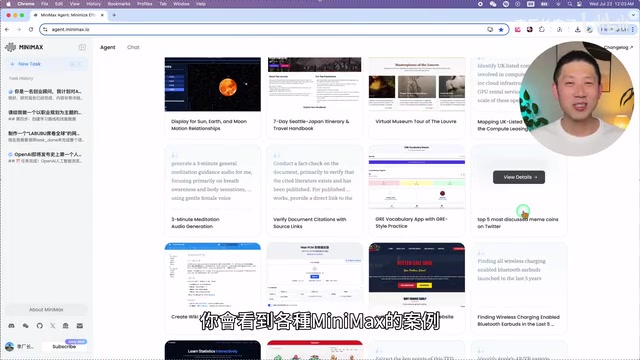
The platform offers a rich library of template examples, covering scenarios like road trip planning around Lake Tai, audio guides for the Louvre, straight-line obstacle racing games, and calorie tracking apps.
Pro tip: Whether you're using Manus, GenSpark, or MiniMax, you can copy the prompt from any official demo example, tweak it to fit your needs, and use it directly. This is the fastest way to get up to speed with any AI agent.
Test 1: Business Plan Generation
To evaluate MiniMax M1's reasoning, task decomposition, and planning capabilities, we intentionally gave it a vague prompt:
"You are a startup consultant. I'm planning to offer short-term AI training courses for frontline employees at Company A, focusing on how to use various large language models and AI agents. Please generate a business plan that includes a target user profile, core selling points, pricing, and an actionable execution timeline."
The prompt deliberately omitted client type, specific pain points, and budget details — the goal was to see how MiniMax handles incomplete information.
The result was impressive. Rather than charging ahead and writing something based on assumptions, MiniMax behaved like a real assistant and proactively asked clarifying questions — inquiring about company size, training specifics, and budget range. This behavior is known as "clarification interaction" in the AI agent field and is a key indicator of agent maturity. By contrast, many AI tools will simply generate content based on assumptions when given vague instructions — faster, but often misaligned with the user's actual intent. MiniMax's proactive questioning demonstrates stronger metacognitive capability at the task-planning level: it can recognize what it doesn't know and actively seek the missing information.
After receiving the additional details, MiniMax produced a complete business plan in about 10 minutes, available for download in PDF, Word, and Markdown formats.
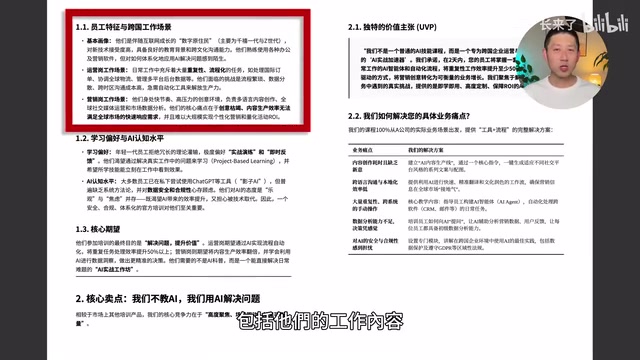
The quality of the plan was genuinely solid:
- The opening accurately identified the typical pain points employees face when using AI and the purpose of the training
- Detailed user personas were developed (job functions, training preferences, AI literacy levels)
- Core selling points, specific problems addressed, and expected outcomes were clearly articulated
- A complete pricing proposal with rationale was included
- An actionable execution timeline was attached
As a first-draft output, this business plan not only covered everything requested but also proactively expanded on several areas — exceeding expectations in terms of professionalism.
Test 2: In-Depth Research Report Generation
The second test focused on MiniMax's deep research capabilities. We asked it to investigate "OpenAI's upcoming AI browser," covering core features, business model, competitive differentiation, impact on developers and content creators, and release timeline — with a specific request that the report not be dry and formulaic, but written like an engaging story.
MiniMax delivered impressively.
The title alone set the tone: "Summer Thunder: The Rise and Fall Approaches." The entire report used everyday life scenarios as entry points — having AI help plan a trip, summarizing industry news in the morning, collecting data for a report, arranging business hospitality, comparing prices while shopping online. It was genuinely engaging to read.
The narrative flowed from the birth of Operator, to OpenAI's challenge to Google's search dominance, to the impact of an AI browser on various industries and future trends. It read more like a tech feature story than a cold research document. For context: OpenAI's Operator, launched in January 2025, is an AI agent tool capable of autonomously performing web-based actions like booking restaurants and making purchases — widely seen as OpenAI's pivotal shift from conversational AI to action-oriented AI. The rumored OpenAI AI browser takes this further, aiming to embed AI capabilities directly into the browser itself, directly challenging Google Chrome's market dominance.
This feature is particularly well-suited for scenarios where you need to "translate" complex topics into accessible language — such as briefing a non-technical executive or explaining a complex concept to a child.
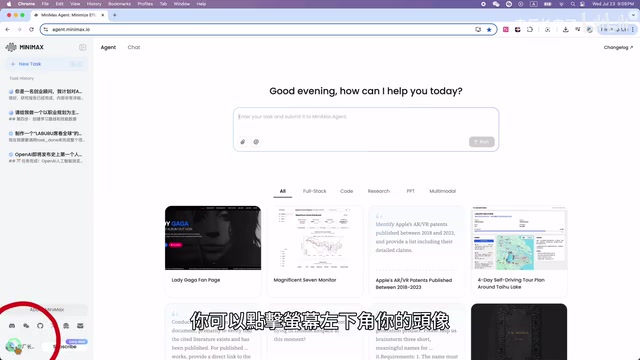
This in-depth research report consumed 227 credits. Based on the 1,000 free credits new users receive, that's roughly 4 to 5 deep research tasks on a similar scale.
Test 3: Slideshow / PPT Creation
The final test evaluated MiniMax's presentation creation capabilities. We asked it to produce a web-style slideshow on "Labubu's Global Takeover," covering the character's origins, design philosophy, color variants, market momentum, cultural impact, and future trends — with specific requirements for data visualization and output format.
Labubu is a collectible toy IP created by Hong Kong artist Kasing Lung, known for its signature jagged teeth and elf-like design. The IP is exclusively operated by Pop Mart, and since 2024 it has experienced explosive global growth — particularly in Southeast Asia, where it triggered near-frenzied buying sprees. Pop Mart's 2024 financial report showed that THE MONSTERS series, which includes Labubu, grew revenue by over 700% year-on-year, becoming the core engine driving the company's overseas business growth.
The final output was impressive:
- Origins page: Covered Labubu's creation history and brand background
- Design language page: Broke down the nine jagged teeth, oversized demon eyes, upright pointed ears, and other signature elements
- Product lineup page: Showcased blind boxes and other popular product categories with their market positioning
- Data analysis page: Included annual revenue, profit growth rates, and market share, along with social media reach data and celebrity effect analysis
- Trend forecast page: Offered well-reasoned projections for the IP's future direction
Both the content depth and visual design of the presentation reached a high standard — ready to use directly for a presentation or sharing.
MiniMax Pricing and Credits Guide
MiniMax's pricing is quite friendly for new users:
| Plan | Details |
|---|---|
| Free tier | 1,000 credits upon registration, no invite code needed |
| Basic plan | Subscription tier comparable to ChatGPT Plus |
| Credit packs | Additional credits available for purchase as needed |
MiniMax has not yet launched a referral program for earning credits by inviting friends.
Usage recommendation: Use the free 1,000 credits to thoroughly explore the chat, agent, and research features. Once you've confirmed it fits your workflow, consider upgrading to a paid plan. Based on our testing, 1,000 credits is enough for 4–5 deep research tasks or a larger number of document generation tasks.
Final Verdict: Is MiniMax Worth Using?
MiniMax's core competitive advantages come down to three things:
- 1-million-token ultra-long context processing: Virtually unmatched among free AI tools
- Built-in MCP connectivity: Integrates with Figma, Slack, Notion, GitHub, and more — highly extensible
- Zero barrier to entry: Register and start immediately, no invite codes or usage caps
Across all three real-world tests, MiniMax performed excellently on business document generation, in-depth research reports, and presentation creation. Its proactive clarifying questions interaction style in particular reflects genuine "agent" thinking — not just a smarter question-and-answer loop.
On the competitive landscape: Manus is a general-purpose AI agent launched in March 2025 by the Chinese team behind Monica.im, which attracted widespread attention for its powerful autonomous task execution — but its invite-only system has limited its user base. GenSpark positions itself as an AI-powered intelligent search and research platform, excelling at generating structured research reports. OpenAI's Operator, Google's Project Mariner, and Anthropic's Computer Use capability (built on Claude) are also actively competing in the agent space. The competitive focus in this field has shifted from raw model capability to breadth of tool integration, reliability of task execution, and smoothness of user experience.
At a time when many competitors are gating access behind invite codes and usage limits, MiniMax's open approach gives far more users the opportunity to experience a top-tier AI agent at zero cost. If you're looking for a full-featured, easy-to-use, and genuinely free AI agent tool, MiniMax is absolutely worth trying.
Key Takeaways
- MiniMax runs on the M1 model with 1-million-token context support — one of the most powerful reasoning engines available in any free AI agent
- Built-in MCP protocol enables connections to Figma, Slack, Notion, GitHub, and other external services, offering strong extensibility
- Real-world tests across business plan writing, deep research reports, and PPT creation all delivered strong results — especially notable is the agent's ability to proactively ask clarifying questions
- New users get 1,000 free credits with no invite code or usage caps required; accessible from both China and internationally
- A deep research report costs approximately 227 credits, meaning the free allocation supports 4–5 similar tasks
Related articles
 Product Reviews
The Programmer's Desk Setup Guide: Building a Workspace That Feels Like Home
Discover how programmers build productive, comfortable workspaces. From multi-monitor setups to ergonomic design, explore the desk philosophy that drives focus and flow.
 Product Reviews
Qoder vs Cursor Real-World Comparison: Which $20/Month AI IDE Is Better?
Hands-on comparison of Qoder vs Cursor AI IDEs: Agent autonomy, human interaction count, and architecture decisions. Qoder needed only 2 interactions vs Cursor's 8.
 Product Reviews
Cursor Cloud Agent Demo: Eliminating Bottlenecks Across the Entire Software Development Lifecycle
Deep analysis of Cursor's Cloud Agent demo showing how cloud VMs, automated test artifacts, and a full-chain control plane systematically eliminate human bottlenecks across the software development lifecycle.