MiniMax RefMod: A Complete Guide to Training-Free Reusable Identity Workflows
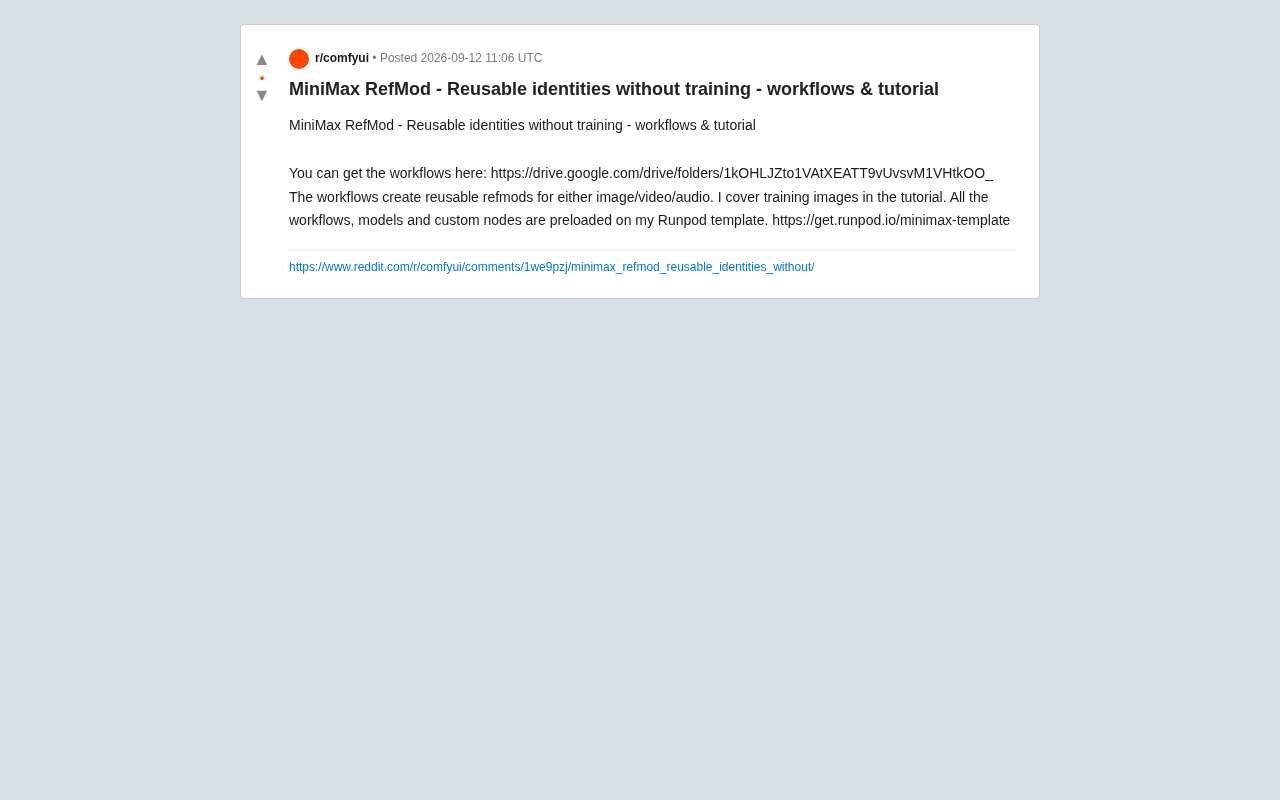
MiniMax RefMod enables consistent character identity across image, video, and audio generation — no LoRA training required.
RefMod is MiniMax's training-free character consistency solution that encapsulates identity features into reusable "reference modules" for use across image, video, and audio generation — eliminating the need to train a separate LoRA model for each character. The creator distributes it as a set of workflows and provides a Runpod cloud template preloaded with all dependencies, drastically lowering the barrier to entry. Reference image quality remains the key variable affecting results: even without formal training, the diversity of angles and clarity of features in input images directly determine final fidelity. For creators, RefMod's value lies in achieving character consistency at a lower time and technical cost, though its performance in high-fidelity professional use cases still warrants direct comparison with LoRA-based approaches.
One of the core challenges in AI image and video generation has always been maintaining a consistent character appearance across different scenes. Traditional approaches typically rely on fine-tuning methods like LoRA, which are time-consuming and require a certain level of technical expertise. MiniMax's RefMod offers an alternative path — reusable identity (identity) references with no training required.
What Is RefMod
RefMod's core concept is building reusable "reference modules" that lock in identity features across image, video, and even audio generation. Unlike LoRA, which requires collecting a dataset and running training, RefMod emphasizes a training-free workflow: creators simply provide reference material and can then reuse the same identity in subsequent generations.
According to the creator's post on Reddit, this solution is packaged as a set of workflows covering identity reuse across three modalities: image, video, and audio. This means whether you want a virtual character to stay consistent across a series of illustrations, or maintain coherent character appearance throughout generated video clips, the same underlying logic handles it all.
Coverage Across Three Workflow Types
The workflows provided cover three distinct output types:
Image Identity Reuse
For static image generation, RefMod allows you to lock a character's visual features into a reusable reference module. In practice, this workflow type best demonstrates the value of the "training-free" approach — eliminating the time cost of preparing a training dataset and waiting for training to complete for each individual character.
Video Identity Reuse
Video scenarios demand even higher consistency, since minor frame-to-frame variations get amplified into noticeable "drift." RefMod's role in video workflows is to keep a character's identity features as stable as possible across continuous frames.
Audio Identity Reuse
Beyond visual content, the creator also provides audio-related workflows for reusing a specific voice identity during audio generation. This extends RefMod's scope beyond visual creation into a broader range of applications.
Preparing Reference Images
Although the overall solution is marketed as training-free, the creator's tutorial dedicates specific attention to preparing "training images" (reference images). The key here is the quality of the reference material — even without formal model training, the input images used to build the reference module directly affect how well identity reuse ultimately performs. Reference images that cover diverse angles, have clear lighting, and display distinct features generally produce more stable results.
Deployment: Ready-to-Use Runpod Template
For users who don't want to deal with environment setup, the creator provides a pre-configured Runpod cloud template. This template comes preloaded with all workflows, required models, and custom nodes, allowing users to run everything directly on cloud GPUs and skip the tedious local installation process.
This "template-based" distribution approach significantly lowers the barrier to entry, making it especially suitable for creators with limited hardware resources or those unfamiliar with managing dependencies in tools like ComfyUI. The workflow files themselves are shared publicly via Google Drive, so users can also download and run them in their own environments.
Practical Value and Caveats
RefMod's significance lies in transforming "character consistency" — a problem that traditionally required training costs — into a reusable set of workflow configurations. For content creators and independent developers, this translates to faster iteration cycles and lower experimentation costs.
That said, it's worth maintaining realistic expectations: training-free approaches typically involve trade-offs between flexibility and peak performance, and whether the identity fidelity can meet professional-grade requirements still needs to be validated against specific projects. The tutorial and ready-made workflows provided are an excellent starting point, but actual results will be influenced by multiple factors including the quality of reference material and the complexity of the target scene.
For readers looking to try it out, it's recommended to start with the image workflow to get familiar with the overall logic, then gradually expand to video and audio scenarios. Using the Runpod template lets you quickly get the pipeline running end-to-end, and once you've validated the results, you can decide whether a local deployment is worth the investment.
Related articles
No Valid Source Material: A Dad Joke Tweet Cannot Support a Technical Article
The source material provided is an unrelated dad joke tweet with no informational value. A valid technical article cannot be generated. Please provide relevant tech content.
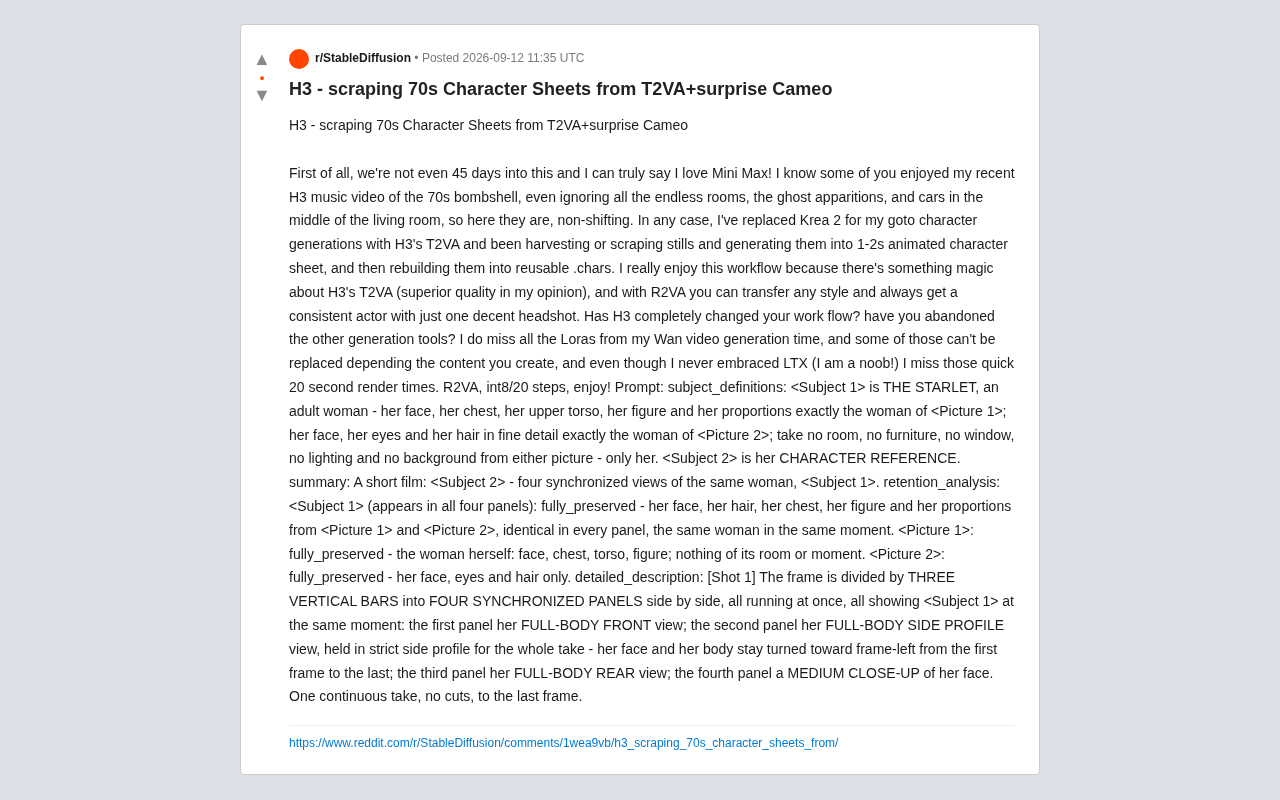
Building a Character Consistency Workflow with Hailuo H3: A T2VA Character Sheet Tutorial
A Reddit creator shares how to build a character consistency workflow using MiniMax Hailuo H3's T2VA/R2VA — from still harvesting to reusable .chars files, with a structured four-view character sheet Prompt.

25 Fields Medalists Issue Joint Statement: AI Is Causing Severe Misalignment in Mathematics
25 Fields Medalists issue a joint statement warning that AI is causing "severe misalignment" in mathematics — and what this means for the broader research community.