Minimax Text2Video Animation Stuns with Quality, Community Eagerly Awaits Frame Feature
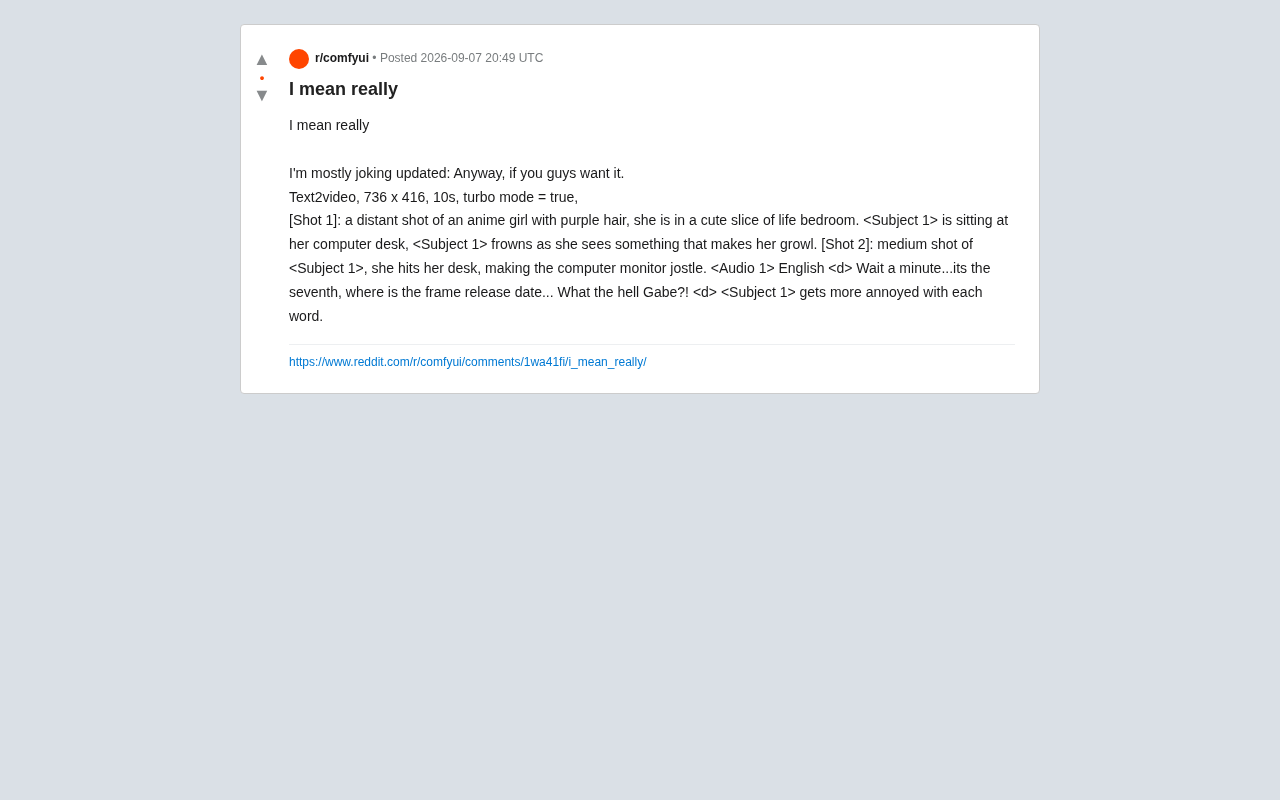
User leverages Minimax Text2Video to create anime demanding frame feature, showcasing AI video capabilities
A Reddit user created an animated video using Minimax's Text2Video showing a purple-haired anime girl frustrated about waiting for updates. The 10-second dual-shot animation demonstrates advanced AI video capabilities including shot transitions, character consistency, emotion progression, and audio-visual sync. The creative meta-narrative reflects community anticipation for Minimax's upcoming frame feature, which may offer frame-level editing and keyframe interpolation—representing the next breakthrough in AI video generation control.
Creative Update Request in AI Video Community: Using Minimax's Own Tool to Express Anticipation
Recently, a rather dramatic post appeared on Reddit. A user created an animated video using Minimax's Text2Video feature, depicting a purple-haired anime girl getting angry while waiting for a product update. This seemingly playful creation actually reflects the AI video generation community's eager anticipation for the release of Minimax's frame feature.
Minimax Platform Technical Background
Minimax is an AI company focused on multimodal large model development. Its Text2Video feature is based on a deep learning Diffusion Model architecture. This type of model can transform text descriptions into coherent dynamic video content by learning spatiotemporal features from large amounts of video data. Compared to traditional text-to-image technology, text-to-video needs to solve coherence problems in the temporal dimension—not only generating individual frames but also ensuring smooth transitions between consecutive frames. Minimax's turbo mode is an optimized fast generation version that trades some image quality details for faster generation speed, suitable for rapid prototyping and creative validation scenarios. Current mainstream AI video generation platforms also include Runway, Pika, and Stability AI, each with different focuses on model architecture, generation quality, and control precision.
The post author used Minimax's turbo mode to generate a 10-second, 736×416 resolution dual-shot animation. The first shot is a distant view showing the purple-haired girl sitting at a computer in a cozy bedroom; the second shot switches to a medium shot where the girl frowns, roars, and even slams the desk upon seeing certain content, causing the monitor to shake. The voiceover uses English dialogue: "Wait... it's the 7th already, where's the frame release date? Gabe, what are you doing?!" with gradually escalating emotion.
Analysis of Minimax Text2Video's Multi-Shot Narrative Capability
This case demonstrates several key capabilities of Minimax Text2Video in narrative expression:
Shot Transitions and Composition Control
The author achieved visual hierarchy changes through explicit shot language (from distant shot to medium shot), which is no easy feat in AI video generation. Shot transitions require the model to understand spatial relationships and narrative rhythm, and Minimax's performance in this regard is quite smooth.
Diffusion Models' Understanding of Shot Language
AI video models' understanding of shot language stems from cinematography knowledge embedded in training data. Terms like 'distant shot' and 'medium shot' have clear definitions in professional film production: distant shots typically establish scene background and spatial relationships, while medium shots focus on character actions and facial expression details. The model needs to learn the mapping between these concepts and visual features—distant shots mean larger field of view, smaller character proportions, and richer environmental details; medium shots require higher character resolution and more compact composition. Technical implementation may use layered generation strategies: first generating overall layout and camera parameters, then filling in detailed content. This spatial reasoning capability relies on the global attention mechanism in Transformer architecture and learning from large amounts of professional film and television materials during training.
Character Consistency Maintenance
Using the <Subject 1> tag achieves coherence of the same character across different shots, which is one of the core technical challenges in current AI video generation. The purple-haired girl maintains consistent appearance and clothing in both shots, indicating the model has good stability in character binding.
Technical Challenges of Character Consistency in AI Video Generation
Character Consistency is one of the most core technical challenges in AI video generation. Traditional diffusion models, when generating consecutive frames, are prone to drift in character appearance, clothing, and even body proportions—a phenomenon called 'temporal inconsistency'. By introducing a Subject tag system, Minimax essentially establishes feature anchors for characters in the model. Technical implementation may adopt methods such as Reference Image Injection or Latent Space Constraint, continuously comparing and correcting character features during generation. This is similar to 'character design sheets' in animation production, but implemented through neural networks. Current advanced industry methods also include conditional control technologies like ControlNet and cross-frame feature alignment solutions based on attention mechanisms.
Progressive Action and Emotion Expression
From frowning and roaring to slamming the desk, along with the monitor's physical reaction (shaking), the model demonstrates its ability to understand dynamic interactions and emotional progression. This multi-layered action performance makes AI-generated animation more engaging.
Audio-Visual Synchronization
Using the <Audio 1> tag with <d> markers achieves temporal alignment of dialogue with actions, with emotion intensity increasing word by word. This fine-grained control reflects Minimax's technical progress in multimodal generation.
Temporal Alignment Technology in Multimodal Generation
Audio-Visual Synchronization in AI video involves the complex technology stack of multimodal learning. Minimax's use of Audio tags with time markers <d> may employ Cross-Modal Attention mechanisms or Joint Embedding Space technology. Specifically, the model needs to map text, audio waveforms, and video frames into a unified semantic space, establishing alignment relationships among the three. The 'word-by-word increasing emotion intensity' feature for dialogue is particularly complex, requiring the model to understand the emotional curve of language and translate it into coordinated changes in visual performance (such as facial expression intensity) and acoustic features (such as volume and pitch changes). This fine-grained control traditionally requires professional animators to manually adjust dozens of parameters in CG animation, while AI models achieve end-to-end automation through learning large amounts of annotated data.
Community Reaction: Anticipation and Humor Reflecting Typical Mindset
The post's title "I mean really" carries obvious helplessness and humor. The author added in an update "I'm mostly joking," but then said "if you guys want it"—this contradictory expression perfectly reflects the typical mindset of the AI technology community: both full of anticipation for new features and unwilling to appear too eager.
The fictional character "Gabe" mentioned in the post likely refers to a key figure on the Minimax team. Transforming the request for updates into animated content itself is a creative meta-narrative technique—using the tool itself to express desire for tool upgrades. This self-referential creation is not uncommon in tech communities, but implementing it through AI generation adds an entirely new dimension to this expression.
Minimax Frame Feature Outlook: Frame-Level Control May Be the Next Breakthrough
Although the post content is relatively lighthearted, the mention of "frame release date" reveals important information: Minimax is developing some new frame-related feature. Combined with technical trends in AI video generation, this may involve the following directions:
- Frame-level editing capability: Allowing users to make fine adjustments and control specific frames of generated videos
- Keyframe interpolation: Guiding intermediate frame generation by specifying keyframes, enhancing creative freedom
- Frame rate and quality optimization: Providing higher frame rates or smoother dynamic effects, narrowing the gap with professional animation
Industry Frontier of Frame-Level Control Technology
Frame-level Control represents the next generation of AI video generation technology. Most current models use end-to-end generation, where users can only indirectly influence results through text prompts, lacking precise control over specific frames. Keyframe Interpolation technology allows users to specify frame states at several key moments in a video, with the model automatically filling in intermediate transition frames—similar to the 'key animation-in-between animation' workflow in traditional animation. Technical implementation may be based on Optical Flow estimation or Deformable Convolution networks to calculate inter-frame motion, then generate smooth transitions through conditional diffusion models. More advanced solutions like Adobe's Project Res-Up and Runway's Motion Brush have begun providing motion control for local regions and object trajectory editing capabilities. Breakthroughs in these technologies will evolve AI video from 'one-time generation' to an 'iteratively editable' creative mode.
One of the main bottlenecks in current AI video generation is temporal consistency and detail control. If Minimax's frame feature can achieve breakthroughs in this area, it will significantly enhance creators' control, bringing AI-generated content closer to professional animation production standards.
Conclusion: Industry Signals Behind an Update Request
This seemingly lighthearted community post actually reflects two key signals in the AI video generation field: rapid iteration of technical capabilities and continuous upgrading of user needs. When users start using the tool itself to push for tool upgrades, it's both recognition of existing capabilities and anticipation of future potential. Whether Minimax can meet community expectations with its frame feature will be a key step in maintaining its lead in fierce competition.
Related articles

Knockin': AI Business Cards That Make Your Personal Bio Intelligent
Knockin' transforms traditional bios into interactive AI business cards where visitors can chat to learn about your expertise and book meetings directly.

Intel CPU Price Increase of 10%: Strategic Transformation and Market Impact Analysis
Intel plans to increase PC processor prices by ~10%, shifting from market share competition to profit-focused strategy. Analysis of price increase drivers, impact on consumers and OEMs, AMD competitive dynamics, and industry trends.
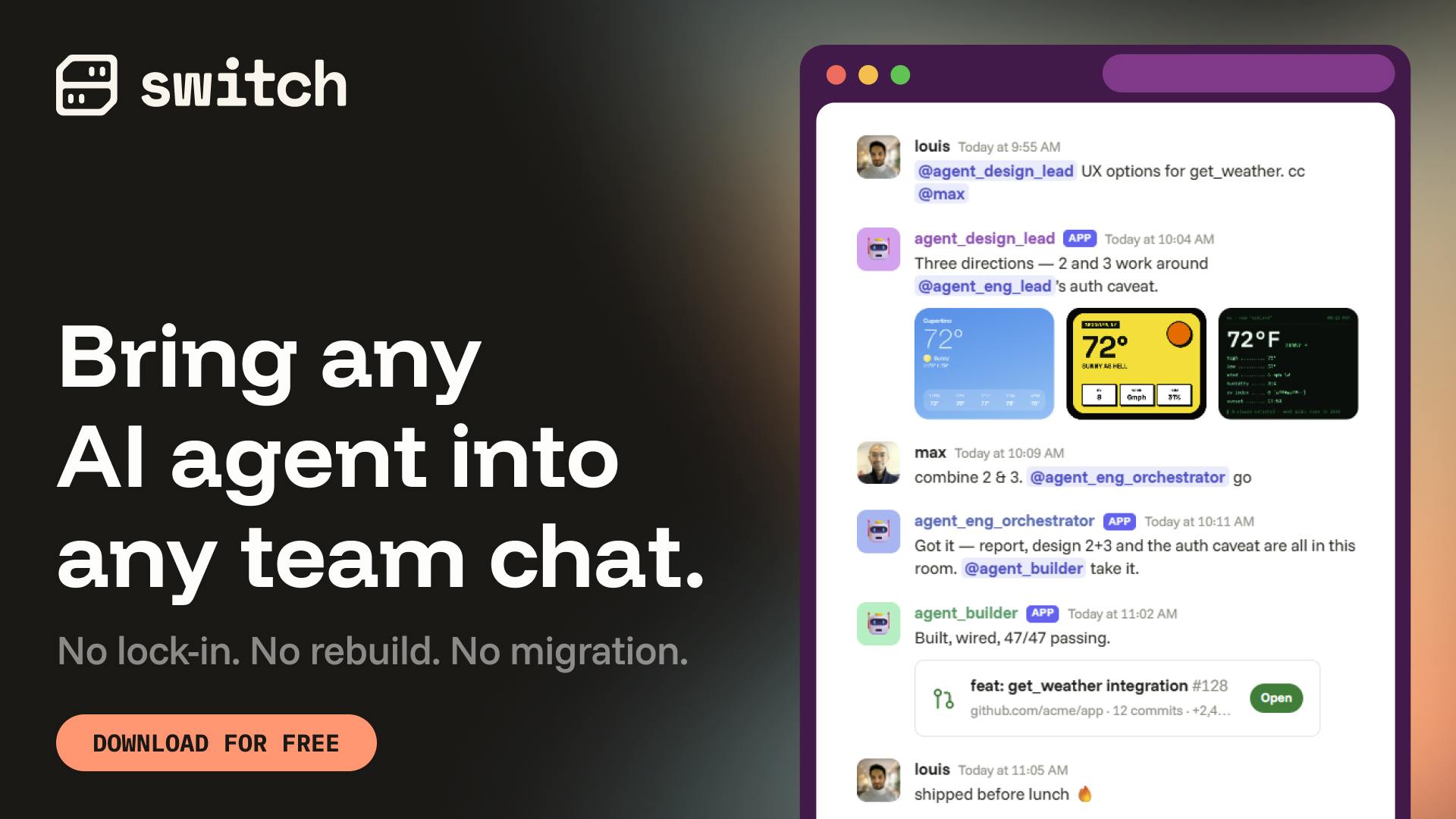
Switch Open Source Tool: Bringing AI Agents into Team Collaboration Platforms
Switch is an open source tool that integrates AI Agents as named participants into Slack, Teams, Discord, and other collaboration platforms, supporting multi-framework compatibility and self-hosted deployment. It reached #1 on Product Hunt.