mio click: The Stress-Relief Button That Lets You Raise a Digital Pet — and It's on a Global Leaderboard

mio click turns stress-relief pressing into a hatchable, rankable digital pet with one button and a small screen.
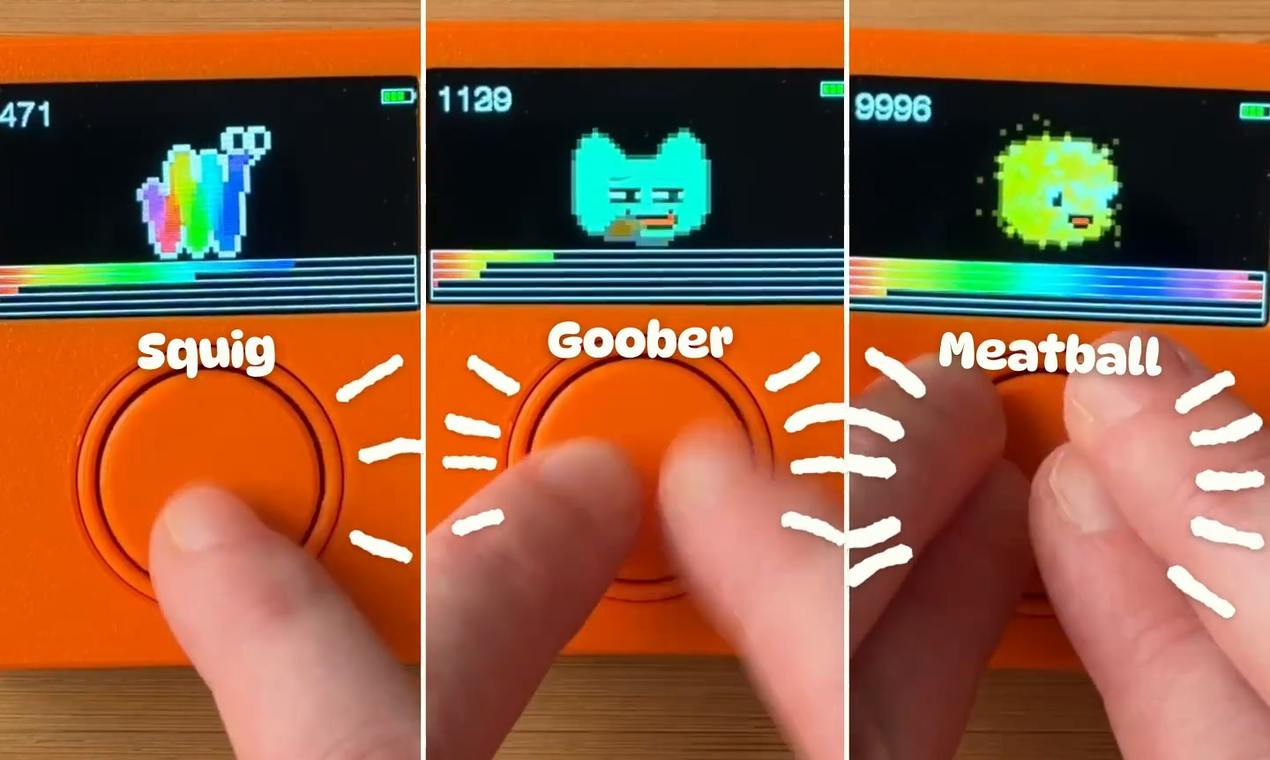
mio click is a handheld button device with a mechanical button and a small screen. Pressing it makes tiny digital creatures (Squig, Goober, Meatball) react, and players can hatch and collect different characters. It strips away Tamagotchi-style hunger and care burdens, keeping only the minimalist press-and-response loop. Every click is recorded and synced via Wi-Fi to a public leaderboard, turning unconscious actions into gamified data. It is hand-assembled in small batches and rated for 50 million presses, targeting stress relief, kids' pets, and light social interaction.
At the intersection of digital toys and physical interaction, a product called mio click is drawing attention on Product Hunt. It looks like a simple fingertip fidget toy, but it has a built-in screen and Wi-Fi, attempting to turn the small act of "pressing a button" into a companion that feels alive.
When a Fidget Toy Learns to "Raise a Pet"
The core design of mio click is very straightforward: a handheld button device with a mechanical button on the front and a small screen beside it. Press the button, and the character on the screen reacts. The official description mentions that you can "hatch" a Squig, Goober, or Meatball — these are different forms of tiny digital creatures. Each one is unique, and every press makes them change their movements.
This brings to mind a Tamagotchi-style raising experience, but mio click compresses the interaction down to the most primitive "press once." There are no complex menus, no hunger or cleanliness stats to tend to — only the instant feedback between pressing and response. This minimalist interaction fits perfectly with the use case of a fidget toy: you don't need to think, you just press down and get a little bit of pleasure.
Tamagotchi is a keychain-style digital pet released by Bandai in 1996 and is regarded as the archetypal virtual pet product. Its core mechanic is the "care loop": players must feed, clean, and play with the character on a schedule, or it will get sick or even die, creating an ongoing obligation of attention and emotional investment. Although mio click also sells itself on "hatching tiny digital creatures," it deliberately strips away the caregiving pressure of hunger and cleanliness stats, retaining only the shortest feedback loop of "press—respond." Understanding this difference is key: Tamagotchi's stickiness comes from responsibility and loss aversion, while mio click's stickiness comes from immediate sensory pleasure and the sense of accumulation created by click counting. The two follow different product logics.
Counting, Syncing, and a Public Leaderboard
Beyond the raising element, mio click also has a built-in counting feature. It records every click you make anywhere and syncs it via Wi-Fi to a public leaderboard. On the leaderboard, you can see how your mio ranks, hatch new characters, or trade with friends.
This design cleverly leverages the psychological mechanism of the "quantified self." What was originally an unconscious stress-relief action is transformed into data that can be accumulated and compared, giving a layer of gamified purpose to a repetitive behavior. The public nature of the leaderboard adds a bit of social pressure and fun, so that every press you make when bored becomes a kind of "progress."
Interestingly, mio click's syncing relies on Wi-Fi, which means it is not a completely offline standalone toy. For a product aimed at children and family scenarios, how the connected features balance privacy and fun will be a real concern for users. However, based on the currently public information, the synced content is limited to click counts and character states, so the data dimensions are relatively restrained.
"Quantified Self" was proposed by Wired editors Gary Wolf and Kevin Kelly in 2007. It refers to tracking one's own behavior, physical state, or habits through sensors and data logging, and using data feedback to change behavior. Common methods include step counting, sleep monitoring, and habit check-ins. In games and consumer products, this mechanism is often simplified into "turning unconscious behavior into accumulable numbers," then layered with leaderboards, streaks, achievement badges, and other elements to create a sense of purpose. mio click's conversion of stress-relief press counts into syncable, comparable values is a lightweight application of this idea: the behavior itself has no purpose, but the growing numbers provide an extra layer of motivation for repetitive actions.
Hand Assembly and Durability of 50 Million Presses
Another selling point of mio click is how it is made: assembled by hand in small batches by "a team of parents." The official page emphasizes "Assembled by hand in small batches by a team of parents," which is both a quality narrative and an implication that the product scale is limited and leans toward a boutique approach.
In terms of durability, the official button lifespan rating is 50 million clicks. For a device whose core action is "pressing," this metric directly determines the long-term experience. If the pressing feel does not degrade over long-term use, mio click has a chance to become a daily object that people genuinely carry around, rather than a toy that gets tossed in a drawer after a few days of novelty.
The lifespan of mechanical buttons is usually measured in "cycles." Common consumer electronics membrane buttons are often rated in the range of hundreds of thousands to millions of cycles, while 50 million is a notably high industrial-grade figure. What needs to be distinguished is that this number generally refers to the failure threshold of the electrical and mechanical structure under laboratory conditions, and is not equivalent to non-degrading feel over the long term — spring fatigue, contact oxidation, and housing wear can all affect the pressing experience before the rated count is reached. In addition, the rated lifespan usually does not cover other components such as the screen, Wi-Fi module, and battery. Therefore, for a connected device, the overall lifespan is often determined by the weakest link rather than the button itself.
Who Is It Really For?
Judging from its Product Hunt categories, mio click is classified under Hardware, Kids & Parenting, and Toys, but its potential users are clearly not limited to children. For adults, it is a fidget device with a screen; for children, it is a digital pet that can be hatched; for families, it is a small social载体 for trading characters. (This sentence seems to have an untranslated term; it likely means "a small social medium for trading characters.")
This multiple identity also brings challenges. As a fidget toy, it needs to feel good enough; as a digital pet, it needs characters that are appealing enough; as a social product, it needs a leaderboard that is active enough. If any one of these three links is weak, the product positioning may become blurred. mio click currently has 93 votes and ranks 18th, indicating that it has reached a group of early interested users, but whether it can convert novelty into long-term use will depend on subsequent character design and community operations.
At a time when AI hardware and smart toys are proliferating, mio click has chosen a lighter path: it does not pursue voice assistants or complex sensors, but instead makes the feedback of "pressing once" feel warm. This restraint may be exactly why it feels "like a friend."
One-line Summary
With one button and a small screen, mio click turns stress-relief pressing into a digital pet experience that can be raised and ranked.
Paragraph Summary
mio click is a handheld button device with a mechanical button on the front and a small screen beside it. When pressed, the tiny digital creatures on the screen (Squig, Goober, Meatball) react with movements, and players can "hatch" and collect different characters. It strips away Tamagotchi-style hunger stats and caregiving burdens, retaining only the minimalist loop of pressing and response, which fits the use case of a fidget toy. The device records every click, syncs it via Wi-Fi to a public leaderboard, and supports hatching new characters and trading with friends, turning unconscious actions into accumulable gamified data. The product is assembled by hand in small batches by a team of parents, with a button lifespan rating of 50 million presses. It targets three groups at once — stress relief, children's pets, and light social interaction — and this multiple positioning is both a selling point and a challenge; it currently has 93 votes and ranks 18th on Product Hunt.
Related articles

AI Assistant Misleads Tenant Into Eviction: Where Does Liability Lie for a Landlord's AI?
A landlord's AI assistant told a tenant they could delay rent—then she was evicted. This case reveals a liability vacuum for AI output involving contracts and legal obligations, and the responsibility deployers bear.

Best Black Friday Buys Under $100: 60+精选科技好物推荐
Black Friday on a budget? Here are 60+精选 tech deals under $100, covering accessories and practical gadgets to help you spend smart and avoid impulse buys.
Zhipu GLM-5.4 Released: Loop Transformer Runs 28 Layers Twice
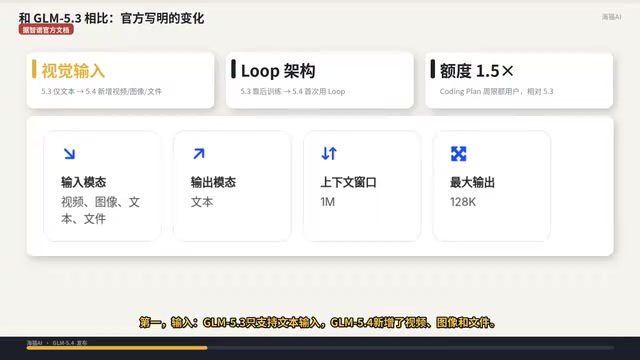
Zhipu releases GLM-5.4, the first Loop Transformer flagship: 28 layers run twice for 2-3T-equivalent intelligence, plus video and image input. API and open weights not yet released.