MLSys 2027 Reviewers Haven't Received Paper Assignments Yet? Community Discussion Draws Attention

MLSys 2027 reciprocal reviewers report no paper assignments yet; community watches timeline and impact.
A Reddit user asked whether MLSys 2027 reviewers had received paper assignments, noting that as a reciprocal reviewer they had not been assigned any papers, which resonated with the community. MLSys is a major machine learning systems conference that uses reciprocal reviewing, requiring submitters to take on review duties, placing high demands on organization. No official information clarifies assignment timing; delays may compress review windows, affect review quality, and intensify time pressure on reciprocal reviewers who are also submitters. The article notes information mainly comes from community discussion, creating asymmetry, advises reviewers to watch official emails and system notifications, and emphasizes that transparency in the assignment stage reflects conference organization quality.
Delayed Reviewer Assignments Raise Community Questions
Recently, a user on the Reddit forum posted asking whether MLSys 2027 reviewers had received their paper assignments yet. The user stated that they had signed up as a reciprocal reviewer for MLSys 2027 but had not yet been assigned any papers, and was curious whether others had received assignment notifications or knew when assignments would be released.
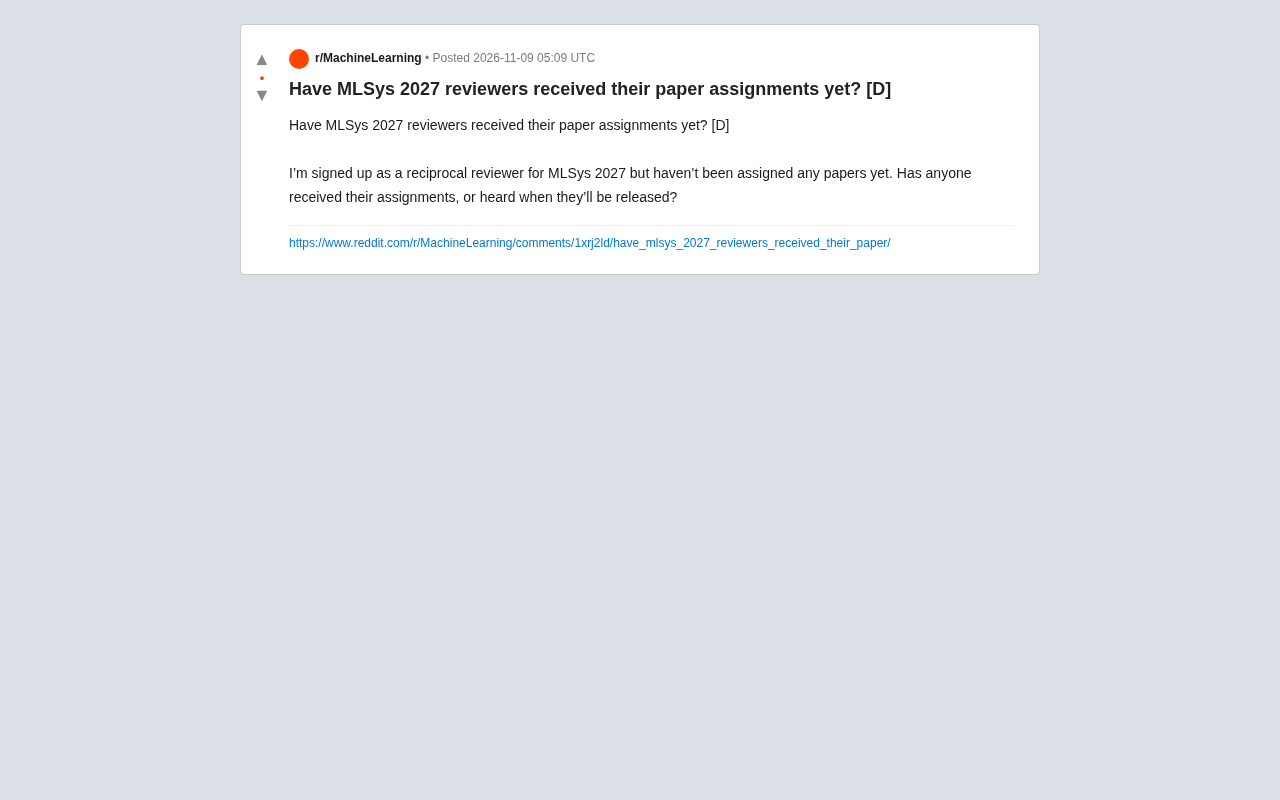
This post quickly resonated with researchers in the community who are also serving as reviewers. For academic conferences, reviewer assignment is a key step in ensuring the paper review process proceeds on schedule, and the timing of assignments directly affects whether reviewers have enough time to complete their reviews.
The Reciprocal Reviewing Mechanism and Timeline
MLSys (Conference on Machine Learning and Systems) is a major conference in the machine learning systems field and employs a reciprocal reviewing mechanism, which requires submitters to also take on review duties. This mechanism aims to balance the number of reviewers against the volume of submissions, but it also places higher demands on the conference's organizational coordination.
Based on community discussion, there is currently no official information clarifying the specific timing of MLSys 2027 reviewer assignments. The core concern of the posting user is to confirm whether assignments have begun and, if not, when they are expected to be released. This kind of information is crucial for reviewers to plan their time and schedule their review work.
MLSys Conference Positioning: MLSys (Conference on Machine Learning and Systems) is a flagship conference at the intersection of machine learning and systems, jointly organized by ACM SIGARCH, SIGOPS, SIGKDD, and others, focusing on directions such as efficient training, inference deployment, and hardware co-design for machine learning systems. In recent years, with the rise of large model systems research, MLSys submissions have grown rapidly, and pressure on the reviewer pool has increased accordingly—one of the backgrounds against which the reciprocal reviewing mechanism has been strictly enforced.
How reciprocal reviewing works: Under this mechanism, each submission typically requires at least one author to register as a reviewer and commit to completing a certain number of review tasks. The conference organizers match registered reviewers with submitted papers by research direction, usually completing the assignment via platforms such as OpenReview. If the number of registered reviewers is insufficient or their directional distribution is uneven, the matching process is prolonged, directly leading to delayed assignment notifications.
Potential Impacts of Delayed Reviewer Assignments
Delayed reviewer assignments may trigger a series of chain reactions. Reviewers need to reserve enough time after receiving assignments to read papers and write review comments; if assignments come too late, review quality may decline or reviewers may be forced to rush to complete tasks before the deadline.
In addition, reciprocal reviewers are often submitters themselves, and they need to follow the review progress of their own papers while reviewing others' papers. Assignment delays may intensify reviewers' time pressure, especially during periods when academic conferences are densely scheduled.
Review Cycle and Time Budget: A typical machine learning conference gives reviewers a review window of about 2 to 4 weeks, during which time must also be reserved for author rebuttals, AC meta-reviews, and other stages. Once assignment delays compress the review window, reviewers often can only complete in-depth reviews of multiple papers within a few days, which not only affects the quality of comments but may also lead review opinions to become conservative or superficial, in turn affecting the reliability of final acceptance decisions.
Limitations of Community Information Sharing
One detail worth noting: current information about MLSys 2027 reviewer assignments mainly comes from community discussion and lacks clear explanations from official channels. The posting user's inquiry itself also reflects the information asymmetry facing the reviewer community as they wait for official notifications.
In the organization of academic conferences, reviewer assignment usually involves multiple factors such as matching papers with reviewers' research directions and balancing reviewer workloads, and organizers need time to complete this work. However, promptly informing reviewers of assignment progress can help alleviate community anxiety and also help reviewers plan their time in advance.
Causes of Information Asymmetry: Conference organizers typically release reviewer assignment and deadline information through the OpenReview system, official mailing lists, or the conference website, but such notifications are often sent as bulk emails and are easily classified as spam or overlooked by reviewers. At the same time, community forums (such as Reddit's r/MachineLearning) have become important informal channels for reviewers to confirm progress with one another, but their information is scattered and lacks authority, and can easily amplify anxiety. Academic conferences could consider setting up a public review process timeline page to alleviate such information vacuums.
Advice for Reviewers
For reviewers who have registered but have not yet received assignments, it is advisable to pay attention to official conference emails and review system notifications while also watching for experience sharing from other reviewers in the community. If assignment timing is indeed later than expected, reviewers may need to communicate with conference organizers in advance to learn about assignment progress and review deadline arrangements.
From a broader perspective, the transparency and communication efficiency of the reviewer assignment stage are important reflections of the quality of academic conference organization. As an important conference in the field, MLSys's review process arrangements deserve continued attention.
Related articles
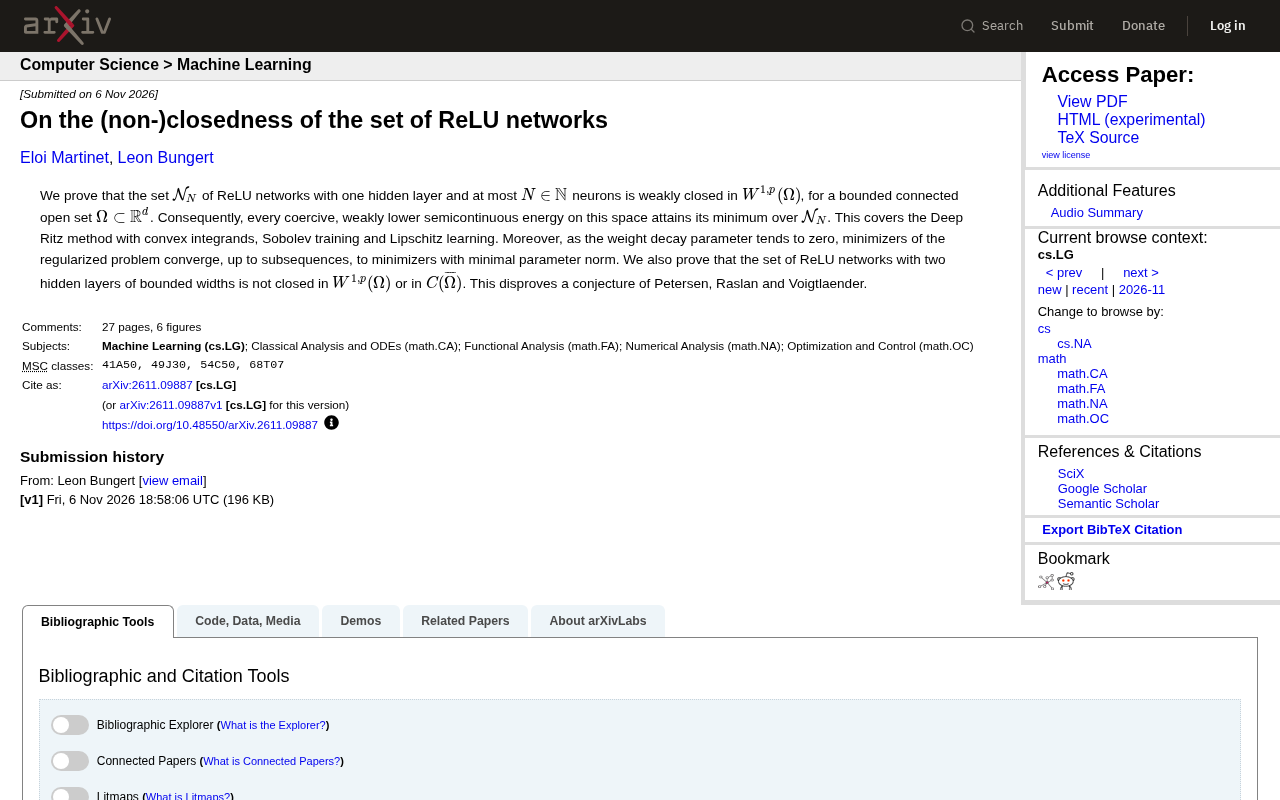
A New Proof on the Closedness of ReLU Network Sets: Single Hidden Layer is Weakly Closed, Two Hidden Layers is Not Closed
New research proves single-hidden-layer ReLU network sets are weakly closed in W^{1,p}, ensuring existence of solutions for Deep Ritz and similar methods; two-hidden-layer network sets are not closed, refuting an existing conjecture.
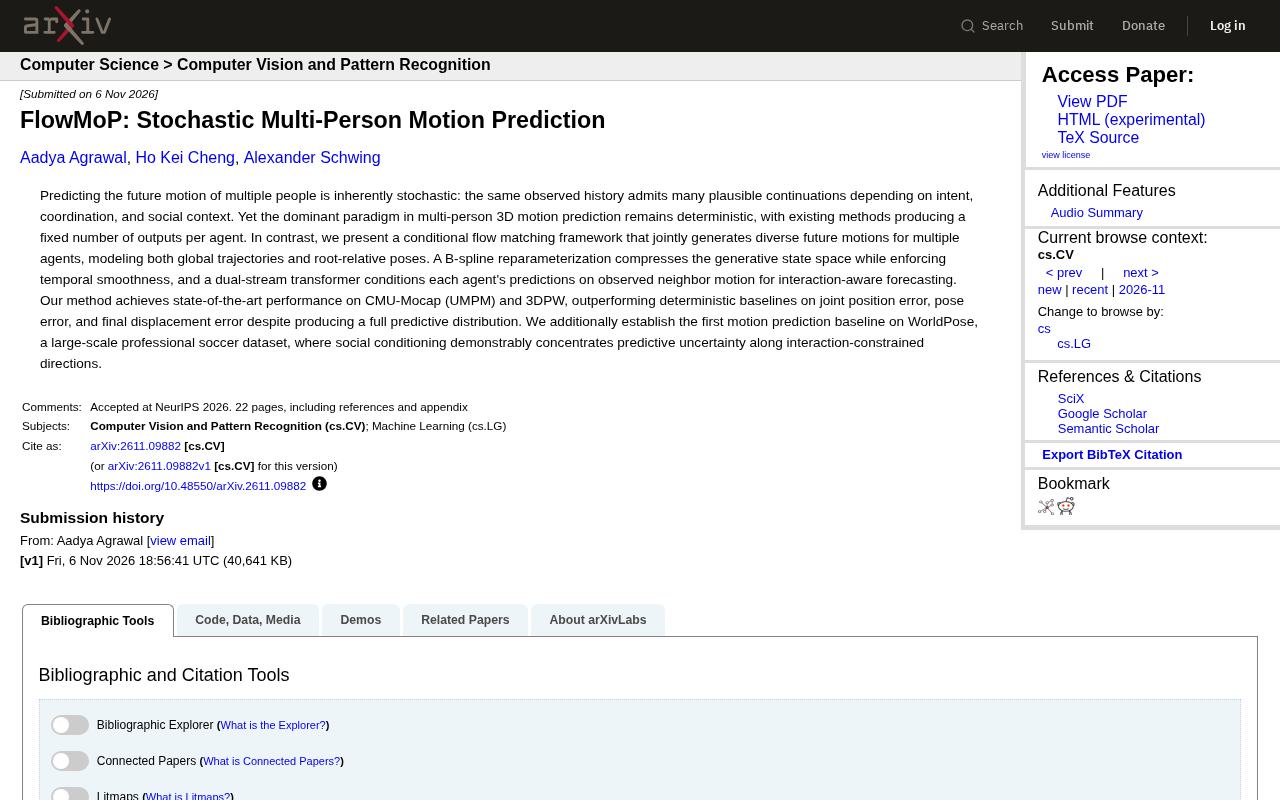
FlowMoP: A New Framework for Stochastic Multi-Person Motion Prediction
FlowMoP introduces a conditional flow matching framework that jointly generates diverse future motions for multiple agents, using B-spline reparameterization and a dual-stream Transformer for interaction-aware prediction. It outperforms deterministic baselines on CMU-Mocap and 3DPW and establishes the first motion prediction baseline on WorldPose.
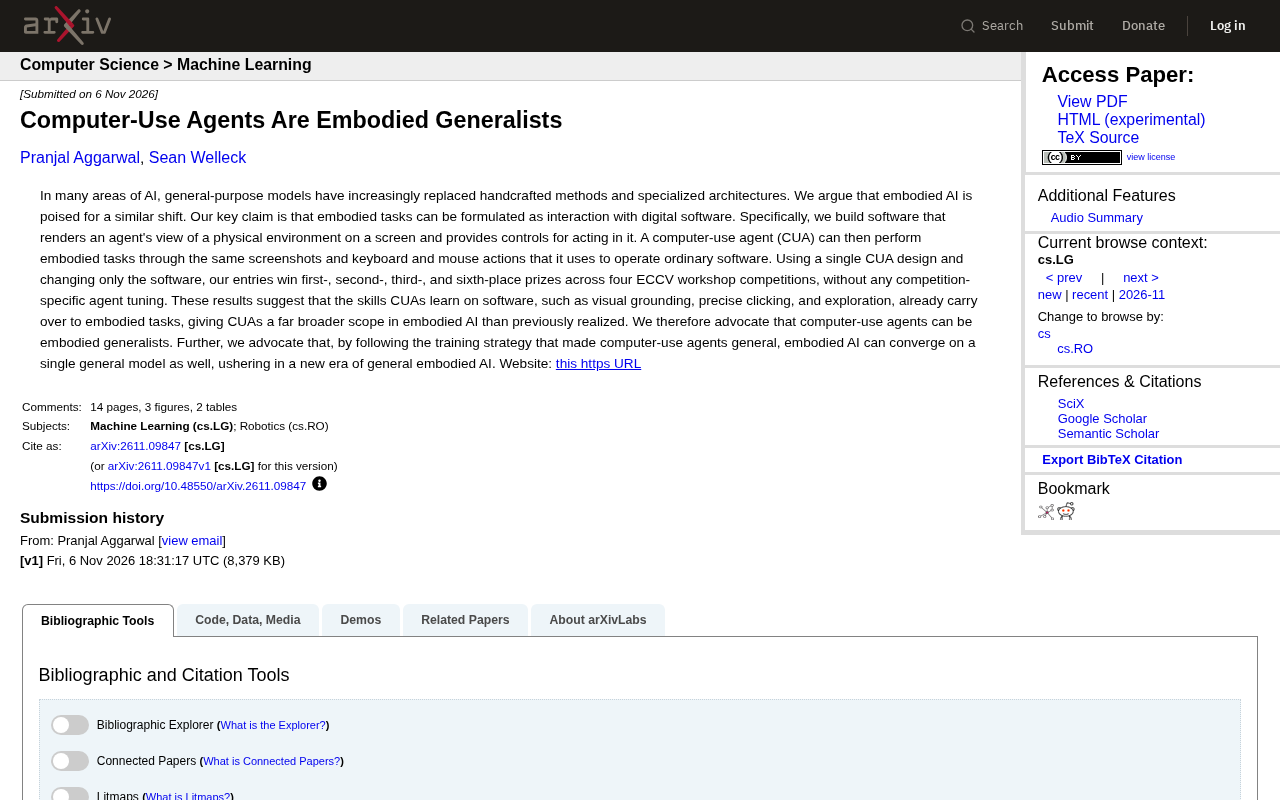
Computer-Using Agents: A New General-Purpose Paradigm for Embodied AI
ECCV workshop competitions show computer-using agents (CUAs) can win multiple contests by turning embodied tasks into software interaction, without specialized tuning—revealing their potential as embodied generalists and a new path to general embodied AI.