MotoGP Aragon GP: Márquez Stages Stunning Home-Turf Comeback to Claim Victory

Márquez sweeps Aragon despite injury and a start error, slashing the championship gap to 19 points.
Marc Márquez arrived at his home circuit of Aragon carrying a chronic arm injury and a Ducati prone to rear tire wear, then compounded his troubles with a start-line error that let two Aprilias past. Facing relentless pressure from Acosta, he responded with the race's fastest lap on lap nine and held firm to sweep both the Sprint and the main race. The perfect 37-point haul lifted him to second in the standings and trimmed leader Martín's advantage from a comfortable cushion to just 19 points, reigniting the title fight with several rounds still to run.
MotoGP never lacks for compelling stories, but few can match the intensity of Marc Márquez's performance at Aragon — a race that compressed pressure, injury, mistakes, and pure legend into a single, breathless afternoon. Based on race commentary sourced from Bilibili, this article reconstructs the Spanish rider's remarkable comeback on home soil and explores its far-reaching implications for the championship battle.
A Title Contender Racing Against His Own Body
Márquez is one of the most recognizable names in MotoGP. As the commentary puts it, he commands fans "from toddlers who've just learned to speak to silver-haired grandparents" — a rider so iconic that a worn pair of his shoes once sold for €3,000. But celebrity aside, his competitive form heading into Aragon was far from ideal.
At the previous round in Britain, he had managed only ninth in the Sprint and seventh in the main race. Each result had its own cause: the Sprint was undone by excessive tire degradation, while the main race was compromised by a recurring injury in his arm. In other words, he arrived at Aragon facing a dual crisis — a machine with known weaknesses and a body that might give out at any moment. His Ducati could be blindingly fast when everything aligned, but rear tire wear remained a chronic issue, and his arm injury threatened to fail him at any point during a long-distance race.
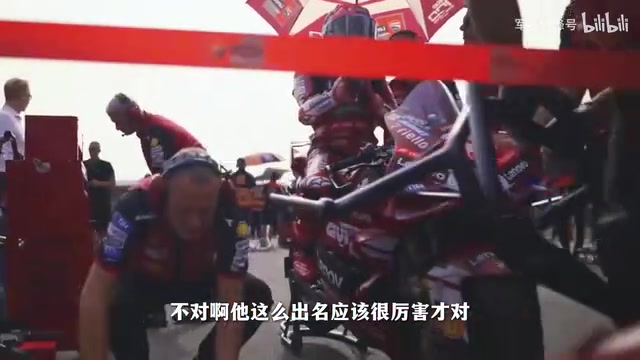
For a championship contender, form fluctuations are part of the game — but the next round was Aragon, the one circuit he simply could not afford to lose.
Márquez's arm injury is no ordinary sports ailment. After attempting a premature comeback in the 2020 season opener, he suffered a fractured titanium plate at the site of a previous humerus fracture, triggering four subsequent surgeries — including one that caused nerve damage, leading to severe muscle atrophy and motor impairment in his right arm. In a sport as physically demanding as MotoGP, this kind of injury is particularly dangerous. Riders must continuously resist braking forces and lateral cornering loads measuring dozens of G's; arm fatigue directly compromises braking point judgment and throttle precision. The so-called "arm pump" effect — where muscles swell under sustained high-intensity use, causing numbness in the hands — is one of the most common causes of late-race mistakes in MotoGP. Márquez's injury history makes him significantly more susceptible to this condition than his rivals.
Aragon: More Than Just a Circuit
Aragon means something far deeper to Márquez than any ordinary race weekend. This is his home ground, the track where he has reinvented himself multiple times over a storied career, and the spiritual home of his most devoted fans. The commentary conjures a vivid image: in those grandstands, you can almost feel the heat — the kind "scorched equally by sunlight and expectation."
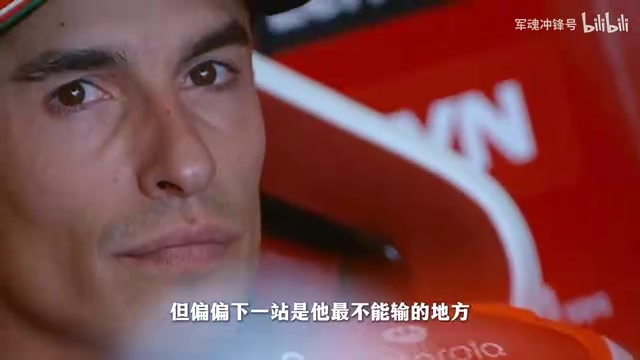
This circuit has served as the backdrop for some of Márquez's most iconic moments:
- 2013 — The rookie snatches his first victory from Lorenzo
- 2016 — Rossi can only watch as Márquez completes the overtake
- 2017 & 2018 — Lorenzo and Dovizioso take turns playing supporting roles
- 2019 — A dominant ride into the distance
- His comeback — Still the king of this track
With so much history invested in this venue, the stakes were enormous. Win, and the world championship would still be within reach. Lose, and he would not only disappoint tens of thousands of fans watching from the stands — he would all but eliminate himself from title contention.
Mistakes Made, Momentum Recovered
The drama began at the very start. In the split second after the red lights went out, Márquez made an error — he had failed to deactivate the rear ride height device. In an instant, two Aprilia machines swept past him on either side.
To make matters worse, the two riders now between him and the lead were among his most direct rivals for the championship.
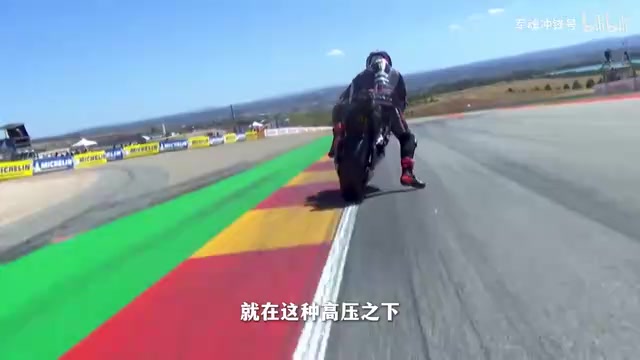
But what defines a top-tier rider is the ability to fight back from a deficit. Márquez quickly reclaimed the lead, though Acosta refused to be shaken off. On lap nine, Márquez posted the fastest lap of the entire race, lifting the tempo — yet Acosta stayed glued to his rear wheel.
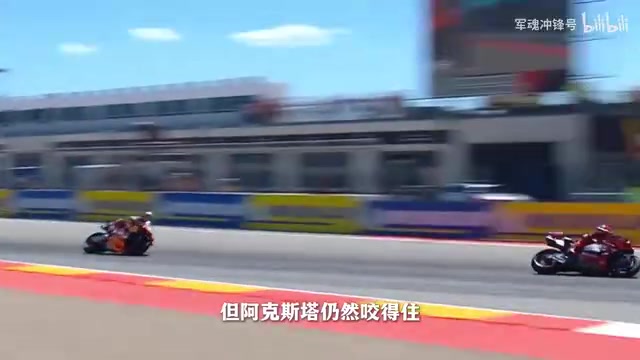
The rival's strategy was transparent: rather than attempt an immediate overtake, Acosta chose to apply relentless pressure, forcing Márquez to sustain a pace that might trigger another mistake. It was a battle fought on two fronts simultaneously — physical and psychological — made all the more precarious by Márquez's arm, which could have given out at any moment.
The Rear Ride Height Device (RHD) is a critical aerodynamic aid on modern MotoGP prototypes. At the start, riders actively lower the rear of the bike to reduce the angle at which the front wheel lifts, suppressing wheelies and maximizing rear-wheel traction during acceleration. Once the start sequence is complete, the system must be manually or electronically reset to restore normal ride geometry for cornering and braking. If the device is not deactivated in time, the bike's weight distribution is thrown off for the remainder of the lap, with serious consequences for corner stability and braking efficiency. The existence of such systems reflects a broader technological arms race in MotoGP — factory teams have expanded their aerodynamic programs well beyond conventional downforce components into active chassis attitude control systems.
A Win That Reshuffled the Championship
In the end, Márquez held firm. While the lap-by-lap detail wasn't fully captured in the source commentary, the outcome speaks for itself: he swept both the Sprint and the main race, collecting a perfect 37 points and completing a comeback that went from start-line blunder to home-crowd triumph.
The win immediately rewrote the standings:
- Márquez climbed to second in the championship
- Martín, managing only fifth in both races, saw his lead trimmed to just 19 points
- Bagnaia reached the podium twice, also closing the gap to the leader
In other words, a single race weekend had tightened the entire title fight. This is precisely what makes MotoGP so compelling: 37 points earned in one afternoon can pull a championship that seemed to be drifting away right back into contention.
From a narrative standpoint, Aragon once again confirmed its status as Márquez's "lucky circuit" — from rookie breakthrough to injury comeback, this track has witnessed his repeated resurgences. This time, he delivered the reversal under a triple handicap: physical injury, a start-line mistake, and relentless pressure from a rival. That makes it arguably the most valuable of all.
MotoGP's points system gives individual rounds enormous weight in the championship picture. Since the introduction of Sprint races in the 2023 season, the maximum points available per Grand Prix weekend have expanded from 25 (race win only) to 37 (12 for the Sprint + 25 for the main race). The direct consequence is that championship gaps can swing dramatically within a single weekend — a leader who scores nothing while a pursuer sweeps both sessions can concede up to 37 points in 48 hours. This round is a prime example: Márquez's perfect 37 against Martín's pair of fifth-place finishes (7 Sprint + 11 race = 18 points) produced a single-round swing of 19 points — nearly equivalent to a standalone race win. This also explains why mid-season leaders often adopt more conservative strategies focused on consistency and points accumulation rather than outright victory-hunting.
Closing Thoughts
What makes this race so extraordinary is precisely the fact that it laid bare every dimension of a legendary rider simultaneously — the vulnerability of a man worried about an old injury, the fallibility of a champion making a rookie-level mistake at the start, and the brilliance of a racer posting the fastest lap of the day when it mattered most. For MotoGP fans, Aragon wasn't just a great race; it was a pivotal turning point in the season's title narrative. The suspense lives on — and the next round is already charged with anticipation.
Related articles

Workbuddy for Absolute Beginners: How a Desktop AI Agent Fits Into Real Workflows
A beginner's guide to the Workbuddy desktop AI agent: installation, claiming credits, file management, and building automated workflows—compared with CodeX for fit and cost, helping professionals shift from AI question-askers to AI managers.

OpenAI's New Agent Stack: Computer Use, Decisions API, and Ultra-Fast Workflows
OpenAI Dev Day unveiled a new agent stack: Computer Use outperforms humans, Decisions API delivers ultra-low-latency classification via Luna, Agents API opens the same Computer Use capabilities, and GPT-6.1 Sol costs only one-seventh of Astra. Core updates, benchmark data, and developer insights.

Liang Wenfeng Open-Sources DeepInfo Inference Framework, Takes On U.S. Ban
DeepSeek open-sources its DeepInfo inference framework after its models, featuring GPU/CPU cross-pipelining, small-model prediction with large-model verification, and full Huawei Ascend and NVIDIA chip support—facing the U.S. federal ban head-on. This article analyzes its significance for AI deployment and open-source strategy.