MotoGP San Marino GP: Marc Marquez Takes Misano Win, Climbs to Top of Standings
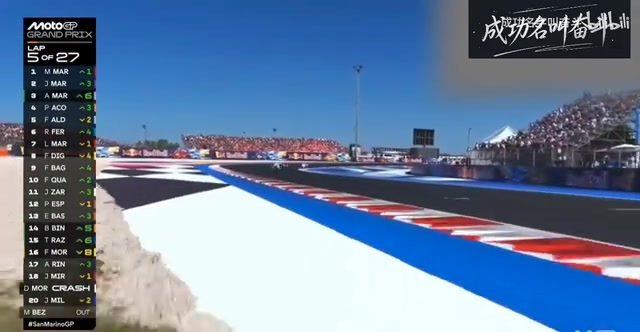
Marquez dominates Misano to lead the standings as crashes reshape the San Marino GP.
Marc Marquez won the 2024 San Marino Grand Prix at Misano, using patient early-race tactics and precise tire management to overcome Martin's lead challenge and ride to victory, extending his record at the circuit and climbing to the top of the standings. Bezzecchi crashed heavily from the lead at Turn 12, while Bagnaia suffered his second consecutive home-race DNF. Alex Marquez finished second despite shadowing his brother relentlessly, and Acosta charged to third. Off track, Quartararo's awkward split from Yamaha and looming rule changes — an 850cc limit and new tire supplier — added layers of intrigue beyond the race result.
Misano's Clockwise Home: Marquez Adds Another Win
The San Marino Grand Prix concluded at the Misano World Circuit. This clockwise layout has always suited Marc Marquez exceptionally well — he had already won here six times before. This time, he stood on the top step once again, extending his Misano win tally and officially moving to the top of the riders' championship standings.
The race was anything but a straightforward Marquez procession from the start. Off the line, Bezzecchi, Marquez, and Martin formed a small lead group, pulling away from the chasing pack. Bezzecchi defended Turn 1 aggressively, and Marquez — despite a few attempts to cut through on the inside — couldn't find a gap and bided his time. That early patience proved to be the foundation for his masterclass pace management in the second half of the race.
Bezzecchi's High-Speed Crash Changes the Script
The most heartbreaking moment of the race came when Bezzecchi suffered a lowside at Turn 12 — a fast right-hander — and slid out of contention. His specially-liveried Aprilia RSGP was destroyed in the crash, snapping clean in two between the tank and the front cockpit. The damage was catastrophic and irreparable.
It's worth noting that Bezzecchi had set a new lap record at Misano during qualifying — a 1:29.892 — and the Aprilia RSGP clearly had strong chemistry with this smooth-surfaced circuit. But the special livery seemed to carry a curse of sorts. His sudden exit from the lead fundamentally changed the shape of the race.
Bezzecchi wasn't alone in the DNF column. Bagnaia crashed out on lap six at his home circuit — his second consecutive San Marino GP retirement — while Jack Miller, Diogo Moreira, and others also fell. A constant stream of yellow flags kept the field on edge throughout.
Lowside is one of the most common crash types in motorcycle racing. It occurs when a tire loses traction mid-corner and slides toward the inside of the bend, taking both rider and machine down with it. The opposite, a highside, is generally more dangerous — the tire suddenly regains grip and launches the rider into the air. Lowsides typically happen from entering a corner too fast, braking too hard, or misjudging throttle application. Even at moderate speeds they can cause serious injury and mechanical damage; Bezzecchi's bike snapping in two is an extreme example. DNF (Did Not Finish) is a universal motorsport term for a rider who fails to complete a race due to a crash, mechanical failure, or penalty — scoring zero points and potentially dealing a significant blow to championship ambitions.
Martin's "Counter-Attack" and Marquez's Rhythm Control
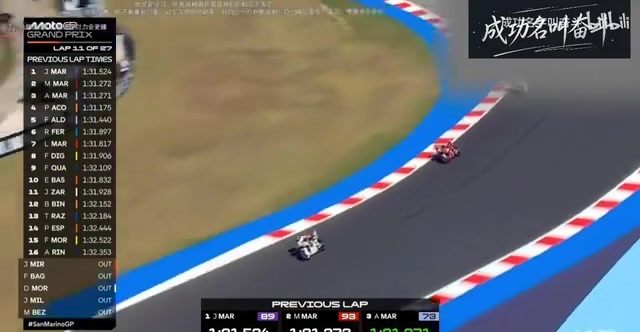
Martin had said before the race that San Marino would be where he hit back. He prefers Misano's silky-smooth surface over the rougher asphalt of Aragon, and the race confirmed that instinct — with around 20 laps to go, Martin made a decisive inside move to pass Marquez and take the lead.
But Marquez refused to be shaken off. He had mentioned in pre-race interviews that he felt comfortable on track, actively managing his pace and rear tire condition. With all riders using the same medium compound front and rear tires, Marquez had a deeper understanding of how to nurse the rubber through degradation. When the pit board signaled a closing rival, the "alien" immediately dialed up the pace, cutting back past Martin through a left-hander with an ease that was almost unsettling — by the time the camera caught the moment, he was already halfway through the pass. From there, he pulled away steadily and entered cruise control.
The Marquez Brothers' Duel and Acosta's Shark-Like Hunt
A secondary storyline ran throughout the race: the quiet sibling rivalry between Marc and his younger brother Alex Marquez. Alex closed to within 0.1 seconds on multiple occasions, maintaining attack range for several consecutive corners — yet he never fully committed to an overtaking attempt, sitting just behind and waiting. Some observers read this as brotherly restraint, but the moment Marc's pit board revealed his pursuer was Alex, he immediately accelerated and opened the gap, leaving no opportunity. Alex ultimately took second place.
The most intense battle in the final stages was for third. Pedro Acosta on the KTM RC16 was relentlessly aggressive, using the bike's top-end speed on the straights and his ability to get on the throttle earlier to work his way past both Costa and a wide-running Martin. Commentary noted that Acosta is confirmed to join Ducati next year, and his greatest ambition before leaving KTM is to win a Grand Prix aboard the RC16.
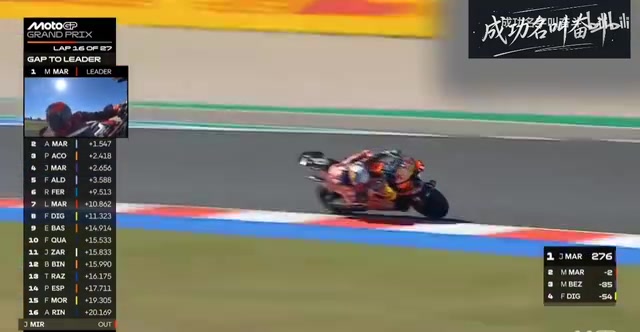
Pedro Acosta joined KTM's Tech3 satellite team in 2024 as a rookie and immediately drew attention with the RC16's strong straight-line exit speed and his fearless attacking style. The RC16's V4 engine delivers power in an explosive, front-loaded manner that allows riders to open the throttle earlier out of corners — a clear advantage in straight-line overtaking and exit acceleration. Acosta is confirmed to move to the Ducati factory team for 2025, in one of the most anticipated transfers in recent memory. His determination to win aboard the KTM before he leaves is equal parts farewell gift to his current employer and personal statement of intent.
Standings Shake-Up and Paddock Transfer Undercurrents
With Marquez winning and Martin finishing fifth, the championship picture shifted considerably. Marquez moved level with — or possibly ahead of — the standings leader heading into the Austrian Red Bull Ring, where the battle is expected to intensify further. Marquez also revealed he has pushed the lean angle of his Ducati GP to approximately 65 degrees — at that point the fairing is already scraping the ground, suggesting he is approaching the very limit of what the package can offer.
The paddock's off-track storylines were equally compelling. After Fabio Quartararo confirmed his move to Honda HRC, Yamaha announced they would no longer provide him with new development updates or include him in any mid-season tests — an awkward and somewhat cold parting of ways. Quartararo was candid: he just wants to finish the remaining races and do his job. This stands in contrast to the usual practice where teams offer departing riders access to new machinery and tires as a goodwill gesture — particularly relevant given that next season will see the displacement drop from 1000cc to 850cc, with Michelin exiting and Pirelli (Benelli) taking over tire supply. The value of mid-season testing in that context cannot be overstated.
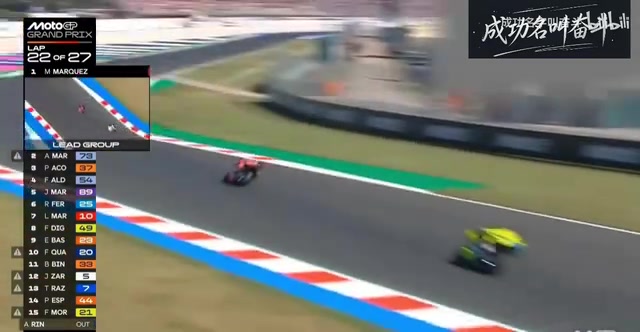
Elsewhere, Alex Rins (#31) announced that when he leaves MotoGP at the end of the season, he intends to step away from two-wheel motorsport entirely. Alex Marquez's departure from Gresini and Di Giannantonio's farewell to VR46 added further bittersweet notes to an already emotionally charged round. These behind-the-scenes narratives gave a seemingly clear-cut race result a surprising depth of humanity and intrigue.
MotoGP has run on 1000cc four-stroke engines since 2012. The reported reduction to 850cc for the upcoming season is intended to manage outright speeds, improve safety margins, and reset the competitive balance between manufacturers. The tire supplier transition is equally significant: Michelin has been the exclusive MotoGP supplier since 2016, accumulating vast data on track behavior and setup optimization. Pirelli's entry resets that knowledge base entirely — riders and engineers will need to build a fresh understanding of the new tire's characteristics across different temperatures and load conditions. This is precisely why mid-season testing windows are so valuable for riders switching teams. Yamaha's refusal to offer Quartararo any such access, in this context, looks particularly pointed.
Final Thoughts
The San Marino GP was yet another demonstration of Marquez at his most controlled: patient in the early laps, decisive in the middle, dominant at the end — all on the clockwise Misano circuit where he has always felt most at home. On the other side of the ledger, Bezzecchi's and Bagnaia's retirements, Acosta's relentless charge, Martin's unfinished comeback, and the paddock's transfer undercurrents all combined to make this one of the most information-dense rounds of the season. With the standings tightening, the Austrian GP is shaping up to be unmissable.
Related articles

Understanding DeepSeek in 3 Minutes: The Rise from a Quant Hedge Fund to an Open-Source AI Leader
DeepSeek's history in 3 minutes: from High-Flyer Quant's compute build-up to V2's MLA inference cost cuts, V3's $5.576M training bill, R1's open-source global shock, and V4 with a $7B Series A.

Local Creative Writing Model Showdown: Fine-tuned Qwen3.8 27B Wins, DeepSeek v4.1 Underwhelms
Bilibili creator tests seven local creative writing models: Hemingway and HumanLike Chat based on Qwen3.8 27B perform best, DeepSeek v4.1 is plain, Dongfang Shuo ranks last with confused characters. Includes three test prompts, scores, and usage advice.

Liang Wenfeng's Three Big Bets: Why Did DeepSeek Open-Source Its 82% Gross Margin?
Why did DeepSeek open-source DeepInfer, its 82% gross margin inference framework, and then launch a hundred-billion funding round? An analysis of Liang Wenfeng's three big bets and the open-source strategy.