Multi-Agent Collaboration: The New Hard Requirement in AI Engineering Interviews

Multi-Agent collaboration skills are now a must-have for AI engineering job seekers.
This article explores how enterprise-level Multi-Agent collaboration has become a hard requirement in AI engineering interviews. It covers the evolution from small-scale NLP models to trillion-parameter architectures, explains orchestration mechanisms and Skill-based tool invocation pipelines, and offers practical advice for job seekers to build competitive profiles through end-to-end project experience and engineering thinking.
Why Multi-Agent Is Becoming a Must-Have on Resumes
In the fiercely competitive AI engineering job market, one trend has become unmistakable: enterprise-level Multi-Agent collaboration capability is shifting from a nice-to-have to a hard requirement. If a resume's project experience lacks real-world Multi-Agent collaboration cases, the probability of receiving an interview invitation drops significantly.
This reflects a deeper industry transformation. As large language models expand from single-point Q&A to complex task orchestration, companies increasingly need engineers who can design, deploy, and maintain Agent systems — not just API consumers.
The concept of Multi-Agent systems originates from distributed artificial intelligence, with academic exploration dating back to the 1980s. However, the real explosion into engineering practice came after open-source projects like AutoGPT and BabyAGI attracted widespread attention in 2023. With the maturation of capabilities like OpenAI's Function Calling and Anthropic's Tool Use, large models are no longer limited to text generation — they can serve as "decision hubs" driving external tool execution. This provides a solid technical foundation for Multi-Agent architectures. Current mainstream enterprise Multi-Agent frameworks include Microsoft's AutoGen, LangChain's LangGraph, CrewAI, and China-developed MetaGPT, each making different design trade-offs in Agent communication protocols, task orchestration patterns, and memory management.
The Era Leap from 4,000 Parameters to Trillions
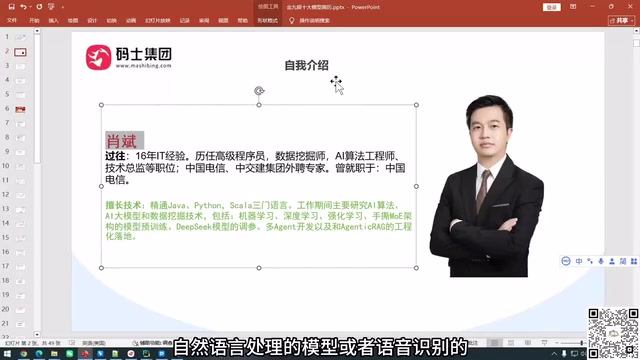
From an industry perspective, when entering natural language processing and speech recognition around 2019, the largest models trained had roughly 4,000 parameters. Today's mainstream large models have crossed into the trillion-parameter range — DeepSeekAd's Pro series, Tongyi Qianwen 3.8, and Kimi (approximately two trillion parameter scale) are all typical examples.
To understand the significance of this leap, we need to review the technical evolution. NLP models around 2019 (such as traditional CRF — Conditional Random Fields, BiLSTM — Bidirectional Long Short-Term Memory networks) typically had parameters in the thousands to tens of thousands range, primarily used for specific tasks like sequence labeling and intent recognition. Google's release of BERT (110 million parameters) in 2018 inaugurated the pre-training/fine-tuning paradigm, followed by GPT-2 (1.5 billion parameters) and GPT-3 (175 billion parameters) progressively pushing parameter scales to new heights. By 2024-2025, Mixture of Experts (MoE) architectures enable total model parameters to reach the trillion level, while only activating a subset of expert networks per inference to control computational costs. DeepSeek-V2's Multi-head Latent Attention and MoE architecture, along with the continuous expansion of the Tongyi Qianwen series, all embody this trend. The leap in parameter scale has not only brought Emergent Abilities but has fundamentally shifted AI engineers' focus — from feature engineering to prompt engineering and system orchestration.
Although large models still rely on neural networks and traditional model algorithms at the foundational level, they differ fundamentally from early NLP models in both scale and engineering complexity. This magnitude of leap directly determines the transformation in engineering practices — single-model tuning is no longer sufficient for production-grade requirements. How to make multiple Agents and various Skills work together has become the core challenge AI engineers must conquer.
Engineering Value of Multi-Agent and Skill Mechanisms
The core philosophy of Multi-Agent collaboration is decomposing complex tasks among multiple intelligent agents with different responsibilities, coordinating their division of labor through orchestration mechanisms. The Skill mechanism, in turn, equips each Agent with the means to invoke external tools and execute specific capabilities.
Technical Substance of Orchestration Mechanisms
Orchestration is the core skeleton of Multi-Agent systems, determining how tasks are distributed, information is passed, and actions are coordinated between Agents. Common orchestration patterns include: Hierarchical, where a primary Agent handles task allocation and result aggregation; Sequential, where Agents execute their respective stages in a preset workflow; and Collaborative, where multiple Agents negotiate as equals to reach consensus before acting. In engineering implementation, orchestration typically involves state machine or Directed Acyclic Graph (DAG) design, requiring handling of complex scenarios such as asynchronous calls, timeout retries, and result aggregation. LangGraph defines Agent flow relationships and conditional branches through graph structures, while AutoGen adopts a conversation-driven collaborative mode where Agents coordinate through natural language interaction. Different frameworks' design philosophies directly impact system scalability and debugging difficulty.
Skill Mechanism and Tool Invocation Pipelines
The Skill mechanism is essentially a plugin-based abstraction of Agent capabilities. Each Skill encapsulates a specific capability — whether invoking a search engine, executing SQL queries, running Python code, or accessing external APIs. In technical implementation, Skills are typically described through JSON Schema specifying their input/output formats and functional descriptions. The large model autonomously decides which Skill to invoke and what parameters to pass based on task context. This process involves Function Calling or Tool Use protocols: the model generates structured invocation instructions, the system parses and executes the actual operation, then returns execution results to the model for next-step reasoning. The stability of tool invocation pipelines directly affects production environment reliability, necessitating well-designed error handling mechanisms (such as retry strategies and fallback plans), timeout controls, result validation logic, and invocation log tracing capabilities.
The engineering advantages of this architecture are significant:
- Task Decoupling: Breaking large tasks into independently processable subtasks, reducing individual Agent complexity
- Capability Extension: Through Skill pluginization, enabling Agents to invoke retrieval, computation, code execution, and other capabilities on demand
- Maintainability: Modular design facilitates debugging and iteration, aligning with enterprise engineering standards

For job seekers, demonstrating deep understanding of Agent orchestration, state management, and tool invocation pipelines in projects is far more convincing than simply listing "proficient in ChatGPT." This is precisely why hands-on experience with enterprise Multi-Agent frameworks has become a key focus for interviewers.
Data Insights Behind Interview Reviews
A set of data from industry training programs deserves attention. According to statistics, since a particular training program launched, over 1,700 students have participated, with approximately 1,065 resumes optimized and revised, and about 625 students completing in-depth reviews with interview recordings.
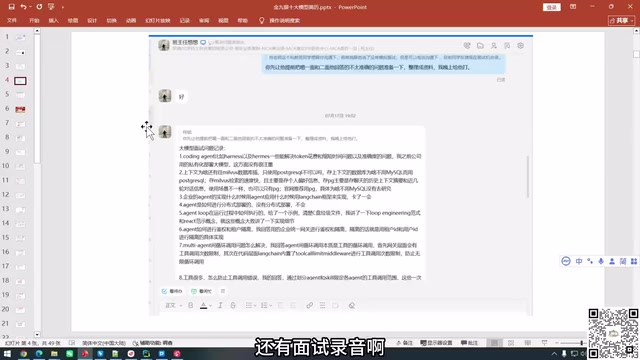
"Interview review" refers to listening to complete interview recordings of students, analyzing the interviewer's intent behind each question, evaluating the strengths and weaknesses of student responses, and providing targeted improvement suggestions. This analytical approach based on real recordings and high-frequency interview questions can indeed accumulate precise judgment about interview trends.
It should be objectively noted that these data come from a single institution's self-reporting and lack third-party verification — readers should rationally assess their representativeness. However, setting aside specific numbers, the methodology conveyed is worth learning from: reverse-engineering the capability dimensions currently being assessed by the industry through reviewing large volumes of real interview samples.
What Interviewers Are Actually Evaluating
Based on actual interview feedback, interviewers typically assess Multi-Agent projects across the following dimensions:
- Overall architectural design philosophy
- Communication and coordination mechanisms between Agents
- Handling strategies for conflicts or errors
- Stability and fault-tolerance design of Skill invocations
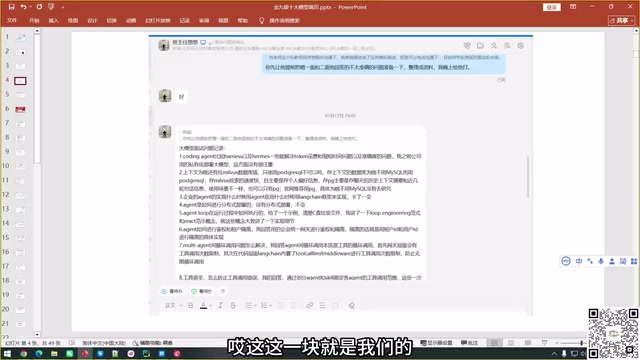
In other words, interviewers are no longer satisfied with candidates saying "what they did" — they dig deep into "why they did it that way" and "how they solved problems when they arose." This requires job seekers to not only have project experience but also clearly articulate the engineering trade-offs behind each design decision.
Practical Advice for AI Job Seekers
Based on the above analysis, the following recommendations are worth serious consideration for practitioners looking to enter or deepen their expertise in AI engineering:
First, prioritize end-to-end project practice. Rather than mastering scattered knowledge points, it's better to complete an entire Multi-Agent collaboration project from start to finish — from requirement decomposition, Agent design, and Skill integration to deployment — forming a complete technical narrative chain.
Second, master the engineering paradigm of the large model era. Deploying trillion-parameter models relies more on orchestration capabilities, Retrieval-Augmented Generation (RAG), tool invocation, and other peripheral engineering capabilities rather than training models from scratch. RAG (Retrieval-Augmented Generation) is one of the key technologies for large model deployment, compensating for model knowledge timeliness and specialization gaps by dynamically retrieving external knowledge bases during inference. In Multi-Agent architectures, RAG typically exists as an independent Skill or dedicated retrieval Agent. Its tech stack involves document chunking, embedding, vector databases (such as Milvus, Pinecone, Weaviate), similarity search, reranking, and context injection among multiple stages. Advanced RAG solutions also include query rewriting, multi-path recall, Self-RAG, and other optimization strategies. Mastering the engineering implementation details of RAG is an extremely high-frequency evaluation point in current AI engineering job interviews. These capabilities are precisely the high-frequency assessment areas for current positions.
Third, prepare for interviews with engineering thinking. Interviewers focus on the complete problem-solving process. When describing projects, proactively explaining the rationale behind architecture choices, pitfalls encountered, and specific solutions is far more effective than stacking technical jargon.
Fourth, maintain sensitivity to new frameworks. Enterprise Multi-Agent frameworks are constantly emerging. Staying current with the design philosophies and applicable scenarios of mainstream tools helps demonstrate technical vision and learning ability during interviews.
Conclusion
From 4,000 parameters to trillions, the bar for AI engineering is rising rapidly. New paradigms like Multi-Agent collaboration and Skill mechanisms are both inevitable products of technological evolution and new measuring sticks in the job market. Regardless of whether specific data points are fully verifiable, the direction they reveal is clear: talent with enterprise-level Multi-Agent project experience and engineering-oriented thinking is becoming a scarce resource in the market.
For every AI practitioner, filling the Multi-Agent collaboration capability gap sooner rather than later may be the key to seizing the next wave of career opportunities.
Related articles

RAG Getting Started in Practice: From Principles to Building an Enterprise Knowledge Base
Bilibili RAG course highlights: from retrieval-augmented generation principles, document chunking and vectorization, to five accuracy factors and enterprise knowledge base boundaries, with fine-tuning vs RAG selection advice.

AI Model Selection Guide: DeepSeek vs. Qwen3 in Practice
How should AI developers choose models? Based on a Bilibili tutorial, this article breaks down the Function Calling differences between DeepSeek V3 and R1, Qwen3's programmatic thinking mode switching and agent capabilities, and outlines a multi-model learning path and practical selection logic.

Anchoring, Loss Aversion, and Nudges: 5 Psychological Tactics Retailers Use to Make You Spend
Behavioral economics reveals how retailers use anchoring, framing, loss aversion, and nudge theory to manipulate your spending decisions. This article breaks down 5 common psychological tactics and offers counterstrategies like slowing down decisions and setting your own anchors to see through the pricing design behind discounts.