Multica: An Open-Source Tool for Managing Multiple AI Coding Agents from a Single Dashboard

Multica lets developers manage multiple AI coding Agents from a single visual dashboard.
Multica is an open-source tool that consolidates AI coding Agents like Claude Code, Codex, and Cursor into a unified visual dashboard. It offers kanban-style task management, persistent conversation history, cloud deployment for reduced ban risk, and concurrent task queues — enabling one developer to orchestrate dozens of Agents efficiently.
From Command Line to Visual Dashboard: The Evolution of AI Agent Collaboration
As more and more developers adopt AI coding tools like Claude Code, Codex, and Cursor, a new challenge has emerged: how do you manage multiple Agents simultaneously without constantly switching between terminal windows?
Background: What Is an AI Agent? An AI Agent is an AI system capable of autonomously perceiving its environment, forming plans, and executing tasks. In the coding world, tools like Claude Code, Codex, and Cursor are essentially programming Agents with a degree of autonomous decision-making — they can understand natural language instructions, invoke tools, run code, and read/write files. As these tools become mainstream, "multi-Agent collaboration" has emerged as a new paradigm for boosting development productivity — similar to multiple engineers working in parallel on a software team, each Agent handling a different module or task. However, managing multiple Agents introduces its own complexity: context synchronization, task dependencies, progress tracking, and cost control all require a higher-level orchestration layer to handle uniformly.
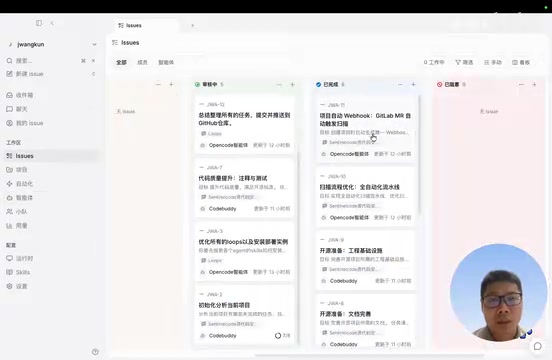
Multica was born precisely to address this pain point. The core idea behind this open-source tool is to consolidate AI Agents that were previously scattered across individual terminals into a single visual dashboard — enabling one person to direct a dozen Agents at once through features like task assignment, a progress kanban board, and a chat inbox. The UI is polished and the feature architecture is well-rounded, with a notably high level of completion.
Why a Unified AI Agent Management Tool Is Needed
Users of AI Agents commonly face a core challenge: context is easily interrupted. Once your train of thought is broken, it's hard to return to the previous task state — you may not even remember what you were doing.
This pain point has deep technical roots. Every AI conversation relies on a finite-length context window to maintain coherence — a core mechanism of how large language models process information. Once a conversation is terminated or the window is cleared, the model loses all memory of prior state, like an engineer who "forgets everything" at the start of each new session. Command-line terminals naturally lack session persistence: when a process exits, its state is gone — a stark contrast to the project state management offered by traditional IDEs.
More practically, any in-progress conversations in command-line tools are lost when your computer restarts. Multica acts like an inbox, persistently saving all tasks and interaction history so you can revisit the progress of any project at any time. At its core, Multica adds a stateful task management layer on top of stateless LLM interactions, solving the fundamental problem of "resuming from where you left off."

Multica Core Features in Depth
Agent Configuration and Team Orchestration
The first step in Multica is configuring your "Agents." It automatically detects locally installed tools — including Claude Code, Codex, Cursor, Kimi Code, OpenCode, Copilot, and more — and allows you to select a model for each Agent individually.
One efficient approach is to name Agents after the underlying tools themselves (e.g., OpenCode, Claude Code, Codex) and treat each Agent as a full-stack engineer to be dispatched uniformly, rather than organizing them by business roles like marketing, product, or frontend/backend. That said, organizing by business role is entirely viable too.
Multica also supports creating "squads" — grouping multiple Agents and team members into a single collaborative unit — and tracks model usage per Agent for easy cost monitoring.
Task Assignment and Kanban Visualization
Task management is Multica's most practical feature. Users can create new tasks within specific projects, set priorities, and tasks default to the "To Do" list. At this stage, tasks are unassigned and not executing; once an Agent is assigned, the task automatically moves to "In Progress," and upon completion flows to "Done" or "Pending Review."
Deep Dive: The Kanban Management Paradigm The kanban model Multica uses originated in Toyota's production system and was later widely adopted in software engineering — tools like Trello and Jira are built around it. The core logic is to visually distribute work items across status columns (To Do → In Progress → Done), reducing context-switching costs and improving overall flow efficiency by limiting the number of tasks in progress at any one time (WIP limits). Applying this model to AI Agent management means each Agent acts as a "virtual engineer," while the human plays the role of product manager or team lead — responsible for breaking down requirements, assigning tasks, and reviewing output, rather than writing every line of code themselves. This "human as Orchestrator" model represents a new division of labor in AI-assisted development.
The core value of this kanban mechanism lies in concurrency: in a command-line terminal, you can't assign tasks to multiple Agents simultaneously. Multica's task queue gives a single person the genuine ability to manage over a dozen AI Agents at the same time.
Cloud Deployment: Practical Tips for Avoiding Account Bans
A Decoupled Architecture: Local UI + Remote Execution
Multica supports flexible "runtime" mounting. Beyond the default local environment, users can also deploy Agents to remote cloud servers.
A typical use case: rent an overseas VPS on AWS (e.g., an Australia node), run Claude Code on it, and connect it to Multica via CLI. The primary purpose is to reduce the risk of Claude Code account bans — by moving the execution environment to a remote server while issuing commands through a unified graphical interface.
Technical Background: Why Does Cloud Deployment Reduce Ban Risk? AI coding tools like Claude Code typically access cloud models via API keys or account authorization. Frequent, high-volume requests can sometimes trigger the provider's anomaly detection, resulting in rate limiting or account suspension. Moving the execution environment to a fixed-IP overseas VPS (Virtual Private Server) reduces abnormal fluctuations in request origin. A daemon process ensures the Agent continues running in the server background, unaffected by local network issues or device restarts. This "local UI + remote execution" decoupled architecture is essentially a Client-Server model — the Multica interface acts as the control console, while the remote server handles the actual computational workload, with each side maintaining clear, separate responsibilities.

Connecting to a remote environment requires creating a Token in settings and completing the connection via CLI, with a daemon process maintaining the connection in the background. This architecture is especially valuable for developers who rely heavily on Claude Code.
Skills Support and Token Cost Optimization
Recognition Limitations for Standardized Skills
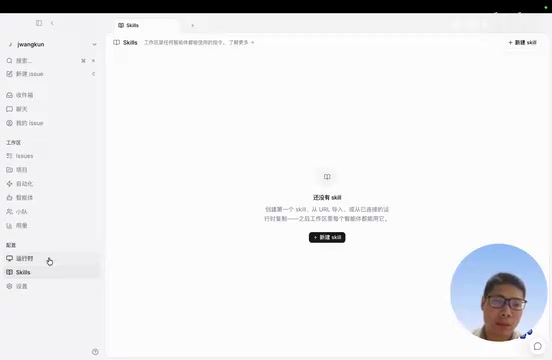
Multica supports linking code repositories and can recognize standardized Skills. One important caveat: Multica can only recognize Skills in standardized formats — locally customized Skills with the same name cannot be invoked directly.
Practical Tips for Reducing Token Consumption
Running multiple Agents concurrently with full interaction logging consumes a large number of Tokens. To understand this, it helps to know how Token billing works: a Token is the basic unit of text processing for large language models, roughly equivalent to 3/4 of an English word or half a Chinese character. Nearly all major LLM APIs charge by Token, and the combination of multi-Agent concurrency and full interaction history logging causes Token consumption to grow exponentially — because every request must carry the complete conversation history.
One effective optimization is to configure a "terminal compression" Skill for each Agent, allowing it to automatically compress terminal interaction content and significantly reduce Token overhead. In essence, this uses summarization or truncation strategies to periodically compress conversation history, reducing the number of Tokens carried per request while preserving key information — striking a balance between functional completeness and cost control. For teams making heavy use of multiple Agents, Token cost management is a critical variable in determining the long-term sustainability of the workflow.
Current State and Project Positioning
As an open-source project, Multica still has some bugs — for example, garbled characters occasionally appear in log output, and compatibility issues may arise in certain deployment environments. It's recommended to try upgrading to the latest version first; if issues persist, file an Issue on the GitHub repository.
In terms of product positioning, Multica primarily serves developers with multi-Agent management needs, and differs from lightweight tools aimed at non-technical users.
For developers already making heavy use of multiple AI coding tools, Multica offers a more structured and visual collaboration paradigm — upgrading fragmented terminal conversations into a team-style Agent management platform complete with kanban, task queues, and an inbox. This may well be a defining example of AI coding evolving from "single-point tool" to "collaborative platform": when AI capability is strong enough, the real bottleneck shifts from "how to get AI to complete a single task" to "how to efficiently orchestrate multiple AIs working together" — and that, precisely, is a whole new extension of human management intelligence into the digital world.
Key Takeaways
Related articles
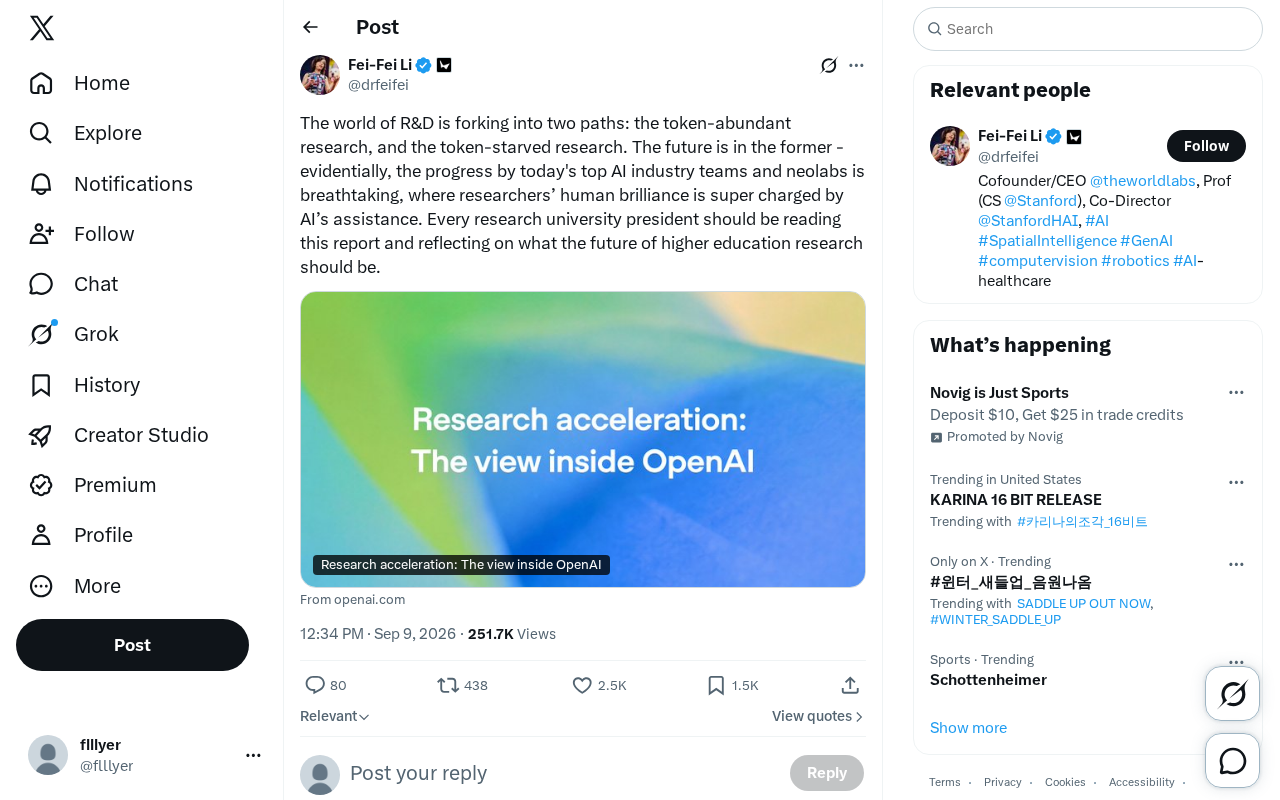
R&D Is Forking: The Coming Battle Between Token-Abundant and Token-Starved Research
R&D is splitting into token-abundant and token-starved research. Top AI labs are pulling ahead—here's what it means for universities and the future of science.
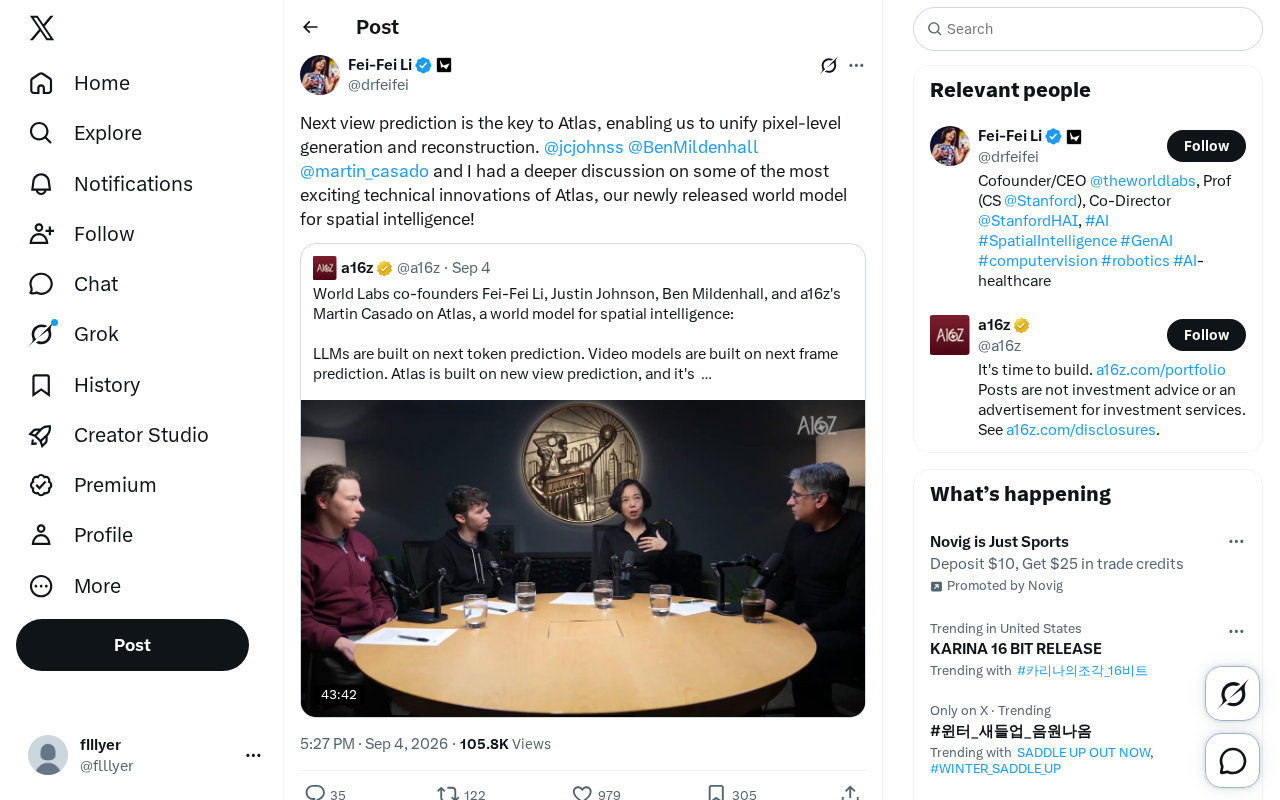
Atlas World Model Explained: How Next View Prediction Unifies Generation and Reconstruction
The Atlas world model uses Next View Prediction as its core to unify pixel-level generation and reconstruction, offering a new approach to spatial intelligence.
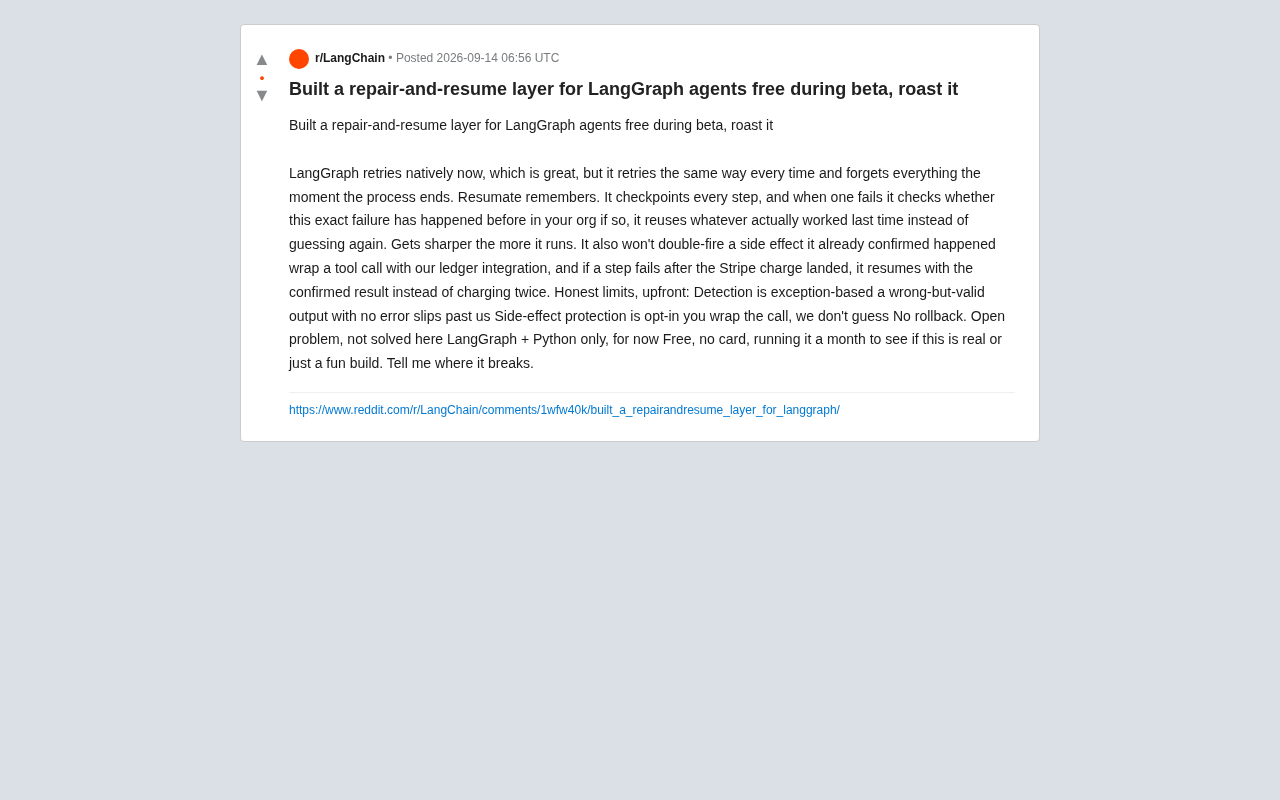
Resumate: A Deep Dive into the Repair-and-Resume Layer for LangGraph Agents
Resumate adds memory-aware checkpointing and idempotent side-effect protection to LangGraph agents, preventing issues like duplicate Stripe charges on retry.