Muse: An AI Agent That Actually Gets Things Done

Muse is a personal AI agent that autonomously executes real-world tasks, not just answers questions.
Muse is a new AI agent on Product Hunt that moves beyond traditional chatbot conversations to actually complete tasks for users. Covering financial management, health tracking, online shopping, and more, it leverages intent understanding, API integration, and long-term memory to deliver end-to-end task execution. As tech giants like OpenAI, Google, and Microsoft race to build autonomous AI agents, Muse enters the consumer market with a differentiated approach.
From Conversation to Execution: A New Paradigm for AI Agents
In an era flooded with AI assistants, most products remain stuck at the "conversation" level—they can answer questions and offer suggestions, but they can't actually complete tasks for you. Muse, a recent arrival on Product Hunt, breaks through this limitation by positioning itself as a personal AI agent that "gets things done," rather than just another chatbot.
Muse's core philosophy is elevating AI from "advisor" to "executor." Users simply describe a goal or everyday task to Muse, and it autonomously plans and carries it out—spanning financial management, health tracking, online shopping, and even helping you care for the people who matter most. This closed-loop capability from intent understanding to task execution signals that personal AI assistants are evolving from tool-like utilities to true agent-like proxies.
It's important to understand the fundamental difference between an AI Agent and a traditional chatbot. A chatbot is essentially a reactive system—users ask, it answers; users go silent, it goes silent too. An AI Agent, by contrast, is goal-oriented: after receiving a high-level objective, it can autonomously decompose tasks, plan execution sequences, invoke external tools, monitor results, and adjust strategies when obstacles arise. This paradigm is known in academia as ReAct (Reasoning + Acting), proposed by teams including Google DeepMind in 2022, emphasizing that large language models should not only "think" but also "act" and iteratively reason based on environmental feedback. Muse's product positioning represents a consumer-market implementation of this very paradigm.
Multi-Scenario Task Automation with AI Agents
Muse's technical highlight lies in its cross-scenario task orchestration capability. Take financial management as an example: when a user says "help me control my spending this month," a traditional AI assistant might only suggest bookkeeping tips. Muse, on the other hand, could connect to your bank account, analyze spending patterns, set budget reminders, and even proactively flag unusual transactions.
This capability relies on three key elements:
Intent Understanding and Task Decomposition
Muse needs to transform vague natural language goals (like "stay healthy") into executable sub-task sequences (log meals, send exercise reminders, schedule a physical, etc.). This requires the underlying large language model to possess strong reasoning and planning capabilities.
From a technical standpoint, this process relies on two core technologies: Chain-of-Thought reasoning and Hierarchical Task Networks. Chain-of-Thought reasoning enables the model to output intermediate reasoning steps before generating a final answer, improving accuracy on complex tasks. Hierarchical Task Networks are a methodology from classical AI planning that recursively decomposes high-level tasks into atomic operations. Current cutting-edge AI Agent frameworks (such as LangChain's Agent module, AutoGPT, BabyAGI, etc.) typically combine both approaches: first using an LLM for semantic-level task planning, then mapping each sub-task to specific API calls or tool operations. Muse's ability to transform "stay healthy" into concrete execution steps is precisely this technology stack manifested at the product level.
API Integration and Permission Management
To truly "get things done," AI must be able to call third-party service APIs—from e-commerce shopping carts to calendar scheduling apps. Muse has already established integrations with multiple services, but how to strike the right balance between convenience and privacy security is a question every AI Agent product must answer.
An AI Agent's ability to take action is highly dependent on the Function Calling mechanism. OpenAI introduced native Function Calling capability for GPT models in 2023, allowing the model to automatically select and invoke predefined external functions or APIs after identifying user intent during reasoning. This means the model no longer just generates text—it outputs structured API call instructions. In practice, this involves complex engineering challenges such as OAuth authorization flows, API rate limit management, and error retry mechanisms. Additionally, emerging standards like MCP (Model Context Protocol) are attempting to unify the interaction protocols between AI Agents and external services, reducing integration complexity. Muse needs to find the right granularity in permission management—neither scaring users away by requesting excessive permissions, nor causing task execution failures due to insufficient access.
Continuous Learning and Personalization
A competent personal agent should be able to remember a user's preferences, habits, and past decisions. Muse claims it can handle tasks related to "the people you care about," which implies it possesses some degree of contextual memory and personalized recommendation capability.
This continuous learning ability relies on "long-term memory" mechanisms. Current mainstream implementations include three approaches: first, vector databases (such as Pinecone, Weaviate) that store semantic embeddings of user interaction history, retrieving relevant memories to inject into context during each conversation; second, structured user profile storage that persists user preferences and habits as key-value pairs; and third, RAG (Retrieval-Augmented Generation) architectures that retrieve relevant information from a user-specific knowledge base before generating responses. This stands in stark contrast to traditional chatbots that rely solely on short-term context windows within a single session, and forms the technical foundation for Agents to deliver a "gets smarter the more you use it" experience. When Muse remembers your mother's birthday or your friend's dietary preferences, it can truly deliver value in scenarios involving "caring for the people who matter."
Market Performance and User Feedback
Muse received 133 upvotes on its Product Hunt launch day, ranking #4—a result that reflects strong market demand for "AI that can execute tasks." The product supports Android and Facebook Messenger, lowering the barrier to entry—no need to download a standalone app; users can summon the agent directly within a familiar chat interface.
The founding team includes David Singleton and several other makers, and their product design philosophy aligns closely with the current "AI Agent" wave. From OpenAI's Operator to Google's Project Astra, tech giants are all betting that "AI capable of autonomously completing complex tasks" will become the dominant paradigm for next-generation human-computer interaction.
Notably, the AI Agent space has become a strategic focal point for tech giants. OpenAI launched Operator in early 2025—an agent capable of autonomously controlling a browser to complete web-based tasks. Google's Project Astra is positioned as a multimodal AI assistant that can understand the physical world through cameras and perform cross-application operations. Microsoft has embedded agent capabilities into the Office 365 ecosystem through Copilot Agents, letting AI handle email sorting, meeting scheduling, report generation, and other enterprise-level tasks on behalf of users. Anthropic introduced its Computer Use feature, allowing Claude to directly control a computer desktop. The common direction across all these initiatives is clear: AI is no longer just about "knowing the answer"—it's about "doing it for you"—representing a paradigm shift from the information age to the agent age. As a startup product, Muse's decision to enter through consumer-facing scenarios means it targets a fundamentally different user base and use cases compared to those of tech giant products, making the choice of differentiation strategy critically important.
Challenges Facing AI Agents
Despite the enticing prospects, AI Agents still face numerous challenges:
Reliability and Error Handling: When AI places orders or makes payments on your behalf, any mistake can cause real financial loss. How Muse designs its confirmation mechanisms and rollback strategies is a key indicator of product maturity.
This issue is fundamentally a design challenge around "automation trust." In industrial automation, this is known as the "Human-in-the-Loop" design pattern—critical decision points retain a human confirmation step, while low-risk operations execute fully automatically. Specifically for AI Agent products, the industry is exploring tiered authorization mechanisms: information-browsing operations (like checking the weather) can run fully automatically; consumption-related operations (like adding items to a cart) require a single confirmation; and financial operations (like payments and transfers) require multi-factor verification. Moreover, reversibility design (Undo/Rollback) is also crucial—every operation performed by an Agent should be undoable, which places transactional and idempotency requirements on the underlying technical architecture. If Muse can establish a mature tiered trust system in this area, it will significantly boost user confidence.
Privacy and Data Sovereignty: Letting AI take over sensitive domains like finance and health requires users to grant extensive data access permissions. Transparent data usage policies and local processing capabilities will become competitive advantages.
Cross-Platform Ecosystem Integration: Currently Muse supports Android and Messenger, but to truly become a "personal hub," it needs deep integration with more platforms and services—testing the team's business development capabilities and the scalability of their technical architecture.
Muse's emergence signals that AI assistants are evolving from "information retrieval tools" to "autonomous decision-making agents." This trend will reshape how we interact with software: in the future, we may no longer need to open a dozen apps and operate each one separately. Instead, we'll describe our intent to a trustworthy AI agent and let it coordinate all the details. Of course, whether this vision can be realized depends on whether products can find the optimal balance between convenience, reliability, and security.
Related articles

AlphaGenome Atlas: An AI Genomic Map Covering 9 Billion DNA Mutations
Google DeepMind launches AlphaGenome Atlas, pre-computing impact predictions for all 9 billion single-base mutations in the human genome across a 1PB dataset covering both coding and non-coding regions.
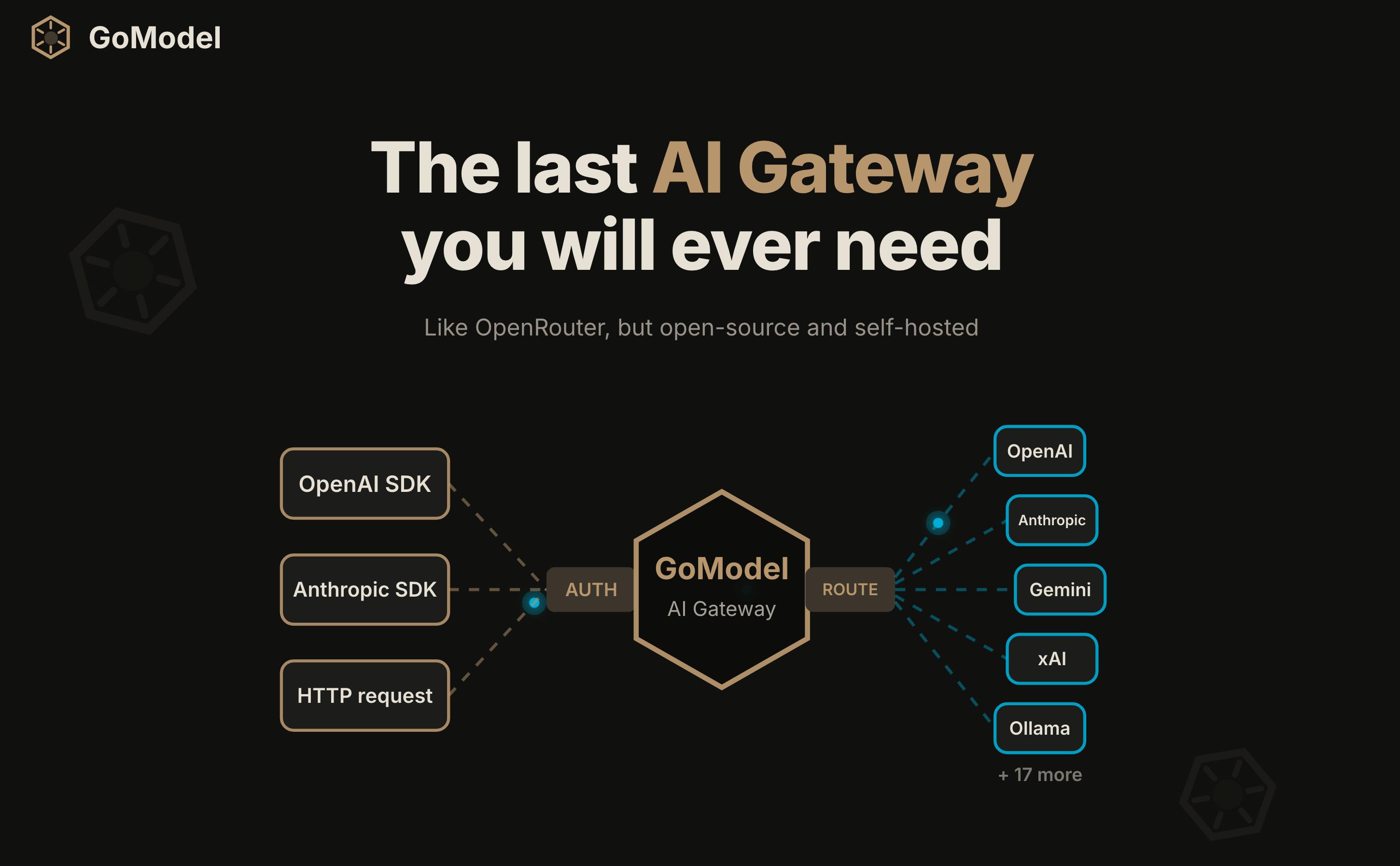
GoModel: An Open-Source Self-Hosted AI Gateway Solution
GoModel is a lightweight open-source AI gateway offering a unified OpenAI-compatible interface for multiple LLM APIs. Features budget control, smart caching, load balancing in a 20MB Docker image.
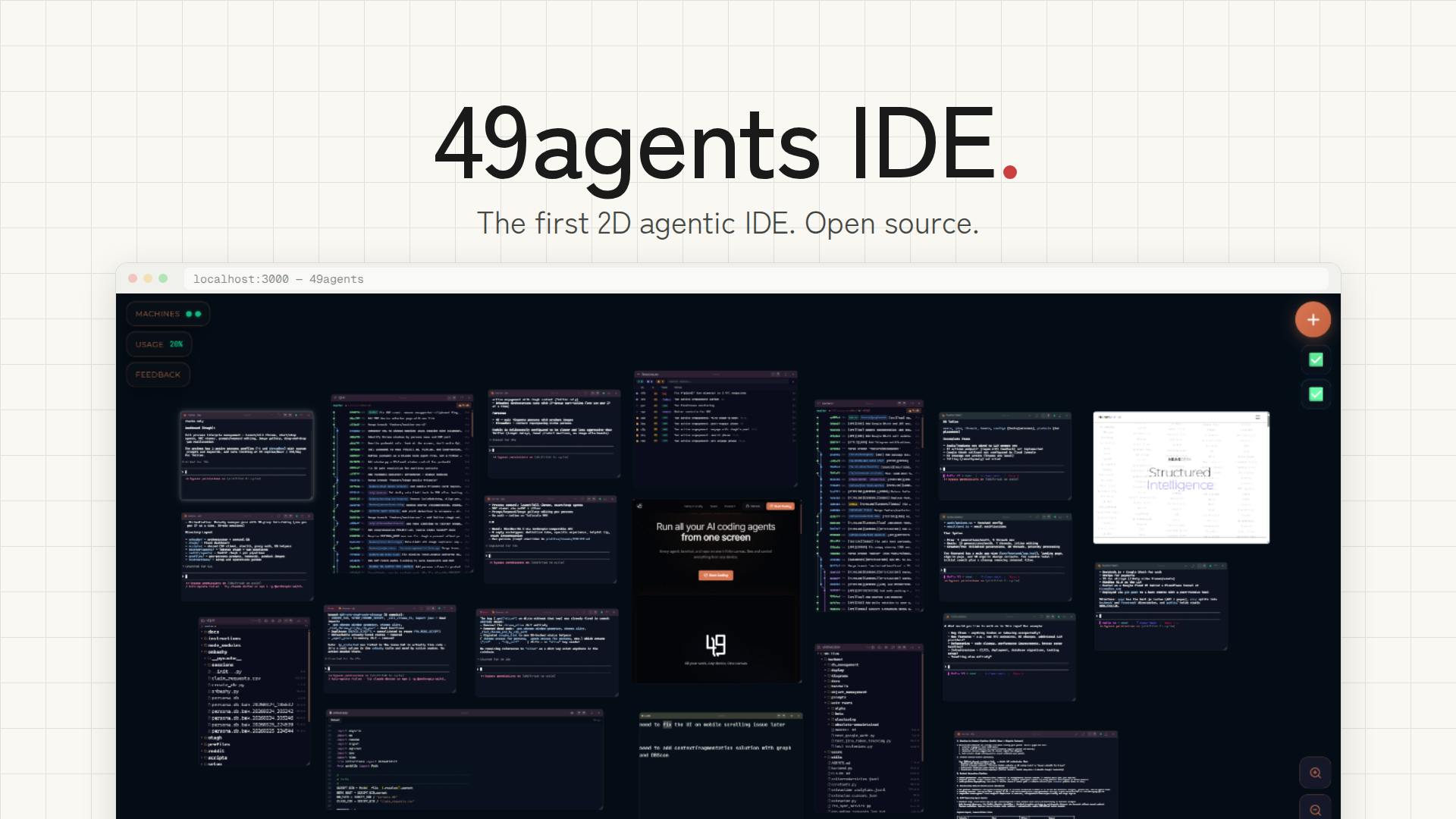
49agents IDE: Rebuilding the Development Workflow with a 2D Canvas
49agents IDE replaces traditional tabs with a 2D spatial canvas, solving cognitive overload in multi-project development through spatial memory and AI Agent management.