Musk Announces Tesla Will End Cybertruck Production in 2027, Factory to Shift to Cybercab
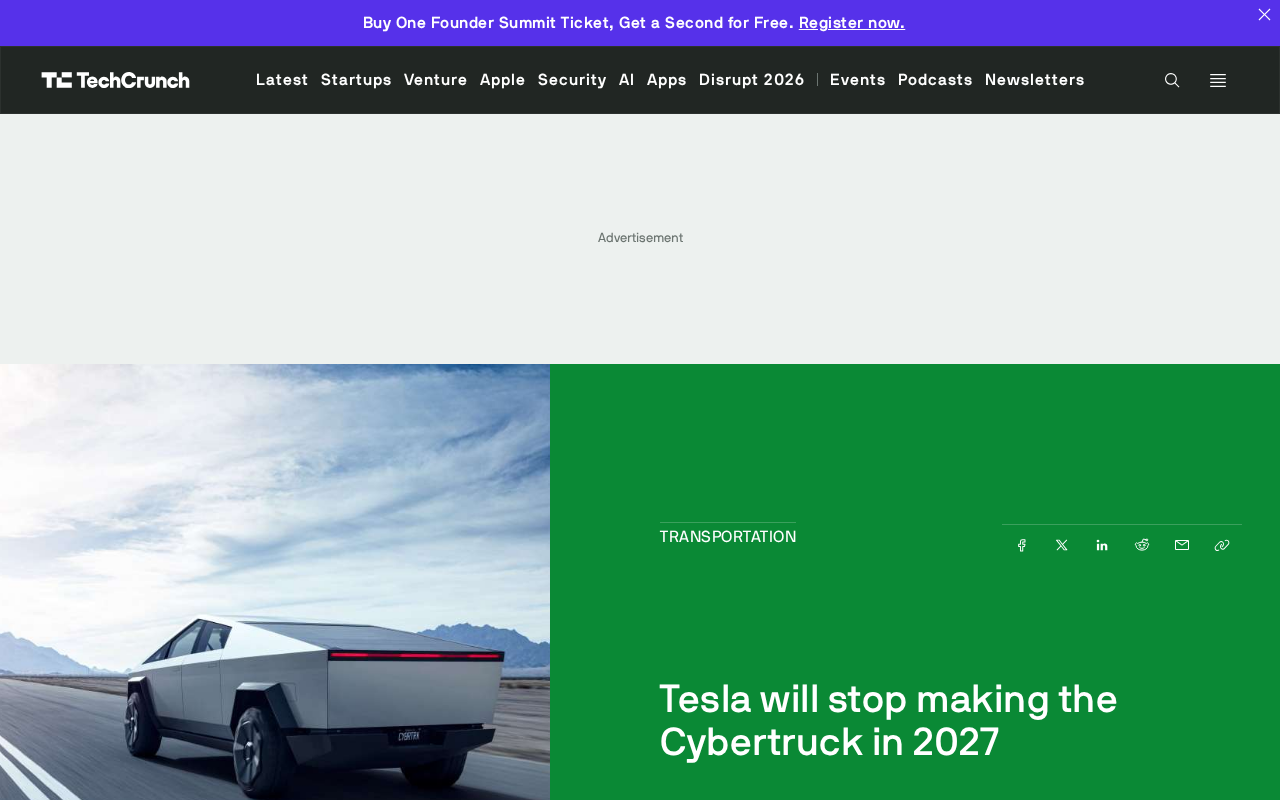
Musk confirms Tesla will end Cybertruck production in 2027 and convert the factory to Cybercab production.
Musk has publicly confirmed that Tesla will stop producing the Cybertruck in 2027 and said the freed-up factory space will be used to build more Cybercab robotaxis. The Cybertruck has been controversial since launch due to its stainless steel body and angular design, with pricing, manufacturing complexity, and market acceptance all posing obstacles. The capacity switch shows Tesla is shifting resources from a consumer pickup line to vehicles serving the Robotaxi network, reflecting a bigger bet on autonomous mobility. The article also notes Musk's history of missed deadlines, uncertainty over the 2027 target, and the single, limited source.
Musk Confirms Cybertruck Production Halt Plan
According to an RSS source, Elon Musk has stated that Tesla will stop producing the Cybertruck in 2027. The news comes from Musk's own public statement, marking the approaching end of the product lifecycle for this controversial electric pickup.
Since its launch, the Cybertruck has sparked widespread discussion with its futuristic stainless steel body and sharply angular design, but its market performance and production ramp-up have consistently faced challenges. Musk's direct confirmation of the production end timeline this time means Tesla's strategic positioning of the model has undergone a fundamental shift.
Cybertruck is a battery-electric pickup unveiled by Tesla in November 2019, featuring unconventional designs such as a stainless steel exoskeleton body and a 48V low-voltage architecture. Originally planned for mass production in 2021, deliveries were actually delayed until late 2023 due to complex manufacturing processes. It was positioned to enter the lucrative U.S. full-size pickup market, directly competing with models such as the Ford F-150 Lightning and Rivian R1T. However, the model's pricing was raised multiple times, production ramp-up was slow, and manufacturing tolerance and cost issues brought by the stainless steel body remained unresolved for a long time — this background is the key premise for understanding the production halt decision.
Factory Space to Shift to Cybercab Production
Musk also revealed that the factory space freed up after Cybertruck production ends will be used to produce more Cybercabs. The Cybercab is a robotaxi product Tesla previously showcased, positioned as a dedicated model for autonomous driving mobility services.
This capacity adjustment reflects that Tesla is shifting resources from a pickup product line aimed at individual consumers to operational vehicles serving the Robotaxi network. Cybercab's mass-production demand is highly tied to Tesla's autonomous driving strategy, and the factory conversion also indicates that the company's production priority for this product is rising.
Cybercab is a two-door, two-seat robotaxi showcased at Tesla's "We, Robot" event in October 2024. Its design eliminates the steering wheel and pedals, relying entirely on Tesla's FSD (Full Self-Driving) software, with the goal of serving the Robotaxi network through extremely low per-mile operating costs. The model is planned to rely on Tesla's pure-vision end-to-end autonomous driving solution, and its mass-production timeline was previously described as around 2026. Since Cybercab and Cybertruck may share part of the production line space at the Texas Gigafactory, Musk's statement on production conversion this time is also seen as an indirect confirmation of Cybercab's mass-production priority.
The Signal Behind the Strategic Adjustment
The capacity switch from Cybertruck to Cybercab reveals the migration path of Tesla's product focus. Although the pickup segment is huge in the U.S. market, the Cybertruck's pricing, manufacturing complexity, and market acceptance all constitute practical obstacles. By contrast, Cybercab targets the autonomous driving mobility network envisioned by Tesla itself, which is a core part of the company's long-term narrative.
It should be noted that Musk has a history of missed deadlines in his statements about product timelines, and whether the 2027 node can be met on schedule remains to be seen. But the factory conversion itself has already given a clearer directional signal than verbal promises.
Robotaxi is the core of Tesla's long-term valuation narrative: the company argues that its future business model will shift from one-time vehicle sales to autonomous driving mobility services charged by mileage, similar to Uber but without human driver costs. This strategy is highly dependent on the maturity of FSD technology and regulatory approval in various regions, and Cybercab is precisely the dedicated vehicle for this network. The shift of factory capacity from the consumer-oriented Cybertruck to Robotaxi operational vehicles means Tesla is betting capital and manufacturing resources on an autonomous driving mobility market that has not yet been fully commercialized, amplifying both risks and imaginative upside.
Editorial View
This news comes from a single RSS channel, and the information available is limited. The specific occasion of Musk's statement, the detailed reasons for ending Cybertruck production, and the figures in Cybercab's capacity plan were not disclosed in the original material. Readers following Tesla's product line can continue to track subsequent official explanations.
One-line Summary
Musk confirms Tesla will end Cybertruck production in 2027 and convert the factory to Cybercab production.
Paragraph Summary
Musk has publicly confirmed that Tesla will stop producing the Cybertruck in 2027 and revealed that the freed-up factory space will be used to produce more Cybercab robotaxis. Since its launch, the Cybertruck has been controversial due to its stainless steel body and angular design, with pricing, manufacturing complexity, and market acceptance all posing obstacles. This capacity switch shows that Tesla is shifting resources from a pickup line aimed at individual consumers to operational vehicles serving the Robotaxi network, reflecting a strengthened bet on its autonomous driving mobility strategy. However, the article also notes that Musk's timelines have a history of missed deadlines, whether the 2027 node can be met remains to be seen, and the source is single with limited details.
Related articles
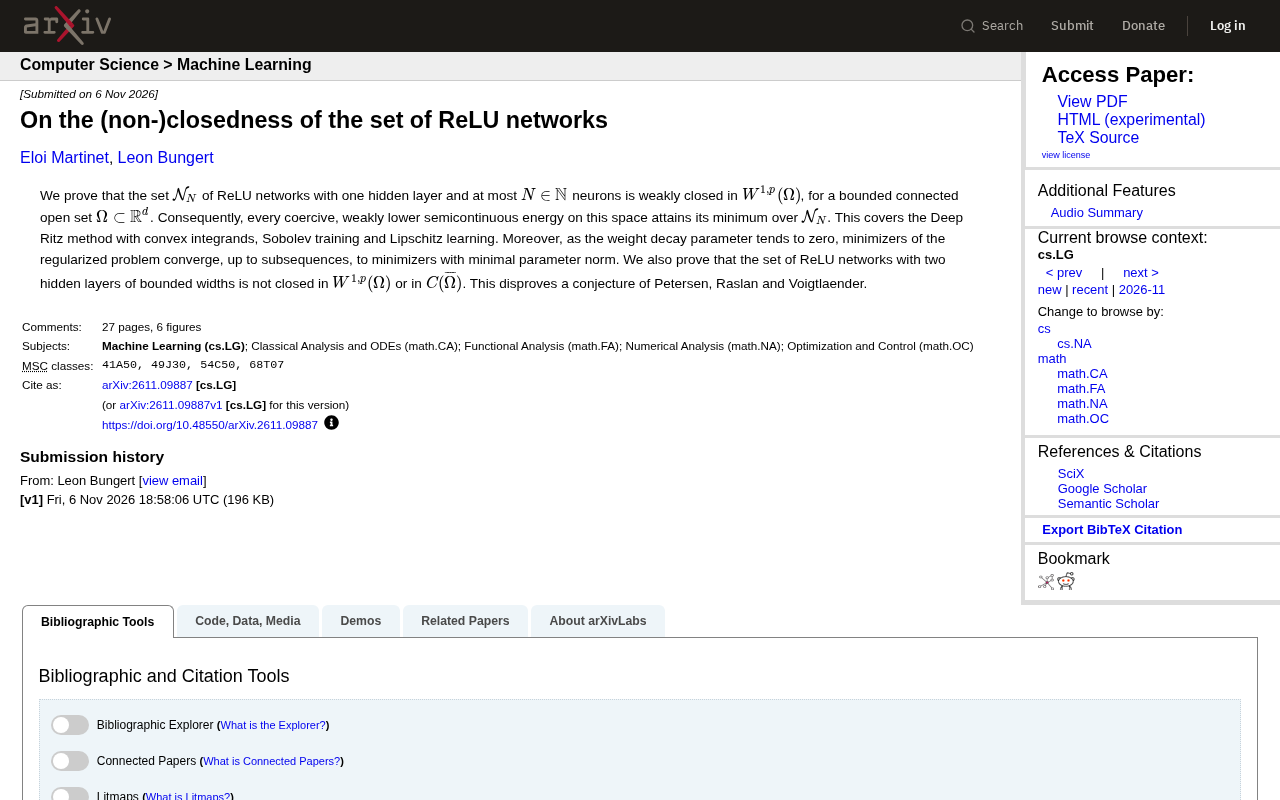
A New Proof on the Closedness of ReLU Network Sets: Single Hidden Layer is Weakly Closed, Two Hidden Layers is Not Closed
New research proves single-hidden-layer ReLU network sets are weakly closed in W^{1,p}, ensuring existence of solutions for Deep Ritz and similar methods; two-hidden-layer network sets are not closed, refuting an existing conjecture.
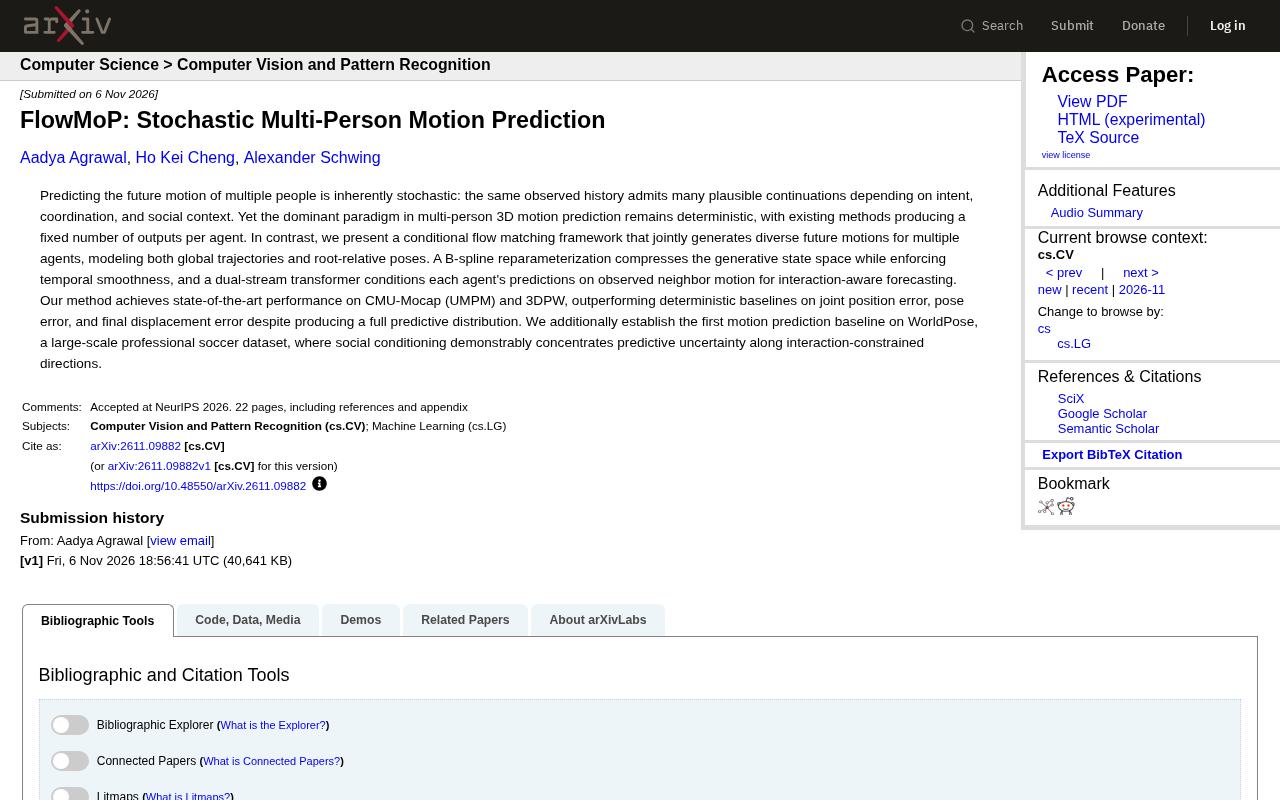
FlowMoP: A New Framework for Stochastic Multi-Person Motion Prediction
FlowMoP introduces a conditional flow matching framework that jointly generates diverse future motions for multiple agents, using B-spline reparameterization and a dual-stream Transformer for interaction-aware prediction. It outperforms deterministic baselines on CMU-Mocap and 3DPW and establishes the first motion prediction baseline on WorldPose.
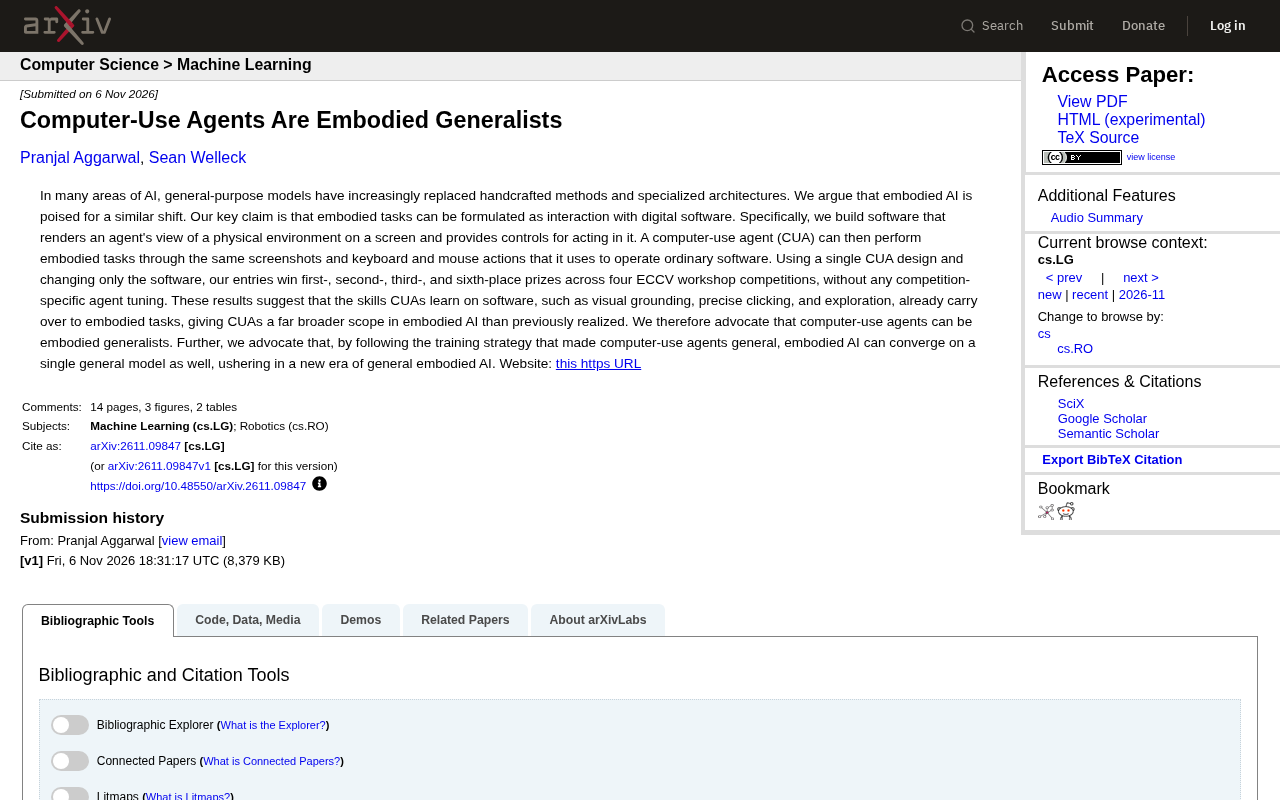
Computer-Using Agents: A New General-Purpose Paradigm for Embodied AI
ECCV workshop competitions show computer-using agents (CUAs) can win multiple contests by turning embodied tasks into software interaction, without specialized tuning—revealing their potential as embodied generalists and a new path to general embodied AI.