Musk's $1 Billion Investment in Skydance: Why Tech Giants Are Betting on Traditional Film and TV

Musk invests $1 billion in Skydance to cut costs and boost its stock price, reflecting tech capital's counter-cyclical bet on content assets.
The article analyzes Musk's $1 billion investment in film and TV production company Skydance. The funds are earmarked for cutting operating costs and boosting the stock price, indicating Skydance is in a restructuring rather than expansion phase. The article notes the markedly different business DNA between investor and target, suggesting the deal is more likely a financial or strategic positioning than industry chain integration. The continued flow of tech capital into content reflects the dual appeal of long-term IP reuse value and low industry valuations. It also cautions that deal details remain undisclosed, cost cutting depends on management execution, stock price recovery depends on industry expectations, and a single injection cannot change the industry cycle. A single case does not prove a trend reversal; whether more tech capital follows and Skydance's specific business moves are more worth watching.
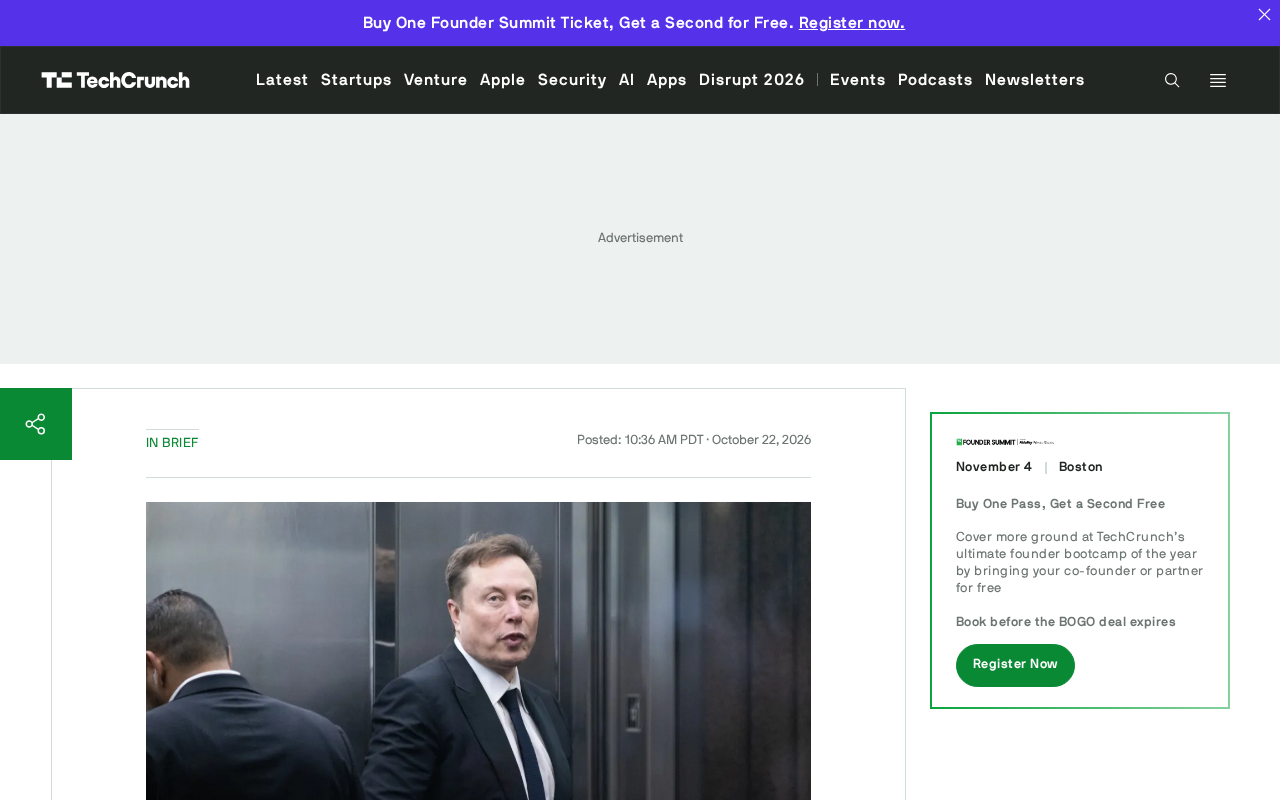
According to multiple foreign media reports, Elon Musk has invested $1 billion in film and television production company Skydance. The funds will be used to help Skydance cut costs and boost its stock price — the head of a tech company known for electric vehicles and rockets suddenly pouring heavy capital into the traditional film and television industry is a logic worth unpacking.
An Injection of Capital That Amounts to "Emergency Relief"
From publicly available information, Skydance is in a phase where it needs cash. The reports explicitly state that this $1 billion investment will provide the company with a "much-needed financial boost," with the use of funds concentrated in two directions: cutting operating costs and lifting the stock price.
This phrasing itself reveals Skydance's current situation — it is not taking money during an expansion phase, but during a restructuring phase. For a film and television production company, cutting costs typically means shrinking the project pipeline, streamlining teams, or renegotiating content acquisition contracts; while lifting the stock price points to insufficient confidence in its valuation in the capital markets. Musk's money solves the short-term liquidity problem; the long-term test is whether the company can use this capital to complete a recalibration of its business structure.
It is worth noting that the investor and the target company have markedly different business DNA. Musk's core assets are concentrated in Tesla, SpaceX, xAI, and other areas, with no direct synergy with film and television content production. This investment is therefore more likely to be interpreted as a financial positioning or strategic stake rather than an integration along the industry chain.
Why Tech Capital Keeps Flowing Into the Content Industry
Musk is not the first tech figure to direct capital toward film and television content. In recent years, the boundary between tech capital and the traditional content industry has continued to blur: streaming platforms were built under the leadership of tech companies, AI generation tools are beginning to enter production workflows, and content distribution channels are being restructured by algorithms.
Skydance itself has participated in multiple major film and television projects and possesses mature content production capabilities. For investors with a tech background, the value of such assets lies not in the box office of a single work, but in the long-term reuse capability of content IP and the bargaining space with distribution platforms. The equity exchanged for $1 billion may correspond to a position in the future content supply chain.
From a financial perspective, valuations of film and television assets tend to be at low levels during industry adjustment periods, when there is greater room for bargaining upon entry. The reports mention that Skydance is seeking to lift its stock price, indicating that its valuation is under pressure, which precisely creates the conditions for a buyer's market.
The long-term reuse capability of content IP is key to understanding why tech capital favors film and television assets. The term IP (Intellectual Property) in the film and television industry usually refers to original stories, characters, or worldviews that can be repeatedly developed, such as film franchises, comic universes, or classic series. Unlike the box office revenue of a single work, IP can be continuously monetized through sequels, spin-off series, game adaptations, theme park licensing, and merchandise, with a lifecycle that may last for decades. For investors, an IP portfolio means more predictable cash flow and stronger resistance to cycles. When tech companies invest in content IP, they are essentially competing for a long-term gateway to user attention rather than betting on the market performance of a single work. This also explains why industry adjustment periods are instead a window for buying high-quality IP assets.
The Risks and Uncertainties of This Deal
What must be viewed objectively is that the information remains at the "according to reports" level, and the transaction details, equity percentage, and investment form (equity, convertible bonds, or another structure) have not been disclosed. There is also no public data to support the specific allocation of the $1 billion.
For Skydance, an injection of external capital can ease short-term pressure, but cost cutting and stock price recovery are two different things. The former depends on management execution, while the latter depends on changes in the market's overall expectations for the film and television industry. A single capital injection cannot change the industry cycle.
For Musk, the return cycle of cross-industry investments is usually long, and the film and television content industry is greatly affected by fluctuations in audience preferences, platform policies, and production costs, which is inconsistent with the high-turnover logic of the tech industry. Whether this money can generate the expected return depends on whether subsequent governance arrangements and business synergies can be implemented.
Convertible bonds are one of the investment forms mentioned in the reports but not elaborated upon, with the full name being Convertible Bond. It is essentially a bond whose holders can receive interest at an agreed rate while also having the right to convert the bond into company stock under specific conditions. For investors, convertible bonds offer both the downside protection of debt and the upside potential of equity; for issuers, their coupon rate is usually lower than that of ordinary bonds, which can reduce short-term financial pressure. If Musk invests in the form of convertible bonds, it means he can convert to equity after Skydance's stock price recovers to obtain higher returns, while Skydance obtains low-cost capital. Different investment structures correspond to radically different risk-return allocations, which is also why it is difficult to accurately assess the true intent of this investment before the transaction details are disclosed.
What It Means for the Industry
If the deal ultimately goes through, the signal it sends is that tech capital's interest in content assets has not diminished; instead, it is accelerating its entry during the industry adjustment period. This is consistent with the logic of the streaming wars of the past few years — whoever controls the content supply controls the gateway to user attention.
But a single case is not enough to prove a trend reversal. What is more worth observing is whether more tech-backed capital will follow, and what specific actions Skydance will take after receiving the money: whether it will continue to compress production scale or bet on new content directions. These execution-level choices say more about the situation than the $1 billion figure itself.
One-line Summary
Musk invested $1 billion in Skydance to cut costs and boost its stock price, reflecting tech capital's counter-cyclical positioning in content assets.
Paragraph Summary
The article analyzes Musk's $1 billion investment in film and television production company Skydance. The funds are explicitly intended for cutting operating costs and boosting the stock price, indicating that Skydance is in a restructuring phase rather than an expansion phase. The article notes that the investor and the target company have markedly different business DNA, and the deal is more likely a financial positioning or strategic stake than industry chain integration. The continued flow of tech capital into the content industry reflects the dual appeal of the long-term reuse value of content IP and low industry valuations. At the same time, the article cautions that transaction details have not been disclosed, cost cutting depends on management execution, stock price recovery depends on industry expectations, and a single capital injection cannot change the industry cycle. A single case is not enough to prove a trend reversal; whether more tech capital follows and Skydance's specific business actions are more worth observing.
Related articles

Workbuddy for Absolute Beginners: How a Desktop AI Agent Fits Into Real Workflows
A beginner's guide to the Workbuddy desktop AI agent: installation, claiming credits, file management, and building automated workflows—compared with CodeX for fit and cost, helping professionals shift from AI question-askers to AI managers.

OpenAI's New Agent Stack: Computer Use, Decisions API, and Ultra-Fast Workflows
OpenAI Dev Day unveiled a new agent stack: Computer Use outperforms humans, Decisions API delivers ultra-low-latency classification via Luna, Agents API opens the same Computer Use capabilities, and GPT-6.1 Sol costs only one-seventh of Astra. Core updates, benchmark data, and developer insights.

Liang Wenfeng Open-Sources DeepInfo Inference Framework, Takes On U.S. Ban
DeepSeek open-sources its DeepInfo inference framework after its models, featuring GPU/CPU cross-pipelining, small-model prediction with large-model verification, and full Huawei Ascend and NVIDIA chip support—facing the U.S. federal ban head-on. This article analyzes its significance for AI deployment and open-source strategy.