Musk Settles with SEC for $1.5 Million: Judge Approves with Reservations — When Will the Regulatory Standoff End?

Musk settles Twitter disclosure case with SEC for $1.5M as judge approves deal with expressed misgivings.
Elon Musk has resolved his SEC dispute over delayed disclosure of his Twitter stake acquisition with a $1.5 million settlement, approved by a federal judge who openly voiced reservations. The case reignites debate over whether financial penalties can meaningfully deter billionaires from securities violations, and highlights the ongoing tension between tech titans and capital market regulators.
A Years-Long Regulatory Standoff Comes to a Close
Elon Musk's protracted dispute with the U.S. Securities and Exchange Commission (SEC) — centering on his disclosure of stake-building in Twitter (now rebranded as X) — has finally been resolved. A federal judge approved a $1.5 million settlement agreement, though not without explicitly voicing "misgivings."
At the heart of the case: whether Musk had timely and adequately fulfilled his disclosure obligations as he gradually accumulated Twitter shares in 2022. The SEC argued that his delayed disclosure compromised market fairness and disadvantaged other investors.
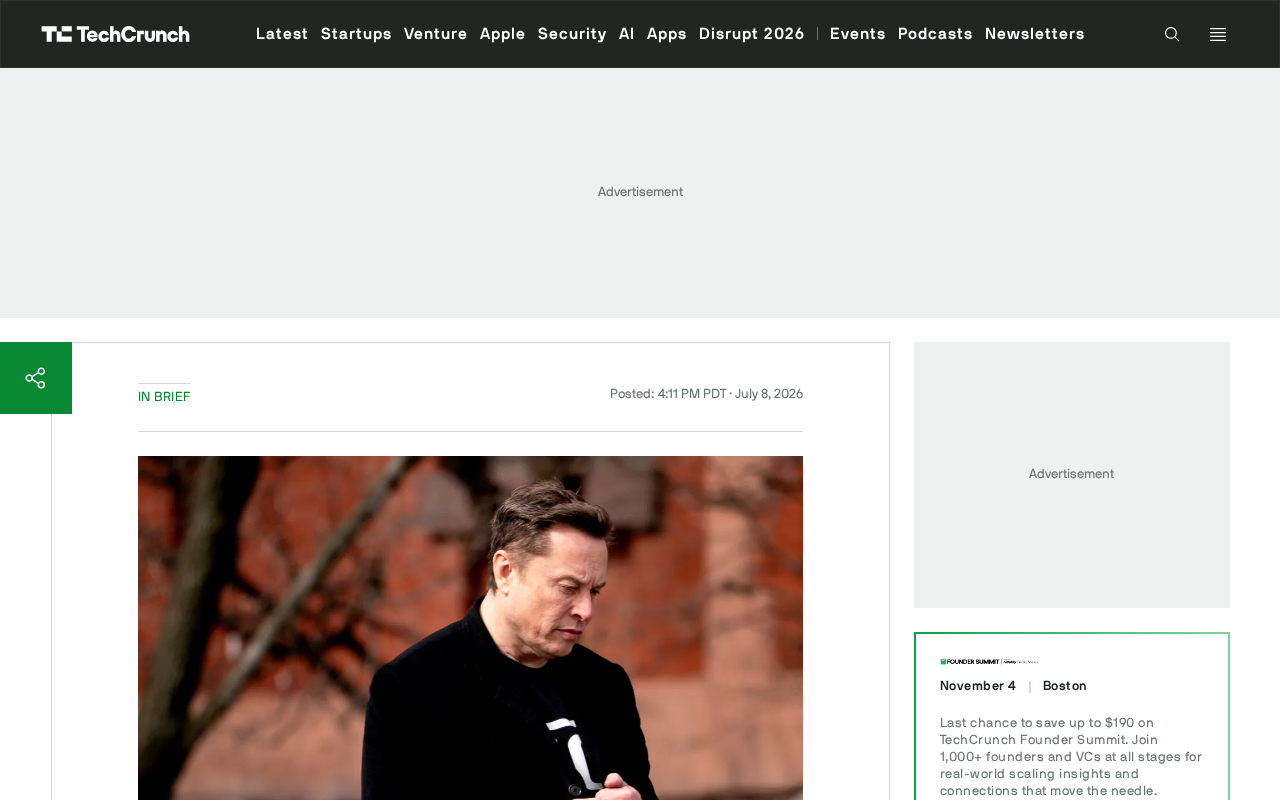
The Disclosure Dispute: Why Musk's Twitter Stake Triggered Regulatory Scrutiny
The 5% Ownership Disclosure Threshold
Under U.S. securities law, any investor who acquires more than 5% of a publicly traded company's shares must file either a Schedule 13D or 13G with the SEC within a specified window — typically 10 days — disclosing the size of the stake and the investor's intentions. The rule is designed to ensure market transparency and prevent large shareholders from quietly building positions while other investors remain in the dark.
This 5% disclosure framework has deep historical roots. It traces back to the Williams Act of 1968, a landmark amendment to the Securities Exchange Act that established a disclosure regime specifically for open-market acquisitions. Schedule 13D applies to activist investors who intend to influence corporate control and must be filed within 10 days; Schedule 13G is available to passive investors and carries a more relaxed timeline. The legislation was a direct response to the rampant information asymmetry of the era — large institutional investors could quietly accumulate equity stakes and then launch surprise takeover bids, leaving ordinary shareholders at a serious disadvantage. Congress responded by building a mandatory disclosure mechanism intended to serve as an institutional firewall between the free flow of capital and the integrity of market information.
The SEC's charges against Musk focused precisely on this framework: regulators alleged that Musk failed to disclose his stake in Twitter on time after crossing the critical threshold. This delay may have allowed him to continue purchasing shares at lower prices while ordinary investors were left at an informational disadvantage.
The Rationale Behind a Settlement
Both parties ultimately settled for $1.5 million, avoiding a drawn-out litigation battle. For someone of Musk's net worth, the sum carries far more symbolic weight than financial consequence. Notably, the judge's explicit expression of "misgivings" at the time of approval signals lingering doubt among regulators about whether such settlements can effectively deter similar conduct.
Consent decrees between the SEC and defendants are a well-established feature of U.S. securities enforcement — fundamentally a pragmatic compromise between administrative efficiency and judicial cost. As a federal agency with finite litigation resources, the SEC cannot afford to pursue every case through a full adversarial process. Critics, however, have long argued that this mechanism creates a structural loophole for deep-pocketed defendants — effectively allowing them to "purchase compliance" when the penalty falls well short of the profits derived from the violation. In academic literature, this is known as "optimal deterrence failure": when the expected punishment is lower than the expected gain from the violation, the deterrent force of the law is systematically undermined. The judge's rare decision to publicly voice reservations is a direct response to this institutional tension.
Musk and the SEC: This Isn't Their First Clash
This is far from Musk's first run-in with the SEC. Back in 2018, he faced securities fraud charges after tweeting that he was "considering taking Tesla private at $420. Funding secured." That dispute also ended in a settlement — Musk and Tesla each paid $20 million in penalties, and Musk was forced to step down as Tesla's chairman.
That episode carries significant legal precedent. The SEC determined that Musk's claim of "funding secured," made without a definitive financing arrangement in place, constituted a materially misleading statement to investors and triggered securities fraud provisions. The case not only set a landmark precedent for holding executives of public companies accountable for social media posts, but also gave rise to the subsequent "pre-approval" agreement — under which Tesla's legal team was required to review Musk's potentially market-moving content before publication, though Musk repeatedly challenged the arrangement in court. Taken together, these confrontations trace the difficult path regulators have walked in attempting to extend traditional securities law into the social media age.
Over the years, the tension between Musk and the SEC has been impossible to ignore. He has repeatedly and publicly expressed his disdain for the regulator — a confrontational posture that is rare among tech titans, and one that ensures every new clash draws intense market scrutiny.
Three Layers of Meaning Behind the Judge's "Misgivings"
A judge proactively expressing "misgivings" is no ordinary occurrence in U.S. judicial practice. It reflects concern on three distinct levels:
- Whether the settlement amount carries meaningful punitive force: $1.5 million is arguably trivial compared to the potential gains Musk may have realized through delayed disclosure, as well as his overall wealth — raising real questions about deterrence.
- Concern for the authority of securities law: If high-net-worth individuals can repeatedly resolve regulatory violations at relatively modest cost, the seriousness and universal applicability of securities regulations may gradually erode.
- Preserving procedural legitimacy: The judge must ensure that a settlement does more than resolve a single case — it must uphold the broader credibility of market rules.
Two Key Takeaways for Markets and Regulators
Disclosure Compliance Is the Bedrock of Capital Markets
Whether you are an ordinary investor or an industry titan, timely and accurate disclosure of significant changes in ownership is a non-negotiable legal obligation. The Musk case sends a clear message to all market participants: there is no exemption lane for disclosure compliance.
The Tug-of-War Between Regulators and Tech Giants Is Far from Over
As tech leaders play an increasingly pivotal role in capital markets, their every move has the potential to send ripples across the market. How regulators strike the right balance between preserving market vitality and safeguarding fair order is a question without a final answer. The Musk-SEC settlement is just one more cross-section of that enduring contest.
Closing Thoughts
This regulatory dispute over the disclosure of a Twitter stake has been resolved with a signed agreement. For Musk, $1.5 million may be little more than a rounding error — but the judge's parting word, "misgivings," points to a far more fundamental question: against individuals of immense wealth and influence, does the existing securities regulatory framework truly have teeth? This is not merely Musk's story. It is an ongoing exam that the entire capital market governance system must keep answering.
Related articles

Felix Rieseberg Personal Homepage
Felix Rieseberg's personal homepage sparks attention on Hacker News. This article covers the Slack engineer's technical background, the rise and fall of nativefier, and the value of a developer homepage as a tech calling card.

@ai-sdk/vue 3.0.306 Patch Release Syncs with [email protected] Update
@ai-sdk/vue 3.0.306 released, synced with [email protected]. A routine patch release for the Vercel AI SDK ecosystem with no public API changes; the Vue adapter layer stays version-aligned with the core package.

Gemini 4 Argon API Launches: The Era of Million-Token Output Begins
Google launches Gemini 4 Argon with sparse MoE architecture, up to 1M output tokens, and a 68.90% Vals Index score, available across API, AI Studio, and the Gemini app.