Mutex Explained: From Bank Withdrawals to Atomic Exchange

Mutexes protect critical sections via atomic exchange instructions, requiring attention to spin overhead, memory ordering, and deadlock prevention.
Based on Computerphile's video "Mutex Explained," the article uses a bank withdrawal example to illustrate the necessity of mutexes: multiple threads executing "check-modify" logic simultaneously cause data inconsistency, so mutexes ensure that the critical section is executed by only one thread at a time. Mutex implementation relies on hardware-provided atomic exchange instructions (such as xchg), achieving lock state transitions through atomic memory read/write, forming a spinlock. Spinlocks are simple but waste CPU; modern operating systems suspend waiting threads after a period of spinning. Additionally, memory barriers prevent compilers and CPUs from reordering instructions, ensuring lock correctness; in multi-lock scenarios, locks must be acquired in a fixed order to avoid deadlock. The article concludes by summarizing key points of mutexes, emphasizing that correct use of locks requires attention to spin overhead, memory ordering, and deadlock prevention.
In concurrent programming, when multiple threads or processes access shared resources simultaneously, data inconsistency easily arises. Computerphile's video "Mutex Explained" uses a vivid bank withdrawal example to clearly explain the working principles, implementation mechanisms, and practical pitfalls of mutex locks.
Why Do We Need Mutexes?
The video starts with a classic concurrency problem: suppose there is a bank account, and the withdrawal function first checks if the balance is sufficient; if so, it deducts the corresponding amount and dispenses cash. The code logic is roughly as follows:

When two threads execute this code simultaneously, they might both check that the balance is sufficient, then both perform the deduction, resulting in an overdrawn account. This problem occurs not only on a single CPU but also in distributed systems, such as two people withdrawing money from the same account at the same time.
The purpose of a mutex is to ensure that this "check-modify" code can only be executed by one thread at a time. It's like a lock on a public restroom door: when someone is inside, others must wait; when the person inside leaves, the lock is released, and others can enter.
Critical Section is a core concept in concurrent programming, referring to a section of code that accesses shared resources (such as bank account balance). The purpose of a mutex is precisely to ensure that at most one thread can enter the critical section at any given time. Typically, a critical section involves a "read-modify-write" sequence, such as first checking the balance, then deducting, and finally writing back the result. If multiple threads interleave these steps, a race condition occurs. The critical section must be as small as possible, enclosing only the operations that truly require mutual exclusion, to reduce lock holding time and improve concurrency performance.
Mutex Implementation: Atomic Exchange Instruction
The most intuitive implementation might be to use a variable to represent the lock state, then check and set it. But this falls into the same race condition: two threads might both see the lock as free and both think they have acquired the lock.
Therefore, the hardware must provide an atomic operation that makes reading and writing inseparable. The video introduces the common atomic exchange instruction (such as xchg):
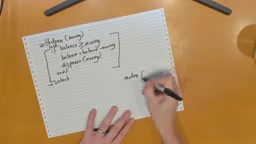
The specific approach: there is a mutex variable in memory, initially 0. When locking, execute an atomic exchange, writing 1 to the mutex and returning the old value. If the old value is 0, it means no one held the lock before, and the current thread successfully acquires it; if the old value is 1, it means the lock is already occupied, and the current thread needs to keep trying (spin). Unlocking simply sets the mutex to 0.
This type of lock based on atomic exchange is called a spinlock, because waiting threads continuously loop and check.
Spinlock is a lock implementation based on busy waiting: when a thread fails to acquire the lock, it repeatedly executes the atomic exchange instruction (or test-and-set instruction) until it successfully acquires the lock. Its advantage is avoiding the overhead of operating system context switching, and it performs excellently in scenarios where the lock is held for a very short time and contention is low. However, the disadvantages of spinlocks are also obvious: waiting threads continuously consume CPU cycles, and if the lock is held for a long time, a large amount of computing resources are wasted. Therefore, spinlocks are typically used for short critical sections on multi-core processors, or in contexts where sleeping is prohibited in the kernel.
The Cost of Spinlocks and Operating System Optimization
Although spinlocks are simple, they have obvious flaws: waiting threads continuously consume CPU resources. The video uses the metaphor of "constantly knocking on the door asking if it's done" to describe this busy waiting, which is both annoying and wastes computing resources.
Modern operating systems typically, after spinning a few times, suspend (sleep) the waiting thread, yielding the CPU to other tasks. When unlocking, the operating system also needs to wake up the waiting threads.

Although this mechanism is more complex, it can significantly improve overall system efficiency, especially when lock contention is intense.
Memory Ordering and Compiler Barriers
Another easily overlooked issue is memory ordering. Both compilers and CPUs may reorder instructions for optimization, causing code between locking and unlocking to be incorrectly executed earlier or later. For example, shared data might be read before acquiring the lock, or data might be written after releasing the lock.
Therefore, atomic exchange instructions usually come with memory barrier semantics to prevent compilers and CPUs from reordering across boundaries. The x86 architecture has stricter memory ordering, while architectures like ARM are more relaxed and require explicit handling by developers.
Memory Barrier is a hardware or compiler instruction used to enforce the order of memory operations. In lock implementations, acquiring a lock (such as atomic exchange) typically requires "acquire semantics" to ensure that subsequent read/write operations are not reordered before the lock acquisition; releasing a lock requires "release semantics" to ensure that previous read/write operations are not reordered after the lock release. The x86 architecture provides strong memory ordering guarantees (such as the TSO model), while weakly ordered architectures like ARM and PowerPC require explicit memory barrier instructions (such as DMB, ISB) to guarantee ordering. C++11 and later standards introduced std::atomic and memory order parameters, allowing developers to precisely control these semantics.
Multi-Lock Scenarios and Deadlock Risks
When a program requires multiple locks (for example, a transfer needs to lock two accounts simultaneously), the risk of deadlock arises. Suppose thread A locks account 1 and then tries to lock account 2, while thread B locks account 2 and then tries to lock account 1; they will wait for each other and never proceed.
This is the classic deadlock problem, similar to the "Dining Philosophers." The video mentions a common solution: define a global order for all locks (such as sorting by account number), and all threads acquire locks in the same order, thereby avoiding circular waiting.

Additionally, database systems often use timeout rollback mechanisms to handle deadlocks, but fundamental prevention still relies on good lock acquisition discipline.
Deadlock occurs when four necessary conditions are simultaneously satisfied: mutual exclusion, hold and wait, no preemption, and circular wait. Breaking any one of these conditions can prevent deadlock. Acquiring locks in a global order actually breaks the "circular wait" condition. Other common strategies include: using timeout mechanisms (such as try_lock with timeout) to break the "no preemption" condition; using one-time resource allocation (such as std::lock to lock multiple mutexes simultaneously) to avoid "hold and wait"; or periodically checking the resource allocation graph through deadlock detection algorithms. In database systems, deadlock detection and rollback are common practices, while in general concurrent programming, preventive design (such as lock ordering) is often a more reliable choice.
Summary and Extensions
Mutexes are the cornerstone of concurrent programming. Through atomic exchange instructions provided by hardware, we can build reliable locks at the software level. However, correct use of locks requires attention to spin overhead, memory ordering, deadlock prevention, and other aspects. Computerphile's video uses intuitive analogies and clear code logic to help developers understand these underlying mechanisms and lay the foundation for writing safe concurrent programs.
One-line Summary
Mutexes protect critical sections through atomic exchange instructions, requiring attention to spin overhead, memory ordering, and deadlock prevention.
Paragraph Summary
Based on Computerphile's video "Mutex Explained," the article uses a bank withdrawal example to explain the necessity of mutexes: multiple threads executing "check-modify" logic simultaneously leads to data inconsistency, so mutexes ensure that the critical section is executed by only one thread at a time. Mutex implementation relies on hardware-provided atomic exchange instructions (such as xchg), achieving lock state transitions through atomic memory read/write, forming a spinlock. Spinlocks are simple but waste CPU; modern operating systems suspend waiting threads after a period of spinning. Additionally, memory barriers prevent compilers and CPUs from reordering instructions, ensuring lock correctness; in multi-lock scenarios, locks must be acquired in a fixed order to avoid deadlock. The article concludes by summarizing key points of mutexes, emphasizing that correct use of locks requires attention to spin overhead, memory ordering, and deadlock prevention.
Related articles

Baidu's ERNIE 5.5 Flash Base Goes Open Source, Images 2.6 Dual Versions Hit the API
Baidu releases ERNIE 5.5 Flash Base sparse MoE model with 280B total parameters and million-token context; OpenAI Images 2.6 Flare and Sunburst hit the API; Ascend adapts Kimi K31 Pro on day one; Google Cloud briefly shows GPT-6 and other model names.

Baidu ERNIE 5.5 Flash Base Open-Sourced: 280B Parameters with Only 14B Active, Million-Token Context
Baidu ERNIE 5.5 Flash Base is now open-sourced: 280B total parameters with only 14B active, million-token context, MLA and HCA hybrid attention. We analyze its specs, Base model positioning, comparison with DeepSeek V4.1 Flash, and hands-on experience with Baidu's free AI workbench.

How BookTok Became the Antidote to Reading in the Digital Age
The Vergecast talks with BookTok creator Morgan Book about the BookTok community ecosystem, why romance novels are thriving, whether audiobooks count as reading, and the trade-offs behind Kindle's premium feel and price hikes.