n8n: A Deep Dive into the Self-Hostable AI Workflow Automation Platform

n8n is a self-hostable visual AI workflow platform that connects AI and business systems, freeing teams from single-vendor lock-in.
n8n is a Fair-code-licensed, self-hostable workflow automation platform that visually connects AI capabilities, business systems, and automation logic through composable nodes. It supports core conversational AI building blocks — chat triggers, LLM calls, and memory management — while allowing JavaScript or Python code to be embedded directly in workflows for maximum flexibility. With 1,500+ third-party integrations, 9,000+ reusable templates, and 205,000+ GitHub stars with frequent updates, n8n's core value lies in acting as the hub between AI and enterprise systems — making any model a swappable node and giving teams true control over their architecture.
As AI moves into production, more and more teams are running into the same problem: over-reliance on a single model vendor's closed platform puts you in a reactive position. The moment an API changes, pricing goes up, or you need to integrate with internal systems, lock-in becomes a real liability. That's exactly the context in which n8n has been gaining traction — it's a self-hostable workflow automation platform that visually connects AI capabilities, business systems, and automation logic into a single, coherent flow.
Building AI Workflows with Visual Nodes
The core philosophy behind n8n is "draw it, don't write it." Entire automation pipelines are assembled by connecting nodes — from a Chat Trigger to a Chat Model to Memory management — with every step represented visually. This design lowers the barrier to building AI-powered applications, making it accessible to non-technical business users who want to understand and participate in workflow design.
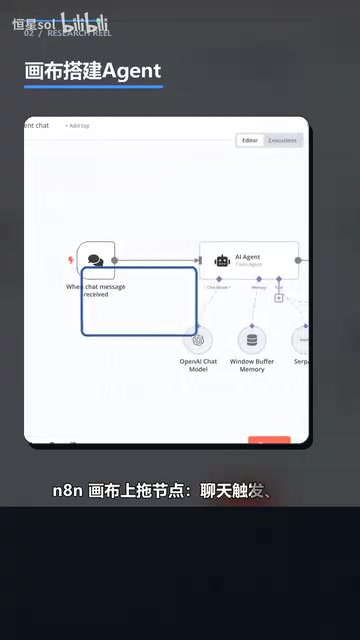
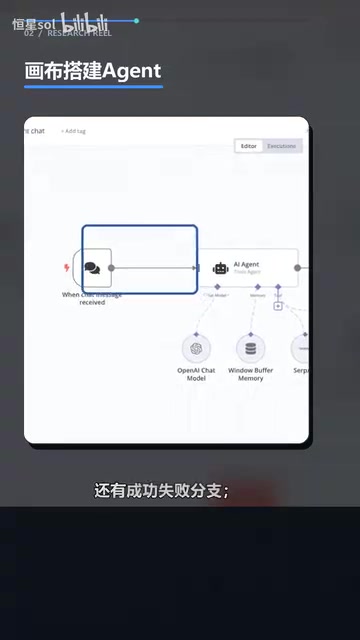
For conversational AI applications, the combination of a Chat Model and Memory node is especially important. The former handles calls to the underlying model, while the latter maintains conversation context so the bot can remember what was discussed earlier. n8n abstracts away what would otherwise require a significant amount of glue code, turning these capabilities into drag-and-drop nodes — while preserving success and failure branch logic to handle the inevitable edge cases that arise in real-world deployments.
Memory nodes serve a specific role in AI chat applications: persisting conversational context. The underlying implementation you choose has a direct impact on both conversation quality and system performance. n8n supports multiple memory backends, including Window Buffer Memory (short-term, retaining only the last N turns), vector database-backed long-term memory (e.g., Pinecone, Supabase Vector), and summary-based compressed memory. Each approach involves trade-offs between token usage, retrieval accuracy, and latency: window buffering is the simplest to implement but risks losing early context; vector retrieval supports longer history lookups but introduces additional embedding computation overhead. When building multi-turn conversational applications, the choice of memory strategy often has a greater impact on user experience than the model itself — which is one reason n8n abstracts Memory into a standalone node rather than baking in a default behavior.
Low-Code Doesn't Mean No-Code
To its credit, n8n hasn't sacrificed flexibility in pursuit of a "zero-code" ideal. When visual nodes aren't enough for complex requirements, users can embed JavaScript or Python code blocks directly into their workflows to implement custom logic. This hybrid model — primarily low-code, with code as a fallback — strikes a practical balance between ease of use and extensibility.
This is a significant win for developer experience. Simple business logic gets built quickly with nodes; special data transformations, complex calculations, or custom third-party API integrations get handled in a familiar programming language. Compared to the steep learning curve of pure-code frameworks and the ceiling imposed by pure low-code tools, n8n finds a pragmatic middle ground.
A Vast Integration and Template Ecosystem
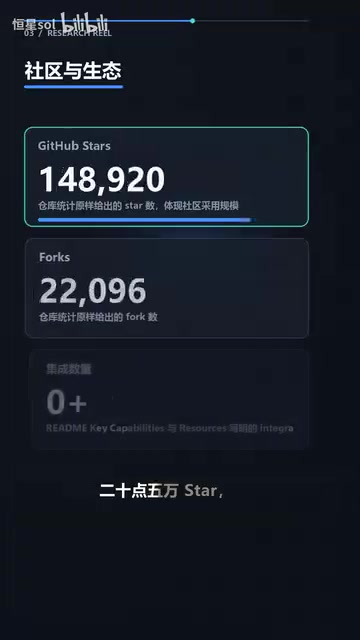
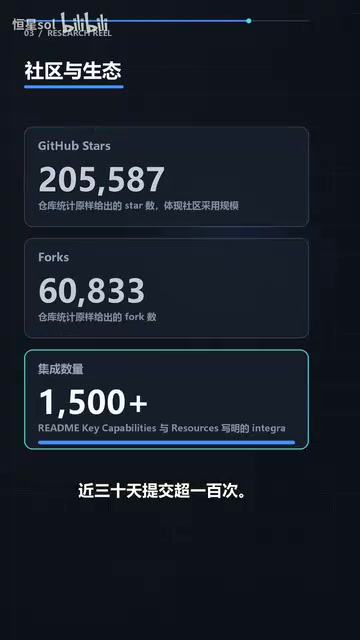
A workflow automation platform's practical value is largely determined by how many external services it can connect to. n8n currently offers over 1,500 integrations, covering common databases, SaaS tools, communication platforms, and various APIs. Whether you're pushing AI output to a corporate messaging app or pulling data from a CRM for processing, most scenarios have a ready-made connector available.
Beyond the sheer number of integrations, n8n has also accumulated over 9,000 reusable templates. For newcomers, the template library dramatically shortens the time from zero to working solution — grabbing a template for a similar use case and adapting it is far more efficient than starting from a blank canvas. This ecosystem also speaks volumes about how active the community is.
Open Source, Active Development, and the Freedom to Self-Host
n8n has surpassed 205,000 stars on GitHub, with over 100 code commits in the last 30 days alone. The project maintains a high iteration cadence, with the latest release at version 2.39.10. For a piece of infrastructure you're planning to depend on long-term, that level of activity is an important confidence signal.
n8n operates under a Fair-code license model. This differs from traditional fully open-source licenses — it permits free use, modification, and self-hosting, but places certain restrictions on commercial hosted services. For most teams, the practical value lies in the flexibility to deploy however you choose: either run the entire stack on your own servers (keeping data in-house and avoiding vendor lock-in) or use the official cloud service to avoid operational overhead.
Fair-code isn't a standardized open-source license — it's a licensing philosophy proposed by n8n's founders that sits between open source and commercial software. In practice, n8n uses the Sustainable Use License and the n8n Enterprise License. The core restriction is this: any commercial platform that builds on n8n to offer "workflow automation as a service" to external customers requires a commercial license. However, internal enterprise use, source code modification, and private deployment are all unrestricted. In practice, the vast majority of users — individual developers and enterprise IT teams alike — will rarely feel any friction from these licensing terms. By contrast, tools that ship under MIT or Apache 2.0 (as some competitors do) allow anyone to build commercial SaaS products on top of them, but the tradeoff is that the commercial entity lacks sustainable monetization incentives, raising questions about long-term maintenance. The Fair-code model attempts to balance community contribution with commercial sustainability — understanding this context is helpful when evaluating n8n as a long-term infrastructure investment.
Who Is It For?
All things considered, n8n is best suited for a few specific types of users: technical teams looking to break free from single-vendor AI dependency and maintain control over their own stack; enterprises that need to weave AI capabilities into existing business processes across a complex web of internal systems; and independent developers who know a bit of code but don't want to reinvent the wheel every time.
Its value isn't in replacing any particular AI model — it's in acting as the "hub" that connects AI to your business systems. When a model is just one swappable node in a larger workflow, the team's control over the overall architecture increases accordingly. That, perhaps, is the real meaning behind "stop letting model vendors hold you hostage."
Related articles

Running Claude Code and Codex in Parallel: A Practical git worktree Guide
A tested workflow for running Claude Code and Codex in parallel on one repo: git worktree allocation, common pitfalls, cross-agent diff review, multi-account switching for usage limits, plus a verification checklist.

GEO Tools Explained: Get Your Content Cited by AI Answer Engines
GEO tools audit and improve how content gets cited by AI answer engines. This guide covers the five-task GEO toolchain, citation patterns, a 20-minute audit, and the citation share vs. conversion trade-off.

How to Choose the Best Generative Engine Optimization Platform: A Full Breakdown of Answer Engine Citation Mechanics
A deep dive into GEO platform selection: how answer engines choose citation sources, a comparison of mainstream GEO tools, a real case of winning a first citation in three weeks, and why to measure share of citations rather than mentions.