n8n + HubSpot + AI: A Practical Breakdown of Automated Lead Qualification for Immigration Consultancies

Automate immigration lead qualification with n8n, OpenAI, and HubSpot for structured AI-driven prioritization.
AI automation expert Daniel Sarsha built a lead qualification workflow for immigration consultancies: after a client submits a form, n8n fetches new HubSpot inquiries, deduplicates them, calls OpenAI for structured evaluation — outputting priority, summary, missing info, recommended actions, and reasoning — writes results back to HubSpot, routes leads into three tiers, and sends Gmail alerts. The approach uses mature SaaS and low-code tools to hand judgment-intensive but rule-bound steps to an LLM, freeing consultants for high-value decisions. The article also notes that bridging from demo to production requires accuracy validation, error handling, and privacy compliance.
Immigration consultancies receive a high volume of new inquiries every day, and the traditional approach is almost entirely manual: someone has to read through each inquiry, understand the client's needs, check for missing information, assess lead priority, and decide on next steps. As inquiry volume grows, this process quickly eats into consultants' time. AI automation expert Daniel Sarsha has shared a lead qualification workflow built on n8n, HubSpot, OpenAI, and Gmail — designed to hand off this repetitive work to machines.
The Core Problem This System Solves
Lead qualification is fundamentally a judgment-intensive task: you need to understand the content and make quick decisions. Manual processing works at low volumes, but once inquiries start flooding in, both response speed and consistency suffer — and high-value leads can easily get buried in the queue.
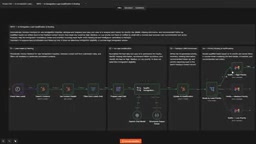
Daniel's workflow connects the entire pipeline: HubSpot handles lead collection and storage, n8n serves as the automation orchestration hub, OpenAI handles content understanding and assessment, and Gmail takes care of notifications. The goal is clear — reduce manual review, speed up prioritization, provide clearer next steps, and ensure all key information is stored within HubSpot.
n8n is an open-source workflow automation platform, similar in positioning to Zapier or Make (formerly Integromat), but with support for self-hosted deployment. Its core design connects various SaaS services and APIs through visual nodes, chaining trigger events, data transformations, conditional branching, and external calls into complete automated workflows. Compared to purely cloud-based solutions, self-hosting means data doesn't need to pass through third-party servers — a meaningful advantage in terms of data sovereignty and compliance for immigration consultancies handling sensitive materials like passport information and financial proof. n8n uses a fair-code license: core features are free, enterprise features are usage-based, and overall costs are typically lower than a comparable Zapier subscription.
How the Workflow Operates
When a client submits a form, the lead is first saved to HubSpot. The workflow then fetches the key fields and checks whether the lead has already been processed — a practical deduplication step that prevents the same inquiry from being evaluated and notified multiple times.
Once confirmed as a new lead, the AI generates five structured outputs:
- Lead priority (High / Medium / Low)
- Brief summary
- Missing information
- Recommended next steps
- Reasoning behind the priority rating
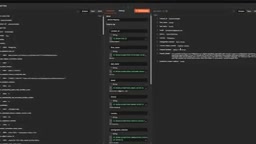
These five outputs don't just sit in a chat window — they're written directly back into the HubSpot contact record. Consultants can open a contact and immediately see the summary, priority level, missing fields, and recommended actions, without reading the full inquiry from scratch. For immigration consulting — where information fields are numerous and document checks are tedious — the automatic flagging of "missing information" is especially valuable.

Priority Routing and Email Notifications
Once the assessment is complete, the system routes leads into three tiers: high, medium, and low. This lets consultants immediately see which inquiries need urgent attention, rather than intuitively picking through a pile of unsorted leads.
At the same time, consultants receive an email notification containing lead details, the AI summary, and recommended next steps. The email notification and CRM write-back form a dual channel: the CRM serves as the center for long-term records and team collaboration, while email handles real-time alerts to ensure high-priority leads aren't missed.

Trade-offs and Takeaways from This Tech Stack
This solution doesn't rely on complex custom-built models or vector databases. Instead, it rapidly assembles a workable business process using mature SaaS and low-code tools — which is exactly the typical path for "AI + automation" implementations today:
- n8n, as an open-source self-hostable orchestration tool, offers better data sovereignty and cost control compared to Zapier, making it well-suited for immigration consulting scenarios that involve sensitive client information.
- OpenAI is used for "understanding + structured output" rather than "generating marketing copy" — having the model produce directly consumable fields is a more pragmatic use of LLMs in enterprise workflows.
- HubSpot acts as the Single Source of Truth, ensuring that automation results ultimately become a team asset.
It's worth being realistic: demonstration workflows like this still require several gaps to be filled for real-world business use — how to validate the accuracy of AI priority assessments, output field format stability, error handling and retry logic, and compliant handling of customer privacy data are all topics the video doesn't address in depth. In other words, it presents a clear, replicable framework, but there's still engineering work between a demo and a production environment.
"Structured output" is a key capability of LLMs in enterprise process integration. Language models return free-form text by default, but by constraining output format via system prompts (e.g., JSON Schema) or using OpenAI's Function Calling / Structured Outputs API, you can have the model directly produce machine-parseable fields rather than paragraphs requiring secondary extraction. The benefit is that downstream nodes (such as writing back to HubSpot fields) need no additional text parsing logic, and format stability improves significantly. However, even with structured output APIs, occasional format drift or missing fields from the model still occur — production environments typically require JSON validation and fallback mechanisms, which is part of why the article notes that "there's still engineering distance between demo and production."
Implications for Consulting-Type Businesses
Immigration consulting is just one entry point. Any service industry whose core process follows "form inquiry → manual judgment → tiered follow-up" — legal consulting, overseas education agencies, insurance, real estate brokerage — can adopt this pattern. The core idea is to hand off judgment-intensive but relatively rule-bound steps to an LLM for structured processing, while concentrating human effort on high-value actions that genuinely require professional judgment and communication.
For teams looking to build similar systems, the barrier to entry isn't high: a CRM, an automation orchestration tool, an LLM API, and a clear set of evaluation prompts are all you need to run through the minimal closed loop. The real challenge isn't the tools themselves — it's distilling your business rules into stable prompt definitions and field specifications that the model can reliably understand.
Related articles

Claude Reportedly Able to Hide Secret Messages in Benign Images
A Reddit post claims Claude Fable 5.1 can hide secret messages in benign images. This article reviews the background, image steganography principles, and potential security risks, and suggests a testing path from rumor to verification.

Federal Government Awards $85 Million; CFS to Develop Fusion-Specific Semiconductors
The federal government awards $85 million to Commonwealth Fusion Systems to develop conductors and power semiconductors for fusion plants. This article analyzes the significance of this funding for the fusion supply chain and commercialization path.

When Should AI Assistants Proactively Suggest? Timing Is Everything
When should AI assistants proactively suggest? Reddit discussion reveals: the same suggestion feels different at different times. This article analyzes the dual nature of proactive suggestions, the boundary of user expectations, and design principles, exploring how to balance automation and user control.