Nadella Calls for AI 'Emergency Brake': Microsoft's CEO on Trust Architecture

Microsoft CEO Nadella calls for an AI 'emergency brake,' pushing the industry to rethink AI safety and controllability.
Microsoft CEO Satya Nadella has publicly called on the AI industry to "take a step back" and reassess AI's "trust architecture," arguing that models need an "emergency brake" mechanism. Coming from one of the world's most aggressively AI-focused companies, this statement carries more strategic weight than a typical PR declaration. The "emergency brake" points to a long-unresolved core question in AI governance: as model capabilities expand rapidly, can humans still exercise effective oversight and intervention? Nadella offered no specific implementation plan — whether the brake would be a built-in technical mechanism, an organizational review process, or a regulatory appeal remains unclear. But the significance is this: AI safety is being placed front and center by the industry's most central players, potentially accelerating the formation of governance rules.
Microsoft's CEO Introduces the 'Emergency Brake' Concept
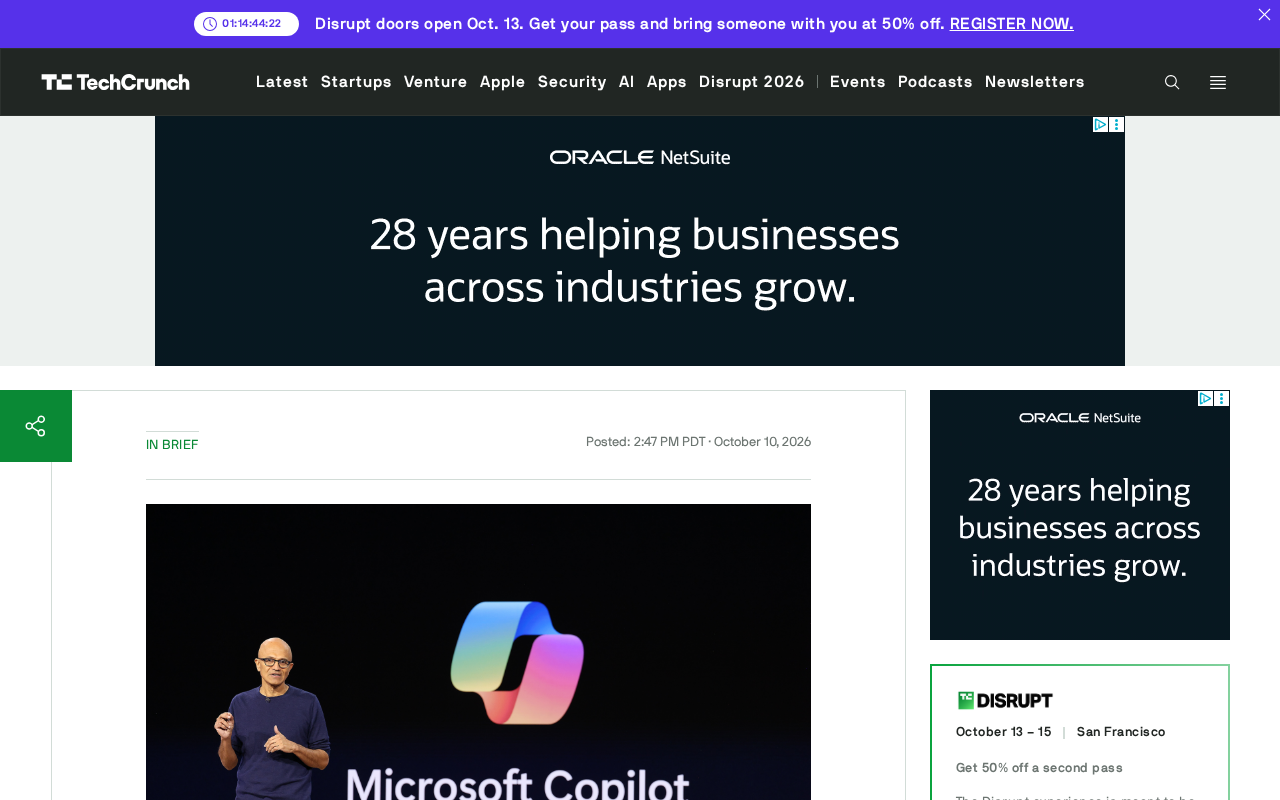
Microsoft CEO Satya Nadella made a weighty argument in a post published Saturday morning: it's time to "take a step back and reassess the trust architecture of AI." He argued that AI models need some form of an "emergency brake" mechanism.
This statement carries real weight, coming from one of the most influential tech executives in the world. Microsoft is not only OpenAI's most significant investor and partner, but has also gone all-in on AI across its own product lines — from Copilot to Azure AI. When a senior executive this deeply embedded in the AI wave speaks publicly about "brakes," the signal is one the entire industry should pay attention to.
What Does 'Trust Architecture' Actually Mean?
The term "trust architecture" that Nadella used is not throwaway rhetoric. It implies that current AI systems have structural gaps in controllability, safety, and accountability. The "emergency brake" can be understood as the ability for humans to intervene and shut down an AI system in a timely manner when it goes out of control, causes harm, or deviates from expected behavior.
This touches on one of the most central questions in AI governance: as models grow increasingly capable and widely deployed, who ensures they remain under human oversight? A powerful system without a reliable "off switch" — no matter how impressive its performance — carries incalculable risk.
From Technological Optimism to Careful Reflection
Over the past few years, tech giants competing in the AI race have mostly emphasized capability breakthroughs and application expansion. Nadella's call to "take a step back" represents a subtle but meaningful shift in tone — from simply chasing speed, to thinking about how to build complementary braking and constraint mechanisms. When this kind of reflection surfaces among industry leaders, it often signals that governance questions will enter the mainstream conversation more quickly.
Why These Remarks Deserve Attention
It's not unusual for executives to talk publicly about AI safety — but having Microsoft's CEO introduce the specific concept of an "emergency brake" in a formal context carries special significance.
On one hand, Microsoft's aggressive push on AI commercialization is well established. The fact that an internal voice is now emphasizing risk suggests that safety considerations are being woven into the company's strategic narrative, not just deployed as PR language. On the other hand, if mechanisms like an "emergency brake" are to be meaningfully implemented, the challenge goes far beyond technical execution — it involves regulatory frameworks, corporate accountability boundaries, and complex cross-industry coordination.
An Implementation Path That Remains Unclear
Based on this brief statement alone, it's impossible to determine whether Nadella envisions the "emergency brake" as a technical built-in mechanism, an organizational review process, or a call for policy-level regulation. The absence of these details is itself telling — it reflects that AI safety discourse is still very much in a phase of "raising questions rather than providing answers."
There are several existing practices in the field worth referencing: the first is Red Teaming, in which a dedicated team simulates malicious users or extreme scenarios before model deployment to proactively identify failure boundaries; the second is Model Cards and System Cards, championed by OpenAI, Google, and others, which require that known limitations and risk disclosures accompany model releases; the third is the human oversight obligation for high-risk AI systems mandated by the EU AI Act, which requires that the ability for human intervention be preserved in specific contexts. However, these measures are largely voluntary disclosures or pre-deployment assessments — there is still no "real-time brake" mechanism capable of dynamically intervening while a system is running. If Nadella's call is to be realized, the technical standards and industry norms for this layer still need to be built from scratch.
Potential Impact on the Industry
If this philosophy is seriously pursued by Microsoft and its partners, it could drive change in several directions: safety assessment processes prior to model deployment may become more standardized; "interruptibility" could emerge as a selling point for enterprise AI products; and regulatory bodies may use voices like this from within the industry to accelerate the development of relevant rules.
For practitioners and observers following AI development, the value of this news lies not in how much detail it provides, but in what it signals as a trend — AI safety is no longer a fringe topic, but is being put on the table by the most central players. What's worth tracking next is whether Microsoft will translate this philosophy into concrete product features or governance commitments.
Background
The "emergency brake" has a more formal counterpart in AI safety research: Corrigibility and the Off-Switch Problem. As early as 2016, researchers from DeepMind and Oxford University co-authored a paper specifically exploring how to design AI agents that "allow humans to safely shut them down at any time." The core difficulty is this: a reinforcement learning system oriented toward maximizing objectives will naturally "resist" being shut down — because being shut down means it cannot complete its goal. As a result, an "emergency brake" is far more than adding a physical power-cut button. It requires fundamental design work at the level of the model's reward functions and decision-making mechanisms, so the system responds to human intervention with "cooperation" rather than "avoidance." This problem remains an open question in AI alignment research to this day.
Related articles

Workbuddy for Absolute Beginners: How a Desktop AI Agent Fits Into Real Workflows
A beginner's guide to the Workbuddy desktop AI agent: installation, claiming credits, file management, and building automated workflows—compared with CodeX for fit and cost, helping professionals shift from AI question-askers to AI managers.

OpenAI's New Agent Stack: Computer Use, Decisions API, and Ultra-Fast Workflows
OpenAI Dev Day unveiled a new agent stack: Computer Use outperforms humans, Decisions API delivers ultra-low-latency classification via Luna, Agents API opens the same Computer Use capabilities, and GPT-6.1 Sol costs only one-seventh of Astra. Core updates, benchmark data, and developer insights.

Liang Wenfeng Open-Sources DeepInfo Inference Framework, Takes On U.S. Ban
DeepSeek open-sources its DeepInfo inference framework after its models, featuring GPU/CPU cross-pipelining, small-model prediction with large-model verification, and full Huawei Ascend and NVIDIA chip support—facing the U.S. federal ban head-on. This article analyzes its significance for AI deployment and open-source strategy.