Nano AI Agent Hands-On Review: Real Experience and In-Depth Evaluation of Free MCP Tools

Nano AI deep research agent review: free, easy to use, solid output quality but still has AI hallucination issues.
This article reviews the Nano AI deep research agent through two real tasks: a Guizhou travel guide and a Pop Mart business analysis. Built on MCP protocol with free integrated tools, it requires zero technical setup and generates complete research reports within 10 minutes, with output quality exceeding expectations. However, it still has occasional browser bugs and AI hallucination issues. Overall, Nano AI is a solid choice for ordinary users to experience AI agents at low cost.
The AI agent space has been heating up recently. Following Manus and Code Space, Nano AI has entered the battlefield with its deep research agent. With major players rushing in, one can't help but wonder: is the Nano AI agent actually any good? This article conducts an in-depth review through two real-world tasks to show you its true capabilities.
Before diving into the review, it's worth understanding the technical background of AI agents. AI Agents are one of the hottest directions in artificial intelligence today. Unlike traditional conversational AI, agents possess the ability to autonomously plan, invoke tools, and execute multi-step processes — they can not only understand user intent but also break down complex tasks into subtasks, autonomously calling external tools to collect information, process data, and generate content. From a technical implementation perspective, mainstream agents today generally adopt the ReAct (Reasoning + Acting) framework, where the model first reasons at each step (Reasoning), decides what action to take next (Acting), then observes the result before entering the next reasoning cycle. This "think-act-observe" loop enables agents to dynamically adjust strategies like humans, rather than mechanically executing preset workflows. This is also the fundamental difference between AI agents and traditional RPA (Robotic Process Automation) — RPA can only execute repetitive tasks according to pre-written fixed rules, while AI agents can understand ambiguous natural language instructions and adapt flexibly based on actual circumstances during execution. 2025 is widely regarded as the "Year of the Agent" in the industry, with international giants like OpenAI, Google, and Anthropic, as well as major domestic AI companies, accelerating their efforts in this space. Manus, mentioned in this article, is a general-purpose AI agent product developed by the Chinese team Monica, which quickly went viral after launch due to its powerful autonomous execution capabilities and is considered one of the benchmark products in the agent space.
Test One: Creating a Four-Day Guizhou Travel Guide with Nano AI Agent
With the May Day holiday approaching, the first test task was very practical — have the Nano AI agent create a four-day Guizhou travel guide covering round-trip transportation, featured restaurants, accommodation recommendations, and scenic spot itineraries.
After inputting the requirements, the agent immediately got to work. Its execution flow was very clear: first task planning, then step-by-step searching for transportation information, restaurant details, hotel data, etc. through MCP tool calls, ultimately generating a complete webpage report. The MCP (Model Context Protocol) mentioned here is an open standard protocol released by Anthropic in late 2024, designed to provide large language models with a unified way to connect to external tools and data sources. You can think of MCP as the "USB port" of the AI world — just as USB allows various peripherals to plug-and-play with computers, MCP enables AI models to call search engines, databases, API services, and other external tools in a standardized way. This is the technical foundation that enables Nano AI's efficient information gathering.
From a technical architecture perspective, MCP adopts a Client-Server model: the AI application acts as the MCP Client to initiate tool call requests, while various external services (such as search engines, map services, databases, etc.) expose standardized interfaces through MCP Servers. Before MCP existed, an AI application needing to connect to N tools required developing N different sets of adapter code. With MCP, you only need to implement the MCP Client once to connect to all tool services that follow the MCP protocol, improving development efficiency exponentially. This architectural design borrows from the classic "Adapter Pattern" in software engineering — introducing an intermediate abstraction layer to decouple the caller and the service provider, allowing both sides to evolve independently without affecting each other. Currently, the MCP protocol has gained widespread industry support, with mainstream AI coding tools like Cursor and Windsurf, as well as numerous developer communities, actively integrating into the MCP ecosystem. It is becoming the de facto standard for AI tool interoperability.

The generated content was quite comprehensive: it opened with a brief introduction to Guizhou, followed by a travel preparation checklist, estimated costs, transportation comparisons, and even thoughtfully included a scenic spot distribution map to help users choose the optimal transportation plan. Scrolling further revealed hotel recommendations, food guides, a super-detailed four-day itinerary, and practical travel tips.
After exporting to PDF, the information was even richer — specific transportation cost breakdowns, hotel options at different price points — it was like having a personal travel consultant. Overall, the quality of this task's completion genuinely exceeded expectations.
Test Two: Generating a Pop Mart Business Analysis Report with Nano AI
The second task raised the professional difficulty — conducting a comprehensive business analysis of Pop Mart. Pop Mart (POP MART) is China's leading trendy toy company, listed on the Hong Kong Stock Exchange in 2020, known for its blind box sales model and IP operation capabilities. The core business logic of the blind box economy lies in exploiting consumers' "uncertainty preference" — the surprise and collection desire brought by the random draw mechanism significantly boosts repurchase rates, while the scarcity design of hidden editions spawns an active secondary market, creating unique community culture and brand stickiness. This business model is called "Variable Ratio Reinforcement" in behavioral economics, sharing similar underlying logic with gacha mechanics in games and lottery purchasing psychology — uncertain rewards are more motivating for sustained participation than certain ones. According to industry research reports, China's trendy toy market exceeded 60 billion RMB in 2024, and Pop Mart holds a significant market share thanks to its strong IP incubation and operation capabilities. In 2024-2025, Pop Mart's stock price surged dramatically thanks to explosive overseas market growth and viral IPs like LABUBU, with its market cap once exceeding 100 billion HKD, making it a phenomenal company in the consumer sector. Choosing such a company with rich information dimensions and high analytical complexity as the test subject effectively examines Nano AI's deep research capabilities.
Conducting a comprehensive business analysis of a listed company involves multi-dimensional information integration and cross-analysis including financial data interpretation, industry competitive landscape mapping, consumer behavior analysis, supply chain model evaluation, and overseas expansion strategy assessment. The challenge for AI agents in such tasks lies not only in the breadth of information collection but also in whether meaningful insights can be extracted from massive fragmented information — this is the litmus test for an agent's "deep research" capability. In traditional investment research workflows, analysts typically need to query financial data and valuation metrics on professional financial terminals like Wind and Bloomberg, search for industry analysts' in-depth views on broker research report platforms, track sentiment dynamics and consumer feedback on social media and news platforms, and read primary materials such as company annual reports and prospectuses — the entire process involves cross-use of multiple professional tools with enormous information integration workload.
After launching, the agent first searched for extensive relevant materials, then conducted analysis from multiple dimensions: company business model breakdown, core competitiveness assessment, market positioning analysis, and future development trend predictions.
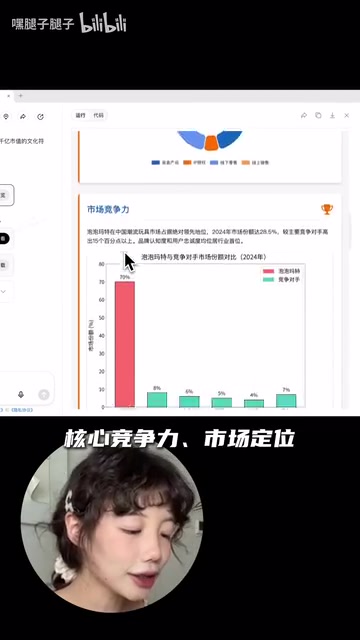
The final report was very rich in content, and the entire process took less than 10 minutes. If done manually, the same work might require hours or even days of material collection and analytical organization. The AI agent compressed what would normally require switching back and forth between multiple platforms into a single automated execution. This efficiency improvement is clearly valuable for investors, analysts, or entrepreneurs who need to quickly understand a company. Of course, it should be noted that AI-generated business analysis reports are better suited as starting points for preliminary research and frameworks for information integration. For deep analysis involving major investment decisions, professional analysts still need to verify and supplement based on primary data and industry experience.
How to Use the Nano AI Agent: Three Steps to Get Started
The Nano AI agent's usage flow is extremely simple — the entire process requires no technical background, and even beginners can easily get started:
- Open the Nano AI official website and click "Agent" on the left side to enter the agent page
- Find the "Deep Research Agent" and click "Use Now"
- Simply input your research needs and wait for the results to generate
From inputting requirements to receiving a complete report, the entire flow is seamless with no unnecessary configuration steps. This minimalist interaction design reflects an important trend in current AI products — encapsulating technical complexity in the backend while making the frontend user experience as close to natural language conversation as possible. Users don't need to understand the underlying model calls, tool orchestration, result aggregation, and other technical details — they just need to describe their needs in everyday language.
Free MCP Tool Ecosystem: Zero Configuration, Ready to Use
Nano AI's universal toolbox integrates a large number of MCP tools, with the costs of commonly used tools covered by the platform — completely free for users, with no API key configuration required.

This addresses the core pain point for ordinary users working with AI. Previously, to leverage AI agents effectively, you either needed to know programming, pay for various API services, or wrestle with complex configuration processes. Before MCP protocol existed, each AI application needed to develop separate adapter interfaces for different tools, making development costly and difficult to reuse. The emergence of MCP protocol significantly reduced tool integration complexity, and Nano AI went a step further by completely eliminating these barriers, allowing users with no technical background to directly experience the powerful capabilities of MCP tools.
It's worth mentioning that an API Key is a string of characters used for identity verification when calling external services, similar to a "pass" for entering a system. Normally, users need to first register accounts on various service providers' platforms, apply for keys, bind payment methods, and then fill in the keys in the AI tool's configuration before they can use it — this series of operations is a significant barrier for non-technical users. Nano AI shields this complexity entirely by managing these keys and service calls uniformly on the backend, so users only need to focus on their needs themselves. This "backend hosting" model is very common in the SaaS (Software as a Service) industry, with the core philosophy of letting users pay for results rather than worrying about infrastructure. Nano AI has successfully applied this concept to the AI tools domain.
Compared to other paid or self-configured MCP tool solutions on the market, Nano AI's free strategy significantly lowers the cost of trying things out.
What Application Scenarios Does Nano AI Agent Support
Besides travel guides and business analysis, the Nano AI agent covers a variety of practical scenarios:
- Stock Analysis: Quickly obtain fundamental and technical analysis of individual stocks
- Trending Event Summaries: Automatically organize event timelines and key information
- Interactive PPT Courseware: Generate interactive teaching presentation materials
- Webpage Reports with Charts: Automatically generate professional reports with data visualization

As you can see, the Nano AI agent is positioned as a general-purpose deep research assistant, covering various needs in work, study, and daily life. From an industry competition perspective, current players in the agent space can be roughly categorized into several types: general execution agents represented by Manus, emphasizing end-to-end autonomous task completion; deep search agents represented by Perplexity, focusing on information retrieval and knowledge integration; and vertical domain agents represented by Devin, specializing in specific scenarios like software development. Nano AI's deep research agent is closer to the second category, but with the MCP tool ecosystem, it also possesses certain general execution capabilities. Different products have varying differentiation strategies, but they collectively push agent technology from proof-of-concept toward practical application. Notably, competition in the agent space is not just about model capabilities — it's a comprehensive contest of tool ecosystems, user experience, and business models. Whoever can build the richest tool ecosystem and reach users with the lowest barriers may gain first-mover advantage in this competition.
Objective Evaluation: Pros and Cons of the Nano AI Agent
Objectively speaking, the Nano AI agent's performance is genuinely impressive, but we also need to rationally assess the overall maturity of current agent technology.
Advantages
- Zero barrier to entry: No programming knowledge needed, no API key configuration required
- Free MCP tools: The platform covers tool invocation costs, no additional fees for users
- High execution efficiency: Completes deep research within 10 minutes, generating complete reports
- Good output quality: Comprehensive content, aesthetically pleasing format, PDF export supported
Shortcomings
- Occasional browser-side bugs: Code generation occasionally errors out, requiring re-runs. This is a fairly common phenomenon among current agent products, because agent-generated code needs to be rendered and executed in real-time within a browser sandbox environment, and browser environment compatibility and resource limitations can cause execution anomalies.
- AI hallucination issues: The accuracy of some information still requires manual verification. AI Hallucination is a common challenge facing all current large language models, referring to AI "confidently making things up" — outputting information that appears reasonable but is actually inaccurate or even completely fabricated. The root cause lies in how large language models work by probabilistically predicting the next most likely token, rather than truly "understanding" facts — models essentially perform text continuation based on statistical patterns learned from training data, and when encountering domains with insufficient or contradictory training data coverage, they tend to generate content that reads smoothly but is factually incorrect. The current mainstream solution in the industry is RAG (Retrieval-Augmented Generation) technology. RAG's workflow is: when a user poses a question, the system first retrieves real document fragments related to the question from external knowledge bases or the internet, then inputs these retrieved contents as context alongside the question to the large language model, allowing the model to generate answers based on real materials rather than relying entirely on its parametric memory. This "research first, then answer" mechanism can significantly reduce hallucination rates but cannot completely eliminate them — the model may still incorrectly interpret or splice retrieved information. Additionally, the industry is exploring more advanced solutions such as Chain-of-Thought verification, multi-agent cross-review, confidence scoring, and dedicated fact-checking models to further improve output reliability. Therefore, for key data and facts in research reports generated by Nano AI, users are advised to perform secondary verification before making important decisions.
- Technology still iterating: Agent technology as a whole is not yet fully mature. From an industry development stage perspective, current AI agents are roughly at the "usable but imperfect" stage, similar to where smartphones were in 2008-2010 — core functionality is already available, but user experience and reliability still have significant room for improvement. As underlying large model reasoning capabilities strengthen, tool ecosystems mature, and engineering optimizations deepen, agent stability and accuracy are expected to improve significantly within the next one to two years.
Conclusion: Is the Nano AI Agent Worth Using?
Overall, agent products like Nano AI have significantly lowered the barrier for ordinary people to use AI. While the technology is still continuously iterating, it can already provide substantial help in many scenarios.
If you want to try AI agents but have been deterred by technical barriers, Nano AI's deep research agent is a worthy choice to experience — free MCP tools, a streamlined workflow, and decent output quality. At the very least, it lets you experience the current capability boundaries of AI agents at minimal cost. As underlying large model capabilities continue to improve and the MCP tool ecosystem grows richer, the practicality of agent products will further increase, and now is a great time to get started with a low-cost introduction.
Related articles
 Product Reviews
The Programmer's Desk Setup Guide: Building a Workspace That Feels Like Home
Discover how programmers build productive, comfortable workspaces. From multi-monitor setups to ergonomic design, explore the desk philosophy that drives focus and flow.
 Product Reviews
Qoder vs Cursor Real-World Comparison: Which $20/Month AI IDE Is Better?
Hands-on comparison of Qoder vs Cursor AI IDEs: Agent autonomy, human interaction count, and architecture decisions. Qoder needed only 2 interactions vs Cursor's 8.
 Product Reviews
Cursor Cloud Agent Demo: Eliminating Bottlenecks Across the Entire Software Development Lifecycle
Deep analysis of Cursor's Cloud Agent demo showing how cloud VMs, automated test artifacts, and a full-chain control plane systematically eliminate human bottlenecks across the software development lifecycle.