Netflix Signs YouTuber Druski as Exclusive Content Battle Heats Up
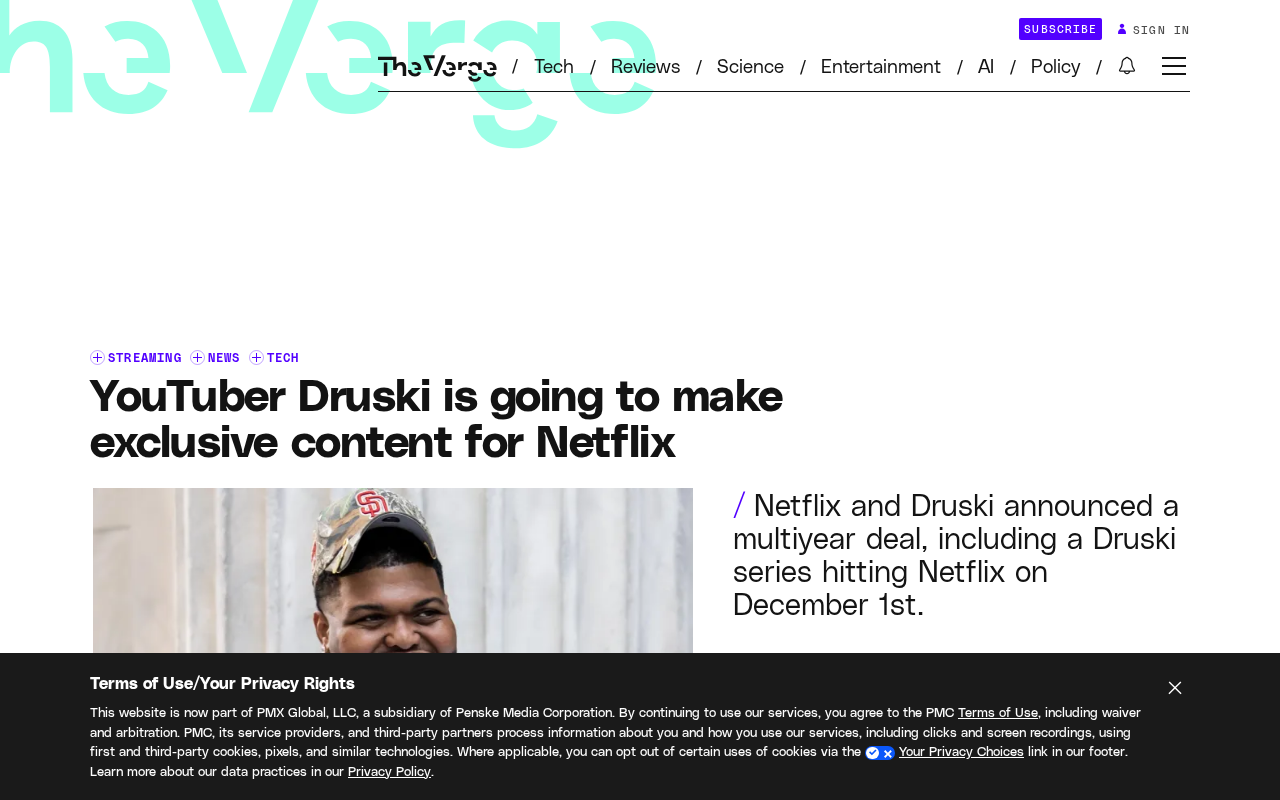
Netflix signs Druski, accelerating the blurring of boundaries between streaming and YouTube creators.
Netflix has announced a multi-year exclusive deal with YouTuber and comedian Druski to create original content, with format and launch timing undisclosed. This continues Netflix's creator strategy, following deals with Mark Rober, Ms. Rachel, and Good Mythical Morning across science, kids, and comedy verticals. Streaming platforms aim to transplant YouTube's high-loyalty fan relationships onto subscription services to reduce cold-start risk, but exclusivity brings migration costs and channel concentration risks.
The line between Netflix and YouTube is blurring. The latest step: Netflix has announced a multi-year deal with YouTuber, comedian, and influencer Druski, who will create "exclusive" original content for the streaming platform.
Deal Essentials: Multi-Year Exclusive, Debut Undetermined
According to Netflix's announcement, the multi-year agreement requires Druski to produce exclusive content for the platform, but officials have not yet disclosed the specific format, launch timing, or financial terms. The announcement only mentions that Druski's "first show" is in the works, with more details to be revealed later.
The significance of this deal lies more in its signal than in its specific terms. It marks another move by Netflix into the creator economy—no longer content merely to license traditional film and TV content, but directly signing individual creators with massive fan bases on social platforms, attempting to bring their traffic and content productivity into its own ecosystem.
Netflix's Creator Roster Is Growing
Druski is not an isolated case. Netflix has previously partnered with several well-known YouTubers, including Mark Rober, known for science experiment content; Ms. Rachel in the children's education space; and the popular YouTube channel Good Mythical Morning. The continued expansion of this list reflects a clear Netflix strategy: using creators with existing audiences to reduce the cold-start risk of content, while injecting a style more attuned to internet-native users into the platform.
From Mark Rober to Ms. Rachel to Druski, Netflix's signings span multiple verticals including science education, children's content, and comedy—indicating that its creator strategy is not a one-off experiment but a systematic effort to build a cross-category content matrix.
Why Streaming Platforms Are Eyeing YouTubers
The relationship between traditional streaming platforms and YouTube has long been nuanced. On one hand, YouTube is the largest free video platform, diverting a significant share of user time; on the other hand, streaming platforms covet the highly interactive, high-loyalty relationship between YouTube creators and their viewers.
Signing top YouTubers essentially "transplants" that relationship onto a subscription-based platform. For Netflix, a creator's built-in fan base may convert into subscribers or viewing hours; for creators, the streaming platform's budget and production resources offer a new revenue source beyond YouTube ad revenue sharing. This mutual demand is driving more similar deals to emerge.
The Creator Economy refers to an economic model led by independent content creators: individuals use platforms like YouTube, TikTok, and Instagram to produce content directly and monetize through ad revenue sharing, brand sponsorships, membership subscriptions, and merchandise sales. By various estimates, the global creator economy has reached hundreds of billions of dollars, with top creators' annual incomes rivaling traditional celebrities.
The rise of this ecosystem has changed the power structure of the content industry—creators no longer depend entirely on traditional media companies' distribution channels, but bring their own traffic, audience data, and content production capabilities. This is precisely why streaming platforms like Netflix have begun bypassing traditional studios to sign creators directly, incorporating the "people" of the creator economy as core assets into the subscription system. Druski's deal is a manifestation of this logic: the platform is buying not just shows, but the relationship capital already established between creators and fans.
The "cold start" challenge for subscription platforms deserves separate mention. Traditional film and TV content has long development cycles from greenlight to launch and high marketing costs, and new shows often require extensive promotion to be discovered by audiences. Signing YouTubers with existing audiences is equivalent to completing part of the "pre-marketing" before a show launches: the creator's fans will actively follow news of the new show, and the platform can leverage the creator's existing social media channels for low-cost promotion.
This strategy is particularly important against the backdrop of intensifying competition in the streaming industry and slowing user growth. Netflix has faced subscription growth pressure in recent years and needs to produce content that retains users more efficiently. Compared with building a new IP from scratch, borrowing established creators' brands and fan bases can significantly reduce market uncertainty for content. This is why Netflix's signings are concentrated in verticals with stable audiences such as science education, children's content, and comedy.
The Double-Edged Sword of Exclusive Content
"Exclusive" is the keyword of this deal—and also a potential risk. Druski's existing fans are primarily active on YouTube, and if new content is available only on Netflix, some fans may face platform migration costs. Netflix needs to find a balance between exclusivity and reach, or the traffic benefits of the signing may be diminished.
On the other hand, exclusivity agreements may also constrain the pace of a creator's content output on other platforms. The specific scope of exclusivity—whether all content is exclusive or only specific shows—remains unclear, and this will directly affect how Druski's existing YouTube channel operates.
Platform migration cost is a key concept for understanding the risks of exclusive content. It refers to the total time, money, and habit changes users incur when moving from one platform to another. For Druski's fans, if new content is only available on Netflix, they need to subscribe to Netflix additionally, learn a new viewing interface, and change their existing viewing habits—these costs will filter out some casual fans.
Streaming platforms typically lower migration barriers through free trials, low-priced tiers, or cross-platform promotion, but the effectiveness varies by creator type. Fans of comedy and entertainment content may be more willing to migrate than those of science education content, as the former relies more on the creator's personal charisma than on a specific platform ecosystem. Netflix needs to design more flexible exclusivity clauses in its contracts—for example, allowing creators to keep some short content or trailers on YouTube—to maintain fan engagement and guide them toward subscribing.
Implications for the Creator Economy
This deal continues a broader trend: social platform creators are becoming targets for traditional media and streaming companies. In the past, creators started on YouTube and then expanded into film, TV, and brand partnerships; now, streaming platforms are proactively stepping forward to engage and lock in creators at an early stage of the creator ecosystem.
For mid-tier creators, Druski's case provides a reference: when fan scale and content style reach a certain level, exclusive contracts with streaming platforms may become a new monetization path. But this path is not for everyone—it requires creators to have cross-platform content adaptability and to bear the channel concentration risk brought by exclusivity agreements.
The ultimate effectiveness of the Netflix-Druski partnership depends on the specific form of the first show and audience feedback after launch. But what is certain is that the wave of signings between streaming platforms and YouTubers will not cool down in the short term.
One-line Summary
Netflix signs Druski as the boundary between streaming and YouTube creators blurs faster.
Paragraph Summary
Netflix has announced a multi-year exclusive deal with YouTuber and comedian Druski, who will create original content for the platform, with the specific show format and launch timing yet to be disclosed. This continues Netflix's creator signing strategy, having previously partnered with YouTubers including Mark Rober, Ms. Rachel, and Good Mythical Morning, covering verticals such as science education, children's content, and comedy. The article argues that streaming platforms signing top creators is intended to transplant YouTube's high-loyalty fan relationships onto subscription platforms, reducing content cold-start risk while offering creators new revenue sources beyond ad revenue sharing. However, exclusivity agreements also bring fan migration costs and channel concentration risks for creators; the scope of exclusivity remains unclear, and Netflix needs to balance exclusivity with reach.
Related articles

World's First Humanoid Robot Company Agility Lists on Nasdaq: Buy or Not?
Agility becomes the world's first pure-play humanoid robot company to list on Nasdaq. This article analyzes what the landmark event means for the industry and investors, unpacking the commercialization test and investment framework for the pure humanoid robot sector.

Agent-Browser: A Browser Automation CLI for AI Agents
Vercel Labs open-sources agent-browser, a Rust-built browser automation CLI designed for AI agents, with over 45,000 GitHub stars and command-line-first browser control.

LZ4: The Open-Source Benchmark for Blazing-Fast Compression
Explore the LZ4 blazing-fast compression algorithm: its design philosophy, performance advantages, and wide use in the Linux kernel, databases, and more. How a 12k+ star open-source project became the speed benchmark.