Netflix Trust Exercise Turns Into Firing Trap: Where Are the Boundaries of Corporate Trust?

Netflix employee fired after sharing in a trust exercise exposes the dark side of corporate vulnerability culture.
A Netflix employee was reportedly fired after sharing personal information during a company retreat trust exercise, sparking debate about psychological safety, corporate culture, and power dynamics. The incident highlights the paradox of high-performance cultures that demand both radical candor and constant readiness for termination, and offers lessons for employees on balancing openness with self-protection.
A Trust Exercise That Led to a Controversial Firing
Recently, a controversial incident involving a Netflix employee sparked heated discussion on Hacker News. According to reports, a Netflix employee shared personal private information during a trust exercise at a company retreat, only to be fired as a result. The incident quickly ignited debate among tech professionals about corporate culture, psychological safety, and the boundaries of trust.
So-called "trust exercises" are common activities at corporate retreats, designed to build understanding and trust among team members by encouraging them to share their vulnerable, authentic selves. These activities trace their origins to the T-group (training group) and sensitivity training movement that emerged in the 1960s, originally developed by MIT social psychologist Kurt Lewin and others to promote personal growth and organizational change through open group communication. The classic "Trust Fall" is the most widely known form. As Brené Brown's theory on "the power of vulnerability" gained widespread popularity in the 2010s, team-building activities requiring deep emotional sharing became increasingly common. However, organizational psychologists have warned that without professional facilitation and clear boundary-setting, such activities can create "forced intimacy" that actually damages team relationships. When this kind of "vulnerability sharing" ultimately becomes the basis for termination, the legitimacy of the exercise itself comes under fundamental question.
The Intent and Potential Risks of Trust Exercises
Psychological Safety in Team-Building Activities
The original purpose of corporate trust exercises is to foster "psychological safety" — one of the core elements of high-performing teams identified by Google in its famous "Project Aristotle." Launched in 2012, the project analyzed over 180 internal Google teams and ultimately found that the strongest predictor of team effectiveness was not individual ability or background, but psychological safety. This concept was first systematically articulated by Harvard Business School professor Amy Edmondson in a 1999 academic paper, referring to the belief among team members that they won't be punished for raising questions, admitting mistakes, or expressing dissenting opinions. After the research was made public in 2015, it had a profound impact and became practically standard theory for Silicon Valley corporate culture building. However, it's worth noting that establishing psychological safety requires consistent behavioral alignment — once a gap appears between what's said and what's done, the collapse of trust is often irreversible.
Yet the Netflix incident reveals the biggest paradox of trust exercises: when employees are encouraged to share intimate information but have no assurance that this information won't be used against them, so-called "trust" becomes a carefully packaged risk. The moment an employee lets their guard down, they are effectively placing their career safety in their employer's hands.
The Causal Ambiguity Between Sharing and Firing
The publicly available information has not fully disclosed what the employee actually shared, nor how that content constituted legitimate grounds for dismissal. This ambiguity is precisely the focal point of the controversy. If the employee shared personal life struggles or past experiences, and the company used that to determine they "didn't align with corporate values," this would undoubtedly violate the fundamental promise of the trust exercise.
In the Hacker News discussion, many commenters pointed out that any activity requiring employees to share private information in a workplace setting inherently involves a power imbalance — employees often cannot truly "voluntarily" refuse to participate. This structural power differential in employment relationships is a core issue in organizational behavior and labor law research: employers control key resources such as compensation, promotion, and termination, while employees are economically dependent on the employment relationship. Sociologists call this phenomenon "compulsory voluntarism" — employees can theoretically refuse to participate in certain activities, but the refusal itself may be interpreted as "not being a team player" or "lacking team spirit," thereby affecting their career prospects. Under the "at-will employment" system prevalent in the United States, employers can fire employees for any non-discriminatory reason, making employees' ability to push back against employer decisions extremely limited and making "voluntary sharing" in trust exercises all the more fraught with risk.
Netflix's Corporate Culture: The Double-Edged Sword of Freedom and Responsibility
The Hidden Pressure of a High-Performance Culture
Netflix is famous for its distinctive corporate culture. Its well-known Culture Deck emphasizes "Freedom & Responsibility" and champions the "Keeper Test" philosophy of retaining only the best employees. This culture deck was originally published by co-founder Reed Hastings and former Chief Talent Officer Patty McCord in 2009 as a 125-slide presentation shared publicly online. Facebook COO Sheryl Sandberg called it "the most important document to come out of Silicon Valley." Its core principles include: managing employees by treating "adults like adults," granting full freedom while demanding high accountability; implementing the "Sunshine Test," meaning all decisions should be able to withstand public scrutiny; and the Keeper Test — managers must ask themselves, "If this employee were leaving, would I fight hard to keep them?" If the answer is no, they should offer a generous severance package and let them go. This culture essentially borrows from the management philosophy of professional sports, positioning the company as a "professional team" rather than a "family," with performance above all else.
While this high-performance-oriented culture has driven Netflix's business success, it also means employees are constantly under pressure of being evaluated and screened. Against this cultural backdrop, "vulnerability sharing" in trust exercises becomes particularly delicate. Employees are simultaneously encouraged to show their true selves while knowing the company could let them go at any time for "not meeting standards." This inherent contradiction makes any activity requiring the exposure of weaknesses fraught with enormous risk.
The Trust Paradox Under High Pressure
When a company simultaneously champions "radical candor" and "you could be cut at any time," the rational choice for employees is often to maintain a defensive posture rather than share sincerely. There's a classic concept in organizational behavior called "impression management," systematically described by sociologist Erving Goffman in his work The Presentation of Self in Everyday Life — people strategically control others' impressions of them during social interactions. In high-turnover corporate environments, the motivation for impression management is greatly amplified, and employees instinctively avoid exposing any information that might be viewed as a "weakness." This means there is a fundamental logical conflict between Netflix-style high-pressure culture and the sincere sharing that trust exercises demand. This incident may serve as a cautionary tale for many Netflix employees and the tech industry at large: in the workplace, candor and self-protection require careful balancing.
Reflections on Corporate Team-Building Practices
Trust Must Be Reciprocal
This incident is a wake-up call for all corporate leaders: trust cannot be a one-sided demand. If companies want employees to share sincerely during team-building activities, they must establish clear boundaries and protective mechanisms to ensure that shared content will not be used for any form of negative evaluation or punishment.
Truly healthy team-building activities should clearly establish the principle that "shared content is completely separated from work evaluations." Some leading organizations have already begun adopting the "Vegas Rule" (What happens in Vegas stays in Vegas) to enforce information boundaries during retreats — explicitly stipulating that personal information shared during team-building activities must not be disclosed externally, much less used for performance reviews or HR decisions. Additionally, professional organizational development consultants typically recommend that deep-sharing activities be led by licensed counselors or certified facilitators, rather than direct supervisors or HR personnel, to reduce the distortion of sharing willingness caused by power dynamics. Otherwise, so-called trust exercises are merely disguised information-gathering operations that will destroy the team's already fragile foundation of trust.
How Employees Can Protect Themselves
For employees in similar environments, this incident offers a practical lesson: in any workplace scenario, even when encouraged to "open up," one should maintain basic judgment. Sharing career-related challenges and growth is reasonable, but information involving deep personal privacy should be handled with caution. The workplace is ultimately a space with power structures and competing interests, and completely unreserved candor often carries unpredictable risks.
From a practical standpoint, employees can use the "onion model" to manage the depth of self-disclosure in the workplace: the outermost layer shares work-related opinions and experiences; the middle layer shares challenges and reflections from professional growth; and the innermost layer — covering personal identity, family relationships, mental health, and other deep privacy matters — should be disclosed only after carefully assessing the safety of the environment and to what extent. If employees feel pressured to participate in uncomfortable sharing activities, they can also consider discussing alternative arrangements with HR, or seeking legal counsel when necessary to understand their rights.
Conclusion: The Boundaries of Corporate Trust Need to Be Redefined
The Netflix "trust exercise turned firing trap" incident may appear on the surface to be an isolated HR dispute, but it touches on a profound issue in the modern workplace: how much of the "trust" in corporate culture is genuine, and how much is merely management rhetoric.
When a company raises the banner of psychological safety with one hand while retaining the power to fire employees at will with the other, the tension between the two cannot be avoided. From a broader perspective, this incident also reflects a deep trend across Silicon Valley and the entire tech industry over the past decade: companies increasingly embrace the "whole self" concept in the workplace, encouraging employees to "bring your whole self to work." But in the absence of institutional safeguards, this cultural narrative can evolve into a new mechanism of control — by encouraging employees to reveal more personal information, companies effectively gain greater latitude for evaluation and management. This serves as a reminder to every tech professional: while embracing open corporate culture, one must also maintain a clear-eyed understanding of the nature of workplace relationships. Trust is worth building, but boundaries are equally worth guarding.
Related articles
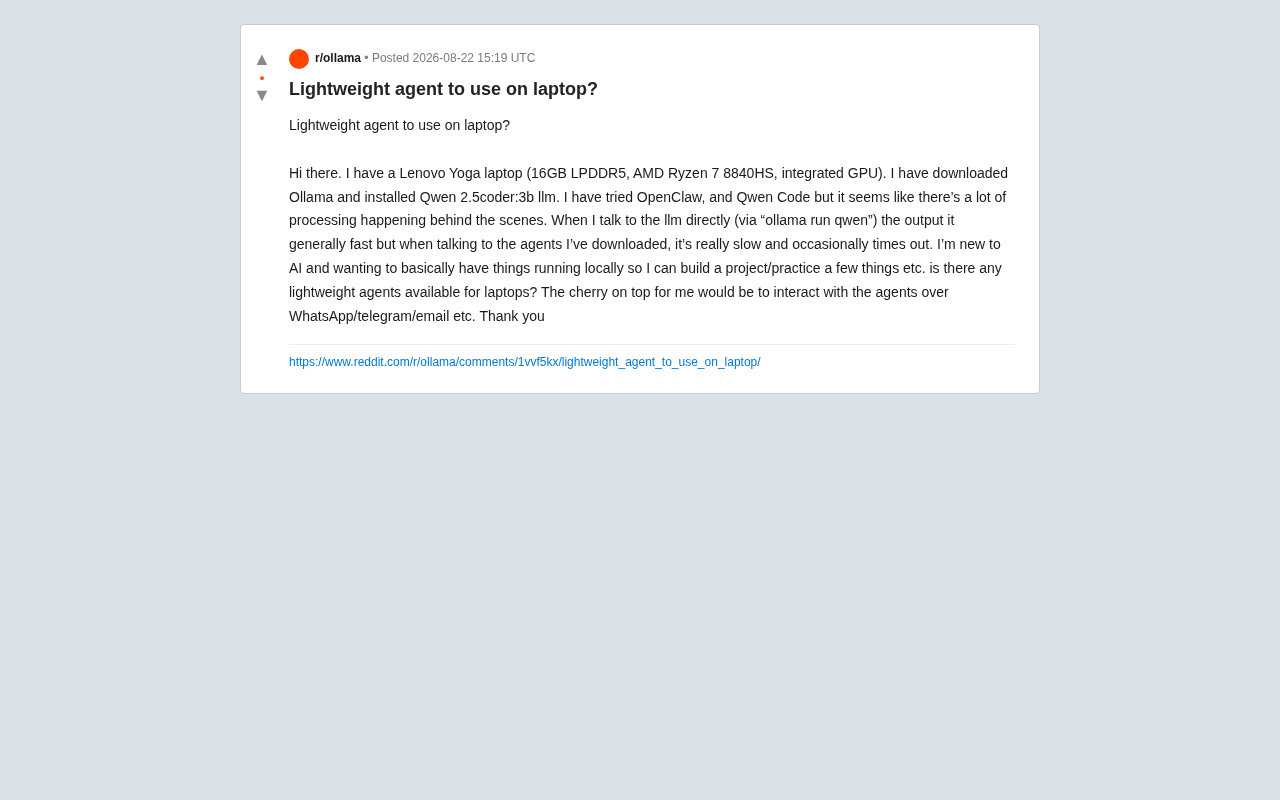
Local AI Agent Deployment Too Slow? A Lightweight Optimization Practical Guide
Local AI Agent deployment slow and timing out? This guide covers Agent framework overhead, hardware bottlenecks, and practical optimizations including context trimming, quantization, and Telegram Bot integration.

Choosing a Laptop for AI Studies: MacBook vs NVIDIA Laptop — An In-Depth Comparison Guide
In-depth analysis for AI students choosing laptops: MacBook Air M5 with remote GPU vs NVIDIA laptop, comparing CUDA support, portability, battery life, and value.

Self-Hosted LLM Tech Stack: A Complete Guide to Managing Your Local AI Cluster from the Terminal
A deep dive into self-hosting LLM tech stacks: inference engines, model management, vector databases, and how to manage your local AI cluster from the terminal.