New Archaeological Discoveries in Ancient Egypt: The Truth About the Sphinx and the Origins of the Pyramids

New archaeological discoveries rewrite our understanding of the Sphinx, pyramid origins, and Egypt's Middle Kingdom.
A National Geographic documentary series reveals groundbreaking Egyptian findings: evidence linking the Sphinx to Khafre and cosmic rebirth rituals, crocodile worship extending beyond known regions, Narmer's massive brewery as a blueprint for pharaonic power, the Pyramid of Seila as possibly the first true pyramid, Wadi al-Jarf as a naval base supporting pyramid construction, and forgotten Middle Kingdom mega-tombs that explain why an entire era was lost to history.
The National Geographic Lost Treasures of Egypt documentary series follows multiple archaeological teams deep into Egyptian sites across the country. Through an entire season of fieldwork, they reveal little-known secrets of this ancient civilization. From the Sphinx at Giza to crocodile worship along the Nile, from a prehistoric mega-brewery to forgotten tombs of the Middle Kingdom, these discoveries not only answer long-standing mysteries but may also rewrite our understanding of ancient Egyptian history.
This article systematically reviews the most groundbreaking findings from this series of excavations, covering three major themes: animal worship, pyramid evolution, and the forgotten Middle Kingdom.
The Sphinx and the Mystery of Animal Worship
The Great Sphinx of Giza is one of the world's most iconic statues. Egyptologists generally believe it was built around the same time as the Giza pyramids, making it approximately 4,500 years old. Egyptologist Dr. Chris Naunton is dedicated to cracking one of the most controversial puzzles: whose face does it actually depict?
Research suggests the Sphinx may have been modeled after a pharaoh of the Fourth Dynasty. Candidates include Khufu, builder of the Great Pyramid, and his son Khafre, who built the pyramid behind it. Naunton leans toward Khafre as the strongest candidate—if this is indeed Khafre's Sphinx, then its position would perfectly guard his pyramid tomb.
More importantly, Naunton discovered a temple site at the foot of the Sphinx. His observations suggest that the Sphinx, the temple, and Khafre's pyramid may all be part of a single grand design. During the spring and autumn equinoxes, the setting sun sinks precisely into the Sphinx's shoulder and the south side of the pyramid. On the summer solstice, the sun sets between the two great pyramids, resembling an Egyptian hieroglyph symbolizing divine rebirth.
The ancient Egyptians' observation and use of astronomical phenomena far exceeded modern imagination. The equinoxes (when day and night are equal) and the solstice held profound symbolic significance in ancient Egyptian religion—the sun's trajectory was seen as the sun god Ra's daily journey across the sky and nightly passage through the underworld. The "Akhet" hieroglyph depicts the sun rising or setting between two hills, symbolizing the horizon and sacred rebirth. Naunton's discovery implies that the entire layout of the Giza Plateau may be a massive three-dimensional recreation of this cosmology—the pyramids simulate the hills, the sun moves between them, and the Sphinx as guardian ensures the pharaoh's soul (the "Ka" and "Ba") can safely pass through the underworld to achieve eternal life. All of this suggests the Sphinx may be the protective core of a "resurrection machine," designed to ensure the pharaoh's passage to the afterlife.
Cross-Regional Evidence of Crocodile Worship
At the Qubbet el-Hawa necropolis near Aswan, Professor Alejandro Jiménez Serrano's team unexpectedly discovered 11 crocodile skeletons. These bones bore black marks and preserved remnants of skin and muscle, identified as mummified crocodiles—the first such find in the team's 11-year excavation history.
The mummified crocodiles are linked to the worship of Sobek. Ancient Egyptian animal worship (Zoolatry) is one of the most unique phenomena in the history of world religion. Egyptians did not simply worship animals themselves but believed specific animals were incarnations or "Ba" (a form of the soul) of deities in the human world. Sobek, as a crocodile-form deity, presided over the Nile's floods, fertility, and military power. In the city of Crocodilopolis in the Fayoum region, priests even kept live crocodiles, adorning them with gold jewelry and feeding them honey cakes. The production of animal mummies peaked during the Ptolemaic and Roman periods; it is estimated that ancient Egyptians produced millions of animal mummies, both as offerings to the gods and as mediums for devotees' prayers. Previously, scholars believed there were no records of crocodile worship in the Aswan region, so the Qubbet el-Hawa discovery challenges the traditional view that "crocodile rituals were limited to a small area of Egypt," proving that animal deity worship was widespread throughout the country.
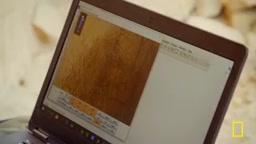
At the Gebel el-Silsila quarry, archaeologists John Ward and Maria Nilsson investigated an unfinished ram-headed sphinx. Maria used computer software to enhance the colors of ancient graffiti, revealing an image of the hippopotamus goddess Tawaret—a quarry worker's private prayer for safety. This statue is believed to have been abandoned when Akhenaten abolished polytheistic worship in favor of the sole worship of the sun god Aten.
Akhenaten (reigned approximately 1353–1336 BCE) launched what is considered humanity's earliest monotheistic reform. He abolished Egypt's millennia-old polytheistic worship system, closed the temples of Amun, and concentrated state religion on the worship of the solar disc Aten. He even moved the capital from Thebes to the newly built city of Amarna. This reform not only affected religious life but also interrupted numerous construction and sculpture projects—the unfinished ram-headed sphinx at Gebel el-Silsila was very likely a casualty of this upheaval. After Akhenaten's death, his successor Tutankhamun restored traditional polytheistic worship, and Akhenaten's name was chiseled from monuments, making him the "heretic pharaoh" of ancient Egyptian history.
Tracing the Origins of the Pyramids
The Giza pyramids were the tallest structures in the world for thousands of years. But they were not Egypt's earliest pyramids—at least six attempts of varying forms preceded them. Multiple teams are now tracing the evolutionary history of this iconic architectural form.
The Royal Brewery: The Embryo of Pharaonic Power
At Abydos, more than 250 miles south of Giza, American archaeologist Matthew Adams's team excavated a unique site. Dating to before 3000 BCE at the dawn of Egyptian civilization, this is the earliest royal cemetery. Through dating a conical pottery jar, the team confirmed these structures were built by Narmer, the first pharaoh of the First Dynasty.
Narmer (circa 3100 BCE) is believed to be the first pharaoh to unify Upper and Lower Egypt, marking the beginning of ancient Egypt's dynastic era. The famous "Narmer Palette" depicts him wearing the double crown of Upper and Lower Egypt while defeating his enemies. Before him, multiple competing chiefdoms existed in the Nile Valley; after him, a centralized state apparatus began to operate. Abydos, as the earliest royal cemetery, was believed to be the location of the Gate of Osiris—the entrance to the underworld.
Surprisingly, these elongated structures turned out to be giant brewing kilns. Egyptians used wheat and water here to brew beer. Matthew discovered six to seven sets of malting kilns, each up to 110 feet long, equipped with as many as 80 pottery jars. It is estimated that the entire brewery could produce nearly 90,000 liters of beer per week—enough to give every person in a 90,000-seat stadium one pint each.
Crucially, no drinking cups were found at the site, and all pottery jars had been opened and used. Matthew concluded from this that the beer was poured out as offerings to the king. This ability to mobilize labor on such a massive scale was precisely the "blueprint" for later building giant pyramids. Narmer's mega-brewery reveals a key dimension of early state power: by organizing large-scale production and redistributing resources (such as beer), the pharaoh demonstrated and consolidated his ruling authority over his subjects. This "redistributive economy" model persisted throughout the pharaonic era and laid the organizational foundation for later mobilizing tens of thousands of workers to build pyramids.
The Pyramid of Seila: Possibly the First True Pyramid
Deep in the desert of Fayoum, American archaeologist Kerry Muhlestein investigates a mysterious pyramid ruin—the Pyramid of Seila. It was built by Sneferu, father of Khufu, approximately 50 years before the Great Pyramid of Giza.
Sneferu (reigned approximately 2613–2589 BCE) was ancient Egypt's greatest architectural experimenter. He built at least three large pyramids, using more total stone than his son Khufu's Great Pyramid. His pyramid at Meidum underwent conversion from a step pyramid to a smooth-sided one but ultimately collapsed. His "Bent Pyramid" at Dahshur had its upper angle changed mid-construction when the original incline proved too steep. Finally, his "Red Pyramid" became the first successfully completed large true pyramid.
Kerry believes Seila may be the first smooth-sided true pyramid in history. He found key evidence in the archives: a limestone fragment carved with a smooth pyramid pattern, and a chapel and passageway on the east side—features characteristic of true pyramids rather than step pyramids.
Using high-resolution laser scanning technology from forensic engineer Brent Benson, the team completed 44 scans and reconstructed a precise 3D model. Measurements showed the pyramid's base is 110 feet square, its height approximately 24 meters (seven to eight stories), and its side angle close to 52 degrees—precisely the signature inclination of all later true pyramids. The 52-degree angle was the optimal incline determined by ancient Egyptian architects after multiple trials and errors—balancing structural stability with ideal visual effect. This discovery very likely proves Seila is Egypt's first true pyramid, pushing the emergence of this architectural form even earlier.
Wadi al-Jarf: The Naval Base Behind the Pyramids
Near the Red Sea at Wadi al-Jarf, French archaeologist Pierre Tallet's team excavated a series of man-made caves. Previously, they discovered the world's oldest known papyrus records here, hailed as "the most significant Egyptian discovery of the 21st century."
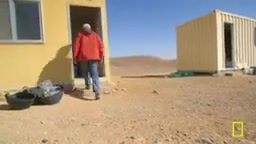
Papyrus is a writing material made from papyrus plants growing along the Nile, and was the primary medium for ancient Egyptian administration and literature. The papyri discovered at Wadi al-Jarf are hailed as "the most significant discovery of the 21st century" not only because of their extreme age (circa 2560 BCE) but because they provide firsthand written records of the pyramid construction process. These records completely debunked the popular myth that "pyramids were built by slaves," proving that the builders were organized professional laborers managed by the state through a sophisticated bureaucratic system.
The diary of an official named Merer records how he managed teams of workers and collected the white limestone needed to build the Great Pyramid. Pierre's team also discovered numerous water storage jars, ship plank fragments, and canvas remnants. Wooden planks up to two meters long suggest that boats approximately 14 meters in length were once stored here.
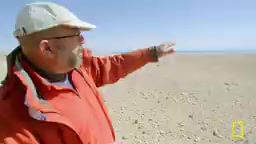
Pierre believes that pyramid workers used these 31 caves as a massive naval base for expeditions across the Red Sea. They traveled to the Sinai Peninsula, only 3 miles away, to obtain copper ore—copper being the key metal for manufacturing pyramid construction tools. By ship, the journey from Sinai to Wadi al-Jarf was reduced from a week overland to just one day. This reveals the astonishing logistical organization behind pyramid construction.
The Forgotten Mega-Tombs of the Middle Kingdom
The Giza pyramids and the Valley of the Kings are separated by a thousand years. Between these two eras, Egyptians built other equally spectacular yet little-known tombs, belonging to a mysterious period called the "Middle Kingdom."
The Middle Kingdom (approximately 2055–1650 BCE) is often called ancient Egypt's "Classical Age"—a period of maturation in literature, art, and administrative systems. Before it, during the First Intermediate Period, Egypt experienced roughly 150 years of division and civil war. The first king of the Middle Kingdom, Montuhotep II, reunified Egypt around 2055 BCE and moved the capital south to Thebes. Pharaohs of this era faced a unique challenge: how to create new symbols of royal power in the aftermath of the Pyramid Age's glory. Egyptologist Colleen Darnell visited his massive terraced temple at Deir el-Bahari—a radical departure from pyramid tomb architecture that heralded an entirely new funerary philosophy.
At Abydos, the tomb built by Pharaoh Senwosret III is one of the most innovative burials in ancient Egyptian history. The king's sarcophagus was hidden 130 feet underground, with passages sealed by over 300 tons of precious red granite. Remarkably, the tunnel extends approximately 250 feet beyond the burial chamber, winding and turning, reaching a total length of nearly 600 feet—the entire tomb is a simulation of underworld architecture. This reflects the deepening of Middle Kingdom religious thought—the tomb was no longer merely a container for preserving the body but a physical recreation of the pharaoh's journey through the underworld. The pharaoh's soul needed to traverse these winding passages to reach the eternal afterlife.
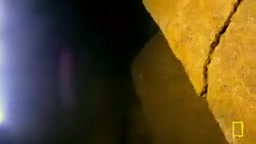
At Dahshur, the "Black Pyramid" built by Amenemhat III was a costly failure. It was constructed on the clay of the Nile floodplain, where groundwater seeped in and softened the foundation. Combined with a core built of cheap, lightweight mudbrick, the structure ultimately collapsed, and the king was never buried there.
Darnell argues that the fatal flaw of mudbrick construction is precisely why so many Middle Kingdom pharaohs have been forgotten—their massive tombs either lie deeply buried and invisible underground or have disappeared into history as the mudbrick eroded. Unlike the Old Kingdom's use of millions of limestone and granite blocks, Middle Kingdom pharaohs chose mudbrick as their primary building material. While this reduced construction costs and time, it could not withstand thousands of years of weathering and Nile floods. This explains why public awareness of the Middle Kingdom is far less than that of the Pyramid Age or the New Kingdom's Valley of the Kings.
Conclusion: Archaeological Discoveries That Rewrite Our Understanding
This season's excavations have yielded multiple breakthrough findings for ancient Egyptian studies: proving that animal deity worship was widespread across all of Egypt rather than limited to a few regions; revealing how Narmer's royal brewery served as the embryo of pharaonic power displays; confirming that Seila may be the first true pyramid in history; discovering Wadi al-Jarf as a naval base supporting pyramid construction; and re-examining the forgotten mega-tombs of the Middle Kingdom.
Together, these discoveries paint a more three-dimensional picture of ancient Egypt—from the emergence of prehistoric kingship, to the zenith of the Pyramid Age, to the maturity and subsequent obscurity of the Middle Kingdom. As the archaeologists note, the ancient Egyptian pharaohs' ability to "consolidate scattered resources and mobilize labor on a massive scale" is the genius that enabled this civilization to create the world's most iconic monumental architecture.
Related articles
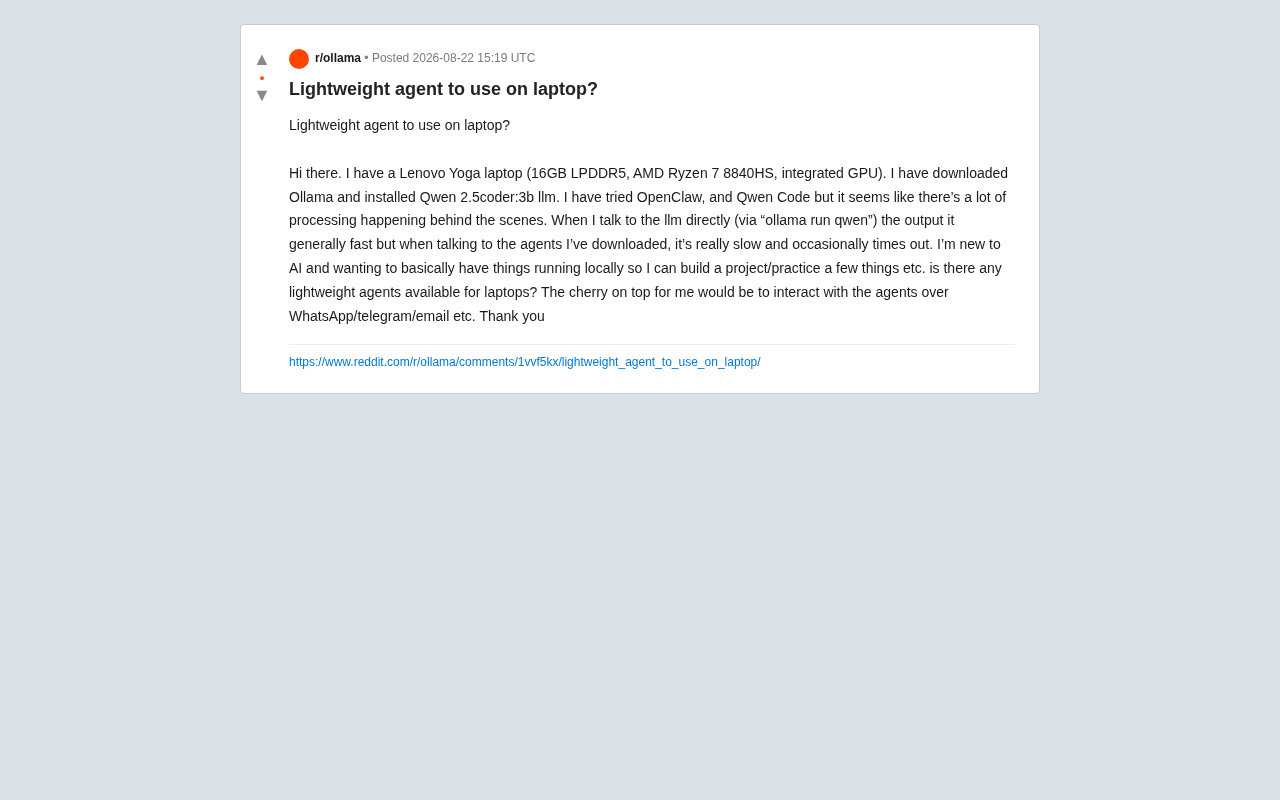
Local AI Agent Deployment Too Slow? A Lightweight Optimization Practical Guide
Local AI Agent deployment slow and timing out? This guide covers Agent framework overhead, hardware bottlenecks, and practical optimizations including context trimming, quantization, and Telegram Bot integration.

Choosing a Laptop for AI Studies: MacBook vs NVIDIA Laptop — An In-Depth Comparison Guide
In-depth analysis for AI students choosing laptops: MacBook Air M5 with remote GPU vs NVIDIA laptop, comparing CUDA support, portability, battery life, and value.

Self-Hosted LLM Tech Stack: A Complete Guide to Managing Your Local AI Cluster from the Terminal
A deep dive into self-hosting LLM tech stacks: inference engines, model management, vector databases, and how to manage your local AI cluster from the terminal.