New Orleans Uses AI to Answer 911 Emergency Calls: An Experiment Sparking Debates Over Efficiency and Safety

New Orleans deploys AI for 911 calls, sparking debate over efficiency gains versus life-or-death safety risks.
New Orleans is implementing AI to answer 911 emergency calls to address chronic dispatcher shortages. While AI can efficiently handle non-emergency calls and reduce wait times, critics raise concerns about near-zero error tolerance in life-threatening scenarios, unclear liability when failures occur, and erosion of public trust. Experts suggest human-AI collaboration — where AI handles triage and low-risk calls while humans retain critical decisions — as the most prudent path forward.
When AI Starts Answering Emergency Calls
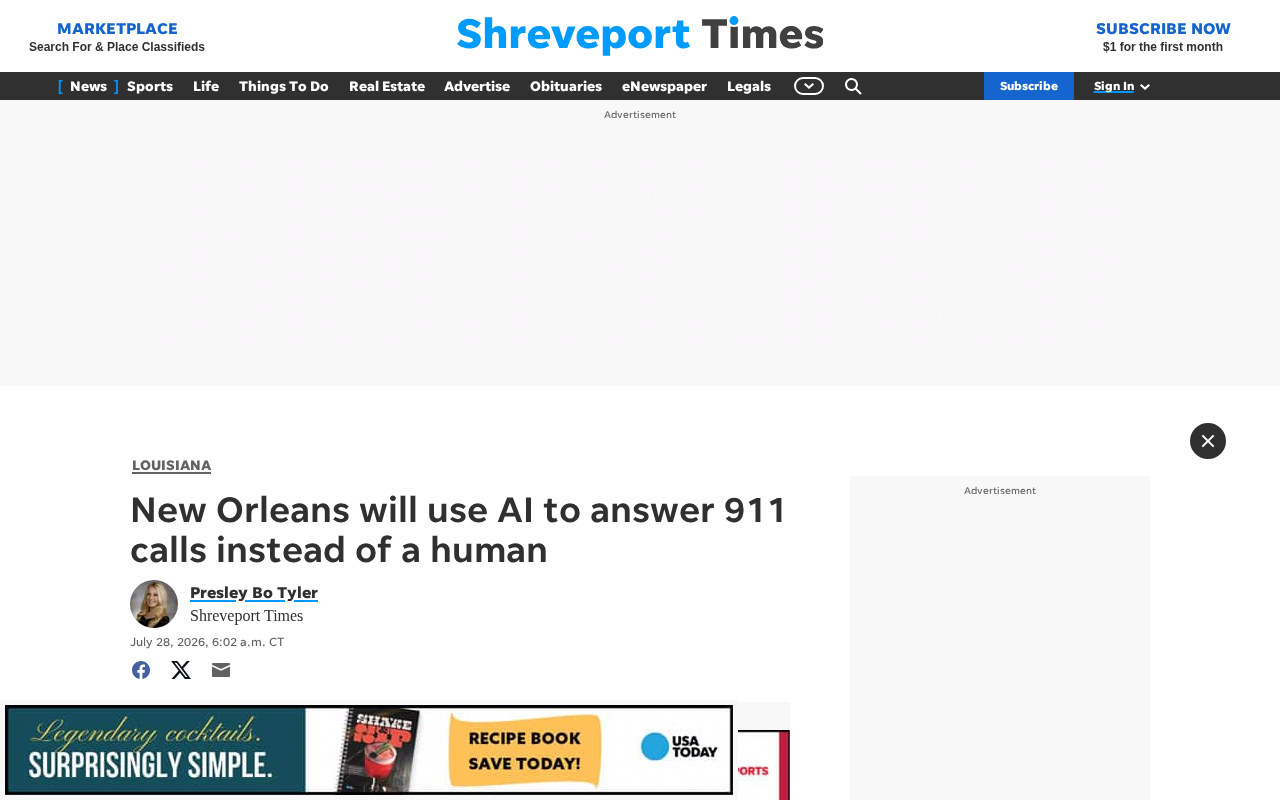
New Orleans is advancing a controversial public safety reform: using artificial intelligence to answer 911 emergency calls, replacing traditional human dispatchers. This initiative pushes emergency dispatch systems to the forefront of automation, sparking widespread discussion about technological reliability, ethical boundaries, and public safety accountability.
The 911 emergency system is the core hub of America's public safety infrastructure. Officially launched in 1968 and first deployed by AT&T in Haleyville, Alabama, it has evolved into a nationwide system integrating police, fire, and emergency medical services, handling approximately 240 million calls per year. 911 dispatch centers (also known as PSAPs — Public Safety Answering Points) serve as the first link in the emergency response chain, where operators must quickly assess incident types, urgency levels, and allocate appropriate resources. Behind every call could be a fire, a traffic accident, a medical emergency, or even a crime in progress. Introducing AI into such a high-pressure, high-stakes environment is undoubtedly an extreme test of technological maturity.
Why Cities Are Turning to AI Dispatch Systems
The Real Pressure of 911 Operator Shortages
Many cities across the United States face chronic understaffing at their 911 dispatch centers. According to the National Emergency Number Association (NENA), there are approximately 6,000 PSAP centers nationwide employing over 100,000 dispatchers, but the industry's annual turnover rate runs between 19% and 30% — far higher than typical public service positions. The high workload, intense psychological pressure, and persistent staff turnover leave many emergency call centers perpetually understaffed.
Behind this high turnover rate lies a harsh occupational reality. Operators endure not only the physical toll of shift work but also prolonged exposure to Secondary Traumatic Stress — they must stay on the line with callers experiencing violence, accidents, and death. Research shows that approximately 24% of 911 operators exhibit PTSD symptoms, yet the profession has long been excluded from the legal definition of "first responder," making it difficult for them to access corresponding mental health support and occupational protections.
When emergency calls flood in but operators are insufficient, wait times are forced to increase — and in emergencies, every second can mean the difference between life and death. Against this backdrop, AI is seen as a potential "pressure relief valve." In theory, AI systems can handle large volumes of concurrent calls simultaneously, rapidly classify the urgency of reports, and prioritize truly high-risk situations requiring human intervention for transfer to human operators.
What Types of Calls AI Handles Well
Not all 911 calls are life-or-death emergencies. In fact, a significant proportion of calls involve non-emergency matters — such as noise complaints, information inquiries, and road condition questions. For these standardized, low-risk calls, AI offers clear efficiency advantages in information collection, classification, and routing.
If AI can efficiently filter and handle these non-emergency calls, human operators can focus their limited energy on genuine life-threatening events. This is the core logic behind New Orleans' implementation of an AI dispatch system.
Controversies and Risks of AI Answering 911 Calls
Almost Zero Margin for Error in Life-or-Death Scenarios
The 911 system is fundamentally different from ordinary customer service hotlines — its margin for error is virtually zero. A single misclassification, a misread of a caller's emotional state, or a speech recognition failure could lead to fatal consequences.
From a technical perspective, current mainstream AI voice interaction systems rely on two core technologies: Automatic Speech Recognition (ASR) and Natural Language Understanding (NLU). ASR converts speech to text, while NLU extracts semantics and intent. Under ideal conditions, these systems can achieve recognition accuracy rates above 95%, but in emergency call scenarios, accuracy drops significantly due to multiple factors: background noise (gunshots, fire alarms, traffic), emotional fluctuations causing abnormal speech rate and pitch, dialect and accent variations, and unstable phone signal quality. Furthermore, current AI still has significant shortcomings in understanding implied meanings, elliptical expressions, and cultural context. For example, when someone says "he's here" on the phone, a human operator can judge from tone whether this indicates fear or anticipation, but AI struggles to make the same precise determination.
AI excels at processing clear, structured information, but emergency calls are often filled with chaos: callers may be panicked, incoherent, heavily accented, or in noisy, intermittent communication environments. Human operators can rely on experience and empathy to capture these non-verbal signals, calm callers' emotions, and guide them to provide critical information — and this is precisely the capability that current AI finds most difficult to replicate.
Who Bears Responsibility When Things Go Wrong
When an AI system makes an error leading to serious consequences, who should bear responsibility? The technology vendor that developed the AI, or the municipal department that deployed the system? This legal and ethical ambiguity is a challenge that all critical public services must confront when introducing automation.
Regarding AI liability attribution, there is currently no unified global legal framework. The existing U.S. legal system primarily relies on product liability law and governmental immunity principles to handle related disputes. Under the Federal Tort Claims Act (FTCA), government agencies may bear compensation liability under specific conditions, but the "discretionary function exception" clause may also provide protection for government technology choices. The EU is already advancing the AI Liability Directive, attempting to establish clearer mechanisms for AI harm attribution, including institutional innovations like burden of proof shifting. For critical infrastructure like the 911 system, the chain of liability involves AI developers, system integrators, operations and maintenance providers, and the government agencies that make deployment decisions — the responsibility boundaries among all parties are extremely difficult to delineate.
Moreover, public trust is an equally significant challenge. When people dial 911 at their most vulnerable and panicked moments, they typically expect a "person" who can understand their situation. Being answered by a machine voice may intensify a caller's anxiety and even affect the effectiveness of information transmission.
The Broader Trend of AI in Public Safety
New Orleans' initiative is not an isolated case but rather a microcosm of the larger trend of AI permeating government public services. From intelligent traffic management and predictive policing to automated municipal hotlines, governments at all levels are exploring ways to use AI to improve efficiency and reduce costs.
Notably, AI applications in public safety have a longer history, accompanied by ongoing controversy. The most famous cases include the PredPol predictive policing system once used by the Los Angeles Police Department, which predicted crime hotspot areas based on historical crime data but was criticized for encoding historical racial biases (such as records of over-policing minority communities) into algorithms, creating a "feedback loop" effect that exacerbated injustice. Cities like Detroit and San Francisco have legislated bans or restrictions on facial recognition technology in law enforcement due to misidentification rates (especially significantly higher error rates for darker-skinned individuals). These precedents remind decision-makers that AI deployment in public safety must undergo systematic bias audits and fairness assessments.
However, the special nature of the 911 system demands a more cautious approach. Currently, a more reasonable path may be "human-AI collaboration" rather than "replacing humans with machines": letting AI handle initial screening, information recording, and non-emergency triage, while returning critical decisions and emotional communication to humans.
At the technical implementation level, human-AI collaboration in emergency dispatch can take multiple forms. The most basic model is AI-assisted transcription: converting call content to text in real-time to reduce operators' recording burden. Advanced models include AI performing preliminary intent classification and geolocation, automatically filling dispatch forms, and recommending response actions to operators. More advanced applications involve AI independently handling low-priority calls (such as non-emergency information inquiries) while conducting real-time risk assessment on all conversations, immediately transferring to human operators upon detecting signals of violence, suicide, or medical emergency. Emergency communications technology companies like Carbyne and RapidSOS have deployed similar intelligent assistance systems in some regions, but typically as the operator's "copilot" rather than replacement. Technology should serve as an assistant to operators, not a substitute.
Conclusion
Using AI to answer 911 calls is an experiment in balancing efficiency against safety, innovation against caution. It reflects the real-world anxieties of city administrators under resource constraints while also exposing the limitations of current AI technology in high-risk, high-emotional-demand scenarios.
Whether this technology can truly enhance public safety response capabilities or will plant hidden dangers at critical moments remains to be tested by time and practice. What is certain is that the step New Orleans has taken will provide valuable experience — or lessons — for other cities. In domains where lives are at stake, any advancement in automation should adhere to "do no harm" as its highest principle.
Related articles
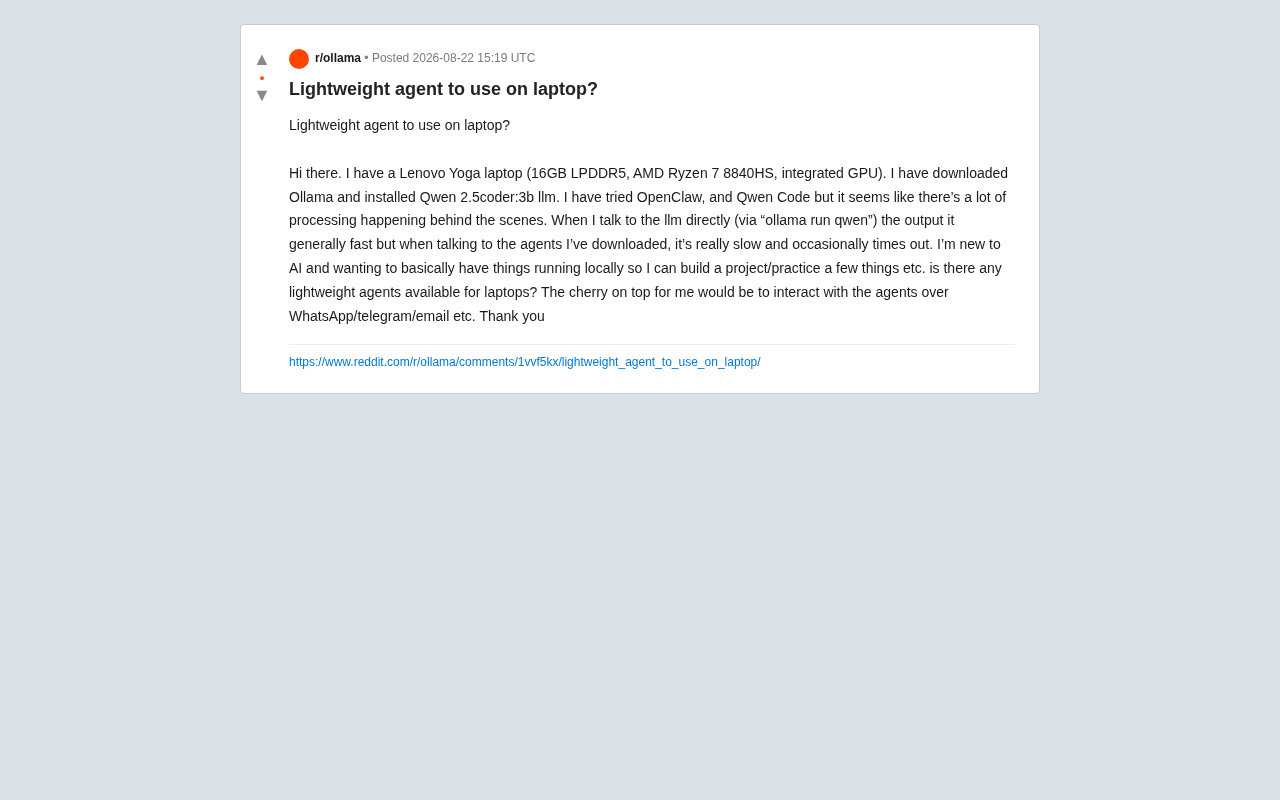
Local AI Agent Deployment Too Slow? A Lightweight Optimization Practical Guide
Local AI Agent deployment slow and timing out? This guide covers Agent framework overhead, hardware bottlenecks, and practical optimizations including context trimming, quantization, and Telegram Bot integration.

Choosing a Laptop for AI Studies: MacBook vs NVIDIA Laptop — An In-Depth Comparison Guide
In-depth analysis for AI students choosing laptops: MacBook Air M5 with remote GPU vs NVIDIA laptop, comparing CUDA support, portability, battery life, and value.

Self-Hosted LLM Tech Stack: A Complete Guide to Managing Your Local AI Cluster from the Terminal
A deep dive into self-hosting LLM tech stacks: inference engines, model management, vector databases, and how to manage your local AI cluster from the terminal.