New Trailer for 'Everest: The Other Side' Released: Ski Mountaineers Take On Ski Descent of the North Face
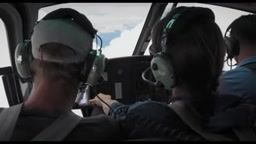
National Geographic's new film 'Everest: The Other Side' documents pro ski mountaineers' harrowing first ski descent of Everest's Direct North Face.
National Geographic's special 'Everest: The Other Side' has released its trailer, spotlighting professional ski mountaineers' bid to challenge Everest's Direct North Face and attempt the first ski descent. The route has only five recorded summits, a 9,000-foot drop, and 45-to-60-degree slopes, described as 'the ultimate route where you can't fall.' The trailer captures the team encountering an avalanche at 21,500 feet, a photographer who keeps filming through the danger, and the team's candid post-incident reflection on risk. Beyond rare North Face footage, the film explores teamwork, fear, and brotherhood in extreme mountaineering, revealing ski mountaineers' pursuit of 'presence.'
National Geographic has released the trailer for its latest special, Everest: The Other Side, focusing on professional ski mountaineers' harrowing quest to challenge Everest's Direct North Face and attempt the first ski descent. The trailer not only showcases rare footage of the North Face but also reveals the true nature of teamwork, risk assessment, and life-and-death moments in extreme mountaineering.
Everest's North Face: The Allure of the Ultimate Route
For professional ski mountaineers, the greatest achievement is skiing down mountains no one has ever skied before. The protagonist in the trailer puts it plainly: "As a professional ski mountaineer, the greatest thing you can do is ski places that have never been skied." In 2018, he and Hilary successfully skied the Lhotse Face, achieving a career milestone, and then set their sights on Everest's North Face.
The Direct North Face has only five recorded summits to date, and Jim Morrison and Hilary Nelson's dream is even bolder—to climb it and become the first to ski down. The route runs from roughly 20,000 feet (about 6,096 meters) to 29,000 feet (about 8,839 meters), a vertical drop of 9,000 feet (about 2,743 meters), with slopes of about 45 degrees and sections reaching as steep as 60 degrees. The film describes it as "a line where you can't fall—the ultimate route on the ultimate mountain."
The North Face has rarely been fully filmed before, and the production team saw this as a huge opportunity to show Everest in a way it has never been seen.
Ski Mountaineering is an extreme sport that combines mountaineering and skiing. Athletes rely on their own power (usually using skis or alpine touring skis) to climb to the summit, then descend by skiing. Unlike regular skiing, ski mountaineers typically face complex terrain such as untracked backcountry snow, glaciers, and rock, and need comprehensive skills including mountaineering, ice climbing, and avalanche risk assessment. Professional ski mountaineers often pursue the "First Descent"—a mountain or route that no one has ever skied down—which is regarded as one of the highest achievements in the field.
Everest's Direct North Face refers to the route that climbs directly up the north side of Mount Everest to the summit, as distinct from the traditional North Col route. The terrain is steep, with exposed rock, unstable snow conditions, and unpredictable weather, making it one of the routes widely recognized as highly difficult in the mountaineering world. Only five recorded summits to date attest to its challenge. A ski descent of this route would be an unprecedented feat in mountaineering history.
Team and Risk: A Balance on the Tip of a Needle
Successfully navigating this route requires extremely precise judgment. Someone in the trailer describes it: "The eye of the needle you have to thread is tiny." The difficulty comes not only from the terrain but also from constantly changing snow conditions and weather.
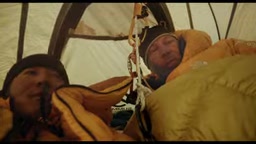
At 21,500 feet, an avalanche struck suddenly. For ski mountaineers, avalanches are "sleeping dragons." The team had only seconds to find cover. Photographer Eric kept filming as the avalanche approached, later telling the protagonist: "If this is the end, I want to make sure I finish my job." That professionalism is striking, and it also reflects the enormous risks behind extreme filming.
Avalanche is one of the most deadly natural hazards in ski mountaineering, referring to the sudden slide of a large mass of snow down a slope. Triggers include fresh snow accumulation, rising temperatures, strong winds, and earthquakes. Avalanches can travel at speeds exceeding 80 kilometers per hour with tremendous impact force, and the survival odds of buried victims drop rapidly with time. In extreme mountaineering, avalanche risk assessment is at the core of daily decision-making; climbers must observe snowpack structure, slope angle, sun exposure, and weather changes to choose safe windows for passage. The phrase "sleeping dragons" in the text is a vivid metaphor for the unpredictability and destructive power of avalanches.
Real Moments: Fear, Reflection, and Brotherhood
The trailer does not shy away from fear and mistakes in mountaineering. After an avalanche incident, the team held a candid debrief. Someone pointed out: "This is unacceptable. We could have seen it coming. The sun was too strong that afternoon—we had planned to be in the shade, but we weren't. That could easily have broken a leg. We just got lucky."
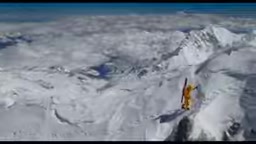
The protagonist also shares his inner motivation: "I don't climb or ski for the risk. I do it for the presence it demands. Life is stripped down to this one breath, this one turn, this one chance." This pursuit of extreme experience goes beyond mere thrill-seeking.
Presence in the context of extreme sports refers to a psychological state in which an individual is fully focused on the present moment, with no distractions. This state is often accompanied by heightened alertness and sensory acuity, allowing people to forget everyday worries and experience a pure sense of "being." Psychologically it is similar to the concept of "Flow," but it emphasizes immediate response to a dangerous environment. The protagonist's line—"Life is stripped down to this one breath, this one turn, this one chance"—is precisely a description of this ultimate focus. It transcends mere adventure stimulation and becomes a source of inner drive.
Conclusion: The Ultimate Test of a Ski Descent
Even after a successful summit, the challenge is far from over. The protagonist must ski down the 9,000-foot North Face. The film repeatedly emphasizes the urgency of "let's get moving," along with the genuine "I love you, bro" exchanges within the team, giving this trailer a layer of human warmth beyond the thrills.
Through rare North Face footage and authentic team interactions, Everest: The Other Side presents the interweaving of risk, technique, and emotion in extreme mountaineering. For viewers interested in mountaineering, skiing, and extreme documentaries, this special is worth looking forward to.
(This article is based on content from the trailer released by National Geographic. For specific broadcast times, please refer to official information.)
Related articles

Cerebras CS-4 Stuns with Launch: The 4-Trillion-Transistor Wafer Monster That Crushes GPUs in Inference Speed
Cerebras CS-4 wafer-scale engine launched: 4 trillion transistors, 900,000 AI cores, inference an order of magnitude faster than GPUs. Modular power rack plus compute backpack design, 3D vertical stacking, and half-millimeter power delivery—online in minutes.

Apple's M6 Chip Lands in iMac: A Week in Review of Performance Upgrades and AI Controversy
Apple launches new iMac and MacBook Pro with M6 chip, N1 wireless chip brings speed gains; OpenAI claims three major discoveries but faces academic skepticism; data centers become a U.S. midterm election issue; Anduril teams up with Qualcomm for all-American laptops.

AI Cracks the Quasi-Riemann Hypothesis? A Mathematician's Account of a Stunning Moment
Number theorist Alex recounts on Lex Fridman's podcast the shocking experience of AI proving the quasi-Riemann hypothesis, plus Fermat's Last Theorem formalization and Navier-Stokes within a month, explaining the signal-processing intuition behind the Riemann hypothesis and the boundaries of AI breakthroughs in mathematics.