Nextcloud Launches Desktop Office App, Expanding the Euro-Office Ecosystem

Nextcloud launches Office Desktop app, bringing open-source office software to the local desktop under the Euro-Office narrative.
Nextcloud has released the Nextcloud Office Desktop app, extending browser-based online document editing to the local desktop. Under the "Euro-Office" narrative, it emphasizes the European open-source ecosystem, data sovereignty, and an alternative to the non-US tech stack. Hacker News discussion (286 points, 112 comments) shows sustained interest, with concerns focused on format compatibility, server integration, and migration costs. Desktopization moves open-source collaboration platforms toward everyday use, but true replacement of mature office software depends on desktop maturity and community feedback.
Nextcloud is pushing its collaboration suite from the browser to the desktop. According to the official blog, the Nextcloud Office Desktop app has been released, and the official title makes its goal clear: bring Euro-Office to your desktop. The news earned 286 points and 112 comments on Hacker News, showing that the developer community remains highly engaged with topics around a "European homegrown office suite" and "bringing open-source office software to the desktop."
From Web to Desktop: The Product Logic Behind Nextcloud Office
Nextcloud's core product has always been a self-hosted file sync and collaboration platform, with Nextcloud Office being the online office component it integrates. In the past, users primarily accessed document editing through the browser, relying on an Office backend running on the server. The arrival of the desktop app changes this usage path: users can open and edit documents directly in their local desktop environment, without having to open a browser, log in to a web page, and wait for it to load.
For heavy office users, the value of this shift lies not in features added or removed, but in workflow continuity. Desktop apps typically integrate better with the operating system's file management, clipboard, keyboard shortcuts, and notification mechanisms, and they better match the habits of users who have long used Word or LibreOffice.
What Euro-Office Means: More Than Just a Name Change
The term "Euro-Office" in the official title deserves separate unpacking. It points to the European homegrown office software ecosystem, emphasizing data sovereignty, open-source governance, and an alternative to the non-US tech stack. Nextcloud has long positioned itself around "European open source, privacy first," and the Euro-Office framing extends this narrative from the server to the user's desktop.
From this perspective, the desktop app is not just a channel expansion but an ecosystem gap-filler. When document editing capabilities reside locally as native applications, users' dependence on the cloud is further reduced, and the completeness of self-hosted deployments improves accordingly—particularly appealing to public sector organizations, educational institutions, and compliance-constrained enterprises.
Data sovereignty refers to an organization's ultimate control over where its data is stored, who can access it, and how it flows—without relying on foreign service providers or cloud infrastructure subject to foreign legal jurisdiction. For the public sector and compliance-sensitive industries, it means data does not leave the country, audit trails are traceable, and vendors are replaceable. Nextcloud has long made this its core selling point: the software can be self-hosted on your own servers, the code is open source and auditable, and it avoids lock-in to a single commercial vendor. Euro-Office extends this logic from the server to the desktop—documents are edited locally and synced through your own server, reducing dependence on third-party cloud office services, thereby constituting an alternative to mainstream US cloud office suites at the procurement and compliance level.
Community Concerns: Performance, Compatibility, and Switching Costs
The heated discussion on Hacker News reflects the real barriers such products face. Open-source office suites on the desktop must compete with mature local applications, not just other online document tools. What users typically care about comes down to a few things: whether document format compatibility can cover everyday collaboration, whether integration with existing Nextcloud servers is smooth, and how much friction there is in migrating from existing office software.
The official blog does not make specific performance or compatibility commitments at the headline level, so actual experience still needs to be judged by release notes and user feedback. For teams considering an evaluation, a pragmatic approach is to first run round-trip editing tests on a real business document before deciding whether to expand deployment.
Document format compatibility is the most frequently tested metric for open-source office suites, usually measured by round-trip fidelity of OOXML (.docx/.xlsx/.pptx): after opening, editing, and saving, whether layout, formulas, comments, macros, and complex styles match the original file. Because Microsoft's format specifications are vast and some behaviors are not fully public, open-source implementations often deviate on edge-case features. For team evaluations, "it can open" is not enough—you need round-trip tests with real documents containing tables, footnotes, and revision history to observe whether there is silent data loss or layout drift, which directly determines migration costs and collaboration reliability.
Signals for the Open-Source Collaboration Market
By turning Office capabilities into a desktop app, Nextcloud sends a signal that open-source collaboration platforms are moving from "usable on the web" to "everyday workhorse." Web apps solved deployment and access barriers; desktop apps address deep usage and habit migration. Only by pursuing both paths in parallel can a full user spectrum—from lightweight viewing to heavy editing—be covered.
Under the Euro-Office narrative, this move will also be interpreted as continued investment in the European open-source office ecosystem. Whether it translates into actual user growth depends on the maturity of the desktop client and the pace at which ecosystem partners follow suit.
Progressive Web Apps (PWAs) and native desktop apps are two common paths for bringing web office capabilities "to the desktop." PWAs provide an app-like experience through browser technologies—lightweight to install and uniformly updated—but have limited control over system-level file associations, offline caching, and deep clipboard integration. Native or Electron-based desktop apps can better integrate with the OS file manager, keyboard shortcuts, notifications, and the local file system, at the cost of higher distribution, signing, and multi-platform maintenance overhead. Nextcloud's choice of a standalone desktop app means it values system integration and offline availability in deep-usage scenarios more than merely lowering the access barrier.
What to Watch Next
In the short term, three areas are worth watching: the range of operating systems supported by the desktop app and its update cadence, the compatibility matrix with Nextcloud server versions, and community feedback from real-world format compatibility testing. These details determine whether it is "just another entry point" or "a genuinely viable office desktop replacement."
For teams already using Nextcloud, the desktop app offers a low-risk way to try it out; for teams that have not yet deployed it, it makes the "European open-source office stack" option a bit more concrete.
One-line Summary
Nextcloud releases the Office Desktop app, pushing open-source office software to the local desktop under the Euro-Office narrative.
Paragraph Summary
Nextcloud has launched the Nextcloud Office Desktop app, extending its browser-dependent online document editing capabilities to the local desktop environment. With "Euro-Office" as its core narrative, the company emphasizes the European open-source ecosystem, data sovereignty, and positioning as an alternative to the non-US tech stack, extending its privacy-first stance from the server to the user's desktop. The 286 points and 112 comments on Hacker News show sustained community interest, but concerns center on document format compatibility, smooth integration with the server, and migration costs. The article argues that desktopization moves open-source collaboration platforms from "usable on the web" to "everyday workhorse," but whether they can truly replace mature office software still depends on desktop maturity, OS support coverage, and real-world community feedback.
Related articles

Federal Judge Halts FCC's Early Review of ABC License, First Amendment Lawsuit Continues
A federal judge issued a preliminary injunction blocking the FCC's early review of ABC's broadcast license and denied the FCC's motion to dismiss. ABC alleges retaliatory action over its news reporting; the First Amendment lawsuit will proceed.
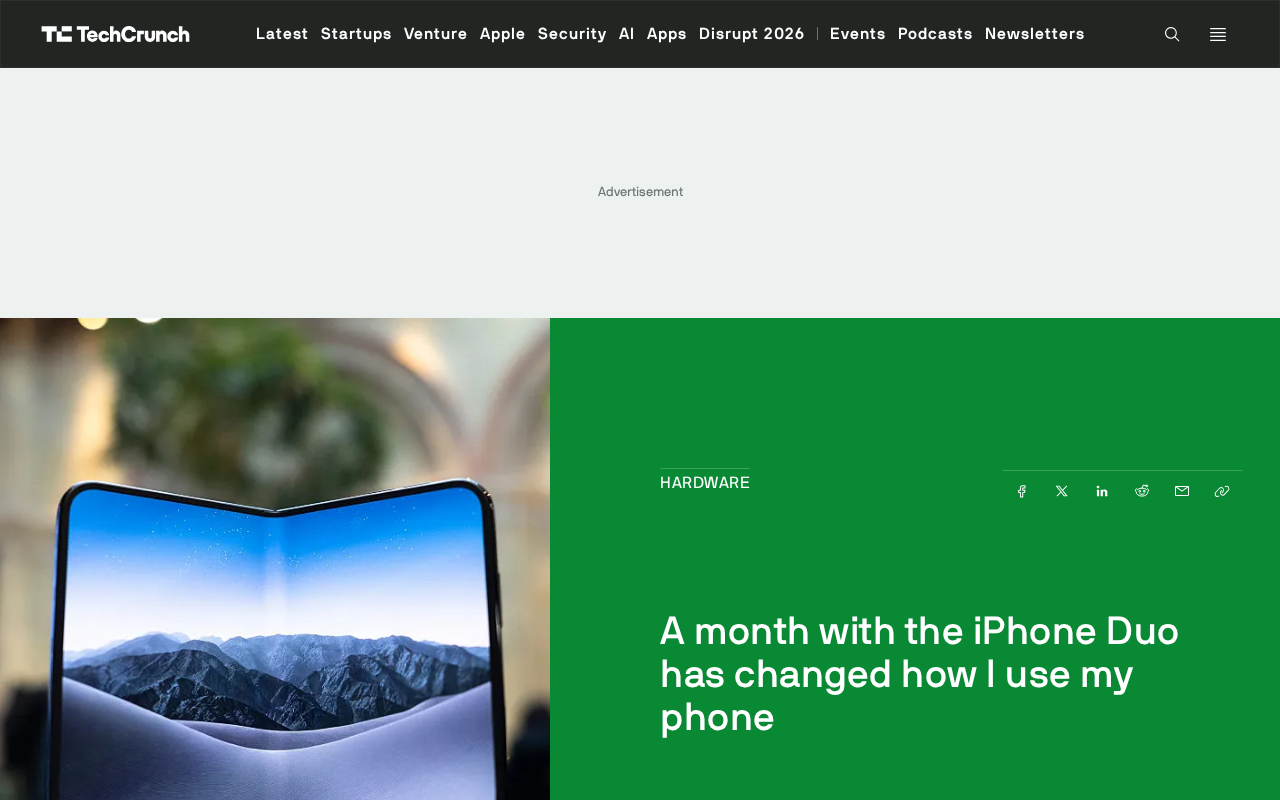
One Month with the iPhone Duo: How It Changed My Phone Habits
After a month with the iPhone Duo, one user found the foldable didn't just change reading habits—it helped break unconscious scrolling and rethink phone use.

Hacker News Thanksgiving Greeting Sparks Discussion: Why Is This Community Culture So Special
A Hacker News Thanksgiving greeting post earned 267 points and 76 comments, reaching the front page. This article analyzes the community culture behind it: why tech communities need space for non-technical emotional expression, and what this means for community operations.