One Month with the iPhone Duo: How It Changed My Phone Habits
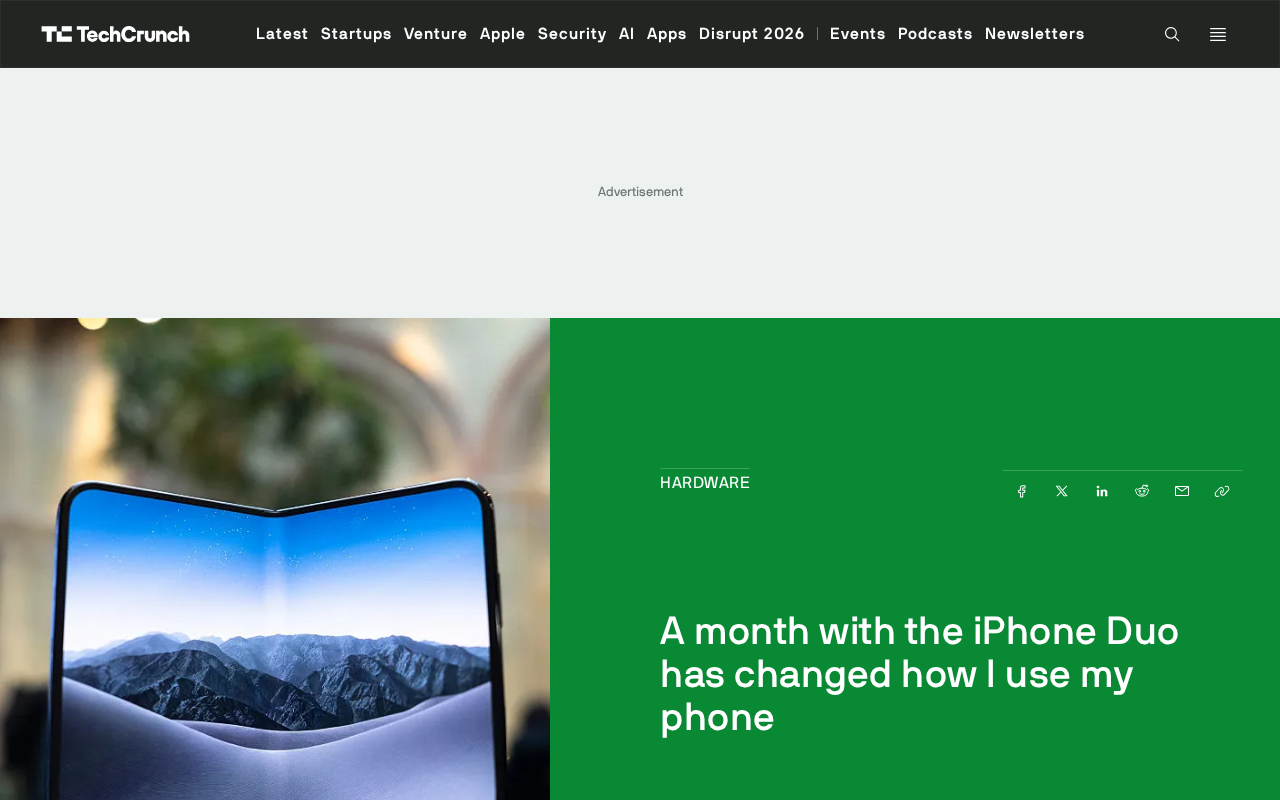
After a month with the iPhone Duo, a longtime iPhone user found the foldable quietly reshaped reading and phone habits.
A longtime iPhone user shares his one-month experience with the iPhone Duo, finding the changes far exceeded expectations. The unfolded large screen wasn't mainly used for videos or games but instead encouraged immersive reading, making better use of fragmented time; the physical switch between folded and unfolded states made the user more aware of why he picked up the phone, reducing unconscious scrolling. The large screen suits reading and productivity, while the cover screen suits quick replies, forming a natural "usage boundary." The article notes this change came not from system restrictions but from the device form itself, revealing the hidden value of foldables: shaping behavioral habits rather than merely hardware specs.
After using the iPhone Duo for a month, a longtime iPhone user found that this foldable device quietly reshaped his daily phone habits—from reading more books to breaking unconscious scrolling, the changes went far beyond expectations.
How the Foldable Form Factor Reshaped Habits
According to the user's account, the larger screen when the iPhone Duo is unfolded wasn't simply used for watching videos or playing games—it unexpectedly encouraged the development of a reading habit. The larger display area brought the e-book reading experience closer to that of a tablet, turning what used to be fragmented time into more immersive reading.
On the other hand, the foldable form itself had a subtle influence on the rhythm of use. Switching between unfolding and folding made the user more clearly aware of the purpose behind picking up the phone, thereby reducing unconscious swiping.
The relationship between immersive reading and fragmented time deserves further elaboration. Mobile reading research typically distinguishes between "fragmented scanning" (such as browsing feeds and short messages) and "deep reading" (continuous reading lasting tens of minutes). Small phone screens naturally lean toward the former: limited information per screen, frequent scrolling, and notification interruptions all weaken focus. When a foldable screen unfolds to a display area close to that of a small tablet, each page can hold more text, reducing page turns and scrolling while also lowering visual fatigue—bringing it closer to the experience of an e-reader. This also explains why the user read more on the foldable: it wasn't that the desire to read suddenly increased, but that the device form lowered the threshold for entering deep reading, giving fragmented time previously occupied by short videos and social media a new destination.
From Passive Consumption to Active Choice
One notable change is that the user began to more actively choose what to do on the phone. Large-screen mode suits reading and productivity scenarios, while the cover screen when folded is better suited for quickly replying to messages. This switch between physical forms creates a natural "usage boundary" that helps the user distinguish between "deep use" and "quick checks."
The original article notes that this habit change didn't come from system-level restrictions or reminders, but rather from the foldable form itself prompting the user to re-examine his relationship with the phone.
The Hidden Value of Foldables
Current discussions about foldables mostly focus on hardware specs and crease control, but this user's one-month experience reveals an often overlooked dimension: the power of device form to shape behavioral habits. When screen size can change with the scenario, users' perception of "when to use the phone and how to use it" changes accordingly.
Of course, this is just one user's personal experience, and whether foldables suit everyone still needs time to tell. But it at least offers a perspective worth paying attention to: good hardware design can sometimes subtly improve digital life habits.
Digital Wellbeing and attention design are key background for understanding this article. Both iOS and Android have built-in features such as Screen Time, app time limits, and Focus modes, whose approach is to curb overuse through software-layer reminders and restrictions. However, such designs rely on users' active configuration and self-discipline, and are easily ignored or bypassed. The foldable's influence discussed in this article follows another path—guiding behavior through physical form and interaction cost, similar to the "Nudge" theory: it doesn't change users' freedom of choice, but changes the design of the environment to make better choices more natural. The unfolded large screen brings a more immersive reading experience, and the folded small screen makes quick checks more natural—this "scenario matching" reduces the appeal of unconscious scrolling. It suggests that improving digital wellbeing doesn't necessarily rely only on software restrictions; hardware form and interaction cost are equally effective levers for shaping usage habits.
Related articles

Federal Judge Halts FCC's Early Review of ABC License, First Amendment Lawsuit Continues
A federal judge issued a preliminary injunction blocking the FCC's early review of ABC's broadcast license and denied the FCC's motion to dismiss. ABC alleges retaliatory action over its news reporting; the First Amendment lawsuit will proceed.

Nextcloud Launches Desktop Office App, Expanding the Euro-Office Ecosystem
Nextcloud releases Nextcloud Office Desktop, extending Euro-Office capabilities from the browser to the desktop. We break down the product logic, ecosystem implications, and community concerns.

Hacker News Thanksgiving Greeting Sparks Discussion: Why Is This Community Culture So Special
A Hacker News Thanksgiving greeting post earned 267 points and 76 comments, reaching the front page. This article analyzes the community culture behind it: why tech communities need space for non-technical emotional expression, and what this means for community operations.