Nikon P1100 Review: Hands-On Experience with 125x Zoom and 3000mm Focal Length

Nikon P1100 delivers 125x optical zoom with 3000mm reach, incredible stabilization, all for around $1,000.
The Nikon P1100 superzoom camera offers an extraordinary 24-3000mm equivalent focal length with 125x optical zoom, F2.8 at wide-angle and F8 at full telephoto. Its standout feature is remarkable image stabilization that keeps shots steady even at extreme focal lengths. Priced around $1,000, it's ideal for birdwatching, sports, and moon photography — delivering telescope-level reach in a portable package.
A Camera That Pushes "Zoom" to the Absolute Limit
In an era where most modern cameras focus on computational photography and AI algorithms, the Nikon P1100 takes a radically different path — it goes all-in on pure optical zoom. This superzoom camera features an astonishing 24-3000mm equivalent focal length lens with a staggering 125x zoom ratio.
Let's explain the concept of "equivalent focal length" here. The P1100 uses a small 1/2.3-inch sensor, so its actual physical focal length is far less than 3000mm. However, due to the crop factor of the small sensor, the field of view is equivalent to what a 3000mm lens would produce on a full-frame camera. The zoom ratio is simply the longest focal length divided by the shortest (3000÷24=125x). For reference, the human eye's field of view is roughly equivalent to a 50mm lens, typical smartphone optical zoom ranges from 3-10x, and professional sports photography lenses generally cover 400-600mm equivalent focal lengths. At 3000mm, the P1100 can pull in distant subjects that are nearly invisible to the naked eye, with a field of view of only about 0.7 degrees — equivalent to the magnification power of a small telescope.
The real-world shooting demonstrations give you an intuitive sense of just how stunning this is: what starts as a seemingly ordinary scene gradually transforms as the lens pushes in layer by layer, ultimately revealing an almost unbelievable shooting distance. This is precisely the viral selling point that has made the Nikon P1100 series spread like wildfire on social media.

It's worth noting that the P1100 didn't appear out of nowhere. Its predecessors — the Nikon P900 and P950 — went viral on social media years ago thanks to their outrageous zoom capabilities, with countless users photographing the moon, distant aircraft, and objects nearly invisible to the naked eye. The P1100 is the latest successor in this product line, pushing the limits of super-telephoto photography to entirely new heights.
Superzoom cameras (also called Bridge Cameras) occupy a special niche between compact point-and-shoots and interchangeable-lens cameras. They feature an integrated lens-body design — you can't swap lenses — but compensate by incorporating a single zoom lens covering an extremely wide focal range, from wide-angle to super-telephoto. This category flourished in the 2010s but has since been squeezed significantly by the rise of multi-camera smartphone systems and the proliferation of mirrorless cameras. Many manufacturers have already exited this niche. Nikon's P series is one of the few product lines still actively iterating in this space. The survival logic is clear: even smartphones with multiple lenses can't come close to matching the optical zoom range of a superzoom camera, while interchangeable-lens systems offer superior image quality but require many times the cost and weight to achieve equivalent focal lengths.
Nikon P1100 Optical Specs: It's More Than Just Long Reach
Many people assume that super-telephoto lenses inevitably make massive compromises in image quality, but the P1100's specifications are surprisingly solid.
Usable Aperture Across the Entire Zoom Range
At the 24mm wide-angle end, the maximum aperture reaches F2.8 — an excellent figure for a superzoom camera, meaning good light-gathering ability and decent background blur potential at the wide end. When the lens is pushed to its extreme 3000mm telephoto end, the aperture remains at F8 — which, considering such an outrageous focal length, is actually quite restrained and practical.
Aperture (F-number) is the ratio of focal length to effective light-gathering diameter. A smaller F-number means a relatively larger effective aperture, collecting more light per unit time. F2.8 at the wide end means you can maintain relatively fast shutter speeds even in low-light conditions while producing some degree of background blur. While F8 at the telephoto end may seem like a large number, it needs to be understood in context: F8 at 3000mm equivalent focal length means the effective light-gathering diameter is still quite substantial. For comparison, many competing superzoom cameras drop to F6.5 or even larger values at their extreme telephoto ends. In practice, F8 still provides adequate exposure in sunny outdoor conditions, and combined with the sensor's high-ISO capabilities, can manage in moderate lighting such as overcast days. However, F8 is indeed limiting for indoor or low-light scenarios — this is an inherent limitation of superzoom cameras, which are best suited for outdoor, well-lit, long-distance shooting.
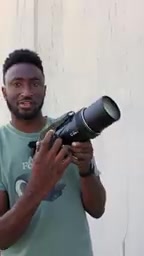
Image Stabilization Is the Real Black Magic
During the review, the "most impressive part" highlighted repeatedly wasn't the 125x zoom ratio itself — it was the Nikon P1100's image stabilization capability. Anyone who has shot with telephoto lenses knows that the longer the focal length, the more dramatically camera shake is magnified in the frame. At an extreme focal length like 3000mm, even the slight wobble from breathing can turn the entire image into a blur.
The P1100's ability to maintain relatively stable images at such extreme focal lengths relies on the synergy between Optical Image Stabilization (OIS) and Electronic Image Stabilization (EIS). OIS works through floating lens elements inside the lens barrel — gyroscope sensors detect the direction and magnitude of body movement in real-time, driving compensation elements to shift in the opposite direction, correcting for shake before light even reaches the sensor. EIS operates at the sensor and software level, cropping the sensor's edge area to create a buffer zone and using algorithms to adjust the readout area in real-time to counteract residual shake. The combination is called "dual stabilization" or "hybrid stabilization." At super-telephoto focal lengths, stabilization difficulty increases exponentially: every time the focal length doubles, the same angular shake produces double the displacement in the frame. At 3000mm, even the subtle 1-2Hz chest vibrations from your heartbeat become visible shake in the image. Nikon has decades of expertise in optical stabilization, and its VR (Vibration Reduction) system is widely recognized as one of the industry's top solutions. This is the technological foundation that gives Nikon the confidence to attempt 125x zoom — and it's the camera's true competitive moat.
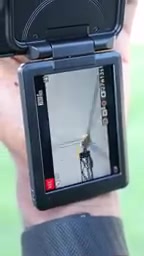
The "Ultimate Zoom Camera" for Around $1,000
At approximately $1,000, the Nikon P1100 has earned the title of "ultimate zoom camera." The reviewer fully agrees: "This thing is truly amazing."
At this price point, you'd be hard-pressed to find another product offering the same zoom range. If you tried to achieve 3000mm equivalent focal length with an interchangeable-lens system, the lens price and weight alone would deter the vast majority of photography enthusiasts. Specifically, in full-frame interchangeable-lens systems, the longest mass-produced telephoto prime lenses typically top out at 800mm, costing between $10,000 and $20,000 and weighing over 4 kilograms. To reach 3000mm equivalent, you'd need to stack teleconverters on an 800mm lens or use an APS-C body's crop factor to "extend" the focal length — but even then, directly reaching 3000mm is extremely difficult. Another option is catadioptric (mirror) lenses or adapted astronomical telescopes, but these are bulky, difficult to focus, and lack autofocus and stabilization. All told, achieving similar super-telephoto results with professional systems could cost $5,000 to $20,000+, with system weights exceeding 5-10 kilograms, plus the need for tripods and other support equipment.
The Nikon P1100's integrated body design condenses this "telescope-level" super-telephoto capability into a portable camera at roughly $1,000 and approximately 1.5 kilograms. While image quality and autofocus performance can't match professional systems, its accessibility and value proposition offer a crushing advantage — and that's precisely its core competitiveness.
Who Is the Nikon P1100 For? Use Case Analysis
So the question becomes: who exactly is this extreme zoom camera designed for?

Three Core Use Cases
- Birdwatching Photography: Birds are often distant and highly alert. The 3000mm super-telephoto lets you capture feather details without getting close — this is the P1100's ideal application and the primary reason many users choose it. In professional birding, photographers typically need 600-800mm lenses plus cropping to get satisfying bird close-ups. The P1100's 3000mm focal length far exceeds this range, allowing you to photograph undisturbed natural bird behavior from much greater, safer distances — significant for wildlife conservation and ecological documentation.
- Sports Event Photography: When you're in the stands far from the field, 125x zoom easily brings the action closer, capturing distant athletic moments without expensive professional telephoto lenses.
- Moon and Astronomical Photography: Capturing crater details on the lunar surface is a classic application for superzoom cameras and is hugely popular in photography communities.
A Thought-Provoking Reminder
The review ends with a half-joking but thought-provoking comment: beyond birdwatching and sports events, "if you particularly want this camera for other reasons, I'd be a little suspicious of your motives."
This remark highlights the double-edged nature of super-telephoto equipment — while powerful long-range capabilities open up creative possibilities, they also mean the camera can capture images from extreme distances that perhaps shouldn't be captured. It serves as a reminder to every user: while enjoying the convenience of technology, one should also respect others' privacy and observe the boundaries and ethical standards of photography.
Nikon P1100 Review Summary
The Nikon P1100 is a product with an extremely clear positioning. It doesn't try to be a jack-of-all-trades — instead, it pushes "zoom" to the absolute industry extreme. The 24-3000mm focal range, practical aperture from F2.8 at wide-angle to F8 at telephoto, stunning image stabilization, and an accessible price of around $1,000 make it a nearly irreplaceable choice for specific long-distance shooting scenarios like birdwatching and sports events.
If your shooting needs center on the word "far," the Nikon P1100 is undoubtedly worth serious consideration. But if you're simply captivated by that jaw-dropping zoom video, perhaps ask yourself first: do you truly need this 125x super-telephoto capability, or do you just want to own a "cool" camera?
Related articles

Getting Started in Machine Learning Research: Essential Paper Reading List and Research Internship Application Path
A complete path from zero to research internship for ML beginners, covering essential classic papers (AlexNet, ResNet, Transformer), paper reading methods, reproduction tips, and practical advice for research internship applications.

Claude Code Hands-On Tutorial: Complete Guide from Installation to Automated Development
Complete guide to Claude Code covering environment setup, permission configuration, Go Goals autonomous loops, Skills system, MCP protocol integration, and version control for automated development.

Gemini 3.7 Flash Release and GPT-5.6 Ultra-Fast Mode: AI Open Source Enters the Ecosystem Era
Google releases Gemini 3.7 Flash for coding and Agent optimization while OpenAI launches GPT-5.6 Ultra-Fast mode with 14x speed gains. AI open source shifts from open models to open ecosystems.