Nintendo Switch 2 Price Increase to $499: Reasons and What Consumers Should Do

Nintendo raises Switch 2 price globally to $499 due to tariff and currency pressures.
Nintendo announced that starting September 1, 2025, the Switch 2's U.S. price will increase from $449.99 to $499.99, with global prices rising simultaneously. The hike is primarily driven by steep U.S. tariffs on goods from Vietnam and other regions pushing up hardware costs, compounded by yen exchange rate volatility squeezing profits. Nintendo also lowered its sales forecast, signaling that protecting margins takes priority over volume. This extremely rare post-launch price increase in modern console history reflects the broader impact of trade tensions on the entire consumer electronics industry.
Nintendo Switch 2 Global Price Hike: What Happened
Nintendo has officially announced a worldwide price increase for the Switch 2 gaming console. In its official statement, the company attributed the adjustment to "changes in market conditions." At the same time, Nintendo lowered its sales forecast for the next fiscal year, signaling a cautious outlook on the market.
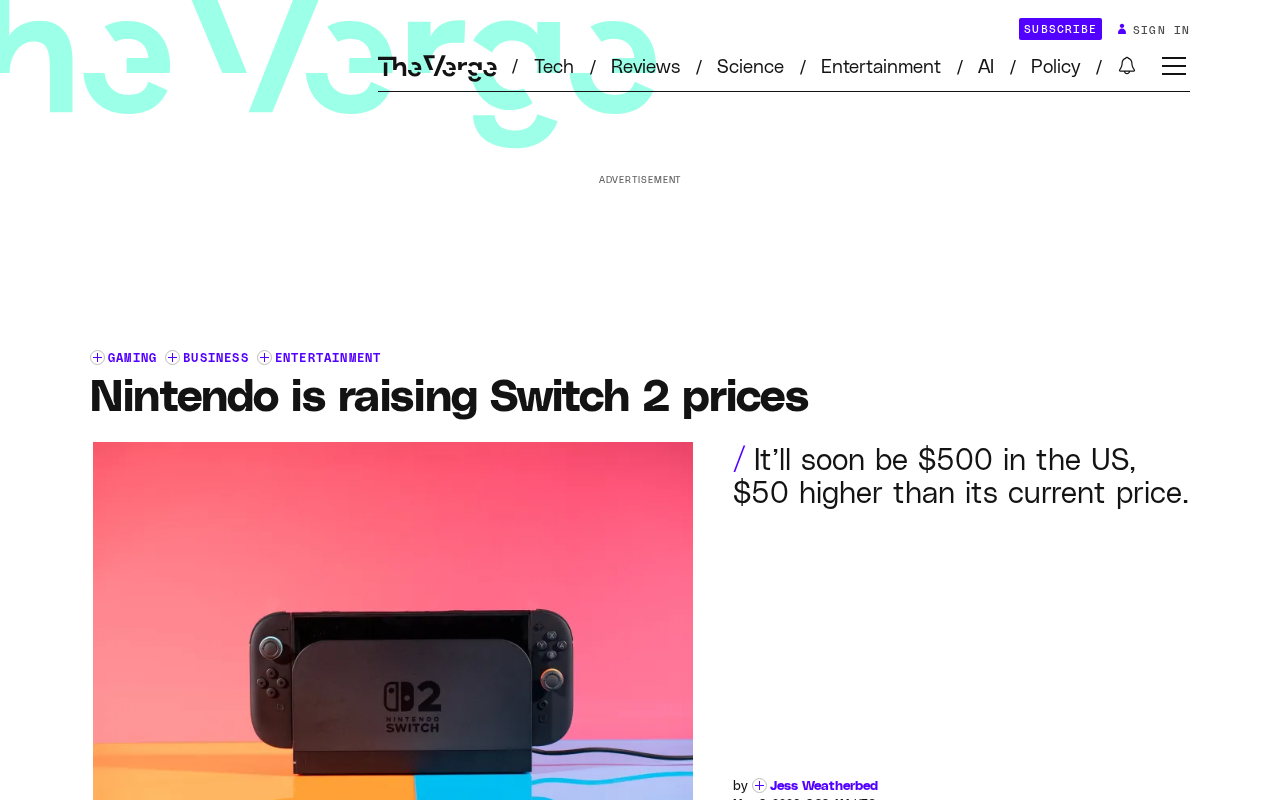
Switch 2 Price Adjustment Details
Starting September 1, 2025, the Switch 2's U.S. retail price will rise from $449.99 to $499.99 — an increase of roughly 11%. This adjustment isn't limited to the United States — Nintendo has confirmed that prices will go up simultaneously across all global regions.
For a gaming console that just recently launched, this move is highly unusual. The gaming console industry has long followed a well-established "razor and blades" business model: hardware is sold at or near cost (sometimes at a loss), while manufacturers generate long-term profits through game licensing fees, digital storefront commissions, and subscription services. Sony's original PS3 launch price of $599 triggered a fierce market backlash, and since then, major manufacturers have generally kept hardware pricing within consumers' psychological comfort zone. Industry convention dictates that consoles gradually drop in price over their lifecycle to expand the user base — not go up. Nintendo announcing a price hike just months after launch is extremely rare in modern console history. The last comparable move dates back to 2011, when Nintendo was forced to cut the 3DS price due to dismal sales (notably in the opposite direction) — underscoring just how intense the current external pressures are.
Why Is Nintendo Raising Prices?
U.S. Tariff Policies Driving Up Costs
The "changes in market conditions" Nintendo referenced most likely point to the dramatic shifts in the current global trade environment. Recent U.S. tariffs imposed on multiple countries and regions have directly increased the manufacturing and import costs of electronic products. As a Japanese company whose hardware is primarily assembled in Asian countries like Vietnam and China, Nintendo's cost structure has taken a significant hit from these tariff policy changes.
Since the original Switch, Nintendo has shifted a large portion of its hardware assembly operations to Vietnam — a move partly driven by supply chain diversification strategies during earlier U.S.-China trade tensions. Vietnam became an important production base for many Japanese and Korean electronics companies thanks to its lower labor costs and relatively favorable trade agreements. However, in 2025, U.S. tariffs on Vietnamese goods surged to as high as 46% — far exceeding prior expectations — and directly disrupted Nintendo's cost projection models. The Switch 2's core chip is a custom derivative of NVIDIA's Tegra architecture, and when you factor in chip procurement costs along with full-unit assembly and cross-border logistics, the landed cost per console becomes extremely sensitive to tariff fluctuations.
Yen Exchange Rate Volatility Squeezing Profits
Currency exchange rates are another factor that cannot be ignored. The yen's impact on Nintendo's financial performance runs far deeper than most consumers realize. Nintendo conducts its R&D, design, and partial manufacturing in Japan, with costs denominated in yen. However, approximately 70% of its revenue comes from overseas markets and is settled in foreign currencies like dollars, euros, and pounds. When the yen depreciates, overseas revenue looks better on paper when converted back to yen. But when the yen strengthens or exchange rates fluctuate sharply, the company's actual profit margins get significantly eroded. Between 2022 and 2024, the yen experienced its largest depreciation in decades, but subsequent exchange rate corrections put renewed pressure on companies reliant on foreign currency revenue. Nintendo has consistently listed exchange rate volatility as a major risk factor in its financial reports, and this price increase can also be viewed as a proactive hedging measure against currency uncertainty.
What the Lowered Sales Forecast Tells Us
By lowering its sales targets alongside the price increase, Nintendo is acknowledging that the higher price will suppress some demand. But faced with cost pressures, protecting profit margins has clearly been prioritized over chasing sales volume. It's a pragmatic, if somewhat reluctant, business decision.
How the Price Hike Affects the Console Market Competitive Landscape
The new $499 price tag puts the Switch 2 squarely in the same price bracket as the Sony PS5 and Microsoft Xbox Series X. While Nintendo's product positioning leans toward portability and family entertainment with a somewhat different target audience, the narrowing price gap could influence some undecided buyers.
For gamers torn between the Switch 2 and other consoles, the "value for money" factor will weigh more heavily in their decision due to the price increase. Nintendo will need to rely on its exclusive game lineup and differentiated experiences to justify the new price point.
What Should Consumers Do Now?
If you've already decided to buy a Switch 2, the most practical advice is: purchase it at the $449.99 price before the increase takes effect on September 1 and save yourself a straight $50.
If you're still on the fence, keep an eye on the following:
- Whether the launch game lineup includes titles that appeal to you
- The specific price increase in your region (adjustment ratios may vary by market)
- Whether bundle deals or other indirect discounts become available
The Consumer Electronics Price Hike Wave May Just Be Starting
Nintendo isn't the only hardware manufacturer under pressure. Against the backdrop of escalating global trade tensions, multiple consumer electronics companies are reassessing their pricing strategies. This trend is likely to spread to more product categories in the coming months — from smartphones to PC accessories, consumers may face varying degrees of price increases.
Taking a longer-term view, hardware price hikes could accelerate the adoption of cloud gaming and digital subscription services. The core logic of cloud gaming is deploying computing power in data centers, so users only need a lightweight device with network connectivity and display capability to run high-quality games — fundamentally bypassing the cost barrier of consumer-grade hardware. Microsoft's Xbox Game Pass Ultimate already integrates xCloud cloud gaming, and NVIDIA GeForce NOW and Sony PlayStation Now continue to expand their service coverage. However, cloud gaming is extremely sensitive to network latency — the industry generally agrees that latency below 20 milliseconds is necessary to ensure playability for action games, which remains an infrastructure-level challenge globally. Nintendo has yet to launch a mature cloud gaming subscription service; its Nintendo Switch Online is positioned more around online multiplayer and classic game libraries. Whether hardware price increases will push Nintendo to accelerate its cloud service strategy is worth watching. After all, software and services are far less affected by physical supply chain disruptions, and for gamers, this is both a challenge and a potential catalyst for new ways of consuming games.
Key Takeaways
- Nintendo Switch 2's U.S. price will rise from $449.99 to $499.99 on September 1, an increase of roughly 11%
- The price hike is attributed to "changes in market conditions," likely related to global tariff policies and rising supply chain costs
- Nintendo simultaneously lowered its sales forecast for the next fiscal year, anticipating that the price increase will suppress some demand
- Prices will increase simultaneously across all global regions, not just the U.S. market
- This move reflects the broad impact of the current trade environment on pricing strategies across the consumer electronics industry
Related articles
Meta Muse Hits 900K Downloads in Six D…
Meta Muse Hits 900K Downloads in Six Days: The AI Agent Era Has Officially Arrived
Meta's AI agent Muse hit 902K downloads in 6 days, topping US App Store and Google Play charts above ChatGPT and Claude. A deep dive into Muse's capabilities and the AI Agent race.
 Industry Insights
IRS Fully Embraces Claude AI, Accelerating Federal Government's AI Adoption
The IRS is recruiting staff with 24/7 Claude AI access, marking Anthropic's breakthrough into the federal government. Explore the strategic implications and tax use cases.
 Industry Insights
The IRS Mobile App Debate: A Trust Crisis in Government Digital Transformation
The IRS's proposed mobile app has sparked heated debate. This article analyzes the core arguments, exploring data security, privacy, and the trust crisis in government digital transformation.