No AI Prompts Required: The Music App Startup Behind a Shibuya Vinyl Bar

A former Spotify exec's startup redefines AI music apps with prompt-free, participatory interaction.
A startup named after a Tokyo Shibuya vinyl bar, founded by a former Spotify executive, is carving a differentiated path in the AI music space. Unlike mainstream tools like Suno and Udio that rely on text prompts, the company releases experimental "singles" apps designed to involve users directly in the music-making process — prioritizing fun and real-time participation over complex prompt engineering. Its branding deliberately invokes the warmth and immersion of vinyl records, embodying a product philosophy of hiding technology behind experience. In a market where AI music tools are growing homogeneous and competition centers on generation quality and model scale, competing on interaction paradigm is an underrated but compelling direction.
A Startup Experiment in Music Interaction
A startup named after a vinyl bar in Tokyo's Shibuya district is attempting to redefine music creation apps — without relying on AI prompting. According to the original report, the company was founded by a former Spotify executive, and its core philosophy is to let users engage with music generation in a more casual, participatory way, rather than requiring them to type out lengthy text prompts to produce a song — the approach most mainstream AI music tools currently take.
Based on the limited information available, the company releases what it calls experimental "singles" — products designed to make users an active part of the music-making process. This creates an interesting contrast with the booming text-to-music space: the startup deliberately sidesteps the friction and coldness of "prompt engineering," opting instead to emphasize playfulness and emotional experience.
Why Go Prompt-Free?
Most AI music generation tools on the market today follow the same pattern: describe what you want, wait for the output. Users must precisely articulate style, tempo, and mood in words to get results that match their vision. This workflow works well for professional creators, but poses two problems for everyday users: describing music in words is inherently difficult, and the process feels more like placing an order than actually creating something — it lacks a sense of participation.
The company, founded by a former Spotify executive, is clearly targeting exactly this pain point. It positions its products as "fun music apps" that involve users directly in music making, rather than having them indirectly control outcomes through text prompts. This approach is closer to gamified, real-time feedback than tool-driven command execution.
What the Spotify Background Signals
The founder's Spotify background is worth noting. As one of the world's largest streaming platforms, Spotify's core strength lies in its deep understanding of how users listen to music and consume it. A founder coming from that world choosing to build "participatory music creation" suggests their insight may come from the consumer side — the observation that ordinary people's interest in music goes beyond passive listening to include some degree of expression and creative desire.
Naming the company after a Shibuya vinyl bar also communicates a distinct cultural sensibility. Vinyl represents something physical, analog, and immersive — a temperamental contrast to cold, AI-generated output. This naming strategy is itself an extension of the product philosophy: rather than chasing technical "generation," the company cares more about the atmosphere and human connection that music creates.
A Different Kind of Play in the AI Music Wave
While the rest of the industry races to improve generation quality, scale up models, and refine prompt precision, this startup has chosen a differentiated path. It doesn't reject AI — it deliberately downplays AI's presence, hiding the technology behind the experience so users feel like they're "having fun" rather than "using an AI tool."
This approach carries both risk and opportunity. The risk is that without powerful generative capabilities, the product may feel thin. The opportunity is that if it genuinely lowers the barrier to creation and makes participation more enjoyable, it could reach the vast majority of everyday users who have been turned away by professional-grade tools. At a time when AI music tools are growing increasingly homogeneous, competing on interaction paradigm rather than generation capability may be an underrated angle.
A Direction Worth Watching
Given the limited public information available, it's too early to assess the actual effectiveness or market reception of these experimental "singles" apps. But the question they raise is valuable: Is the future of AI music about letting machines create on behalf of humans, or about helping humans express themselves better with machine assistance?
The startup behind this Shibuya vinyl bar leans toward the latter. Whether it can carve out a path in a music tech space dominated by well-resourced players will require more product details and user data to confirm. For readers tracking the intersection of AI application deployment and music technology, this is a name worth adding to the watch list.
Related articles

Ditch the Vector Database: Building a Memory Layer for LangChain Agents with BM25
CogniCore replaces vector databases with BM25 retrieval for LangChain agent memory, outperforming embeddings in small-context benchmarks with zero external dependencies.
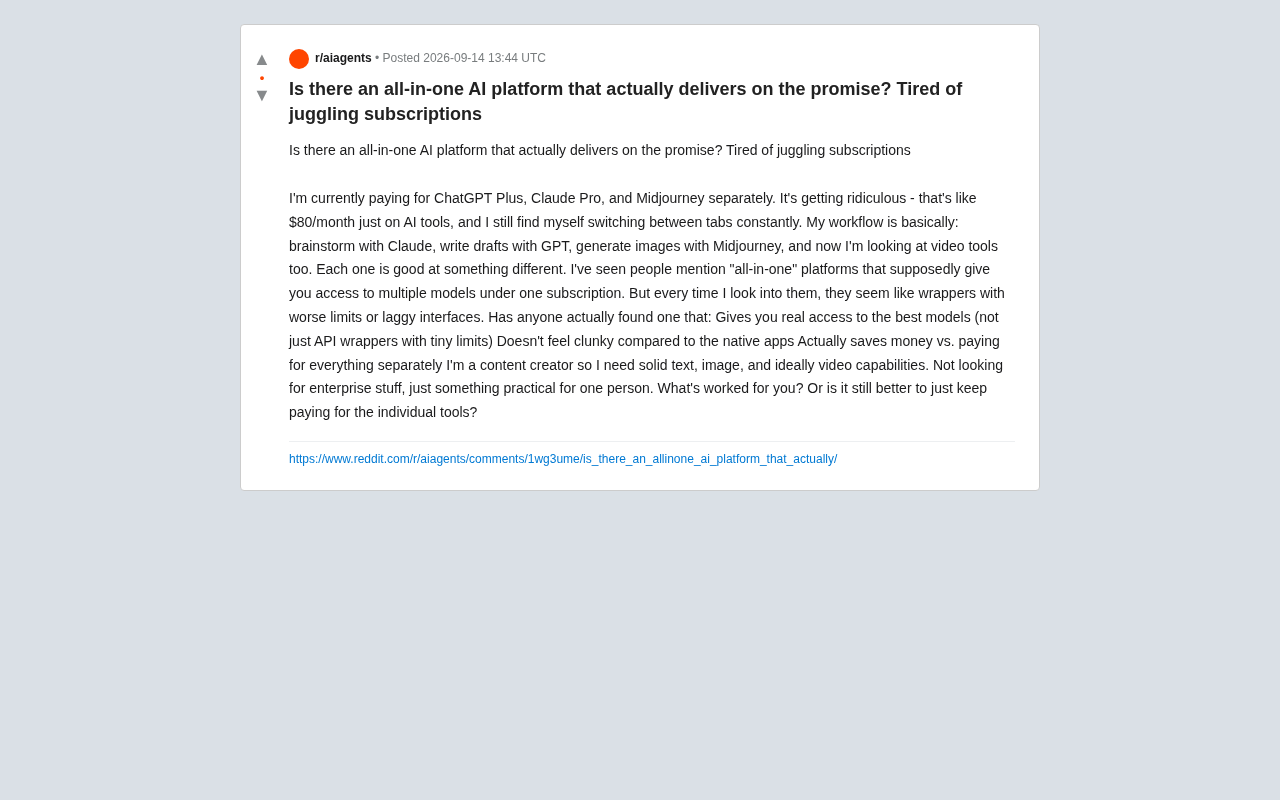
Are All-in-One AI Platforms Actually Worth It? A Practical Guide to Escaping Subscription Overload
Tired of paying for ChatGPT, Claude, and Midjourney separately? We break down whether all-in-one AI platforms are actually worth it — and what a smarter subscription stack looks like.

Volkswagen Mission Efficiency: The World's Lowest-Drag EV Breaks Multiple Efficiency Records
Volkswagen's Mission Efficiency prototype claims the world's lowest drag coefficient, built on MEB+ platform with ID. Polo and ID. Cross components. Here's what it means for EV efficiency.