No One Contributing to Your Open Source Project? A Practical Guide to Promotion Channels and Attracting Collaborators

A practical guide to promoting open source projects and attracting contributors through active community building.
Many developers assume open sourcing a project will automatically attract contributors, but that rarely happens without intentional effort. This guide covers proven promotion channels (Reddit, Hacker News, Hackaday), platform optimization strategies, content marketing approaches, and the critical mindset shift from one-time publishing to ongoing community cultivation — with special attention to hardware-software hybrid projects.
A Common Yet Tricky Open Source Dilemma
In the open source community, one type of question comes up almost daily: I built an open source project, but no one pays attention, let alone contributes code. A Reddit user recently shared this exact frustration — he spent a long time developing a hardware-software hybrid project and hoped to attract software-savvy collaborators through open sourcing, since he admitted software isn't his strong suit.
The reality, however, is harsh: he confessed that he'd open-sourced projects before, only to have them completely ignored. This time, he wanted to figure out one core question — where exactly on the internet should I promote my project so it actually gets seen and attracts contributors?
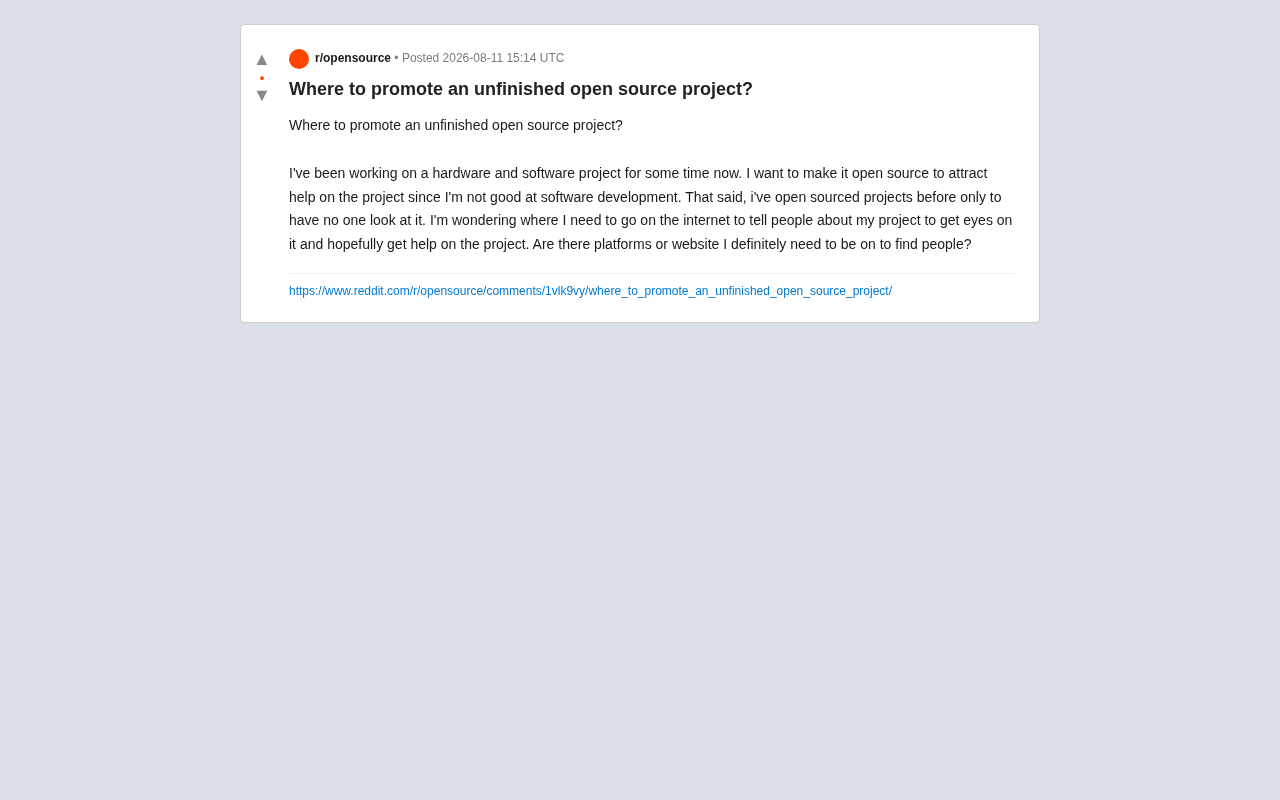
This question seems simple but touches on the essence of open source collaboration. Many developers assume that "open source" automatically means "people will come help," but the opposite is true: open sourcing just puts your code in a public place, while attracting contributors is something you need to actively work at.
Why Open Source Projects Often Get Ignored
Being "Unfinished" Isn't the Problem
Many people worry that promoting an incomplete project looks unprofessional. In reality, nearly every successful open source project was "unfinished" in its early days. The real issue isn't completeness — it's whether you've clearly communicated the project's value and how people can participate.
An open source project that successfully attracts contributors typically has several characteristics: a clear README, well-defined problem descriptions, labeled "good first issue" tasks, and making it immediately obvious what problem the project solves. Without this infrastructure in place, even people who stumble upon your project will struggle to take that first step toward contributing.
The Unique Challenge of Hardware + Software Projects
Interestingly, the original poster's project is a hardware-software hybrid. These types of projects are inherently harder to attract contributors to than pure software projects because the barrier to entry is higher — potential collaborators may need identical or similar hardware to test and debug.
For these projects, lowering the barrier to participation is especially critical: provide simulators, clear hardware specification documents, demo videos, or even consider splitting out the software portion so people without the hardware can still contribute to certain modules.
Key Channels for Promoting Open Source Projects
Addressing the core question of "where to promote," here are several community-proven effective channels.
Niche Communities and Forums
- Reddit's specialized subreddits: Such as r/opensource, r/coolgithubprojects, and technical subreddits related to your project's domain (e.g., hardware projects might target r/electronics, r/embedded, etc.).
- Hacker News: Posting in "Show HN" format is a classic way many open source projects gain their first wave of attention.
- Hackaday: Especially friendly to hardware projects and a major gathering place for the hardware maker community.
Leveraging Code Hosting Platforms for Visibility
Simply uploading code to GitHub isn't enough. You need to actively use the platform's built-in mechanisms:
- Use appropriate Topics tags so your project appears in relevant searches.
- Polish your README with screenshots, GIF demos, or architecture diagrams.
- Clearly label issues with
good first issueandhelp wantedtags to lower the psychological barrier for new contributors.
Content Marketing and Social Sharing
Posting a bare link often has limited impact. A more effective approach is to tell the story behind your project:
- Write a blog post or Dev.to article explaining why you built this project and what challenges you faced.
- Share development progress on X (Twitter), Mastodon, and similar platforms.
- Create demo videos that visually showcase what your project can do.
People are more willing to participate in a project with a clear vision and a real story behind it, rather than a lonely code repository.
The Mindset Shift from "Publishing" to "Cultivating"
Active Promotion Matters More Than Passive Waiting
The original poster's past experience of "open sourcing and getting ignored" reveals a common misconception: treating open source as a one-time publishing event. In reality, attracting contributors is an ongoing process of community cultivation.
A successful round of promotion might bring a brief spike in attention, but without follow-up engagement — like promptly responding to issues, welcoming new contributors, and thanking participants — that attention quickly fades. Retention is harder and more important than exposure.
Break Down Collaboration Needs into Specific Tasks
For authors hoping to "attract software-savvy people to help," a practical suggestion is: break down what you want help with into specific, actionable small tasks.
Instead of saying "I need software development help," say "I need someone to help me implement an API endpoint for feature X — here's the relevant documentation and existing code." The more specific and smaller the task, the easier it is for potential contributors to get started. This is exactly why "issue decomposition" is so important in open source project management.
A Practical Action Checklist for Solo Developers
Based on this case, here are several universal action steps:
- Polish your project's "storefront" first: README, demos, and clear problem descriptions are key to retaining every casual visitor.
- Choose precise channels: Rather than casting a wide net, find niche communities highly relevant to your project's topic.
- Tell a good story: Use content formats like blogs and videos to bring your project to life.
- Break down tasks: Convert collaboration needs into specific, beginner-friendly issues.
- Cultivate continuously: Treat promotion as long-term work, and respond to and thank every participant promptly.
The beauty of open source lies in collaboration, but collaboration never happens automatically. It requires the project creator to invest as much — or even more — effort in communication, organization, and cultivation as they do in writing code. For solo developers hoping to get help through open source, understanding this point may be more fundamental than finding the "right promotion channel."
Related articles

DeepCell: One-Click AI Generation of Documents, Spreadsheets, and Slides
DeepCell tops Product Hunt with one-click generation of documents, spreadsheets, and slides, using the .deepcell format for linked updates, designed for System 2 tasks like modeling and sales reviews.

Doneas: 15-Minute Daily Accountability Calls That Keep Indie Developers From Procrastinating
Doneas is a daily accountability tool for indie developers: plan tasks on Monday, join a 15-minute call with five builders each day, and log deliveries on a public progress page. This article analyzes its core mechanics, effectiveness, and potential issues around retention and matching.

Fastlane 2.0: Fully Automated AI Ad Campaigns, From Creative to Optimization
Fastlane 2.0 is an AI ad automation tool: enter your website and it learns your brand, generates video and image ads, and runs and optimizes them on Meta, TikTok, Instagram, and YouTube.