NüshuRescue: Using AI to Save the Endangered Nüshu Script
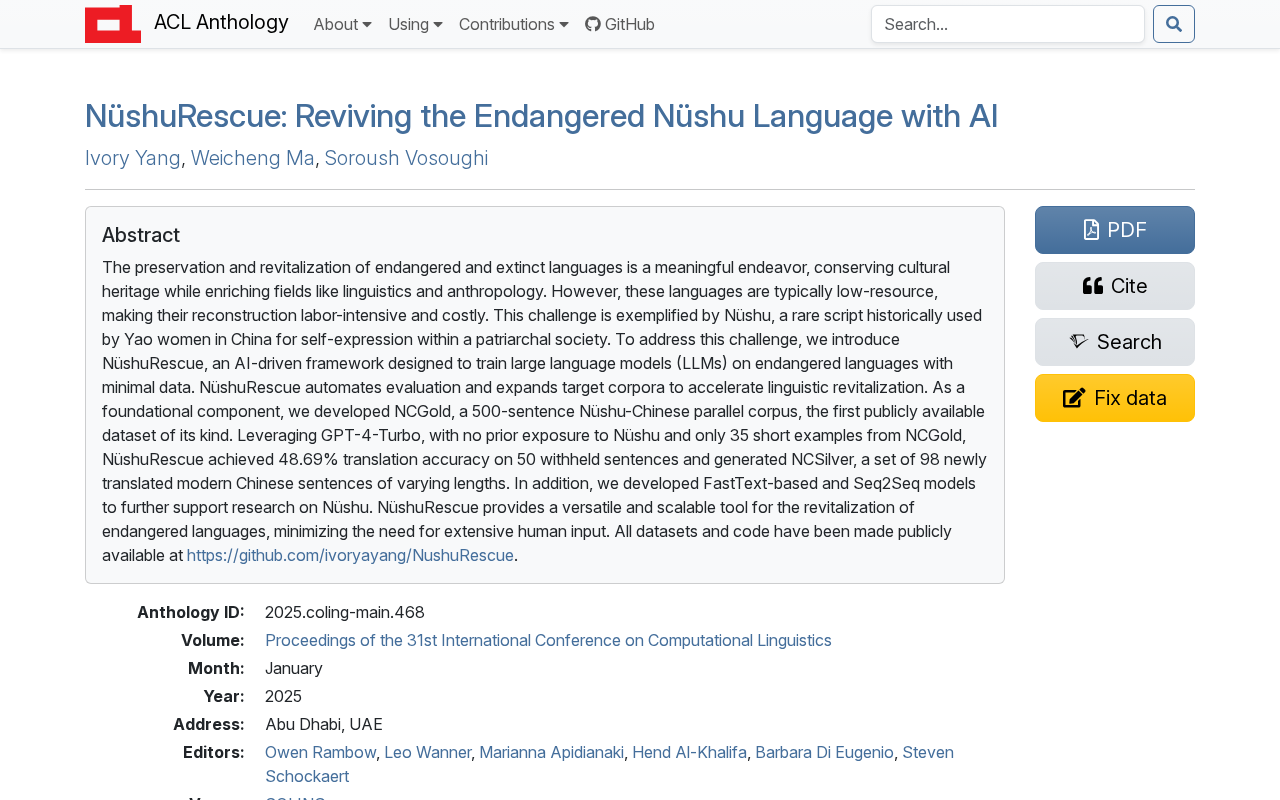
NüshuRescue uses AI to digitally preserve Nüshu, the world's only writing system created exclusively for women.
Nüshu, a rare script created and used exclusively by women in Jiangyong, Hunan, China, faces extinction as its last fluent users age. The NüshuRescue project aims to build a digital preservation pathway using AI, but Nüshu is a classic low-resource language — surviving texts are scarce and no standardized corpus exists — making mainstream data-driven methods difficult to apply. The project must combine OCR, cross-lingual transfer learning, and expert annotation to overcome data scarcity. Though still in early stages with limited public technical detail, it represents a meaningful model for non-commercial, humanistic AI: preserving endangered cultural heritage.
When Ancient Nüshu Meets Artificial Intelligence
Nüshu is one of the world's rarest writing systems — one created exclusively by and for women. Originating in Jiangyong County, Hunan Province, China, it was independently developed by local women during an era when they were denied access to formal education. They used it to write, express emotions, and offer comfort to one another, preserving a unique record of female cultural memory. As the last generation of fluent users grows old, this script faces the very real risk of disappearing forever.
The NüshuRescue project was born from this urgency: to leverage artificial intelligence to establish a digital pathway for documenting, recognizing, and transmitting this critically endangered writing system. Although publicly available information remains limited, the project's core mission is clear — to use modern AI tools to carry forward a piece of human cultural heritage that is on the verge of extinction.
Why Endangered Languages Are a Hard Problem for AI
Scripts like Nüshu represent a classic "low-resource language" challenge for AI. Mainstream large language models and image recognition systems depend on vast amounts of training data — yet surviving Nüshu texts are extremely scarce, active users are few, and no standardized digital corpus exists. This makes conventional data-driven approaches very difficult to apply directly.
AI processing of such languages typically requires tackling several interconnected problems: optical character recognition (OCR) for the script, cross-referencing and alignment with related languages like Chinese, and transfer learning under data-scarce conditions. Projects like NüshuRescue generally need to combine limited expert-annotated data, the generative capabilities of language models, and cross-lingual transfer learning in order to achieve usable results despite insufficient training samples.
Cultural Significance Beyond the Technology
Using AI to protect endangered languages carries value that goes far beyond the technical achievement — it is fundamentally an act of cultural rescue and preservation. Nüshu is unlike ordinary writing systems; it is deeply embedded in a specific social context: a tradition of intimate, private communication between women. Digitizing it means permanently capturing not just the symbols and pronunciation, but also the writing conventions and the cultural narratives woven around them, making them available for future research and learning.
This aligns with a growing focus in both academia and the tech world: using AI to build digital archives for the thousands of endangered languages around the globe. UNESCO has repeatedly warned that a staggering number of the world's languages are disappearing at an alarming rate, while advances in AI — across speech recognition, machine translation, and text generation — are providing unprecedented tools for these preservation efforts.
Limitations and the Road Ahead
It is worth being clear-eyed about the current state of such projects. NüshuRescue has generated relatively little discussion in the technical community (such as on Hacker News), and publicly available technical details and validated results remain sparse. The fundamental bottlenecks facing AI-driven endangered language revival — scarce data, insufficient expert resources, and the difficulty of quantifying cultural context — are unlikely to be fully overcome in the near term.
That said, efforts like this carry real demonstrative value. They showcase a non-commercial yet deeply humanistic direction for AI applications: one focused not on maximizing traffic or efficiency, but on preserving cultural diversity. For a script as close to extinction as Nüshu, even a preliminary level of digitization and model-based recognition could become a critical step toward its survival.
Conclusion
NüshuRescue represents an AI application paradigm worth paying attention to — one that directs advanced technology toward corners of human history that mainstream efforts have overlooked, yet which carry profound cultural memory. As low-resource language processing technology matures, AI may indeed come to play an increasingly important role in rescuing endangered languages and scripts. The story of Nüshu may be only the beginning.
Related articles

Deep Dive into Agent Eval Harnesses: Build vs. Buy?
A deep dive into the four core components of an agent eval harness — Cases, Runner, Capture, and Graders — with practical guidance on when to build vs. adopt existing frameworks.
Getting Started with Krea 2 Image Generation: A Beginner's Guide to LoRA and Checkpoints
A beginner's guide to Krea 2 image generation: how to start with free open-source workflows, understand LoRA vs Checkpoint on Civitai, and achieve consistent realistic image generation.

Nintendo 'Customer Appreciation' Sale: Switch Games and Accessories Price Cuts Roundup
Nintendo's Customer Appreciation sale discounts Switch games and accessories at Amazon, Best Buy, Walmart, and its digital store — funded by tariff refunds. Ends Sept 26.