NVIDIA cuDSS 1.0: A Direct Sparse Solver Accelerating Engineering Simulations

NVIDIA cuDSS 1.0 migrates direct sparse solving to GPUs, completing the CUDA ecosystem and lowering the GPU migration barrier for CAE software.
The article discusses the positioning and value of the GPU-accelerated direct sparse solver library NVIDIA cuDSS 1.0 in computational engineering. Sparse linear system solving is a core step in large-scale numerical simulations such as structural mechanics, CFD, and electromagnetic simulation, and traditional CPU direct solvers (MUMPS, SuperLU) have hit scalability bottlenecks. cuDSS 1.0 provides engineering software with an incremental GPU backend option through GPU-native matrix factorization, hybrid memory management, and CUDA ecosystem integration. The article emphasizes that direct methods complement rather than replace iterative methods: direct methods suit exact solutions, ill-conditioned matrices, and multiple right-hand side reuse scenarios. It also notes that GPU memory capacity and sparsity pattern parallelism are the main challenges, and looks ahead to the continued evolution of GPU direct sparse solving.
Why Is Solving Sparse Linear Systems So Critical?
In computational engineering, from structural mechanics and computational fluid dynamics to electromagnetic simulation, almost every large-scale numerical simulation ultimately comes down to solving a sparse linear system. The scale of such systems often reaches millions or even hundreds of millions of unknowns, and solution efficiency directly determines the feasibility and iteration speed of the simulation. Traditionally, engineers have relied on CPU-based sparse direct solvers (such as MUMPS and SuperLU), but faced with increasingly complex multiphysics coupling problems, the scalability of CPU-based approaches has gradually become a bottleneck. The release of NVIDIA cuDSS 1.0 is precisely aimed at migrating the computational workload of direct sparse solving to GPUs, leveraging parallel computing architectures to dramatically shorten solution times.
Note: The original text only provides abstract information and does not include specific performance data or version details. This article offers a reasonable analysis based on limited material.
Sparse direct solvers (such as MUMPS and SuperLU) work by performing LU or Cholesky factorization on the coefficient matrix, transforming the original problem into solving triangular systems. Unlike iterative methods, which approach the solution step by step, direct methods deliver an exact solution (in the sense of floating-point precision) in a finite number of steps, making them particularly robust for ill-conditioned matrices and multiple right-hand side scenarios. The cost is that the factorization process produces fill-in—positions that were originally zero become nonzero after elimination, significantly increasing memory usage and computational cost. To control fill-in, such solvers typically first reorder the matrix (e.g., AMD, METIS nested dissection), then perform symbolic factorization and numerical factorization. MUMPS supports distributed-memory parallelism, while SuperLU focuses on shared memory and multi-core CPUs; both have long been the default solver backends in CAE software. Understanding fill-in and reordering mechanisms is key to judging whether GPU direct solving can deliver speedups: dense block computations with high parallelism are well suited to GPUs, while symbolic factorization and strongly order-dependent portions may become bottlenecks.
The Core Positioning of cuDSS 1.0
cuDSS (CUDA Direct Sparse Solver) is a GPU-accelerated direct sparse solver library introduced by NVIDIA, and version 1.0 marks its transition from an experimental tool to production readiness. Unlike iterative solvers, direct sparse solvers obtain exact solutions through matrix factorization (such as LU and Cholesky), giving them inherent advantages for ill-conditioned problems and multiple right-hand side scenarios. The goal of cuDSS 1.0 is to enable engineering software developers to migrate existing CPU solving pipelines to GPUs with minimal code changes while maintaining numerical stability and precision.
Complementary Relationship with Iterative Solvers
Direct solvers are not meant to replace iterative solvers. For extremely large-scale problems, iterative methods (such as the conjugate gradient method) have advantages in memory footprint; direct methods are more efficient when high-precision solutions are required or when the matrix factorization can be reused for multiple right-hand sides. The launch of cuDSS 1.0 completes the puzzle of NVIDIA's GPU-accelerated computing libraries, allowing developers to flexibly choose solution strategies based on problem characteristics.
Technical Architecture and Key Features
Although the original text does not elaborate on technical details, cuDSS's public positioning suggests its design revolves around several engineering pain points:
- GPU-native matrix factorization: Leveraging CUDA cores to parallelize dense block computations in LU/Cholesky factorization, reducing CPU-GPU data transfer overhead.
- Hybrid memory management: Supporting keeping some data in GPU memory and some in host memory to cope with GPU memory capacity limits.
- Integration with the CUDA ecosystem: Can work in conjunction with libraries such as cuSPARSE and cuSOLVER, making it easy for projects with existing CUDA code to adopt incrementally.
Impact on the Engineering Software Ecosystem
Mainstream CAE software (such as ANSYS and COMSOL) and open-source tools (such as PETSc and deal.II) have long centered on CPU solving. The emergence of cuDSS 1.0 provides these software packages with a GPU backend option. Developers can wrap the cuDSS interface to give specific modules GPU acceleration without rewriting the entire solver. This incremental migration path lowers the adoption barrier for engineering software vendors.
The CUDA ecosystem is the software stack NVIDIA has built around general-purpose GPU computing, including the runtime, compiler (NVCC), and a series of domain libraries. Those directly related to sparse computing include: cuSPARSE, which provides basic primitives such as sparse matrix-vector multiplication and sparse triangular solve; cuSOLVER, which provides dense and sparse matrix factorization interfaces; and cuBLAS, which handles dense linear algebra. cuDSS's positioning is to encapsulate the complete sparse direct solving workflow (reordering, symbolic factorization, numerical factorization, back substitution) on top of these low-level primitives, so that developers do not need to orchestrate the GPU kernels and memory management for each step themselves. This layered design means that projects with existing CUDA code can introduce cuDSS module by module without refactoring the entire solving pipeline, which is precisely the technical basis for its "incremental migration" claim.
Practical Application Scenarios and Challenges
In structural mechanics finite element analysis, the factorization of the stiffness matrix is often the most time-consuming step in simulation. Migrating this step to the GPU could theoretically significantly shorten the waiting time for each design iteration. Solving the pressure Poisson equation in computational fluid dynamics also benefits from direct methods, especially in scenarios requiring high-precision mass conservation.
However, GPU direct sparse solving also faces challenges: GPU memory capacity limits the size of problems that can be handled; the degree of parallelism in the matrix factorization process depends on the sparsity pattern, and irregular sparse matrices may not fully utilize GPU compute power. cuDSS 1.0 needs to find a balance point under these constraints.
Summary and Outlook
The release of NVIDIA cuDSS 1.0 provides the computational engineering field with a new option for GPU-accelerated direct sparse solving. It is not a panacea, but in suitable scenarios—medium scale, requiring exact solutions, multiple right-hand sides—it has the potential to deliver significant efficiency gains. As GPU memory capacity grows and sparse algorithms are optimized, the GPU-ization of direct sparse solving is worth continued attention.
This article is based on abstract information from the NVIDIA developer blog. For specific performance benchmarks and technical details, please refer to the official documentation.
Background Supplement
Iterative solvers (such as the conjugate gradient method CG and GMRES) approach the solution through repeated matrix-vector multiplication iterations, with memory usage typically O(n), far lower than the O(n^{4/3}) to O(n^2) level of direct factorization, and can therefore handle larger-scale problems. However, their convergence speed strongly depends on the matrix condition number; ill-conditioned problems may require a large number of iterations or even fail to converge; in multiple right-hand side scenarios, each solve requires re-iteration. Direct solvers, on the other hand, support back substitution for any number of right-hand sides after a single factorization and can still provide reliable solutions for ill-conditioned matrices. A common compromise in engineering practice is a hybrid strategy: using incomplete LU factorization (ILU) or algebraic multigrid (AMG) as preconditioners for iterative solving, balancing memory and robustness. cuDSS is positioned as a direct method, and its value lies precisely in filling the gap in the GPU ecosystem for "exact solutions + multiple right-hand side reuse," rather than competing head-on with iterative methods.
Related articles

AI Assistant Misleads Tenant Into Eviction: Where Does Liability Lie for a Landlord's AI?
A landlord's AI assistant told a tenant they could delay rent—then she was evicted. This case reveals a liability vacuum for AI output involving contracts and legal obligations, and the responsibility deployers bear.

Best Black Friday Buys Under $100: 60+精选科技好物推荐
Black Friday on a budget? Here are 60+精选 tech deals under $100, covering accessories and practical gadgets to help you spend smart and avoid impulse buys.
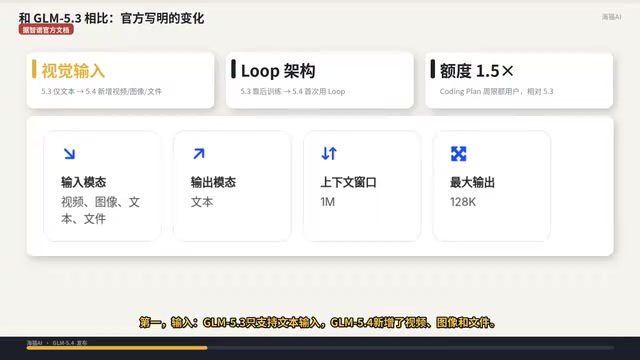
Zhipu GLM-5.4 Released: Loop Transformer Runs 28 Layers Twice
Zhipu releases GLM-5.4, the first Loop Transformer flagship: 28 layers run twice for 2-3T-equivalent intelligence, plus video and image input. API and open weights not yet released.