NVIDIA NeMo Data Designer: An Open-Source Framework for Multimodal Synthetic Data Generation
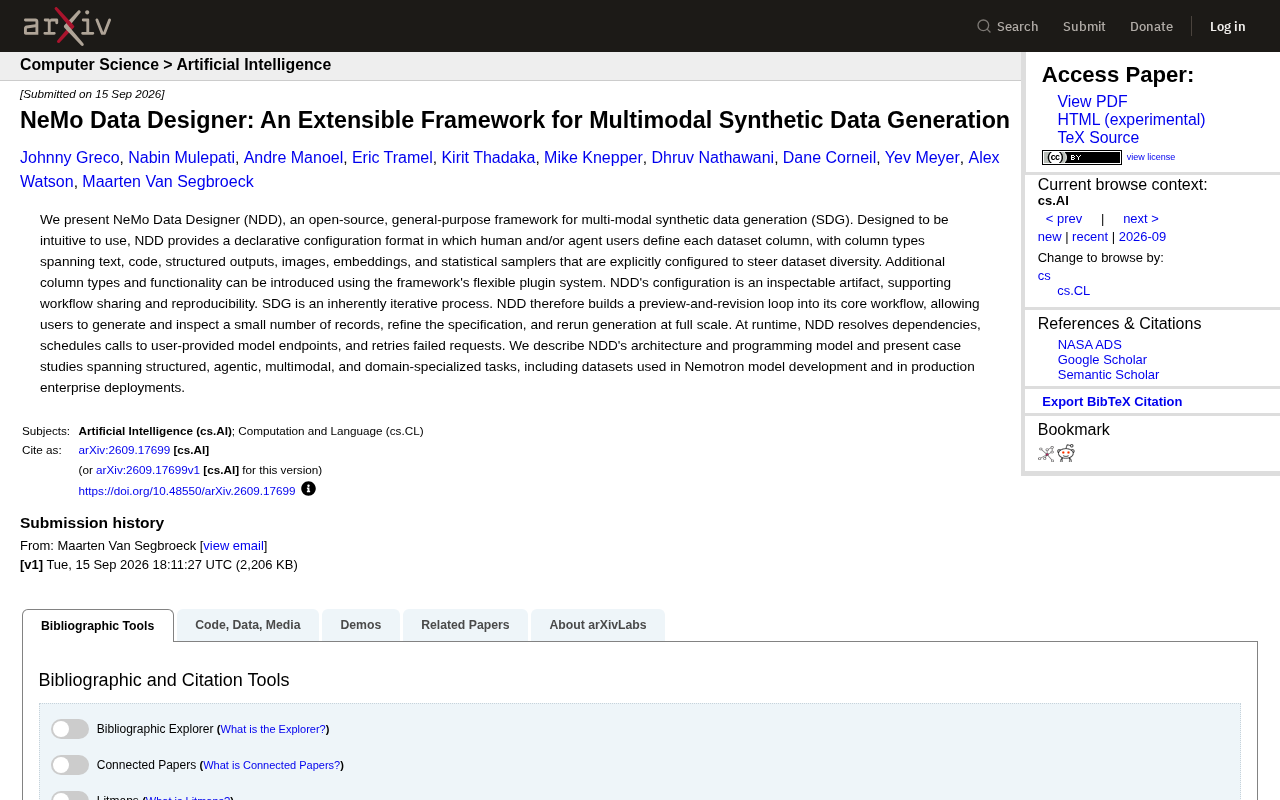
NVIDIA open-sources NeMo Data Designer to turn synthetic data generation from ad hoc scripts into a reproducible engineering framework.
NVIDIA's NeMo Data Designer (NDD) is an open-source, general-purpose multimodal synthetic data generation framework designed to address the high cost and insufficient coverage of real-world data collection. Its core design spans four dimensions: declarative configuration that makes dataset structures versioned and reproducible; a built-in preview-revision loop enabling small-scale trials before full runs; automatic runtime dependency resolution between columns with model call scheduling and retry handling; and a plugin system for ongoing extensibility. NDD has been validated in Nemotron model development and production enterprise deployments, marking a shift from scattered scripts to systematic engineering practice.
Synthetic Data Generation (SDG) is becoming an indispensable part of large model training. Real-world data collection faces numerous bottlenecks — high costs, privacy constraints, and insufficient coverage — and synthetic data can fill these gaps in a controlled manner. NVIDIA's newly released NeMo Data Designer (NDD) targets exactly this pain point. It is an open-source, general-purpose multimodal synthetic data generation framework that aims to consolidate what were once scattered, script-driven data construction workflows into a reusable and reproducible engineering paradigm.
Declarative Configuration: Treating Datasets as Inspectable Artifacts
The most fundamental design philosophy behind NDD is its adoption of a declarative configuration format. Users — whether human engineers or AI agents — describe the dataset they want by defining each individual "column." Column types span text, code, structured outputs, images, embedding vectors, and statistical samplers for explicitly controlling dataset diversity.
This "define-by-column" abstraction is elegantly conceived. It decomposes a complex data construction problem into fields with well-defined types and dependencies, lowering the barrier to entry while ensuring that the configuration itself becomes an inspectable artifact. In other words, your data generation logic is no longer buried in a pile of ad hoc scripts — it becomes a shareable, version-controlled, reproducible workflow description. This is a critical property for both research collaboration and enterprise-grade deployment.
Declarative Configuration is a programming paradigm where users describe "what result they want" rather than "how to achieve it step by step." Its counterpart is the imperative style, which requires developers to write out every execution step. In data engineering, SQL is a classic example of declarative thinking: you write a
SELECTstatement to describe the target, and the database engine determines the execution plan. NDD applies the same philosophy to synthetic data generation: engineers "declare" the dataset structure and per-column generation rules in a configuration file, while the framework handles underlying model calls, concurrency control, and data flow. The advantage is that the configuration itself serves as documentation — team members can understand the dataset construction logic without reading generation scripts. Declarative descriptions are also naturally suited to version control systems like Git, where every change is traceable, aligning with MLOps requirements for experiment reproducibility.
Preview-and-Revision Loop: A Workflow Built for Iteration
Synthetic data generation is fundamentally an iterative process. Getting the configuration right on the first attempt is rarely possible — you typically need to generate a small batch of samples, inspect quality, adjust the specification, and then scale up for a full run. NDD directly embeds this preview-and-revision loop into its core workflow.
Concretely, users can generate a small number of records for inspection, identify issues, modify the specification, and then re-run the generation at full scale. This design addresses a genuine pain point in SDG practice — it avoids the costly mistake of generating millions of records only to discover the entire batch has gone off track, making quality control a gradual and manageable process.
Runtime Capabilities: Dependency Resolution, Scheduling, and Fault Tolerance
At the runtime level, NDD handles a substantial amount of engineering heavy lifting. The framework automatically resolves dependencies between columns, schedules calls to user-defined model endpoints, and retries failed requests.
This deserves elaboration. When certain columns depend on the output of other columns — for instance, a "code" column might depend on a preceding "requirements description" column — execution order and data flow become genuinely complex problems. NDD encapsulates this underlying scheduling, concurrency, and fault-tolerance logic, allowing users to focus on "what kind of data they want" rather than "how to keep the generation pipeline running." For scenarios that require calling external LLM APIs, the built-in retry mechanism also significantly improves the stability of large-scale generation tasks.
The automatic resolution of inter-column dependencies is essentially the construction of a Directed Acyclic Graph (DAG). NDD treats each data column as a node in the graph, with directed edges representing input/output dependencies between columns. The framework uses this graph to infer which columns can be generated in parallel and which must wait for upstream columns to complete. This pattern has been widely validated in modern data orchestration tools such as Apache Airflow and Prefect. For synthetic data scenarios, DAG scheduling is particularly critical — assembling a complete training sample often requires multiple rounds of model inference. For example, a question must be generated first, followed by an answer, and finally a quality score, with strict ordering constraints between all three. Abstracting this orchestration logic away from user scripts reduces redundant engineering effort and lowers the probability of errors introduced by manually managing execution order.
Plugin System: An Architecture Built for Extensibility
Another defining feature of NDD is its flexible plugin system. The framework allows additional column types and functionality to be introduced via plugins, meaning it is not a closed, fixed-purpose tool but a platform that can evolve continuously alongside changing requirements.
This extensibility is especially important for long-term use. Synthetic data needs vary enormously — today you might need only text and code, while tomorrow you may need to handle multimodal images or domain-specific structured data. The plugin mechanism allows NDD to adapt to these shifting requirements without modifying the framework itself, and it is the underlying foundation for the framework's "general-purpose" positioning.
From Research to Production: Validation Through Real-World Use Cases
The paper presents a series of cross-scenario case studies covering structured tasks, agentic tasks, multimodal tasks, and domain-specific tasks. More compelling is the inclusion of datasets used in Nemotron model development, as well as datasets deployed in production-grade enterprise environments.
This distinguishes NDD from many academic projects that remain at the proof-of-concept stage. It is not merely a theoretical framework — it has already been battle-tested in NVIDIA's own large model training pipelines and in the real production environments of enterprise customers. For teams evaluating the tool's practical viability, these deployment case studies serve as important validation.
Nemotron is NVIDIA's series of large language models, and the construction of its training data is the most direct internal validation scenario for NDD. The Nemotron series (including Nemotron-4 and others) has demonstrated strong instruction-following and reasoning capabilities across multiple benchmarks, with some results attributed in part to high-quality synthetic training data. NVIDIA's previously published Nemotron-4 340B paper disclosed details about large-scale use of synthetic data for alignment training — and the data generation workflows described there are precisely what NDD seeks to systematize. Distilling internally validated data construction experience into an open-source framework means external developers can reuse the engineering best practices NVIDIA accumulated during actual model training, rather than working from a purely conceptual interface design.
Conclusion: A Step Toward Engineering Synthetic Data
The significance of NeMo Data Designer lies not in inventing the concept of synthetic data, but in its attempt to transform SDG from an "art" into an "engineering discipline." Declarative configuration delivers reproducibility; the preview-and-revision loop delivers quality control; runtime scheduling and fault tolerance deliver scalability; and the plugin system delivers long-term extensibility. Together, these four properties form a relatively complete methodology.
For teams struggling with large model training data, agentic data construction, or multimodal dataset creation, this open-source framework is worth watching. Its real-world effectiveness still needs to be validated in specific business contexts, but at the very least, it provides a clear, battle-tested answer to the question of "how to systematically generate high-quality synthetic data."
Related articles
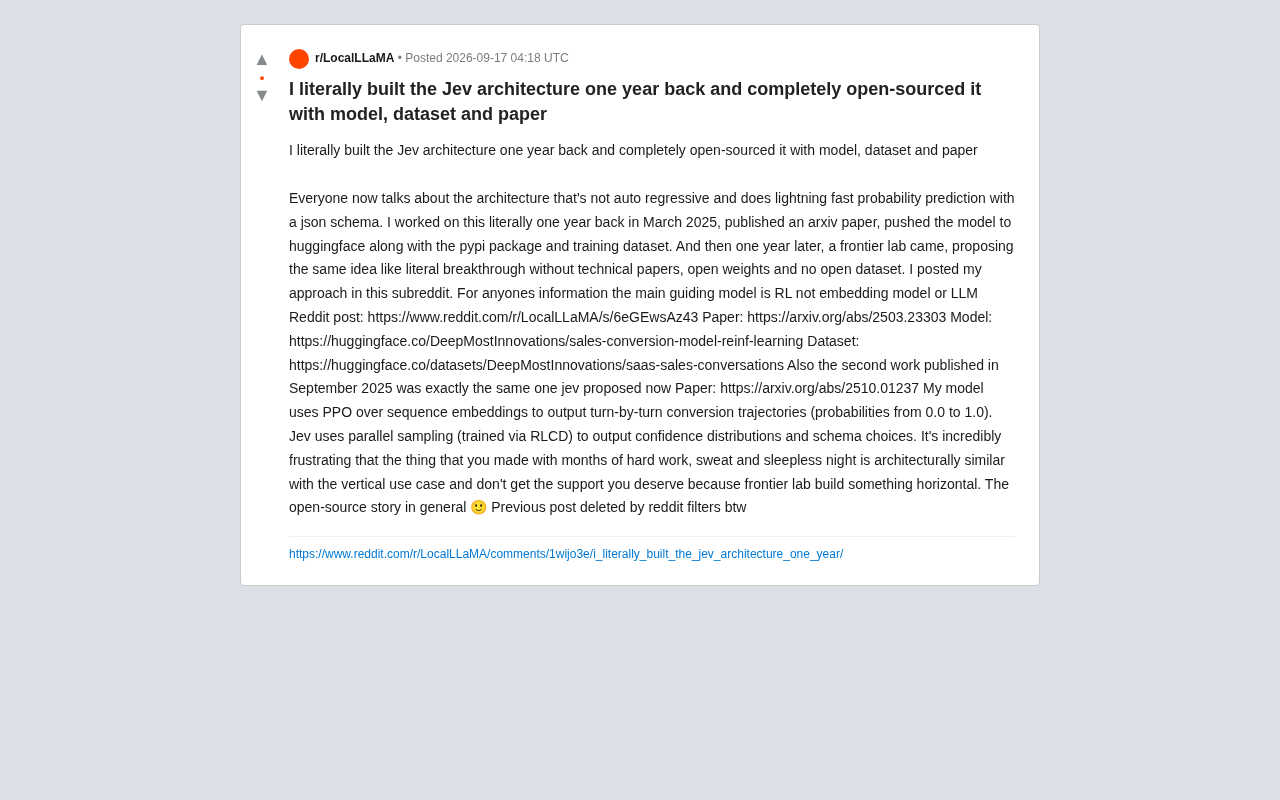
The Open Source Dilemma: A Non-Autoregressive Architecture Pioneer Overshadowed by Frontier Labs
An indie developer claims a frontier lab repackaged his year-old open-source non-autoregressive RL architecture as a breakthrough. We compare PPO sequence embeddings vs. RLCD parallel sampling and examine open source attribution gaps.
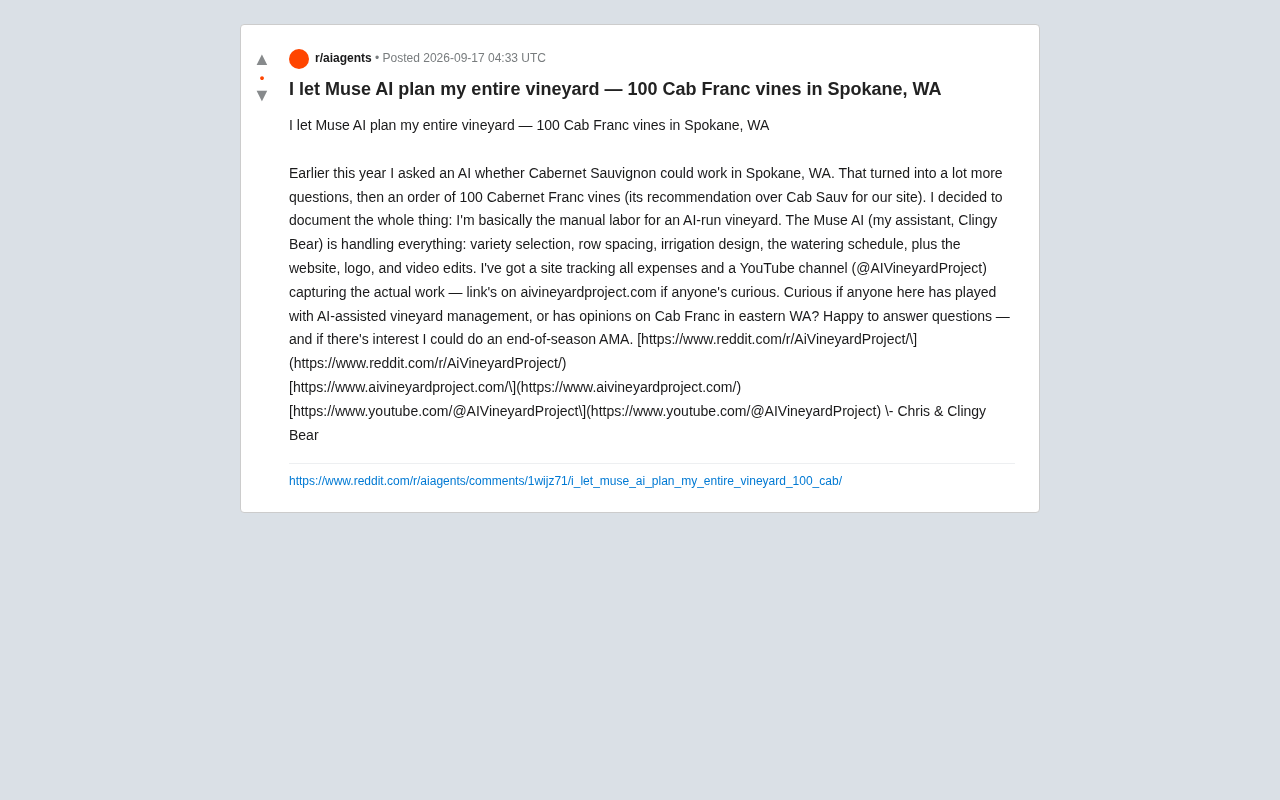
AI Plans an Entire Vineyard: A Real-World Experiment with 100 Grapevines
A Spokane hobbyist let Muse AI plan his entire vineyard — variety, spacing, irrigation, even the logo. He planted 100 Cabernet Franc vines and is documenting everything publicly.
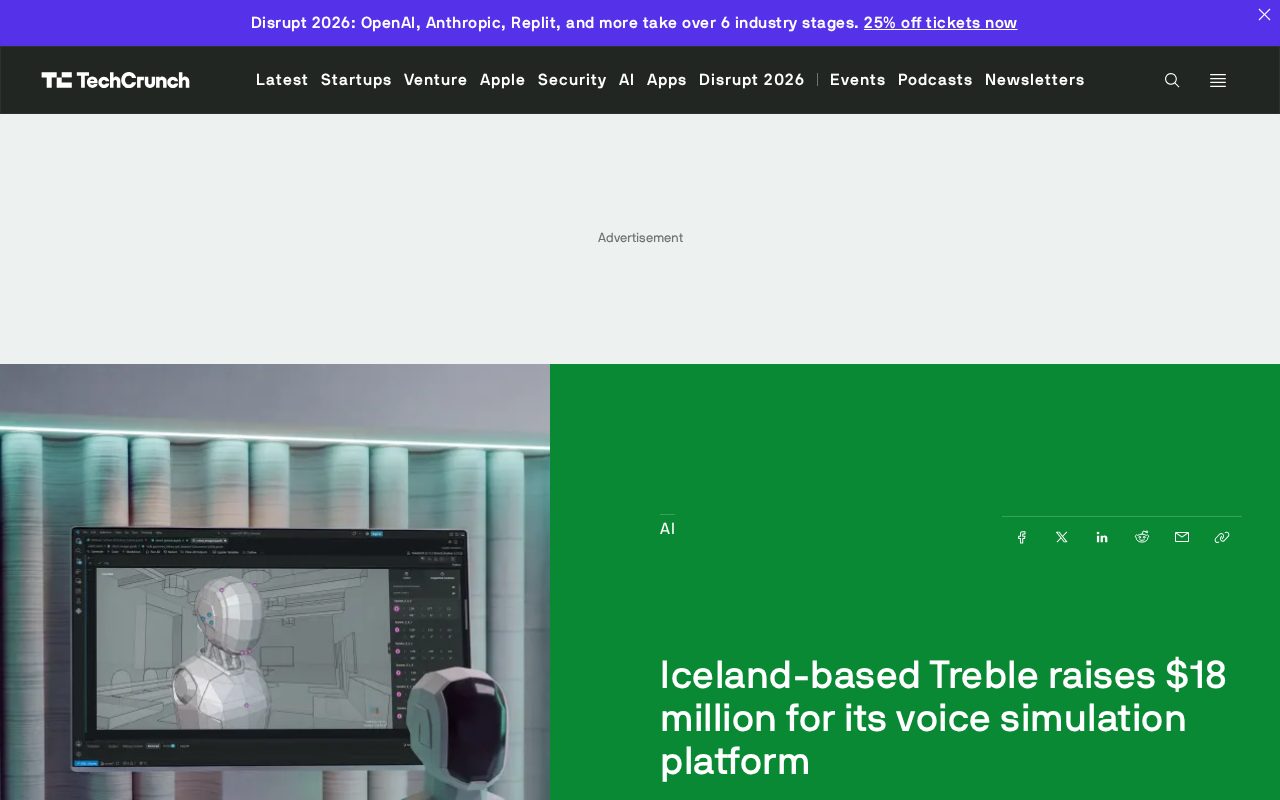
Iceland's Treble Raises $18M to Bet on Voice Simulation Platform
Iceland-based voice simulation company Treble raises $18M. Its platform serves voice AI developers, AI wearables, and robotics firms. A deep dive into the technology and what the funding signals.