NVIDIA Reaffirms Unchanged Open-Source AI Strategy After Jensen Huang's Departure
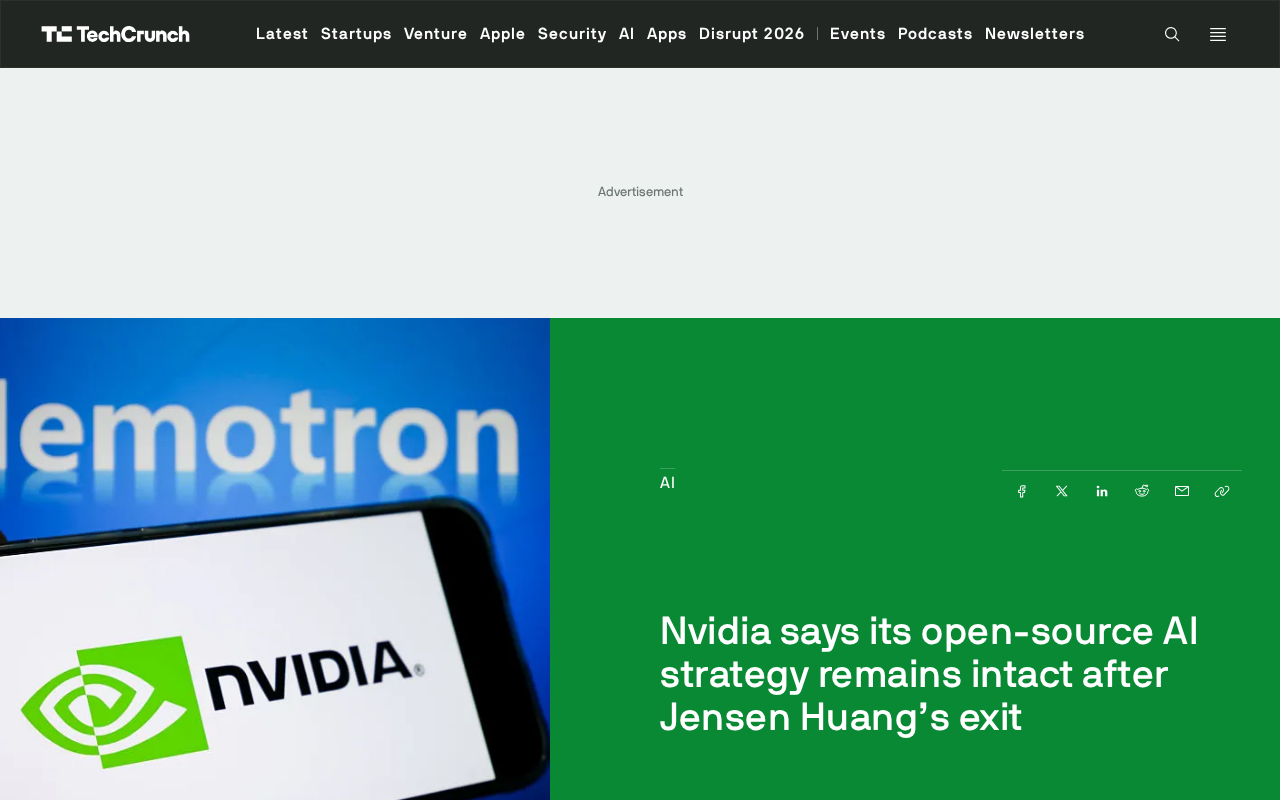
NVIDIA's interim CEO reaffirms the open-source AI strategy and Hugging Face acquisition plan, but execution-level organizational arrangements remain uncertain.
After Jensen Huang's sudden departure, NVIDIA's interim CEO publicly confirmed for the first time that the open-source AI strategy and the Hugging Face acquisition plan remain unchanged, aiming to stabilize confidence through strategic continuity. The article notes that the open-source path extends NVIDIA's CUDA ecosystem moat, while the Hugging Face acquisition aims to shift from tool provider to workflow definer. However, Huang's personal imprint raises questions about whether these decisions reflect organizational consensus or individual will, and the official statement leaves execution-level questions unresolved: who takes over internally and what the interim CEO's authority boundaries are remain unclear. If the acquisition and open-source investment continue, it is a positive signal for the open-source AI community, but the management change itself reveals the open-source infrastructure's dependence on corporate decision-making. The real test lies in subsequent actions rather than the statement itself.
Temporary CEO Sets the Tone: Open-Source Path and Acquisition Plans Remain
Following Jensen Huang's sudden departure, NVIDIA's interim CEO has stated that the company's commitment to open-source AI and its plan to acquire Hugging Face remain unchanged. The statement attempts to quell speculation about the strategic direction of the GPU giant, but it also exposes how deeply its open-source approach depends on individual leadership.

According to an RSS source, NVIDIA's interim CEO made clear that the company will continue to advance its open-source AI strategy and maintain its plan to acquire Hugging Face. This is NVIDIA's first public response on strategic direction since Huang's departure.
The statement itself is not complicated, but the timing is telling. Huang's exit was sudden, and the open-source AI strategy and the Hugging Face acquisition happen to be two of NVIDIA's most emblematic moves in recent years. By bundling the two together and reaffirming them, the interim CEO is effectively using "strategic continuity" as the primary tool to stabilize confidence both internally and externally.
Judging from the wording, the core of the statement is not to explain why Huang left, but to draw a clear line of continuity: the person is gone, the direction is not.
Why Open Source Is So Critical for NVIDIA
NVIDIA's hardware business is built on an ecosystem. CUDA's moat comes not only from chip performance but also from developer habits, framework adaptation, and community accumulation. The open-source AI strategy is an extension of this ecosystem logic—by opening up toolchains and supporting open-source models and community projects, NVIDIA lets more developers complete training and inference on its platform.
The plan to acquire Hugging Face points to a position further upstream. Hugging Face is the core hub for distributing open-source models and datasets. If the deal goes through, NVIDIA will reach model developers and community traffic more directly. For a company whose foundation is selling compute power, this means moving from "providing tools" to "participating in defining workflows."
Therefore, when the interim CEO reaffirms the open-source strategy, the essence of the message is: NVIDIA does not intend to retreat to the old path of a closed-source, closed ecosystem.
CUDA (Compute Unified Device Architecture) is a parallel computing platform and programming model introduced by NVIDIA in 2006, allowing developers to write general-purpose computing programs directly on GPUs using a C-like language. Its moat does not come purely from hardware performance but from more than a decade of accumulated developer habits, underlying adaptation of deep learning frameworks (PyTorch, TensorFlow, etc.), and the library ecosystem built around it (cuDNN, TensorRT, cuBLAS, etc.). Once models and toolchains are optimized on CUDA, the cost of migrating to other acceleration platforms is extremely high, and this path dependence underpins NVIDIA's dominant position in the AI compute market. Understanding this is essential to understanding why the open-source strategy is an extension of NVIDIA's ecosystem logic rather than a gesture: the more widespread open-source toolchains become, the more developers are brought into the CUDA system.
Hugging Face was founded in 2016, initially starting as a chatbot company before transforming into a centralized hosting and distribution platform for open-source machine learning models. Its Hub hosts hundreds of thousands of pretrained models and datasets. Open-source libraries such as Transformers and Diffusers have become the de facto standard entry point for developers to load and fine-tune models, and mechanisms like Model Cards and Spaces have made model evaluation and demonstration highly community-driven. For NVIDIA, Hugging Face sits at the upstream traffic entry point for model developers: whoever controls model distribution and the starting point of workflows is better positioned to influence the hardware and software stacks on which inference and training depend. This is also the key reason the acquisition plan is seen as a leap from "selling compute" to "defining workflows."
The Tension Between Personal Imprint and Organizational Strategy
Jensen Huang has long been the public face of NVIDIA's strategy, and the open-source AI path and the Hugging Face acquisition plan also carry a clear personal decision-making imprint. After the founder's sudden departure, outsiders naturally ask: are these decisions organizational consensus or the product of individual will?
The interim CEO's statement gives the official answer—organizational consensus. But the statement cannot fully eliminate a real problem: strategy can be written into documents, but execution depends on specific people. The trust of the open-source community, the advancement of acquisition negotiations, and the allocation of internal resources all require influential champions. After Huang's departure, who takes over internally and where the interim CEO's authority boundaries lie—the source material provides no further information.
This constitutes the most noteworthy part of this event: strategic continuity has been confirmed in a high-profile manner, but the organizational arrangements supporting that continuity remain unclear.
The doubts about strategic continuity triggered by a founder's sudden departure have a mature framework in corporate governance research. Investors typically distinguish between "founder vision" and "institutionalized strategy": the former relies on personal authority for momentum, while the latter has settled into budgets, roadmaps, and board resolutions. The interim CEO's public statement is a form of signaling, but what the market really focuses on is verifiable organizational arrangements—for example, whether the successor has equivalent decision-making power, whether key project leaders stay on, and whether the acquisition negotiation team is stable. If these arrangements are absent, the strategic statement may be interpreted as transitional PR language rather than a sustainable commitment. For an open-source ecosystem that depends on long-term investment, organizational stability itself is a kind of public good.
What It Means for the Open-Source AI Ecosystem
If NVIDIA does indeed maintain its open-source path and the Hugging Face acquisition, that is a relatively positive signal for the open-source AI community. A top compute vendor continuing to bet on open-source distribution channels means open-source models will still receive optimization momentum from the hardware side at the toolchain and deployment levels.
Conversely, this event also reminds the community: the direction of open-source AI is not determined solely by the technical community. A management change at a chip company is enough to make outsiders reassess the stability of the entire open-source infrastructure.
NVIDIA's statement has temporarily stabilized expectations, but the real test lies in subsequent actions—whether the acquisition continues to advance, whether investment in open-source projects is maintained, and whether community relationships are continuously maintained by new people. The interim CEO's statement is a starting point, not a conclusion.
One-line Summary
NVIDIA's interim CEO reaffirmed that the open-source AI strategy and the plan to acquire Hugging Face remain unchanged, but organizational arrangements at the execution level remain uncertain.
Paragraph Summary
After Jensen Huang's sudden departure, NVIDIA's interim CEO made the first public statement confirming that both the open-source AI strategy and the plan to acquire Hugging Face remain unchanged, seeking to stabilize internal and external confidence through "strategic continuity." The article points out that the open-source path is an extension of NVIDIA's CUDA ecosystem moat, while the Hugging Face acquisition is intended to move from tool provider to workflow definer. However, Huang's personal imprint makes outsiders question whether these decisions are organizational consensus or individual will, and the official statement fails to eliminate doubts at the execution level: who takes over internally and what the interim CEO's authority boundaries are remain unclear. If the acquisition and open-source investment continue, it is a relatively positive signal for the open-source AI community, but the management change itself exposes the open-source infrastructure's dependence on corporate decision-making. The real test lies in subsequent actions rather than the statement itself.
Related articles
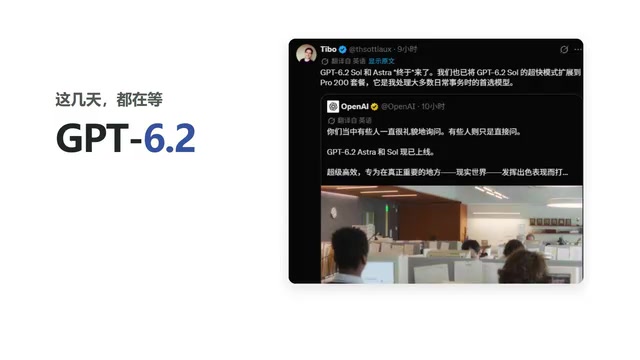
GPT-6.2 and Astra Launch Together: OpenAI Has Finally Figured Out Its Release Cadence
OpenAI releases GPT-6.2 Sol and Astra together, with Plus users able to try them in ChatGPT Work and Codex. This article breaks down the positioning differences between the two models, Astra's practical use in long-document retrieval and rewriting, and how the simultaneous dual-model launch affects user workflows.
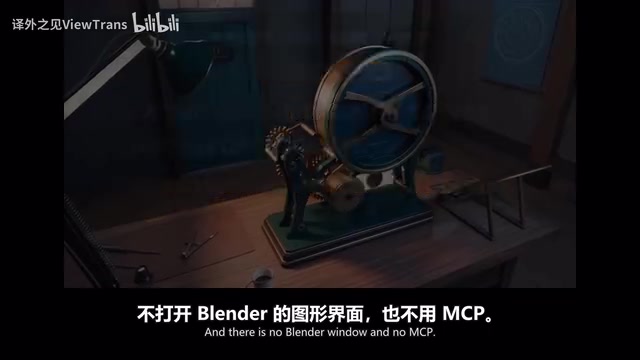
GPT-6.2 Dual-Model Hands-On: How Big Is the Gap Between Astra and Sol in Clock-Making and Game-Building?
GPT-6.2 Astra vs Sol hands-on: Blender clock, neon shooter, and Formula racing compared. Astra spends $419 with strong execution; Sol costs $197 but drops to 2 FPS. Both still trail Fable and Opus in games and aesthetics.
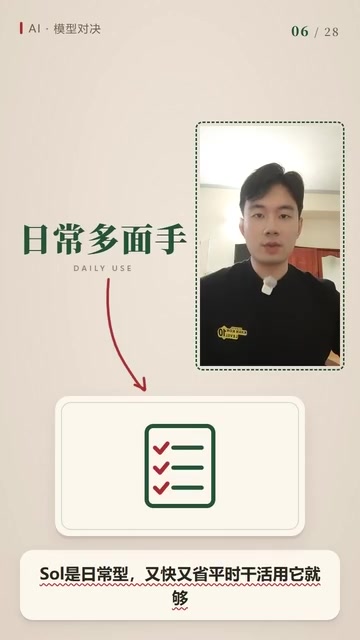
GPT-6.2 Astra and Sol Released: A Big Cost Drop, and How to Choose Between the Two Models
OpenAI releases GPT-6.2 Astra and GPT-6.2 Sol: Astra tackles professional tasks, Sol targets low-cost everyday use, with cost per task cut to under a third.