NVIDIA's Two Faces: Strong Earnings and Executives Calling for Jensen Huang's Return
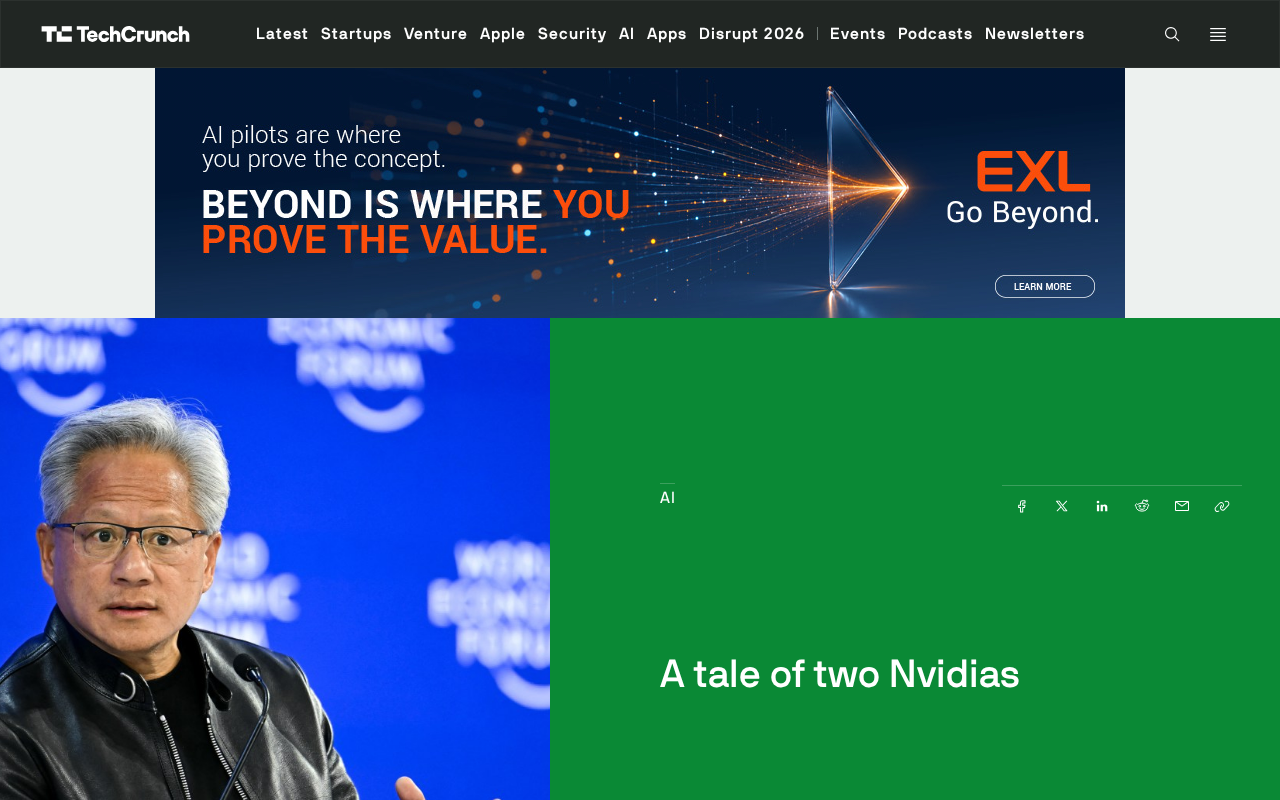
NVIDIA's strong earnings and executives calling for Jensen Huang's return reflect the tension between growth and ecosystem.
The article contrasts two starkly different narratives surrounding NVIDIA: strong earnings driven by AI chip demand and the data center business, confirming its dominance in the AI computing market; and tech executives publicly calling for Jensen Huang to return to day-to-day management, reflecting industry anxiety about strategic pace, supply chain allocation, and ecosystem partnerships. These narratives converge on how NVIDIA can balance short-term performance and long-term ecosystem health amid rapid growth.
Title
NVIDIA's Two Faces: Strong Earnings and Executives Calling for Jensen Huang's Return
Meta Description
NVIDIA's latest earnings are strong, but tech executives are publicly calling for Jensen Huang's return. This article analyzes the industry anxiety and ecosystem tensions behind these two narratives surrounding the AI chip giant.
Article Content
NVIDIA recently presents two starkly different narratives: on one side, impressive earnings figures; on the other, tech executives publicly calling for Jensen Huang's return. This contrast reveals the AI chip giant's heat in capital markets and the subtle tensions within its industry ecosystem.
Strong Earnings: NVIDIA's Hard Power
The latest earnings show that NVIDIA continues to maintain growth momentum driven by AI chip demand. The data center business remains the core engine, while gaming and professional visualization provide stable support. The earnings figures confirm NVIDIA's dominant position in the AI computing market and explain why capital markets remain bullish on the company.
However, beyond the numbers, voices within the industry point to another side.
NVIDIA's data center business mainly consists of two major parts: GPUs for AI training and inference (such as the H100, H200, and B200 series), and accompanying networking interconnect products (such as InfiniBand and Spectrum-X Ethernet switches). Among these, GPUs contribute the vast majority of data center revenue, while the networking business is becoming a second growth curve. The so-called "AI computing market" is currently largely defined by NVIDIA's CUDA software ecosystem—CUDA is a parallel computing platform and programming interface through which developers invoke GPUs for general-purpose computing. After more than a decade of accumulation, CUDA has formed a vast library, toolchain, and developer community, constituting NVIDIA's deepest moat. Even if competitors' chips approach NVIDIA's in hardware specifications, they often need to rewrite their software stacks or rely on compatibility layers, resulting in high migration costs. This is the technical foundation of NVIDIA's "dominant position" behind the earnings figures, and it also explains why capital markets remain bullish on the company.
Executives' Call: The Subtext of Jensen Huang's Return
In contrast to the optimism of the earnings, multiple tech executives have publicly expressed their desire for Jensen Huang to return to the company's day-to-day management. This call is not unfounded—it reflects a certain anxiety within the industry about NVIDIA's strategic direction. Executives may be concerned about the pace of NVIDIA's decisions on supply chain allocation, product roadmaps, or ecosystem partnerships, and it may also reflect a reliance on Jensen Huang's personal leadership style.
As the soul of NVIDIA, Jensen Huang's public appearances and strategic statements often directly affect market sentiment. The executives' call is essentially an expectation for NVIDIA to remain agile and open.
Jensen Huang currently serves as NVIDIA's President and CEO and has not left the company, so the term "return" more likely points to an expectation for deeper involvement in daily operations and ecosystem communication rather than a literal change in position. In the AI chip industry chain, NVIDIA occupies the core position of upstream computing supply, and its GPU allocation directly determines the training progress of downstream cloud providers, AI startups, and research institutions. When supply is tight, who gets chips first and how many they get becomes a highly sensitive issue for ecosystem partners. In addition, NVIDIA's product roadmap (such as the annual architecture iteration cadence) and ecosystem partnership strategy (such as investment in startups and support for open-source frameworks) both affect the expectations of the entire industry. The executives' public call can be understood as a signal combining pressure and communication: they hope NVIDIA will remain agile in decision-making transparency and distribution of partner interests, and Jensen Huang's personal authority is precisely the most effective force for driving such adjustments.
The Intersection of Two Narratives
The earnings and the call appear contradictory, but in fact point to the same question: how NVIDIA can balance short-term performance and long-term ecosystem health amid rapid growth. The earnings prove that NVIDIA's business model remains strong, but the executives' anxiety reminds us that hardware dominance does not mean absolute satisfaction among ecosystem partners.
For readers following the AI computing market, NVIDIA's next moves—whether product iteration, supply chain adjustments, or senior management focus—will profoundly affect the direction of the entire AI industry chain.
One-line Summary
NVIDIA's strong earnings and executives calling for Jensen Huang's return reflect the tension between growth and ecosystem.
Paragraph Summary
The article contrasts two starkly different narratives surrounding NVIDIA: on one hand, the latest earnings show continued strong AI chip demand, with the data center business as the core engine driving growth, confirming its dominant position in the AI computing market; on the other hand, multiple tech executives publicly call for Jensen Huang to return to day-to-day management, reflecting industry anxiety about NVIDIA's strategic pace, supply chain allocation, and ecosystem partnerships. The article points out that these two narratives appear contradictory but actually converge on the same question—how NVIDIA can balance short-term performance and long-term ecosystem health amid rapid growth. The earnings prove its business model is strong, but the executives' call reminds us that hardware dominance does not equal absolute satisfaction among ecosystem partners. Jensen Huang's personal leadership and public statements significantly affect market sentiment, and NVIDIA's next moves in product iteration, supply chain adjustments, and senior management focus will profoundly affect the direction of the entire AI industry chain.
Related articles

Oral Pancreatic Cancer Drug Hailed as Biggest Breakthrough in Decades
An oral pancreatic cancer drug is called the biggest breakthrough in decades, sparking Hacker News debate. We analyze the real weight of this claim and the distance to clinical availability.

DevWorkflow 5.0: From Idea to Launch with the AI Five-Step Method
DevWorkflow 5.0 is a Claude Code plugin that uses a five-step process to take AI-assisted development from idea to launch. It asks you before every decision, preventing AI from adding tables and fields on its own, keeping docs and code consistent, and stopping merges before tests are written. Supports multiple platforms and languages, for individual developers and small teams.

How Do Hermes Agent's .md Files Work? A Breakdown of the Core Mechanism
Explaining Hermes Agent's .hermes directory mechanism: user.md stores personal info, memory.md records details worth remembering, soul.md defines the Agent's personality. Learn how these pure Markdown files keep the Agent consistent across sessions.