Observations from Tencent Cloud's AI Game Competition: How General-Purpose Agents Are Ushering in a Golden Age for Narrative Games

General-purpose AI Agents are dramatically lowering creation barriers for narrative games.
At Tencent Cloud's AI Game Competition, general-purpose AI Agent tools like WorkBody demonstrated their power to democratize narrative game development. Through two standout projects — one using AI for complete voice acting pipelines, another enabling non-programmers to build games via natural language — the event showed how narrative games perfectly match current AI capabilities, while highlighting that human taste and polish remain irreplaceable.
Recently, the East China regional round of Tencent Cloud's AI Game Competition came to a close. As a guest judge for the AI track, after walking through the entire venue, I had one strong impression: with the support of general-purpose AI Agent tools, the creative barrier for small-scale narrative games (AVG/visual novel types) is being dramatically lowered. Narrative games may truly be entering their own golden age.
A Thousand-Person AI Game Creation Experiment
The offline filming day for the East China regional round brought together over 1,000 contestants, producing more than 200 works. After multiple rounds of screening, 18 works ultimately made it to the offline stage. The scale was impressive, and the quality of works exceeded expectations.
A core observation: using general-purpose Agent tools like WorkBody to make games doesn't lose to so-called professional AI game editors in specific tracks. It's worth explaining the difference between the two — professional AI game editors are typically vertical tools with pre-configured functional modules for game development scenarios (such as character generation, scene arrangement, etc.), while general-purpose Agents are intelligent agent systems built on large language models that can flexibly adapt to various tasks through natural language instructions. They possess core capabilities like planning, memory, tool invocation, and self-correction, unconstrained by specific application scenarios. In other words, the moat of professional vertical tools is being gradually eroded by general-purpose agents. For creators without programming backgrounds, this is a critical signal — they finally have the opportunity to create complete game worlds at low cost.
Below, I'll break down the two works that left the deepest impression on me, examining exactly what role AI played in them.
Case Study 1: Anthimular — AI Handling the Entire Voice Acting Workflow
The first work comes from students at the Shanghai Film Academy, titled Anthimular. It's a visual text-based reasoning game with mystery elements.
Worldbuilding and Narrative Design
The game adopts a near-modern worldview: in this setting, humans can already intervene in others' consciousness. The protagonist is an employee of a certain company who enters the female lead's consciousness during a treatment session, only to discover that she somehow knows him — yet he has no memory of her. From here, a suspenseful story unfolds as they search for the truth behind it all.

Technical Implementation: Building a Custom Ren'Py Workflow
Technically, the team chose an open-source project from GitHub — a Ren'Py-based open-source solution — as their foundation. Ren'Py is the de facto standard engine in visual novel development. Built on Python and released in 2004, it has been widely adopted, with notable works like Doki Doki Literature Club! developed using it. Ren'Py's advantage lies in its near-natural-language scripting syntax for writing dialogue and branching storylines, but when it comes to complex conditional logic, variable management, and custom UI, some programming foundation is still required. Since the open-source project's knowledge base was limited and didn't have the rich reference materials available for mainstream code, the team built their own Ren'Py-based AI Workflow from scratch.
The most surprising part was the voice acting. Traditional game voice acting typically involves writing voice scripts, contacting voice actors, studio recording, post-production editing, and other steps — costly and time-consuming, often an unbearable burden for small teams. In recent years, however, AI speech synthesis technology has undergone a qualitative leap — new-generation models represented by VALL-E, GPT-SoVITS, and others can clone a speaker's voice from minimal samples while achieving highly natural intonation, rhythm, and emotional expression. Team members revealed that Anthimular's entire voice acting was handled by WorkBody: WorkBody autonomously checks which voice lines are still incomplete, proactively calls the localized voice models already written, and then writes the corresponding code directly into the game script. Beyond that, it summarizes processed audio files into documentation to avoid redundant work later.
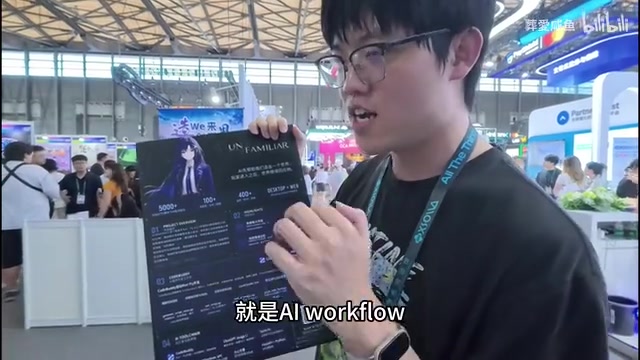
This is no longer simple "AI-assisted generation" — it's AI acting as an executor with memory and planning capabilities within a complete production pipeline. It can perceive the current project state (which voice lines are done, which aren't), formulate execution plans (which model to call, which script to write to), and record and summarize after execution to prevent duplicate work — this is precisely the core characteristic that distinguishes AI Agents from traditional AI tools.
Case Study 2: Crown of Daylight and Secret Orders of the Night Duck — A Breakthrough Path for Non-CS Majors
The second work comes from Fudan University, titled Crown of Daylight and Secret Orders of the Night Duck. It's a history-themed narrative game with core mechanics revolving around event detection.
Using Natural Language to Direct AI Code Writing
What's special about this team is that neither member has a computer science background. Their goal was straightforward: they wanted to tell a good story but needed a precise, simple, and effective implementation method.
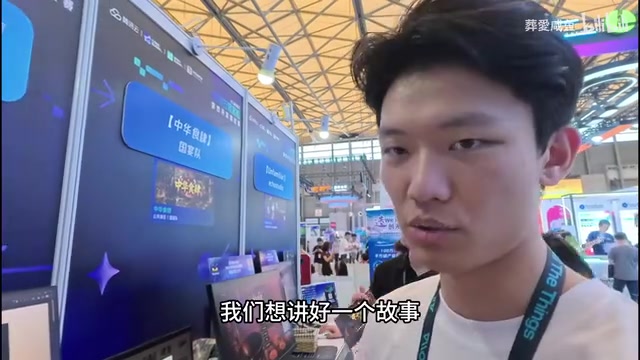
As a result, event integration, API calls, and ending determination in the game were all completed with WorkBody's assistance. Their primary method was describing functional requirements in natural language and having WorkBody modify code directly in the files. For creators without coding backgrounds, this is nearly the ideal collaboration paradigm — creators only need to clearly know "what I want" without needing to know "how to implement it."
Key Technique: Decompose Tasks, Direct Step by Step
One student shared practical tips for using WorkBody that are highly worth learning from: Don't start by telling the AI "build me a complete AVG game." The correct approach is to first have WorkBody break the game into individual systems, then break systems into interfaces, buttons, and specific operations, and then direct it to complete each one step by step.
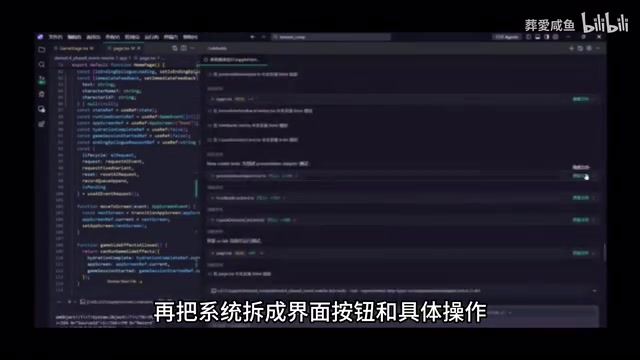
This "divide and conquer" methodology is fundamentally aligned with the modular thinking in software engineering. The core principle of modular design is decomposing complex systems into mutually independent, single-responsibility modules, each of which can be developed, tested, and maintained independently. When collaborating with AI Agents, this principle is especially critical: current large language models still have limited attention windows and reasoning capabilities, and are prone to hallucinations or missing key details when facing overly large or vague task instructions. The industry has gradually formed a consensus — the best practice for collaborating with AI is to keep tasks at an "atomic" granularity, having the AI complete only one clearly bounded, verifiable small task at a time, forming an efficient iterative loop of "human plans — AI executes — human reviews." The finer the task granularity, the higher the AI's execution success rate.
Why Narrative Games Have an Advantage in AI Game Competitions
After walking through the entire event, my judgment is: narrative games (visual novels/AVGs) hold a significant advantage in AI game competitions of this kind.
Whether it's a suspense-tinged story like Anthimular or a history-themed work, they share a common trait: they are centered on text and narrative, with relatively low requirements for real-time interaction, physics engines, and complex logic. This happens to be the domain where current AI excels — text generation, plot arrangement, and ending branch determination. By contrast, action games require precise physics collision detection and frame-level input response, strategy games require complex numerical balancing and AI opponent design — areas where current AI toolchains are far from mature. The high alignment between narrative games' technical requirements and AI capabilities makes them the ideal entry point for AI-assisted development. More importantly, it gives students without coding backgrounds the ability to create a complete world.
Shortcomings That Can't Be Ignored
Of course, the flip side of these advantages is obvious weaknesses. In many of these works, dialogue is filled with a typical "AI flavor" — text that's overly polished, lacking personality and refinement. Specifically, "AI flavor" manifests as: highly similar sentence structures, word choices leaning toward four-character idioms and literary expressions, a lack of colloquial particles and irregular breaks, and difficulty distinguishing speaking styles between characters. The low cost of AI-generated text can actually cause creators to lose the patience for careful crafting; and for players, once they detect large amounts of unpolished AI text, trust and reading patience evaporate quickly.
In other words, AI has lowered the barrier to "getting something made," but "making it good" still requires the creator's aesthetic sensibility and patience. Tools liberate productivity but cannot replace taste.
General-Purpose Agents Are Liberating Game Creativity
Every year someone says it's a "big year for indie games," every year someone says "Steam is going to explode," but this year truly feels different.
The fundamental reason: demand is becoming increasingly fragmented. The global indie game market has shown a significant "long tail" trend in recent years — according to Steam platform data, the number of newly listed games continues to climb each year, while market concentration among top titles is declining. This means player groups are accelerating their differentiation, and niche themes — psychological horror, historical research, cultural exploration, personal narrative — have increasingly large survival space. The emergence of numerous experimental narrative works on platforms like itch.io also proves that player acceptance of "personal expression" games is rising.
With the support of general-purpose Agent tools like WorkBody, creators' creativity is being unleashed as never before — a single person or small team can now accomplish voice acting, programming, and event systems that previously required professional division of labor. The efficiency revolution on the supply side perfectly matches the fragmentation on the demand side: large teams are no longer needed to serve niche markets — one or two creators with ideas can turn their unique stories into interactive game experiences.
When the technical barriers to creation are no longer the primary obstacle, true competition will return to content itself: whose story is more moving, whose worldview is more complete, who is willing to put in that extra bit of polishing effort on top of AI-generated first drafts. In this sense, the golden age of small-scale narrative games may truly be upon us.
Related articles

Should U.S. College Fraternities Be Banned? A Researcher's Incisive Observations
Why not just ban U.S. college fraternities? A researcher finds the key resistance comes from decision-makers' own fraternity identities and schools' "willful ignorance."

Microsoft Discovery: Accelerating Scientific Discovery with AI Agents
Microsoft's Discovery platform runs specialized AI agents to help researchers screen and prioritize the most promising compounds and experimental paths, reducing experiments and accelerating scientific discovery.

Cambridge Heavy Industries Secretly Develops Desktop-Scale Nuclear Fusion Device
Cambridge Heavy Industries is secretly developing a desktop-scale laser-driven nuclear fusion device, targeting the equipment supply market for fusion power plants. This article analyzes its miniaturization technology path, commercialization logic, and unique positioning in the fusion startup wave.