OneDayBuild: Build Your SaaS Foundation in One Day and Get a Head Start on AI Entrepreneurship

OneDayBuild helps AI entrepreneurs build a complete SaaS foundation in just one day.
OneDayBuild is a SaaS foundation toolkit for AI entrepreneurs, built on Next.js + Tailwind CSS + Prisma. It integrates essential modules like user authentication, payments, email, and SEO, along with unified API wrappers for major LLMs. By compressing weeks of infrastructure work into a single day, it lets founders focus on their core AI product. Born from the creator's real indie dev struggles, the product was validated through a waitlist and includes custom prompts for AI coding tools like Cursor and Bolt.
Why Do AI Entrepreneurs Need a SaaS Foundation Toolkit?
With the rapid advancement of AI technology, more and more small teams — and even solo developers — are capable of building successful products. Open-source models are readily available, API calls are simple to use, and the core of an AI application can often be completed in just a week or two.
But here's the problem — the core functionality is just the tip of the iceberg.
After you've excitedly gotten your AI model up and running, you'll find a mountain of "boring but necessary" work waiting for you: user registration and login, password recovery, payment integration, billing reconciliation, user tier management, email delivery, SEO optimization… These foundational SaaS platform features can easily consume another week or two — or even longer.

Data from YC (Y Combinator), the prestigious investment firm, delivers a sobering reality: 43% of startups had not even shipped a product by the time they shut down. YC is Silicon Valley's most influential startup accelerator; since its founding in 2005, it has incubated over 4,000 companies, including unicorns like Airbnb, Stripe, and Dropbox, making its accumulated startup data exceptionally valuable. This statistic reveals the "execution trap" — founders consistently underestimate the true engineering effort required to go from idea to usable product. Many startups don't fail because of their core technology; they get bogged down by the tedious work of building infrastructure.
What Is OneDayBuild? An All-in-One SaaS Development Toolkit
OneDayBuild is a SaaS foundation toolkit designed for AI entrepreneurs, with a clear goal: compress weeks of foundational platform development into a single day.
It covers virtually all the essential modules a SaaS product needs:
- User Authentication System: Complete flows for registration, login, password recovery, and more
- Payment System: Integration with major payment platforms, handling billing and reconciliation
- User Management: User tiers, profile management, etc.
- Email System: Automated delivery of various notification emails
- SEO Optimization: Basic search engine optimization configuration
- Waitlist Feature: Collecting users before product launch
Tech Stack: Next.js + Tailwind CSS + Prisma
OneDayBuild is built on a modern, mainstream development stack: Next.js + Tailwind CSS + Prisma + cloud database. This stack represents the current go-to choice for full-stack JavaScript development. Next.js, developed by Vercel and built on the React framework, provides Server-Side Rendering (SSR) and Static Site Generation (SSG) capabilities, greatly simplifying SEO optimization and performance tuning. Tailwind CSS is a utility-first CSS framework that enables rapid UI construction through predefined utility classes, eliminating the naming chaos of traditional CSS. Prisma is a next-generation ORM (Object-Relational Mapping) tool that provides a type-safe database access interface, supports mainstream databases like PostgreSQL, MySQL, and SQLite, and manages data models through a unified Schema file. Together, they form a complete development loop from frontend to backend to database.
If your project already uses this tech stack, getting started is virtually frictionless — you just need to configure a few settings in the toolkit, obtain API keys from the corresponding third-party services, and plug them into your environment variables.
As the creator puts it: "Rome wasn't built in a day, but your SaaS foundation can be."
Integrated with Leading AI Models, Ready Out of the Box
Beyond foundational platform features, OneDayBuild also integrates access to today's leading large language models, including ChatGPT, Claude, Gemini, Llama, and more.

ChatGPT (OpenAI), Claude (Anthropic), Gemini (Google), and Llama (Meta, open-source) represent the four major camps in today's LLM market. Each provider's API differs in authentication methods, request formats, streaming output, error handling, and billing units — for example, OpenAI uses Bearer Token authentication, Claude uses the x-api-key header, and Gemini works through Google Cloud's OAuth system. For applications that need multi-model comparison or fallback switching, abstracting away these differences is a tedious but critical engineering task. OneDayBuild handles this abstraction layer so developers don't need to read through each provider's API documentation individually — they can simply call the pre-wrapped methods in the toolkit and focus on prompt design and business logic. For entrepreneurs looking to quickly validate AI product ideas, this significantly lowers the technical barrier.
Custom Prompts Tailored for Cursor, Bolt, and Other AI Coding Tools
While AI coding tools like Cursor and Bolt are extremely popular right now, the real-world experience often falls short when dealing with larger or more comprehensive applications — if your descriptions aren't detailed enough, the generated output tends to be disappointing. Cursor is a deeply customized AI coding IDE based on VS Code, with built-in access to models like GPT-4 and Claude, supporting code completion, code explanation, and cross-file refactoring. Bolt, launched by StackBlitz, is a browser-based AI full-stack development tool that can generate and run complete web applications directly in the browser. The core limitation of these tools lies in the "context window" — as project scale grows and file structures become complex, AI models struggle to understand the overall architecture and tend to generate code that conflicts with or duplicates existing code. Those viral demos claiming to "whip up an AI app in minutes" likely involved extensive preparation work at the prompt stage.
OneDayBuild addresses this pain point by including a set of prompts specifically designed for AI coding tools like Cursor and Bolt, providing detailed descriptions of the platform's existing feature modules and directory structure. These prompts are essentially a carefully crafted "project specification" that helps AI tools generate code within the correct context through structured descriptions of existing modules and directories, rather than starting from scratch and guessing blindly. This is a key technique for improving the practical usability of AI coding tools.
Born from Real Pain Points: A Solo Developer's Firsthand Experience
This product was born from the creator's own experience as an indie developer.

Earlier this year, the creator began working as an indie developer, participating in two projects (one of which was an international project). All team members focused exclusively on AI fine-tuning and core feature development, while foundational platform features were completely overlooked — they didn't make it onto the agenda until the middle-to-late stages of the project.
What was assumed to be a simple task — especially with some free open-source packages available — turned out to be riddled with pitfalls once the actual implementation began. This experience led the creator to a key realization: no matter what kind of AI application or AI Agent you want to build, a solid foundation platform is indispensable, and the amount of work involved far exceeds expectations.
Market Validation: From Waitlist to Real-World Project Deployment
Before starting formal development, the creator launched a Waitlist page. A Waitlist is a lightweight implementation of the "Minimum Viable Product" (MVP) concept from Lean Startup methodology — before the product is fully developed, a simple landing page collects potential users' emails, simultaneously validating market demand and building an early user base. With virtually no marketing effort, 21 signup emails were received. These signups from organic traffic are known as "organic signals" and reflect genuine market interest far more accurately than paid advertising traffic. The creator then engaged in deep conversations with potential users and invited 3 of them to try the product, following the Lean Startup "Build-Measure-Learn" cycle.
Related articles
 Product Reviews
The Programmer's Desk Setup Guide: Building a Workspace That Feels Like Home
Discover how programmers build productive, comfortable workspaces. From multi-monitor setups to ergonomic design, explore the desk philosophy that drives focus and flow.
 Product Reviews
Qoder vs Cursor Real-World Comparison: Which $20/Month AI IDE Is Better?
Hands-on comparison of Qoder vs Cursor AI IDEs: Agent autonomy, human interaction count, and architecture decisions. Qoder needed only 2 interactions vs Cursor's 8.
 Product Reviews
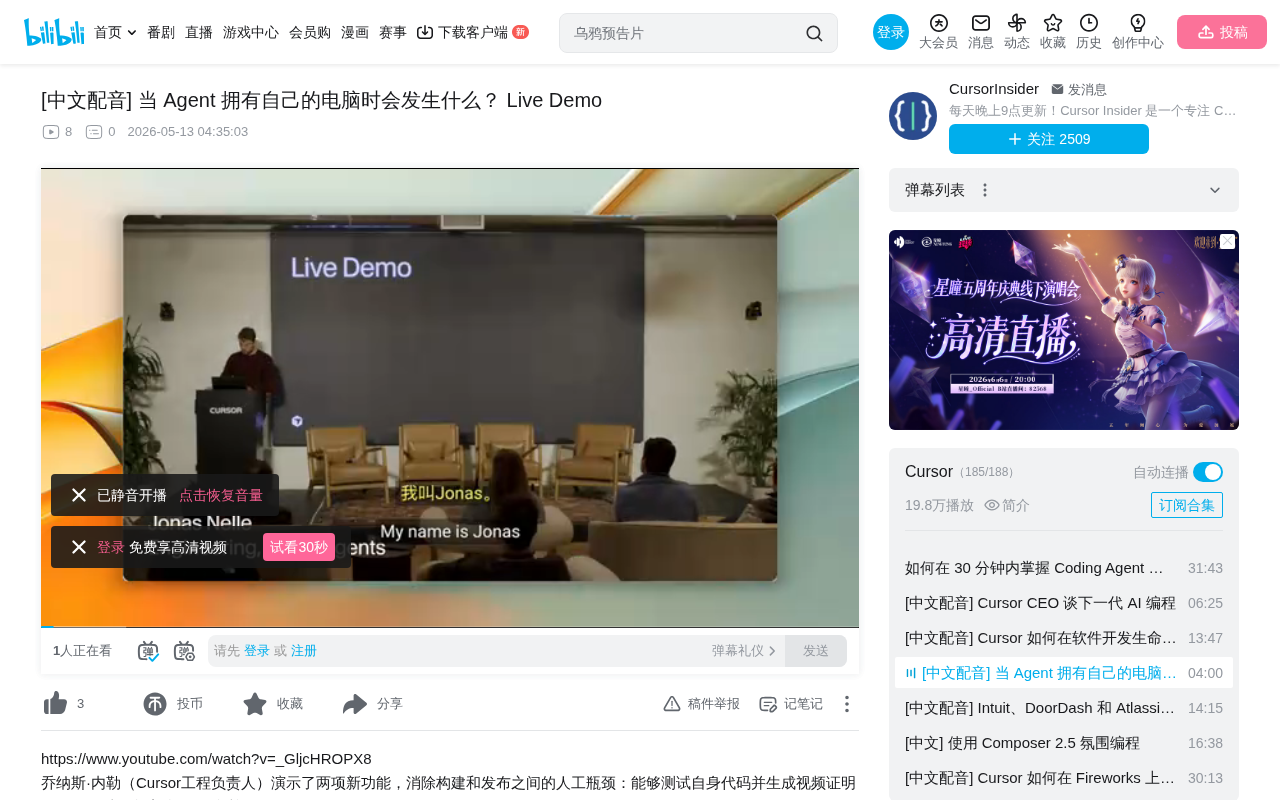
Cursor Cloud Agent Demo: Eliminating Bottlenecks Across the Entire Software Development Lifecycle
Deep analysis of Cursor's Cloud Agent demo showing how cloud VMs, automated test artifacts, and a full-chain control plane systematically eliminate human bottlenecks across the software development lifecycle.