OONI Probe: Measuring Global Internet Censorship with Open Source Tools
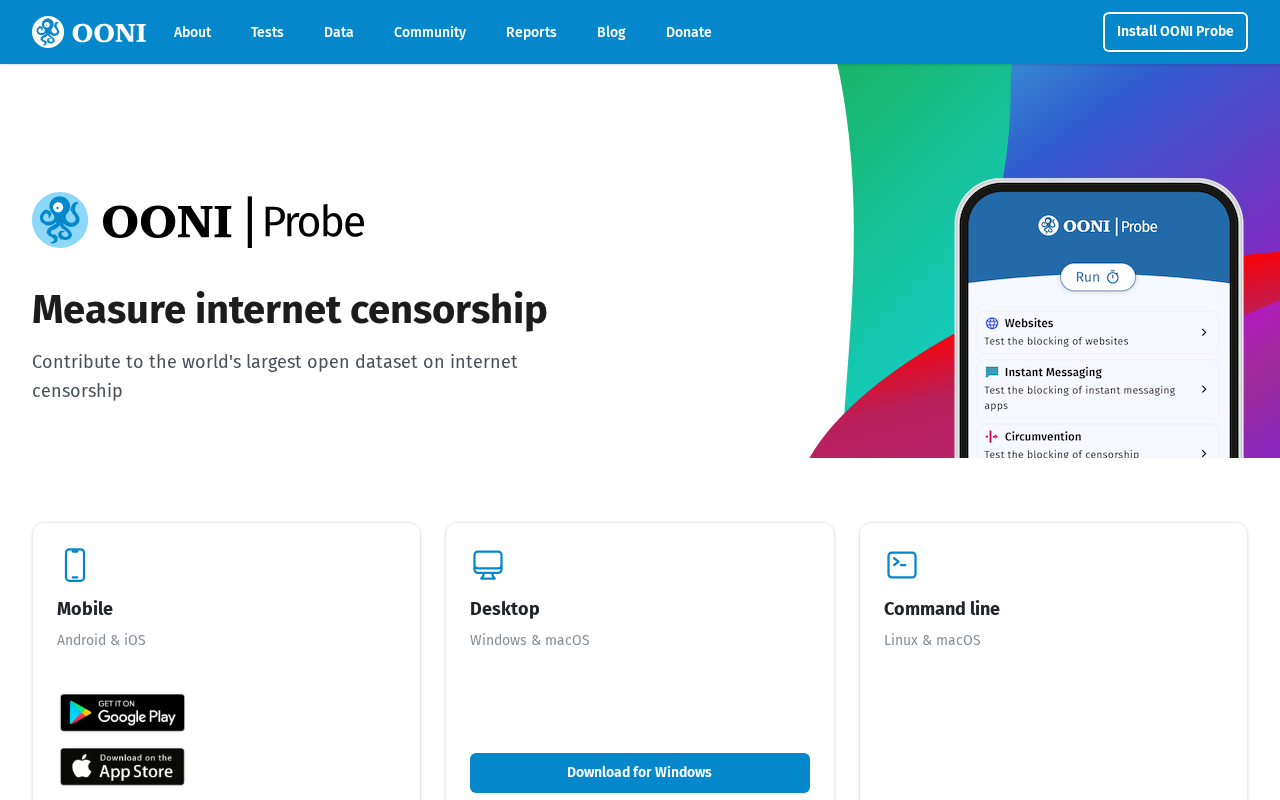
OONI Probe turns global internet censorship into a publicly accessible, crowdsourced open dataset.
OONI Probe is a free, open source censorship detection tool developed by the OONI project, available on iOS, Android, Windows, macOS, and Linux. It detects website and messaging app blocking, identifies covert tampering like DNS poisoning and throttling, and measures overall network performance. Test data is aggregated into a public dataset freely accessible to researchers, journalists, and activists — forming a distributed evidence network that continuously documents censorship worldwide. Its key strength is converting hard-to-prove censorship into verifiable technical data, though privacy risks exist in high-pressure environments and users should assess local safety conditions before use.
What Is OONI Probe
Internet censorship is notoriously difficult to quantify — it's hard for ordinary users to tell whether a website is blocked by their provider or simply experiencing a technical outage. The OONI (Open Observatory of Network Interference) project was created to address exactly this problem. It offers an open source tool called OONI Probe that lets anyone measure and document censorship on their own network.
The project recently gained traction on Hacker News with 177 points and 112 comments, reflecting the tech community's ongoing interest in internet freedom and transparency. As a free, open source application, OONI Probe runs on mobile (iOS, Android) and desktop (Windows, macOS, Linux) platforms. Users simply install the app and run tests to participate in a global, collaborative network censorship monitoring effort.
What OONI Probe Can Do
Detecting Website and App Blocking
OONI Probe's core feature is detecting website blocking. It attempts to access a list of websites known to be potentially censored, then compares the results against expected behavior on an uncensored network to determine whether a site is blocked. Beyond websites, it can also test the availability of instant messaging apps (such as WhatsApp, Telegram, and Facebook Messenger) as well as censorship circumvention tools (such as Tor and Psiphon).
Measuring Network Performance and Tampering
Beyond blocking detection, the tool can also measure network speed and performance, and probe for man-in-the-middle style traffic tampering. This data is especially valuable for identifying more subtle censorship techniques — such as traffic throttling and DNS poisoning.
DNS poisoning is a common censorship technique: when a user queries a domain name, the local DNS resolver returns an incorrect IP address, redirecting the request to a null address or a block page instead of the actual server. Because this process is completely invisible to ordinary users, it's hard to distinguish from a regular network failure. OONI Probe identifies this type of tampering by comparing local DNS query results against authoritative responses from uncensored networks. Similarly, throttling is a form of "invisible censorship" — rather than outright blocking a service, ISPs reduce the bandwidth for specific protocols or destinations to the point of near-unusability. OONI's network performance measurement module can run bandwidth and latency tests against specific targets, providing quantifiable evidence of such behavior.
The Value of Open Data
One of OONI's most significant attributes is the openness of its data. Measurement data collected when users run tests is aggregated into a public dataset that any researcher, journalist, or activist can freely access and analyze. This crowdsourced data collection model transforms censorship — which is otherwise murky and hard to prove — into something verifiable and trackable.
As users around the world continuously contribute measurement data, that data can paint a picture of how internet censorship evolves globally over time — which countries blocked which platforms and when are all traceable in the data. This provides a solid empirical foundation for academic research and investigative journalism.
Privacy Considerations Worth Noting
Running a censorship measurement tool can itself carry risks in certain high-pressure environments. OONI officially advises users that running tests in regions with strict censorship may reveal testing intent, so users need to assess the safety of their own situation. This was a recurring topic in the Hacker News discussion: transparency and personal safety require careful balancing.
On a technical level, OONI Probe makes real network requests to the websites and services being tested, which means the local IP address will appear in request logs. In environments with heavy network surveillance, actively accessing known blocked domains or nodes of circumvention tools like Tor could trigger flags in traffic analysis systems. OONI addresses this with an "informed consent" flow and clearly explains within the app which tests generate which types of traffic, allowing users to selectively run only lower-risk test items. Additionally, collected measurement data is processed before upload to remove certain sensitive fields — however, local network environment information (such as the ASN, or Autonomous System Number) is still included in the public dataset, which can be identifying in certain contexts.
Summary
OONI Probe represents a classic open source approach to tackling information opacity: using distributed collaboration and open data to transform a difficult-to-quantify social issue into measurable, analyzable technical data. For anyone interested in internet freedom, or engaged in related research or reporting, it's a low-barrier, high-value practical tool. That said, understanding its potential privacy implications is equally important before putting it to use.
Related articles

ChatGPT Space Launches: Team Collaboration and New Pages Features Explained
ChatGPT Space is OpenAI's new team collaboration feature with Pages, real-time collaboration, and Slack/Google Drive sync. We break down its privacy design, multi-platform integration, and the full workflow from conversation to document.

Migrating Apache Spark UDFs to GPU Acceleration with AI Agents
NVIDIA developer blog explains how AI Agents rewrite Apache Spark UDFs for GPU acceleration, covering migration criteria, agent rewriting and verification workflows, plus pitfalls like result consistency and CPU-GPU transfer overhead.

Zed Editor v0.40.4-rc2 Released: Usage Credits Now Available Without Upgrading
Zed editor releases v0.40.4-rc2, allowing users to use usage credits for AI features without upgrading to a paid plan, lowering the trial barrier.