Open Analytics: A Privacy-First, AI-Native Open-Source Web Analytics Tool Review

Open Analytics offers privacy-first, AI-native web analytics with MCP integration as a Google Analytics alternative.
Open Analytics is a new open-source web analytics tool positioning itself as an AI-native, privacy-first alternative to Google Analytics. It features cookieless tracking for GDPR compliance, a lightweight script for better Core Web Vitals, and notably integrates with AI assistants via the MCP protocol. While competing against established tools like Plausible and Umami, its AI-native capabilities and support for analyzing AI bot traffic set it apart in an increasingly crowded privacy analytics market.
In a market where Google Analytics holds near-monopoly status in web analytics, an open-source product called Open Analytics has emerged on Product Hunt. Positioning itself as "AI-native" and "privacy-first," it aims to provide the modern web with a lighter, more compliant Google Analytics alternative that deeply integrates with AI tools.
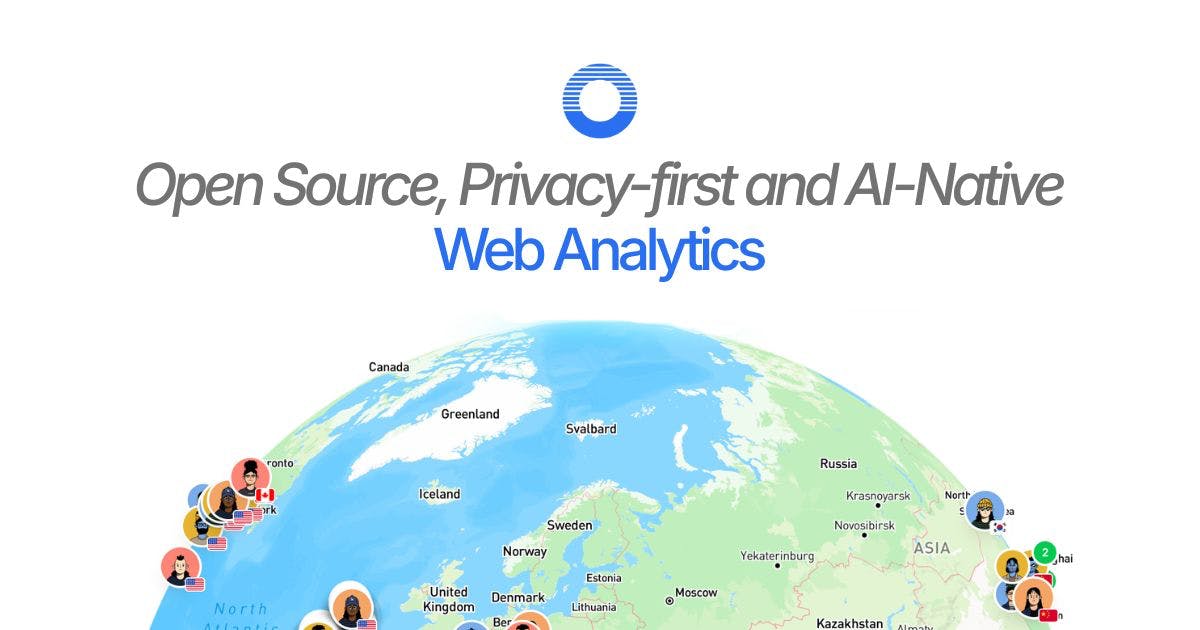
What Pain Points of Google Analytics Does Open Analytics Target?
Open Analytics' tagline reads straightforwardly: "AI-native Google Analytics alternative for the modern web." Behind this statement lie several long-standing pain points in the web analytics space.
Privacy and GDPR Compliance Issues
Google Analytics relies on cookies to track users. As privacy regulations like GDPR grow increasingly strict, websites are forced to display annoying cookie consent banners that hurt user experience and create compliance risks. Open Analytics adopts a cookieless approach, claiming to be GDPR-friendly with no consent banners required—directly eliminating one of the biggest compliance burdens for website operators.
To understand the severity of this pain point, consider the enforcement power of GDPR (General Data Protection Regulation). This EU data protection law, officially enforced since 2018, is considered one of the world's strictest privacy laws. It requires websites to obtain explicit consent before collecting personal data (including cookie identifiers), with violations potentially resulting in fines of up to 4% of global annual revenue or €20 million. Google Analytics has been ruled in violation of GDPR in multiple EU countries including Austria, France, and Italy due to data transfers to US servers. Beyond GDPR, regulations like California's CCPA and Brazil's LGPD are creating global compliance pressure, turning privacy-first analytics from an optional nice-to-have into an essential requirement.
Data Sovereignty Issues
As an open-source, self-hostable tool, Open Analytics lets users maintain complete control over their data rather than handing visitor behavior data to third-party tech giants. This follows the same trajectory as privacy analytics tools like Plausible and Umami that have gained momentum in recent years.
AI-Native Capabilities: Open Analytics' Core Differentiator
What truly distinguishes Open Analytics from similar privacy analytics products is its proactive embrace of the AI era. The product description specifically emphasizes that it's "built for humans and AI agents."
Connecting AI Tools via MCP Protocol
The most noteworthy technical detail is Open Analytics' support for connecting analytics data to AI tools through MCP (Model Context Protocol). MCP is an open standard rapidly gaining adoption in the AI developer community that allows large language models and AI applications to access external data sources and tools in a standardized way.
MCP was officially released by Anthropic in late 2024 to solve the fragmentation problem of connecting LLMs with external data sources and tools. Before MCP, every AI application needed custom API integration code to access external data, resulting in massive amounts of duplicated development work. MCP defines a unified client-server architecture that lets AI models access various data sources in a plug-and-play manner, similar to a USB interface. Its architecture consists of three core components: MCP Host (the application running the AI model), MCP Client (the protocol client responsible for communicating with servers), and MCP Server (the server-side component exposing specific data source or tool capabilities). As of mid-2025, MCP has gained support from major AI vendors including OpenAI, Google, and Microsoft, with thousands of MCP Server implementations on GitHub covering databases, CRMs, project management tools, and more. Open Analytics' MCP support means it can serve as a standardized data node within AI workflows.
This means users can have AI assistants like Claude or ChatGPT directly read real-time website traffic data, conversion funnels, revenue metrics, and then ask questions in natural language: "Which channel had the highest conversion rate last week?" or "Help me analyze why traffic dropped yesterday." Compared to repeatedly clicking through filter options in traditional dashboards, this interaction model better aligns with how data analysis should work in the AI-native era.
New Analytics Scenarios for AI Traffic
"Built for AI agents" carries another layer of meaning: as an increasing share of website traffic comes from AI crawlers and automated agents, traditional analytics models based on human behavior assumptions are gradually losing accuracy. An analytics tool designed from the ground up with AI traffic in mind may more accurately distinguish between human visitors and machine visitors—something that will become increasingly important.
Since 2024, website traffic from AI crawlers and automated agents has experienced explosive growth. According to multiple industry studies, AI bot traffic already accounts for 30%-50% of total traffic on some websites, primarily from sources including OpenAI's GPTBot, Google's Gemini crawler, Anthropic's ClaudeBot, and various AI-powered search engines and content aggregation services. This AI traffic is fundamentally different from traditional search engine crawlers: they don't just index content but also deeply parse page semantics, simulate user behavior paths, and even automatically complete form submissions and purchases through AI agents. Traditional analytics tools typically design their metrics systems based on human behavior patterns—such as bounce rate, average session duration, and page depth—which become severely distorted when facing AI traffic. For example, an AI crawler might traverse an entire website in milliseconds, generating large volumes of false pageviews, or an AI shopping agent might exhibit behavior patterns entirely different from human users. Analytics tools that can accurately identify and classify AI traffic will help website operators gain more authentic human user behavior insights.
Open Analytics Core Features at a Glance
According to official descriptions, Open Analytics delivers the following core capabilities through a lightweight script:
- Real-time visitor tracking: Instantly see active users currently on your website
- Conversion funnel analysis (funnels): Track the complete user path from entry to goal completion
- Revenue tracking: Link traffic data to actual revenue, helping assess marketing ROI
- AI tool integration: Connect with various AI assistants through the MCP protocol
The "lightweight script" is a selling point that shouldn't be overlooked. Google Analytics' tracking script is relatively large and can slow down page load times, while privacy analytics tools that emphasize performance typically keep their scripts extremely small (Plausible's script is under 1KB). For modern websites focused on Core Web Vitals and SEO, this is a tangible advantage.
Core Web Vitals are a set of metrics introduced by Google in 2020 to measure webpage user experience, including LCP (Largest Contentful Paint), INP (Interaction to Next Paint), and CLS (Cumulative Layout Shift). These metrics have been incorporated into Google's search ranking algorithm, directly affecting a website's SEO performance. Third-party JavaScript scripts are a common factor dragging down Core Web Vitals—Google Analytics' gtag.js is approximately 28KB compressed, and with its dependencies like analytics.js, the total payload can reach 70-90KB while blocking the main thread during execution. In comparison, Plausible's script is under 1KB and Fathom's is about 2KB. For e-commerce, media, and other websites highly sensitive to page load speed, the size difference in analytics scripts can mean hundreds of milliseconds in loading time variance, subsequently affecting conversion rates and search rankings.
The Unique Value of Open Source and Self-Hosted Deployment
Open Analytics' open-source nature brings several distinct advantages:
Transparency and trust — Public code means users can audit exactly how data is collected and processed, which is especially critical for a product marketed as "privacy-first."
Flexible deployment — Self-hosting options let enterprises deploy analytics systems on their own servers to meet strict data compliance requirements, particularly suited for data-sensitive industries like finance and healthcare.
Community-driven — Open-source projects can typically leverage community contributions for rapid iteration and more easily form ecosystem synergies with other open-source tools.
Competitive Landscape: Opportunities and Challenges for Open Analytics
As a newly launched product on Product Hunt (with 11 upvotes, 4 comments, and ranking #9 at the time of writing), Open Analytics' actual maturity and stability remain to be market-tested.
The privacy analytics space it occupies is already quite competitive, with mature products like Plausible, Umami, Fathom, and PostHog each holding their ground. Specifically, Plausible Analytics is the track benchmark—developed by an EU team with a script of only about 1KB, completely cookie-free, and currently serving over 10,000 paying users. Umami is known for its minimalist self-hosted deployment and has over 20,000 GitHub stars in the developer community. Fathom takes a commercial route, emphasizing a clean paid experience and enterprise-grade support. PostHog positions itself more broadly as an open-source product analytics platform combining product analytics, session replay, feature flags, and A/B testing, with a valuation approaching $500 million in 2024. These products each have their focus areas, but none has made AI-native capabilities their core differentiator—this is precisely the gap Open Analytics aims to fill.
For Open Analytics to break through, its AI-native capabilities and MCP integration are its most differentiated weapons, though this also depends on whether the MCP ecosystem itself continues to grow.
Additionally, migration costs from Google Analytics, historical data compatibility, and the completeness of enterprise-grade features will all be key factors determining whether it achieves widespread adoption.
Conclusion: AI Is Redefining Web Analytics Tools
Open Analytics represents a clear trend: the next generation of web tools is being redefined by AI. When data analysis is no longer confined to manually operated dashboards but can be directly invoked and reasoned over by AI agents, both the form and value of analytics tools will undergo profound transformation.
For developers and startup teams who value privacy compliance while wanting to embrace AI workflows, open-source, privacy-first, and AI-native web analytics tools like Open Analytics are worth keeping on your radar.
Key Takeaways
Related articles

Chain of Thought Isn't Just for AI: How Humans Can Use CoT to Improve Thinking Quality
Chain of Thought isn't just a prompt trick for large models. Starting from a Hacker News discussion, this article analyzes why CoT works for human thinking too, breaks down actionable ways to transfer it, and highlights the key differences between human CoT and machine CoT.
Cloudflare Teams Up with OpenAI: Closi…
Cloudflare Teams Up with OpenAI: Closing the Loop from Vulnerability Discovery to Defense with AI
Cloudflare uses OpenAI Daybreak to investigate security vulnerabilities and generate reviewable remediation plans, while developers use Codex to boost coding efficiency and quality.

Orca Multi-Agent Orchestration in Practice: A Guide to Parallel Collaboration with Claude and Codex
Orca is Stable AI's free open-source agent workbench supporting 34 agents like Claude Code and Codex in parallel. Learn its Git worktree isolation, multi-model orchestration, and mobile management.