Open Finance MCP: An Open-Source Tool That Lets AI Assistants Read Your Bank Data Directly

Brazilian open-source tool Open Finance MCP lets AI assistants directly read bank data for financial analysis
Open Finance MCP is an open-source tool developed by Cumbuca, a licensed Brazilian payment institution, that connects users' bank account data to AI assistants like ChatGPT and Claude through Anthropic's MCP protocol, enabling natural language financial analysis. Built on Brazil's Open Finance framework with a 2-minute setup, it keeps user data fully under user control. As an early implementation of MCP in finance, it demonstrates the trend of deep AI and open banking integration, with a model replicable across global open banking systems.
When AI Meets Open Banking: What Is Open Finance MCP
Imagine telling ChatGPT or Claude: "Analyze my spending from last month" — and the AI actually reads your bank transactions and delivers a detailed breakdown. That's exactly what Open Finance MCP makes possible.
Developed by Cumbuca, a licensed payment institution in Brazil, this open-source tool connects users' bank account data to mainstream AI assistants through the MCP (Model Context Protocol). Built on Brazil's Open Finance framework, it enables AI to help users understand and analyze their financial data using natural language.
What is the MCP Protocol? MCP (Model Context Protocol) is an open standard released by Anthropic in November 2024, designed to solve the fragmentation problem of connecting AI models to external data sources and tools. Before MCP, every AI application that needed to access external data required developers to write custom integration code, resulting in extremely high maintenance costs. MCP uses a unified client-server architecture that allows AI models to call external resources — file systems, databases, APIs, and more — in a standardized way. Its design philosophy is similar to what USB did for hardware ecosystems: once the standard is established, any compliant tool becomes plug-and-play. Major platforms like GitHub, Slack, and Google Drive have already launched MCP servers, and financial data integration represents an important extension of this ecosystem into high-sensitivity domains.
Core Features of Open Finance MCP
Natural Language Financial Analysis
The core value of Open Finance MCP lies in transforming structured bank data into context that AI can understand. Users can ask questions in everyday language:
- "How much did I spend on dining this month?"
- "Summarize my income and expenses over the past three months"
- "What patterns do you see in my spending habits?"
The AI assistant responds based on actual bank statement data, rather than offering generic financial advice.
Compatible with ChatGPT, Claude, and Other Major AI Platforms
The tool supports all AI applications compatible with the MCP protocol, with explicit support for ChatGPT and Claude. As MCP becomes the standard interface for AI tools connecting to external data sources, more AI platforms are likely to join this ecosystem in the future.
2-Minute Ultra-Simple Setup
The team claims setup takes just 2 minutes. Users don't need to create additional accounts — they authenticate directly through the Open Finance standard using their CPF (Brazil's personal tax registration number) plus bank account information. This design lowers the barrier to entry while following open banking's standardized processes.
CPF and Open Banking Authentication Mechanisms CPF (Cadastro de Pessoas Físicas) is a personal tax registration number issued by Brazil's Federal Revenue Service, functioning similarly to the U.S. Social Security Number (SSN) or China's national ID number. It serves as the core identity credential for Brazilian residents participating in financial activities. In the Open Finance system, CPF combined with bank account information forms the foundation of user authentication, enabling secure cross-institution data access through the OAuth 2.0 authorization framework. The key aspect of this design is that user authorization is fine-grained and revocable — financial institutions can only access specific data types that users have explicitly consented to share, and each authorization has a time limit. This fundamentally differs from traditional "credential-sharing" financial aggregation tools (like early Mint), which required users to hand over their bank login credentials to third parties, posing significant security risks.
Data Security and User Privacy Protection
In the financial data space, security is the most critical concern. Open Finance MCP addresses this through several key design decisions:
User Sovereignty Principle: Data access is entirely controlled by users, who can revoke authorization at any time. This aligns with open banking's core philosophy that "users own their data."
Licensed Institution Compliance: Developer Cumbuca is a payment institution authorized by Brazil's central bank, operating under financial regulatory constraints with strict compliance requirements for data handling.
Standardized Protocols Ensure Transparency: Data exchange occurs through the Open Finance standard framework rather than proprietary interfaces, increasing transparency and auditability.
The Significance of MCP in Financial Scenarios
From Developer Tools to Consumer Financial Applications
Open Finance MCP is an early implementation of the MCP protocol in the financial sector. As Anthropic promotes MCP as the standard protocol for AI-to-external-tool connections, financial data integration has emerged as a high-value yet highly sensitive application area. This product's existence signals that the MCP ecosystem is expanding from developer tools into consumer-grade financial applications.
The Trend of Deep Integration Between Open Banking and AI
Brazil is one of the world's most aggressive countries in advancing open banking, with its Open Finance framework covering banks, insurance, investments, and other financial sectors.
Brazil's Open Finance Framework: A Global Leader Brazil's Open Finance system, led by the Central Bank of Brazil (Banco Central do Brasil), has been implemented in phases since 2021 and is one of the world's most comprehensive open financial systems. Unlike Europe's PSD2, which primarily focuses on payment accounts, Brazil's framework encompasses bank deposits, credit, investments, insurance, pensions, and virtually all financial products within its data-sharing scope — which is why it's called "Open Finance" rather than just "Open Banking." As of 2024, over 800 financial institutions have joined the system, with cumulative data-sharing API calls exceeding billions. It is one of the most mature open financial data infrastructure markets globally. This solid infrastructure is precisely what enables Open Finance MCP to achieve its "2-minute setup" promise.
Combining open banking data with AI analytical capabilities could spawn a new generation of personal financial management tools — upgrading from passive transaction viewing to proactive intelligent financial analysis.
Global Replicability and Current Limitations
Currently, the product is limited to the Brazilian market, which relates to Open Finance's regional nature. However, the model is replicable — Europe's PSD2, the UK's Open Banking, and other regions advancing open banking could all see similar AI + open finance products emerge.
Global Open Banking Regulatory Framework Comparison Major open banking systems worldwide differ significantly in their regulatory approaches. The EU's PSD2 (Payment Services Directive 2.0) took effect in 2018, mandating that banks open payment account data to licensed third parties, though with relatively limited scope. The UK continued and deepened its own Open Banking standard post-Brexit, regulated by the Competition and Markets Authority (CMA), with over 7 million active users today. Australia launched the broader CDR (Consumer Data Right) framework, extending the open data philosophy from finance to energy, telecommunications, and other industries. By contrast, the U.S. has been slower on open banking, relying mainly on market-driven data aggregators like Plaid and Finicity, with no unified regulatory framework yet. These differences mean that while Open Finance MCP's model is replicable, landing in different markets will still require navigating distinct compliance challenges.
Summary: The Future Direction of AI Personal Finance Assistants
Open Finance MCP represents a clear trend: AI assistants are evolving from general-purpose conversational tools into personalized intelligent agents that can access users' real data. When AI can read your actual financial situation, the advice it provides upgrades from "general knowledge" to "personalized insights."
This direction is worth watching closely, particularly regarding how to balance convenience and risk in data security and user privacy protection. For developers following fintech and AI applications, the exploration of MCP in financial scenarios is just getting started.
Key Takeaways
- Open Finance MCP connects bank data to ChatGPT and Claude via the MCP protocol, enabling natural language financial analysis
- Developed by Cumbuca, a licensed Brazilian payment institution, it's built on Brazil's Open Finance framework with a 2-minute setup
- User data remains fully under user control with revocable authorization, adhering to open banking's user sovereignty principle
- This product is an early implementation of MCP in finance, demonstrating the trend of AI and open banking convergence
- Currently limited to Brazil, but the model is replicable in Europe's PSD2 and other open banking systems worldwide
Related articles
 Product Reviews
The Programmer's Desk Setup Guide: Building a Workspace That Feels Like Home
Discover how programmers build productive, comfortable workspaces. From multi-monitor setups to ergonomic design, explore the desk philosophy that drives focus and flow.
 Product Reviews
Qoder vs Cursor Real-World Comparison: Which $20/Month AI IDE Is Better?
Hands-on comparison of Qoder vs Cursor AI IDEs: Agent autonomy, human interaction count, and architecture decisions. Qoder needed only 2 interactions vs Cursor's 8.
 Product Reviews
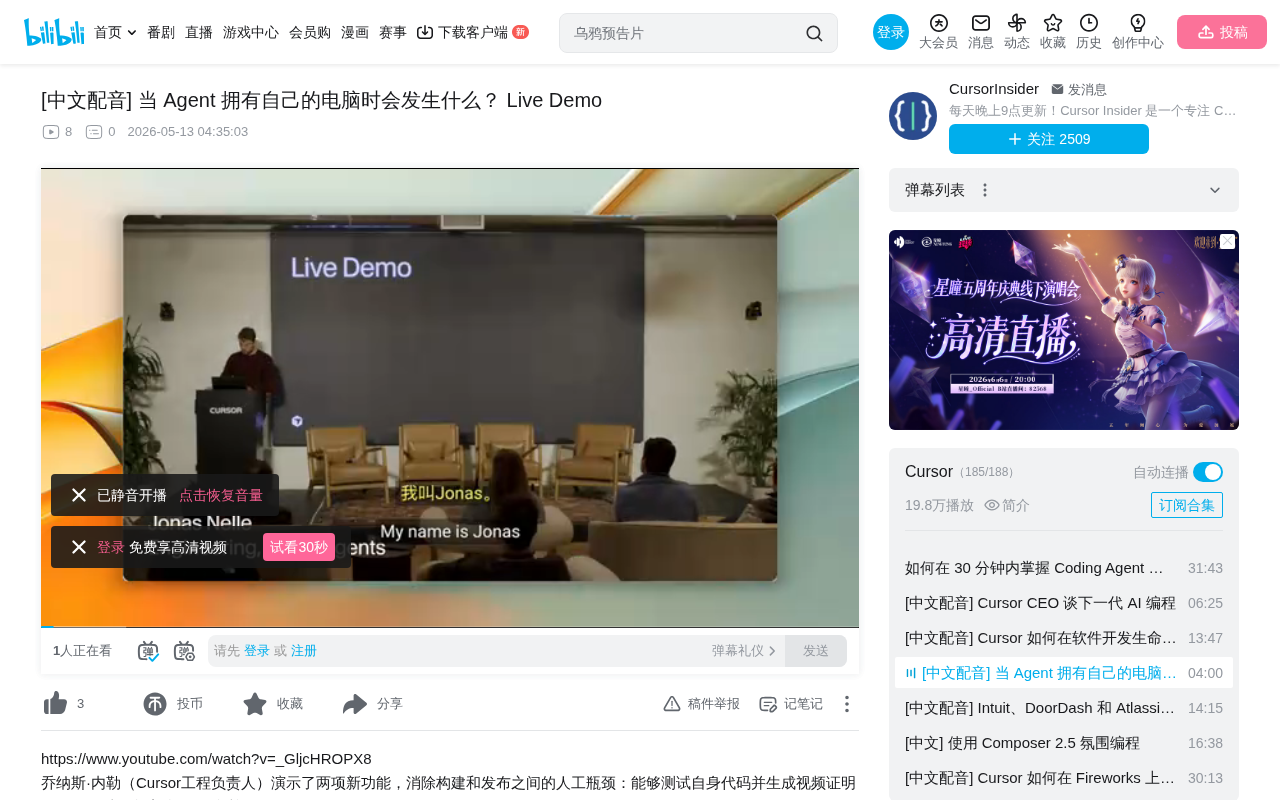
Cursor Cloud Agent Demo: Eliminating Bottlenecks Across the Entire Software Development Lifecycle
Deep analysis of Cursor's Cloud Agent demo showing how cloud VMs, automated test artifacts, and a full-chain control plane systematically eliminate human bottlenecks across the software development lifecycle.